
🧭 TL;DR — the honest bottom line
Here's the thing about Wuhan: it's the great Chinese city most foreigners fly over, not to — and that's exactly why it's so good right now. This is the "thoroughfare of nine provinces," China's high-speed-rail crossroads, a 3,500-year-old river city split into three by the Yangtze and the Han. You come for the Yellow Crane Tower (the tower of a thousand Tang poems), you stay for a ¥1.50 ferry across the Yangtze at dusk, the 2,400-year-old bronze bells at a free world-class museum, hot-dry noodles slurped standing up in a breakfast alley, and — if you time it for mid-to-late March — cherry blossoms that turn Wuhan University into the most photographed campus in Asia.
Give it 2–3 days for the city, more if you're using it as a rail hub. Two things to do before you fly: set up an eSIM (so Google and WhatsApp work) and bind a card to Alipay (so you can pay for anything). Sort those two and the rest of this guide is just the fun part.
No time to read all of this? Tell us your dates and we'll build your Wuhan plan for you — on WhatsApp, real humans. (One message, no obligation.)
Message us →📌 This guide is long because it's complete — use the menu to jump. Everything below is named, priced, and verified June 2026; we flag anything that drifts so you can double-check the load-bearing details.
Before You Go
🛂 Do You Need a Visa for Wuhan? — Visa-Free Entry Explained
Short answer: probably not. China spent the last two years quietly becoming one of the easiest big countries in Asia to walk into, and Wuhan's Tianhe International Airport (WUH) is an officially approved entry port for the headline scheme. Which route you use comes down to one thing — what color your passport is.
| Route | Who it's for | Max stay | The catch |
|---|---|---|---|
| 30-day visa-free | 50 countries — most of Europe, Australia, NZ, Japan, Korea, and UK + Canada (added 17 Feb 2026) | 30 days | Ordinary passport valid for your whole stay (airlines often ask for 6 months). Tourism/business/visiting friends — no onward-ticket rule. Enter at any open port of entry. |
| 240-hour (10-day) transit | 57 countries incl. the USA, Brazil, Mexico, Indonesia | 10 days | You must hold an onward ticket to a third country/region and enter via an approved port — Wuhan Tianhe (WUH) is one. |
✓ verified Oct 2026 Lists shift often — reconfirm your nationality on the official site before booking.
🇺🇸 Americans, read this carefully — it trips people up
US citizens are not on the 30-day visa-free list, but they are on the 240-hour visa-free transit list. To use it, you must meet the policy's conditions, including entry through an approved port and a confirmed onward ticket to a third country or region different from your departure country or region. Wuhan Tianhe (WUH) is an approved port. The trick is the word transit: China has to believe you're passing through to somewhere else, so you need an onward flight booked out of mainland China to a third country or region before you land. Easy third stops from Wuhan: Seoul, Bangkok, Singapore, Tokyo. The official notices say only "a third country or region", and none of the official pages we read names Hong Kong or Macao either way; reading them as qualifying is an inference, not an official rule. If your plan depends on it, confirm with your airline or the National Immigration Administration's 24-hour hotline, +86 12367 (English available), before you book. Land in Wuhan → spend up to 10 days → fly onward.
The 240-hour window now lets you move between the permitted areas of all 24 participating provinces (some provinces only allow certain cities — check the area table on nia.gov.cn), so a Chongqing → Xi'an rail run from Wuhan, or a Zhangjiajie detour, is fine inside the 10 days (more on those in Part 4).
Two things that quietly sink people
① The 240 hours don't start when you land — they start at 00:00 the next day (GMT+8), so your arrival day is a freebie. ② "Third country" means different from where you came from — a US→Wuhan→back-to-US ticket does not qualify; you must exit to somewhere else first.
Policy and country lists shift — always reconfirm your nationality on the official en.nia.gov.cn before you book the flight.
🗓️ Best Time to Visit Wuhan
Aim for late March or October — that's the sweet spot, and one of those two is non-negotiable if you want cherry blossoms. Spring and autumn are mild and dry; the summer is genuinely brutal and the winter is damp-cold.
| Season | Months | Temp | The real story |
|---|---|---|---|
| 🌸 Spring (best) | Mar–May | 14–26°C | The reason to come. Cherry blossoms peak mid-to-late March, East Lake and Wuhan University go pink, the whole city is out. Book everything ahead. |
| ☀️ Summer | Jun–Aug | 28–40°C+ | Wuhan is one of China's "Three Furnaces" — 40°C is normal, and the plum-rain season (梅雨) dumps a month of humidity from mid-June. Hard mode. |
| 🍁 Autumn (best) | Sep–Oct | 15–27°C | The calmer golden window. Clear-ish skies, comfortable, golden ginkgo at Guiyuan Temple and red maples by East Lake. No blossom crowds. |
| 🌫️ Winter | Dec–Feb | 0–10°C | Rarely freezes on paper, but river wind + high humidity makes it feel ten degrees colder. Grey. Pack a real coat. |
If cherry blossoms are the dream, plan for roughly 20–31 March and check bloom trackers before you commit — peak shifts a week either way with the weather. Avoid the National Day / Golden Week (1–7 Oct) and Spring Festival crushes, when domestic crowds and prices spike.
✈️ How to Get to Wuhan: Airport & High-Speed Rail
Wuhan is one of China's great rail crossroads — its airport is solid, but the high-speed rail network is the real superpower, putting half the country within a few hours.
The airport — Wuhan Tianhe (WUH)
One main international airport, Tianhe International (WUH), ~25 km northwest of the centre. The clean way in is the metro:
- Metro Line 2 runs straight from the airport (Terminal 3) into the city. To Hankou Railway Station ~50 min, ¥6; all the way across to Wuchang it's longer (the full line is ~100+ min end-to-end), ¥2–10 by distance. Operates ~06:00–23:00 (last airport train ~22:40).
- Taxi / Didi to central Hankou: ~¥80–120, 40–60 min depending on traffic. Worth it for a late arrival with bags.
Onward by high-speed rail — Wuhan is a hub
This is where Wuhan earns its "nine provinces" nickname. From Wuhan, Hankou, or Wuchang stations (the booking app picks the right one), the fast trains fan out:
| To | Time (high-speed) | Why bother |
|---|---|---|
| Guangzhou | ~4h | Cantonese food + the Pearl River Delta; gateway south. |
| Shanghai | ~4–4.5h | The big one east. |
| Chongqing | ~5h | China's wildest megacity — cyberpunk skyline, hotpot rivalry. |
| Xi'an | ~3.5–5h | Terracotta Army. A new line (due ~late June 2026) may cut this toward ~2.5h. |
| Zhangjiajie | ~5h | The "Avatar" sandstone pillars in neighbouring Hunan, whose capital is Changsha. |
Book trains on the official 12306 website (English version) or Trip.com with your passport — full how-to in Part 4.
💴 Wuhan Travel Budget: What It Costs (per day, excluding flights)
Wuhan is cheaper than China's tier-1 cities (Beijing/Shanghai/Shenzhen) for what you get — the headline sights are free or near-free, and you eat brilliantly for almost nothing. Rough daily budgets:
| Style | Per day (ex-flights) | What that buys you |
|---|---|---|
| 🎒 Backpacker | ¥180–300 (~$25–42) | Hostel dorm/budget room, breakfast-alley street food, metro + the ¥1.50 ferry everywhere |
| 💺 Mid-range (most people) | ¥300–650 (~$42–92) | Comfortable 3–4★ hotel, sit-down meals, Didi when you're lazy, the handful of paid sights |
| ✨ Comfort | ¥800+ (~$112+) | 4–5★ riverside hotel, private guide, the good seats at the Han Show, fine Hubei dining |
The biggest budget lever isn't the hotel — it's how you eat and move. Hot-dry noodles, the river ferry, and the metro keep you firmly mid-range while living very well. (~¥7.1 = $1 as of Jun 2026; rates drift.)
Sources — Part 1 (verified June 2026)
Visa & 240h transit: en.nia.gov.cn (National Immigration Administration); chinaairlinetravel.com (Wuhan WUH 240-hour transit port); chinadiscovery.com & windhorsetour.com 2026 visa guides; china-briefing.com (UK/Canada added 17 Feb 2026; 57-country 240h list incl. USA (NIA, 20 Aug 2026), 24 provinces).
Airport & metro: travelchinaguide.com (Wuhan Metro Line 2; Hankou Station ¥6/~50min); chinaairlinetravel.com (WUH metro guide); trip.com airport guide; yangtze-river-cruises.com (Wuhan transport).
High-speed rail: chinadiscovery.com & travelchinaguide.com (Wuhan↔Guangzhou ~4h; ↔Shanghai ~4–4.5h; ↔Chongqing ~5h; ↔Xi'an 3.5–5h, new line late-Jun 2026 ~2.5h; ↔Zhangjiajie ~5h); Wikipedia (Wuhan Railway Hub).
Budget / climate: travelchinaguide.com Wuhan weather (Three Furnaces, plum-rain mid-June); numbeo Wuhan 2026.
Arrival & Essentials
The three things that turn China from "intimidating" into "effortless." Do the first two before you fly — fifteen minutes at home saves you a stressful first hour at the airport.
📱 Internet & VPN in China: Get an eSIM before you fly
Let's be blunt about the thing everyone whispers about: mainland China blocks Google, Instagram, WhatsApp, Gmail, and most Western apps. Your normal SIM will roam onto a Chinese network and hit that same wall — and Wuhan, away from the tier-1 tourist track, is a place where patchy data really bites (more than one traveller has been stranded mid-day with no maps and no Alipay).
The clean, legal, no-drama fix: an international travel eSIM that routes your data through a server outside the mainland — so Google Maps, WhatsApp, Instagram, all of it just works, with no separate VPN to fiddle with. You install it as a second line; your home number stays for calls/texts.
| eSIM | Best for | VPN? | The honest take |
|---|---|---|---|
| Nomad | Multi-city + high-speed rail | No | The most stable when you're moving — survives tunnels, train Wi-Fi gaps, city-hopping. Top pick if Wuhan is one stop on a bigger rail trip. |
| Airalo | One or two cities, budget | No | The most popular, cheapest, dead-simple — and the one most-recommended for China specifically. Plenty for a city-based Wuhan trip. |
| Holafly | Heavy data users | No | Unlimited-data plans + 24/7 support. Great if you stream/hotspot — check the fair-use cap. |
| Saily | Privacy-minded | No | By the NordVPN team, strong privacy. Solid for fixed-data plans. |
How it actually goes: buy online → you get a QR code by email → scan it to install (takes 2 min) → leave it off until you land → flip it on as the plane taxis in, and you're online before you reach baggage claim. Only needs an email — no Chinese ID, no registration. Buy it at home on your own Wi-Fi; do not count on installing it after you land, because activation pages can themselves be behind the wall.
One phone really does replace everything
Wallet, keys, train tickets, translator, metro card, ferry fare, bike unlock, dinner orders, museum tickets — all collapse into one phone the moment you're set up. Most people pay by phone these days, though cash is still legal tender. Get your eSIM + Alipay sorted and you operate exactly like a Wuhan native by day two.
More on this: China Essentials — paying with Alipay & WeChat →💳 How to Pay in Wuhan: Alipay & WeChat for Foreigners
Most people pay by phone, but cash is still legal tender: since 1 February 2026, staffed businesses must accept it. Keep some small notes as a backup (is cash accepted in China?). Don't count on foreign cards at small shops; bigger hotels, malls and major sights are more likely to take them. The great news for 2026: Alipay and WeChat Pay both take a foreign Visa/Mastercard directly, no Chinese bank account needed. Do this at home before you fly — identity verification is smoother on your home connection, and you want it working the second you land.
Set up Alipay (your main wallet)
- Download Alipay from your app store and register with your home mobile number (you'll get an SMS code).
- Open "Cards" → "Add Bank Card" and enter a real Visa or Mastercard. ⚠️ Use a normal physical credit/debit card — prepaid and virtual/online-only cards are frequently rejected. This is the #1 reason setup fails.
- Complete passport verification (photo of passport + a quick selfie). Approval is usually minutes.
- Add a backup: download WeChat Pay and bind a second physical card the same way — handy if one card gets declined, and essential here because the river ferry and some street stalls lean on it.
The limits & fees you need to know ✓ verified Jun 2026
| Figure | |
|---|---|
| Payments under ¥200 | Fee-free (0%) |
| Payments over ¥200 | ~3% service fee |
Alipay and WeChat Pay set spending limits for foreign cards — see Essentials. Check your current limit in the app.
The practical read: the under-¥200 fee-free rule covers nearly everything you'll buy here — noodles, metro, ferry, coffee, taxis. The ~3% only bites on a hotel or a fancy dinner. Still, carry some cash and a second physical card as a fallback — rare, but cards do occasionally get declined.
🚕 Getting Around Wuhan: Metro, Ferry & Didi
Wuhan is huge and split into three towns by two rivers — Hankou (commerce/concessions, north of the Yangtze), Hanyang (across the Han), and Wuchang (Yellow Crane Tower, East Lake, the universities, south of the Yangtze). Getting between them is half the fun, and the metro + the river ferry have you covered.
From the airport into town
| From | Option | Time | Cost | When to pick it |
|---|---|---|---|---|
| Tianhe (WUH) | Metro Line 2 → Hankou / city | ~50 min to Hankou | ¥2–10 | Default. Cheap, beats traffic, runs to ~23:00. |
| Tianhe (WUH) | Didi / taxi to your hotel | 40–60 min | ¥80–120 | Late arrival, heavy bags, or staying far from a metro stop. |
Around the city — metro, ferry, Didi
- Metro: clean, English-signed, ¥2–10 by distance, runs ~06:00–23:00. Pay by opening Alipay → "Metro" / 乘车码 mini-program → scan the QR at the gate. The network is big (15+ lines) and crosses both rivers — it's your backbone.
- The Yangtze ferry (do this): the Wuhan Guan (Hankou) ↔ Zhonghua Road (Wuchang) ferry crosses the river in ~12–15 min for about ¥1.50 — the single best-value sightseeing on this trip, with the skyline and the Wuhan Yangtze River Bridge (the first bridge ever built across the river, 1957) in full view. More in Part 3.
- Didi (China's Uber): full English app, takes foreign Visa/Mastercard (or link Alipay), register with your home phone number — no Chinese SIM or bank needed. Set it up before you fly (~10 min). At the airport and big stations, walk to the signed 网约车 (wǎngyuē chē) ride-hailing pickup zone rather than booking from inside; expect a small ¥5–15 platform fee. The chat has a built-in English↔Chinese translator; the driver confirms you by the last 4 digits of your phone number.
"Wait — China is THIS safe?"
You are 2×+ more likely to be robbed in San Francisco or Chicago than in a major Chinese city. Women routinely walk home alone past midnight; with dense CCTV, opportunistic street crime barely exists. Wuhan is a relaxed, student-heavy river city — late-night noodle runs and solo Didi rides home from a Hankou bar are completely normal.
Sources — Part 2 (verified June 2026)
eSIM: unusualnomad.com, traveltomtom.net (China eSIM tests 2026 — route offshore, no separate VPN; Airalo most-recommended for China; Nomad most stable city-hopping).
Alipay limits & fees: realchinatrip.com, trip.com, ltl-school.com (<¥200 fee-free · ~3% above; prepaid/virtual cards often rejected; confirm limits in-app).
Metro / ferry / Didi: travelchinaguide.com (Wuhan Metro fares & hours), yangtze-river-cruises.com (Wuhan transport, ferry), trip.com (ferry Wuhan Guan↔Zhonghua Rd ~¥1.3–1.5/~12min), wise.com & chinasurvivalkit.com (Didi English app, foreign cards, 网约车 pickup zone).
Safety: trip.com "Is China Safe", unusualnomad.com 2026 (solo female, late-night Didi, near-zero street crime).
Things to Do in Wuhan
An 1,800-year-old poetry tower over the Yangtze, a ¥1.50 ferry across China's greatest river, 2,400-year-old bronze bells that still play, cherry blossoms that draw millions, and breakfast eaten standing up in an alley. Everything below is named, priced, and verified June 2026 — walk in and do it, no second tab needed.
🏯 Yellow Crane Tower (Huang He Lou): Tickets, Hours & How to Visit

This is the icon — the building that put Wuhan in a thousand years of poetry. The current tower (rebuilt 1985, 51 m, five storeys of yellow tile and upturned eaves) sits on Snake Hill in Wuchang, and the view from the top — the Yangtze sliding past, the 1957 river bridge, the three towns spread out — is the whole point. Chinese visitors come half for the view and half because every schoolchild memorises Cui Hao's and Li Bai's Tang poems written here. You don't need the poetry to enjoy it, but knowing it's the most-written-about building in China changes how it feels.
The essentials
- Ticket: ¥70 year-round. Kids under 1.2 m and seniors free or half. A separate night ticket runs ¥120–150 (light show + illuminated tower).
- Hours: 08:30–18:00 peak / 08:30–17:00 off-season; last entry ~17:00. Budget 2–3 hours.
- How to book: buy on Trip.com (smoothest for foreign passports) or the official "黄鹤楼" WeChat account, up to 7 days ahead — passport name must match. E-ticket scanned by QR at the gate.
- Getting there: Metro Line 5 → Huanghelou (黄鹤楼) station, or Line 4 to Fuxing Road, then a short walk up Snake Hill.
How to do it right
Go late afternoon, climb to the top tier for the river view as the light softens, then come down and walk five minutes to the Yangtze River Bridge for the classic shot of the tower and the bridge together. Skip the over-priced photo-costume stalls inside. If you can stretch to it, the night version — tower lit gold, a projection show on the hillside — is genuinely lovely and far less crowded than midday.
The most famous building in China is a 1980s rebuild — and that's the norm
Heads-up so you're not disappointed: the Yellow Crane Tower has been destroyed and rebuilt at least a dozen times in 1,800 years (fires, wars, floods), and today's tower dates to 1985 — it's even in a slightly different spot from the Qing original. This isn't a Wuhan quirk; it's how a lot of Chinese "ancient" landmarks work — the site and the story are continuous even when the timber isn't. Come for the poetry and the river, not the carbon-dating, and it's magnificent.
🚢 The Yangtze River: Ferry Crossing, the Bridge & Night Cruise

If the Yellow Crane Tower is the postcard, the river is the soul. The Yangtze (Cháng Jiāng, "Long River") is the third-longest on earth and it cuts Wuhan clean in two — and the locals' everyday way across it is the best-value experience in the city.
The ¥1.50 ferry — do this, ideally at dusk
The Wuhan Guan (Hankou) ↔ Zhonghua Road (Wuchang) ferry has run for decades. It costs about ¥1.30–1.50, takes ~12–15 minutes, and on the way you get the full skyline, the river traffic, and a side-on look at the Wuhan Yangtze River Bridge — the first bridge ever built across the Yangtze (opened 1957), a double-decker (rail below, road above) that was a genuine national triumph. Pay with Alipay/WeChat or a few coins at the Wuhan Guan wharf on the Hankou Bund; boats run frequently through the day into the evening. Go around sunset and you get the city switching its lights on mid-river. Nothing else this cheap will be a highlight of your trip.
The night cruise — the dressed-up version
Want the full sit-down version? The Liangjiang (Two Rivers) night cruise sails the lit-up riverfront — the Yangtze River Light Show turns both banks into a moving canvas. Tickets run roughly ¥88 and up per person (some include a drink/dessert), boarding at Yuehan or Hongxiang wharf in the evening (~20:00–21:00 departures). Lovely, but honestly the ¥1.50 ferry gives you 80% of the magic for 1.5% of the price — do the ferry for sure; add the cruise only if you want the show and a seat.
Your best view in Wuhan costs less than a stick of gum
Let it land: a ¥1.50 ferry across the third-longest river on the planet, at golden hour, with the skyline lighting up and a 1957 engineering landmark gliding past — for about 20 US cents. The tourist night cruise is nice, but the working commuter ferry is the real thing, and it's the single best illustration of how cheap a great day in China can be.
🔔 Hubei Provincial Museum: the Bianzhong Bells (free)
This is the sleeper hit of Wuhan, and it's free. The Hubei Provincial Museum in Wuchang holds one of the most jaw-dropping objects in China: the Bianzhong (编钟) of Marquis Yi of Zeng — a 65-piece bronze chime-bell set, cast around 433 BC (that's ~2,450 years ago) and pulled from a waterlogged tomb in 1978 almost perfectly intact. Each bell plays two distinct tones depending on where you strike it; together they span five octaves and still play today. Standing in front of them is one of those quiet "China is unfathomably old" moments. (Same museum: the Sword of Goujian and a hall of Chu-kingdom treasures.)
The essentials — book ahead, it's the catch
- Ticket: Free — but you must reserve in advance (the snag). Roughly 5,000 slots/day, released by date; book via the museum's WeChat account or Trip.com, with your passport. Go for a morning slot.
- Hours: 09:00–17:00 (last entry ~15:30). Closed Mondays (except public holidays). ← don't show up on a Monday.
- Chime-bell performance: a live 20-minute concert on the bells (a replica set), several shows daily (around 11:30, 14:00, 15:00; extra weekend slot), ¥50 extra. Worth it — hearing them is the whole point.
- Getting there: Metro to the Donghu (East Lake) area, Wuchang; it sits right by East Lake at 156 Donghu Road, so pair the two.
How to do it right
Reserve a morning slot, see the bells and the Chu treasures first while it's quiet, catch a midday bell concert, then walk straight out to East Lake (next section) for the afternoon. Half a day, two of Wuhan's best things, total spend ~¥50 (just the concert — the museum is free).
🌳 East Lake (Dong Hu): China's Largest Urban Lake — greenway & cherry blossoms
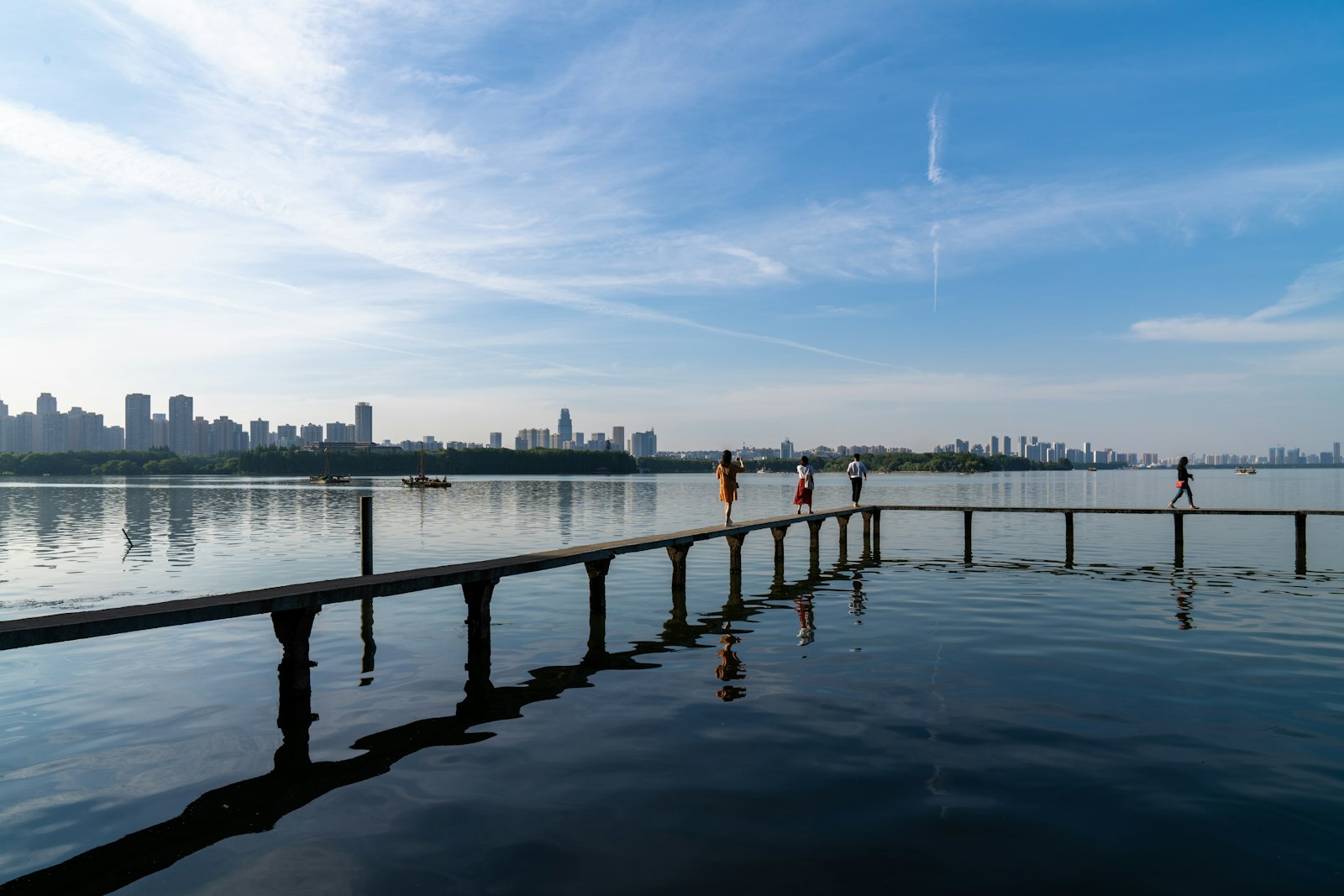
Forget what "city park" means back home. East Lake is the largest urban lake in China — about 33 km² of water, six times West Lake in Hangzhou — ringed by a ~100 km car-free greenway that opened in 2019. This is where Wuhan exhales: locals cycle, picnic, paddle, and in spring it's the city's blossom epicentre.
How to actually do it
- The greenway (free): the headline. Rent a bike (shared bikes via Alipay/WeChat, or rental stands near the gates) and ride a stretch of the lakeshore — you don't need to do all 100 km; a couple of hours along the Tingtao or Moshan sections is plenty. Open all day, free to enter the main areas.
- Moshan (Mo Hill) Scenic Area: gardens and pavilions on a low hill, pretty year-round, small ticket in peak garden season.
- East Lake Cherry Blossom Garden: the famous one. ¥60 entry (¥30 concession), open ~08:00–18:00 (weekdays from 08:30; later/evening sessions in bloom season), peak mid-to-late March. Ranked among the world's top cherry-blossom gardens, with night illuminations during the bloom. Note this is a separate paid garden — the lakeshore greenway itself is free.
Spring strategy
In mid-to-late March the blossoms are the whole city's obsession and the crowds are real. Go early (gates open ~08:00) on a weekday, do the Cherry Blossom Garden first, then escape onto the free greenway where it's calmer. Outside blossom season, East Lake is a gorgeous, uncrowded, free afternoon — bike, then a lakeside tea.
🌸 Wuhan Cherry Blossoms: Wuhan University & how to actually get in
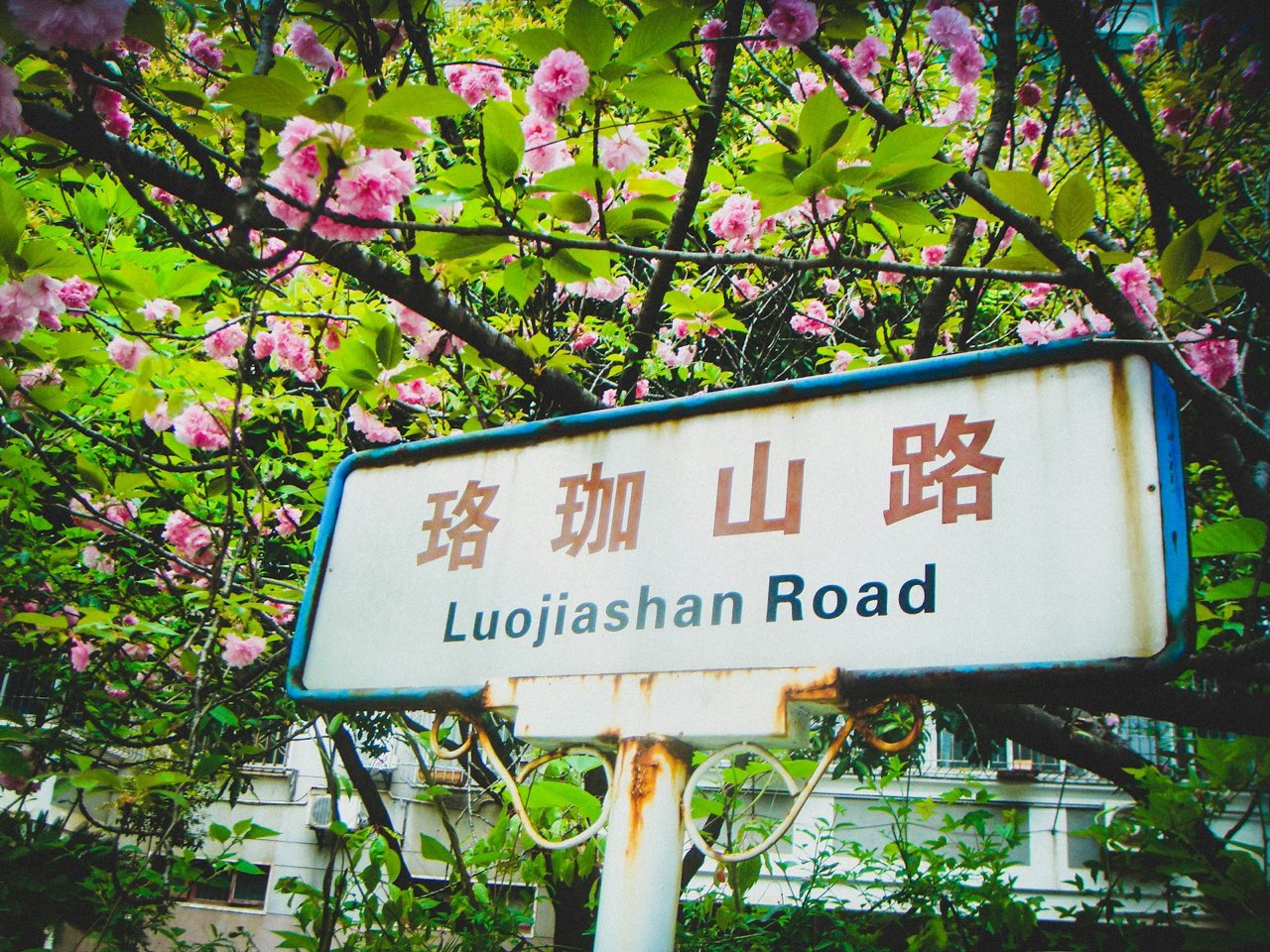
If you come in late March, this is the one with the booking war. Wuhan University (Wuda) has Asia's most famous campus cherry-blossom avenue — old boulevards lined with sakura, framed by 1930s Sino-Western architecture. It's stunning, it's free, and getting in during bloom season is the single hardest reservation in this guide.
The reservation reality — read this twice
- During peak bloom (roughly late March to early April), the campus runs free, real-name, limited daily reservations — about 20,000/weekday, 40,000/weekend.
- Slots open 3 days ahead at 20:00 (8 pm) Beijing time via the university's official site / "武大发布" WeChat account — and they are gone within seconds. This applies to foreign visitors too.
- You enter with your reservation QR + passport at designated gates (Main/Luojia Gate, West/Hongyi Gate, etc.); entry windows ~08:30–17:30 weekdays, 08:00–18:00 weekends.
The honest play
Be at your phone 8:00:00 pm sharp three days out, refreshing — treat it like a concert drop. Missed it? Don't despair: the East Lake Cherry Blossom Garden (paid, no booking war) and the blossoms along East Lake's greenway and Moshan are arguably more photogenic and far less stressful. Locals will tell you Wuda is the legend, but East Lake is the easier win.
The most famous cherry blossoms in China are free — if you can win a 20,000-slot lottery in under a minute
Wuhan University charges nothing to see its sakura, which sounds great until you realise the only currency is speed: 20,000 free weekday slots, released 3 days out at 8pm, snapped up in seconds — foreigners included. If that sounds like a part-time job, skip it guilt-free and ride the free East Lake greenway instead, where the blossoms are everywhere and nobody's refreshing an app at 8pm. Either way, blossom season is mid-to-late March — get the dates right or you'll see bare branches.
Coming for the blossoms? We'll tell you exactly how and when to try for the Wuhan University reservation, and build the rest of your March trip around it. Tell us your dates on WhatsApp.
Ask us →🍜 What to Eat in Wuhan: Hot-Dry Noodles, Doupi & Wuchang Fish
Wuhan does breakfast (过早 / guò zǎo) better than almost anywhere in China — "guo zao," literally "passing the morning," is a genuine local institution, eaten on the move, often standing up. This is street-food-first eating, gloriously cheap.
The dishes you came for
- Hot-dry noodles (热干面 / rè gān miàn) — the Wuhan dish. Springy alkaline noodles, no soup, tossed with sesame paste, chilli oil, pickled radish and scallion — you mix it yourself. A bowl is ¥4–8. Eat it for breakfast, standing, like a local.
- Doupi (豆皮) — a crispy pan-fried square of egg-coated tofu skin stuffed with sticky rice, diced pork, mushroom and bamboo. Savoury, hefty, ~¥8–15. The famous name is Lao Tong Cheng (老通城) for "sanxian doupi."
- Wuchang fish (武昌鱼) — a delicate freshwater bream, usually steamed, immortalised in a Mao poem. A sit-down dish, ~¥60–120 depending on the restaurant.
- Duck neck (鸭脖 / yā bó) — Wuhan's addictive spicy-braised snack, sold by weight. Zhou Hei Ya (周黑鸭) and Jingwu (精武) are the famous brands; a portion ~¥20–40. Beer's natural enemy.
Where to eat — two easy bets
- Hubu Alley (户部巷), Wuchang — the tourist-famous breakfast street near the Yangtze. Hundreds of stalls; hot-dry noodles ¥4–6, and ~¥80–120 total lets two people graze across a dozen snacks. Insider: it's a zoo on weekends/holidays and many stalls are mediocre-touristy — go late afternoon (~5pm) on a weekday when it's calm and everything's open, and head for the packed stalls (Cailinji for noodles is the named favourite).
- Jiqing Street (吉庆街), Hankou — the night counterpart. By evening it fills with dai pai dong (open-air stalls): braised crayfish, spicy snails, beef soup, doupi. Lao Tong Cheng sits at the crossing. Grittier, more local, better after dark.
Ordering without embarrassing yourself
Most stalls: point and pay by QR (Alipay/WeChat — scan the table/stall code). Spice phrases if you need them: "wēi là / 微辣" (mild), "bú yào là / 不要辣" (no spice) — though Wuhan food is more savoury-sesame than tongue-numbing Sichuan, so you're mostly safe.
Breakfast for a dollar, and it's the best meal of the day
A bowl of hot-dry noodles is ¥4–8 — that's under a dollar for the dish the whole city queues for. Add a doupi (¥10) and a soy milk and you've eaten like a local for ~¥15. Wuhan's genius is breakfast, and breakfast is its cheapest meal — you'll spend more on a single Western brunch than on three days of guò zǎo.
🌃 Wuhan Nightlife: the Hankou Bund, Bar Streets & Live Music
Wuhan's nights are river-and-concession flavoured — this is a young, student-heavy city (over a million university students), so the scene runs from elegant riverside strolls to dive-y livehouses, and it's safe and cheap.
Start with the Hankou riverfront
The Hankou Bund (汉口江滩) is the move on night one: a long riverside promenade backed by the former foreign concessions — block after block of 1900s European-style architecture (British, French, Russian, German, Japanese banks and trading houses), floodlit at night. They call it the "Little Bund," and walking it — then drifting onto Jianghan Road (江汉路), the grand pedestrian street, for the chiming Jianghan Customs House clock — is a free, atmospheric evening. After 10pm locals sit on the river wall with canned beer watching ferries blink past.
For a proper drink
- Jianghan Road / Hankou bars — stylish spots with river views; rooftop and concession-building bars, craft-beer taprooms. A beer runs ~¥35; many places do happy-hour BOGO before 8pm (Wednesdays especially).
- Garden Road Bar Street (花园道) — a 300 m industrial corridor with 30+ bars and livehouses shoulder to shoulder, the youthful heart of the scene — music, art, cheap drinks.
- Live music — Vox Livehouse and Wuhan Prison are the legendary indie venues (Wuhan has serious punk/rock cred); gig tickets ~¥50–150.
The practical bits
Beer prices: craft beer ~¥30–50, happy hour ~¥20–35. Closing: most bars ~2am, livehouses to 3am weekends. Pay by phone (foreign cards rarely work at the bar). Getting home: the metro stops ~23:00, but Didi runs all night, ¥20–40 across town, and it's completely safe solo.
A night out in Wuhan: ¥35 craft beer, free riverside cinema, and a safe Didi home
Walk the floodlit Hankou Bund (free), grab a ¥35 craft beer on Jianghan Road, catch a punk gig in a sweaty livehouse for ¥80, and take a ¥30 Didi home at 2am without a flicker of worry — women do it solo here all the time. The "China is pricey / sketchy after dark" assumption is just wrong; Wuhan after midnight is cheap, easy, and genuinely fun.
Want a local to walk you the Hankou concessions and the real bar streets — no tourist traps, just the good spots? Ask us on WhatsApp.
Ask us →Sources — Part 3 (verified June 2026)
Yellow Crane Tower: trip.com attraction page (¥70 year-round; ~08:30–18:00; night ¥120–150; WeChat "黄鹤楼" booking); thechinajourney.com; intotravelchina.com.
Yangtze ferry & cruise: trip.com (Wuhan Guan↔Zhonghua Rd ferry ~¥1.3–1.5/~12min); travelchinaguide.com (Yangtze River Bridge, 1957, first across the Yangtze); trip.com Wuhan Liangjiang night cruise (~¥88+); chinawondersguide.com (river light show).
Hubei Provincial Museum: trip.com & us.trip.com attraction page (free w/ reservation, ~5,000/day, 09:00–17:00 last entry 15:30, closed Mon, chime-bell perf ~11:30/14:00/15:00 ¥50); intotravelchina.com (Marquis Yi Bianzhong 433 BC, 65 bells, Sword of Goujian); en.wikipedia.org Hubei Provincial Museum.
East Lake: intotravelchina.com (largest urban lake, ~33km², ~100km greenway opened 2019); trip.com (East Lake Cherry Blossom Garden ¥60/¥30, ~08:00–18:00; East Lake Greenway free; Moshan).
Wuhan University blossoms: en.hubei.gov.cn (public reservation system); trip.com 2026 cherry-blossom guides (free real-name reservation, ~20,000 weekday/40,000 weekend, released 8pm 3 days out, gone in seconds, passport+QR entry, gate hours).
Food: en.wikipedia.org Hot dry noodles; travelchinaguide.com Hubu Alley (¥4–6 noodles, ¥80–120 graze, go ~5pm weekday) & Wuhan dining; thechinajourney.com "What to Eat in Wuhan" (doupi/Wuchang fish/duck neck); wuhan.video food guide (Lao Tong Cheng doupi, Zhou Hei Ya).
Nightlife: thingstodoinwuhan.com nightlife; travelchinaguide.com (Jiqing Street, Hankou Bund "Little Bund", concessions); chinawondersguide.com (Garden Road bars, 30+ venues); echinacities.com (Vox Livehouse, Wuhan Prison).
Prices and hours shift on Chinese public holidays — confirm the load-bearing ones on Trip.com or the official page before you commit.
Day Trips & Go Further
Here's the honest truth about Wuhan day trips: the city's real superpower isn't a single nearby waterfall, it's the high-speed rail network. From here you can be in another province for lunch. We'll cover the few worthwhile near-Wuhan options, then the rail moves that actually define a Wuhan-anchored trip — and a sample itinerary to string it all together.
🚄 First, the train logic (read this once, it unlocks everything)
Wuhan has three big stations — Wuhan Station (mostly east–west fast trains), Hankou Station (north Hankou, handy for the concessions/airport), and Wuchang Station (south, handy for Yellow Crane Tower). The booking app tells you which one your train leaves from — just check, because they're far apart.
How to actually get a ticket (the foreigner-proof version)
- Book on Trip.com or the official 12306 website (English version). Trip.com is smoother for non-Chinese passports; 12306 is the source of truth and slightly cheaper.
- Book 1–2 days ahead for popular runs (Zhangjiajie, holidays, weekends) — they sell out.
- Bring your physical passport — it is your ticket. Tap it at the foreigner gate; if the auto-gate rejects it, the staffed window waves you through in seconds.
- Arrive 30 min early. Chinese high-speed stations are airport-sized; security + finding your platform eats time.
From Wuhan you can reach half of China before dinner
This is the "nine provinces thoroughfare" in action: Xi'an (Terracotta Army) ~3.5–5h and a new line due late June 2026 may cut it toward ~2.5h; Chongqing ~5h; Zhangjiajie's Avatar pillars ~5h; Guangzhou, Shanghai, Beijing all ~4–4.5h. Inside the 240-hour visa-free window you can legally chain several of these — a Wuhan → Chongqing → Xi'an loop, or a Wuhan + Zhangjiajie combo, all without a visa. No other Chinese city is better placed to be your trip's hub.
More on this: China Essentials — getting around (rail, metro, Didi) →🧭 Day Trips Near Wuhan: what's actually worth it
Let's be straight: Wuhan's immediate surroundings are flat river-plain, so it doesn't have a Leshan-Buddha-style knockout an hour away. The genuinely worthwhile near-city options:
- The "three towns" loop is its own day trip. Honestly, crossing the Yangtze by ferry, doing the Hankou concessions + Jianghan Road (Hankou), the Yellow Crane Tower (Wuchang), and Guiyuan Temple (Hanyang) is a full, rewarding day without leaving the city. See below.
- Mulan Scenic Area (木兰), ~1.5–2h north of the city by car/bus — a cluster of green mountain-and-grassland parks (Mulan Tianchi, Mulan Mountain) tied to the Hua Mulan legend. A good nature half-day if you've got 3+ days and want out of the concrete. Tickets vary by park (~¥60–100 each); easiest with a car/Didi or a local tour.
Guiyuan Temple (归元寺), Hanyang — worth the metro hop
A serene 400-year-old working Buddhist temple, famous for its hall of 500 gilded luohan (arhat) statues — each one different — and gorgeous golden ginkgo in autumn. Ticket ¥10 (¥20 on public holidays); open 08:00–17:00. Quietly one of the loveliest, least-touristy things in Wuhan. Pair it with the Hankou Bund across the river.
🛤️ The rail moves that define a Wuhan trip
This is the real Part 4. Use Wuhan as a hub and pick one or two:
| City | Fast-train time | Why go |
|---|---|---|
| Chongqing | ~5h | China's most surreal megacity — cyberpunk vertical skyline, ferocious hotpot. Easy overnight or onward. |
| Xi'an | ~3.5–5h (~2.5h late-Jun 2026) | The Terracotta Army and the Tang-dynasty old capital. |
| Zhangjiajie | ~5h | The sandstone pillars that inspired Avatar's floating mountains, in neighbouring Hunan. |
| Guangzhou | ~4h | Cantonese food capital, gateway to the south and Hong Kong. |
Within the 240h visa-free window these chain legally — see Part 1. Wuhan is hands-down the best-connected base in central China for a multi-city run.
🗓️ Wuhan Itinerary: 2 & 3 Days — the points actually strung together
These plug straight into Part 3. Times assume a central base (Hankou riverside or Wuchang near Yellow Crane Tower). Tap a day to open the hour-by-hour plan.
⏱️ 2 Days — the essential Wuhan
Day 1 Wuchang: tower, bells & lake
- 08:30Reserve-ahead slot at the Hubei Provincial Museum — see the Bianzhong bells + Chu treasures while it's quiet.
- 11:30Catch the 20-min chime-bell concert (¥50).
- 12:00Walk to East Lake — rent a bike, ride a stretch of the free greenway (or the Cherry Blossom Garden if it's late March).
- 15:00Metro to Yellow Crane Tower — up for the Yangtze view in softening light (¥70).
- 17:00Down to the Yangtze River Bridge for the tower-and-bridge shot.
- 18:30Hop the ¥1.50 ferry across to Hankou at dusk — best view in the city.
- 19:30Dinner + drinks on the Hankou Bund / Jianghan Road.
Day 2 Hankou & Hanyang: concessions, temple, breakfast street
- 08:00Guò zǎo (breakfast) — hot-dry noodles standing up, the proper Wuhan start.
- 09:30Guiyuan Temple (Hanyang) — the 500 luohan hall (¥10).
- 12:00Lunch, then metro to Hankou.
- 14:00Walk the former concessions + Jianghan Road — 1900s European architecture, the "Little Bund," the Customs House clock.
- 17:00Hubu Alley (Wuchang) late-afternoon for a snack graze when it's calm — or save appetite for…
- 19:30Jiqing Street night stalls (Hankou) — crayfish, doupi, beer. Or the Han Show spectacular (book ahead, from ~¥300) for a big finale.
⏱️ 3 Days — add a rail day or nature
Days 1–2 As above
Run the 2-day plan, unrushed — stretch the East Lake afternoon, add a riverside evening or a Yangtze night cruise (~¥88).
Day 3 Pick your adventure
- Option ARail: bullet to Xi'an, Chongqing, or Zhangjiajie and keep going — Wuhan as launchpad. (Within 240h visa-free, legal to chain.)
- Option BNature: Mulan Scenic Area north of the city — mountains, grassland, the Hua Mulan legend. A green half-to-full day.
- Option CSlow Wuhan: a pure drift day — a long East Lake bike, Tanhualin old art lane (cafes, galleries, 1800s mission buildings) in Wuchang, one more ferry, one more bowl of noodles.
Want this turned into a real plan — trains pre-booked, museum slot planned (we'll show you how to book it), the right neighbourhood to sleep in, maybe a Zhangjiajie or Xi'an add-on? Send us your dates on WhatsApp.
Send dates →🛏️ Where to Stay in Wuhan: Best Areas — with real price bands
No booking links, no commission — just where each type of traveller should sleep and what you'll actually pay. Rough nightly bands for a clean 3–4★ double, low/shoulder season — they spike in late March (blossoms), October, and holidays, so confirm live on your booking app. Good news: Wuhan runs cheaper than China's tier-1 cities.
| Area | Best for | Why here | Rough nightly band |
|---|---|---|---|
| 🏙️ Hankou — Jianghan Rd / riverside | First-timers | The buzzy heart: concessions, the Bund, the best bars and shopping, Hankou Station + airport metro. Where I'd put a first-timer. | Budget ~¥250+; mid ~¥400–700; 4–5★ above |
| 🏯 Wuchang — Yellow Crane Tower / Han St | Classic sightseeing | Old-city side: walk to the tower, close to East Lake, the museum, the universities. Calmer, very scenic. | From ~¥250; mid ~¥450–700 |
| 🎒 Hubu Alley / Tanhualin (Wuchang) | Atmosphere & backpackers | Historic lanes, breakfast street, arty cafes; hostels and characterful boutiques. | Hostel dorms from ~¥60; boutiques mid & up |
| 💼 Optics Valley (Guanggu) | Business / longer stays | Newer, functional chain hotels; the tech district. Less ideal for first-time sightseeing (far from the river). | Mid ~¥350–600 |
My honest pick: stay Hankou (Jianghan Road / riverside) for your first Wuhan trip — you're walking distance from the concessions, the Bund, the bars, and a metro/ferry ride from everything in Wuchang. Choose the Wuchang tower side instead if your trip is museum-and-lake-led and you want quiet over nightlife.
"Central, river-view Wuhan" costs what a roadside motel costs back home
A clean 4★ a short walk from the Hankou Bund runs well under what you'd pay in Shanghai or Beijing for the same — Wuhan is a tier-1-quality city at tier-2 prices. A bed in a Tanhualin courtyard hostel is single digits in dollars. You don't trade "central" for "affordable" here.
Sources — Part 4 (verified June 2026)
Trains/stations: travelchinaguide.com & chinadiscovery.com (Wuhan/Hankou/Wuchang stations; Wuhan→Chongqing ~5h, →Xi'an 3.5–5h + new Xi'an–Shiyan line ~late-Jun 2026 → ~2.5h, →Zhangjiajie ~5h, →Guangzhou ~4h); Trip.com / 12306 booking.
Guiyuan Temple: ct-by.com & trip.com (¥10 weekday / ¥20 holiday; 08:00–17:00; 500 luohan hall, Hanyang).
Near-Wuhan / Mulan: travelchinaguide.com & thechinajourney.com (Mulan Scenic Area cluster north of city, Hua Mulan legend).
Tanhualin: trip.com & chinaeducationaltours.com (old art street, 1800s mission buildings, cafes, Wuchang).
Han Show: trip.com (Han Show Theatre, from ~¥300, closed Mon/Tue, ~90 min, Wuchang).
Hotels / areas: thechinajourney.com & thingstodoinwuhan.com "Where to Stay in Wuhan 2026" (Hankou/Jianghan first-timers; Wuchang tower side; Optics Valley business); public nightly-rate ranges across booking platforms, Jun 2026.
Know Before You Go
🧠 Culture, money & health — the fine print
🤝 Culture shocks & etiquette (the 6 that trip up first-timers)
- No tipping. Anywhere. Restaurants, taxis, hotels — none of it. Trying to tip causes confusion, not gratitude.
- Carry your own tissues + hand sanitiser. Public restrooms (and many squat toilets) often have neither paper nor soap.
- You order by scanning a QR code at most places — point your camera at the table/stall sticker, a menu opens, you tap, you pay. (Menus are usually Chinese — Google Translate's camera, on your eSIM, reads them instantly.)
- Tap water is NOT drinkable — locals boil it or drink bottled. Every hotel room has a kettle and free bottles.
- Strangers may ask for a photo with you — especially with kids, and especially away from the tier-1 tourist trail like here. It's friendly curiosity, not a scam. Smile, say yes or wave it off.
- Personal space & volume run differently — closer queuing, louder restaurants, brisk service. Cultural, not rude. Roll with it.
💰 What's dirt-cheap vs. surprisingly pricey
Absurdly cheap (spend freely):
- The Yangtze ferry — ~¥1.50 across the river.
- Street breakfast — hot-dry noodles ¥4–8; a full graze ¥15–30.
- Metro & Didi — metro ¥2–10; cross-town Didi often ¥20–40.
- Major museums — the Hubei Provincial Museum (and its world-class bells) is free.
Surprisingly pricey (budget for it):
- Imported goods & Western groceries — familiar shampoo or cheese costs a premium.
- Western food & brunch — a "normal" Western breakfast can cost more than three bowls of noodles.
- Specialty coffee — Wuhan's café scene is big and not cheap; a flat white ¥30–45.
- Big-name shows & club bottle service — the Han Show and imported spirits add up; beer's cheap, a club table is not.
🚑 Emergencies & health (save these before you fly)
- Don't drink the tap water — bottled or boiled only. Your hotel kettle is your friend; ice in proper restaurants/cafés is fine.
- Summer heat is real — if you come Jun–Aug, Wuhan is a "furnace city" (40°C+). Hydrate, hide from midday sun, and expect plum-rain humidity in mid-June.
- Pharmacies (药店) are everywhere, cheap, well-stocked, no prescription for basics — point to the problem or show a translated note.
- Major hospitals (e.g. Tongji and Union/Xiehe, both top national hospitals, plus Zhongnan) have international/VIP desks. Travel insurance is strongly worth having.
❓ Wuhan FAQ — straight answers to what everyone actually asks
Do I need a visa to visit Wuhan in 2026?
Probably not. 50 countries get 30 days visa-free (most of Europe, Australia, NZ, Japan, Korea; UK & Canada since 17 Feb 2026). Citizens of the 57 countries on the 240-hour list — including the US — can instead use the 240-hour (10-day) visa-free transit if they meet the policy's conditions, including entry through an approved port and an onward ticket with a confirmed date and itinerary, leaving within 240 hours for a third country or region different from their departure country or region (e.g. Seoul or Bangkok; whether Hong Kong or Macao counts is our inference, not an official rule, so confirm with your airline or the immigration hotline, +86 12367, before you book). Wuhan Tianhe (WUH) is an approved transit port. Always confirm on the official en.nia.gov.cn before booking. (Full breakdown: Part 1.)
When do the Wuhan cherry blossoms bloom, and how do I see them?
Peak is mid-to-late March (roughly 20–31 March, shifting a week with the weather). The free East Lake greenway and the paid East Lake Cherry Blossom Garden (¥60) are the easy options. Wuhan University is the legend but requires a free real-name reservation released 3 days ahead at 8pm Beijing time — and slots vanish in seconds (foreigners included). If you can't win it, East Lake is the stress-free, equally pretty plan. (Full strategy: Part 3.)
Is the Hubei Provincial Museum really free, and do I need to book?
Yes, free — and yes, book ahead. It releases ~5,000 timed slots per day via its WeChat account or Trip.com; reserve with your passport, aim for a morning. Open 09:00–17:00 (last entry ~15:30), closed Mondays. The must-see is the 2,450-year-old Bianzhong chime bells; catch a daily live bell concert (¥50, ~11:30/14:00/15:00). (Details: Part 3.)
How much is the Yellow Crane Tower, and is it worth it?
¥70 year-round (a night ticket runs ¥120–150); open ~08:30–18:00. Yes, worth ~2 hours — it's Wuhan's icon and the Yangtze view from the top is the payoff — but know it's a 1985 rebuild of a tower destroyed and rebuilt many times over 1,800 years. Come for the river and the poetry, not the carbon-dating. (Full visit: Part 3.)
How do I cross the Yangtze River in Wuhan?
The cheapest and best way is the public ferry — Wuhan Guan (Hankou) ↔ Zhonghua Road (Wuchang), about ¥1.30–1.50, ~12–15 min, with skyline and river-bridge views. Go at dusk. A dressed-up night cruise with a light show runs from ~¥88. You can also cross by metro under the river, but the ferry is the experience. (Part 3.)
What should I eat in Wuhan?
Start with hot-dry noodles (re gan mian, ¥4–8) — the city's signature breakfast. Then doupi (tofu-skin sticky-rice parcel), Wuchang fish (steamed bream), and duck neck (spicy braised snack). Graze Hubu Alley (Wuchang, daytime) or Jiqing Street (Hankou, night). Wuhan food is savoury-sesame, not Sichuan-numbing, so spice-shy travellers are fine. (Full field guide: Part 3.)
How many days do I need in Wuhan?
2–3 days for the city itself (Yellow Crane Tower, the museum bells, East Lake, the ferry, Hankou concessions, the food). Add days if you're using Wuhan as a rail hub — it's ~3.5–5h to Xi'an, Chongqing or Zhangjiajie, all chainable inside the 240-hour visa-free window. (Itineraries: Part 4.)
When is the best time to visit Wuhan?
Late March (cherry blossoms, 14–26°C) or October (clear, comfortable). Avoid June–August — Wuhan is one of China's "Three Furnaces" (40°C+) with a humid plum-rain season from mid-June. Winter is damp and feels colder than the thermometer says. Skip the National Day (1–7 Oct) crush. (Full season guide: Part 1.)
How do I get from Wuhan Tianhe Airport (WUH) to the city?
Metro Line 2 runs from the airport (T3) into town — to Hankou ~50 min for ¥6, longer across to Wuchang (¥2–10), operating ~06:00–23:00. Or Didi/taxi to central Hankou, ¥80–120, 40–60 min. The metro is the default; take Didi for a late or bag-heavy arrival. (Part 2.)
Will Google, WhatsApp and Instagram work in Wuhan?
Not on local WiFi/SIM — but there's a clean fix. China blocks them; install an international travel eSIM (Airalo, Nomad, Holafly, Saily) before you fly — it routes your data offshore so everything just works, no separate VPN. Set it up at home; activate on landing. Data can be patchy off the tier-1 track, so carry a little cash too. (eSIM comparison: Part 2.)
Is Wuhan safe, especially for solo travellers and women?
Very. Like the rest of urban China, Wuhan has near-zero violent street crime and dense CCTV. It's a young student city — women routinely take solo Didi rides home from Hankou bars past midnight. Standard city sense applies, but you'll feel safer here at night than in most Western cities. (Safety box: Part 2.)
Can I pay everywhere with a foreign card?
Via QR, yes — don't count on the card itself. Bind a Visa/Mastercard inside Alipay or WeChat Pay (before you arrive) and scan-to-pay almost everywhere, from noodle stalls to the ferry. Don't count on foreign cards at small shops; bigger hotels, malls and major sights are more likely to take them. Keep some cash and a second card as backup. Alipay and WeChat Pay set spending limits for foreign cards — see Essentials. Expect a ~3% fee above ¥200. (Setup steps: Part 2.)
Is Wuhan worth visiting at all?
Yes — and it's underrated precisely because few foreigners go. You get a genuine 3,500-year-old river city with a world-icon tower, a free museum holding 2,450-year-old playable bronze bells, China's largest urban lake, knockout cheap food, atmospheric colonial-era riverfront, and the best rail connections in the country — all at tier-2 prices and tier-2 crowds. It's the anti-tourist-trap big city. (Whole guide above.)
📣 Plan it with us
Want the whole thing handled?
Flights, trusted hotels in the right neighbourhood, pre-booked bullet trains, the hard-to-get museum and blossom reservations explained (we'll tell you exactly when to book), and a local guide who knows which noodle stall and which ferry at which hour. That's exactly what we do — real humans, real local knowledge. Tell us your dates and what you're into, and we'll take it from there.
Plan your Wuhan trip on WhatsApp
All sources (verified June 2026)
Visa & entry: en.nia.gov.cn (National Immigration Administration); chinaairlinetravel.com (WUH 240h port); china-briefing.com. Transport: travelchinaguide.com, chinadiscovery.com, trip.com / 12306, yangtze-river-cruises.com, chinaairlinetravel.com. Attractions/tickets: trip.com guide pages (Yellow Crane Tower, Hubei Provincial Museum, East Lake, Guiyuan Temple, Han Show), en.hubei.gov.cn (WHU blossom reservation), intotravelchina.com, en.wikipedia.org. Food & nightlife: travelchinaguide.com, thechinajourney.com, wuhan.video, thingstodoinwuhan.com, chinawondersguide.com, echinacities.com. eSIM & payment: unusualnomad.com, traveltomtom.net, realchinatrip.com, trip.com, wise.com, Alipay/WeChat help centres. Hotels: public nightly-rate ranges across major travel-booking platforms.
⚠️ Live-confirm before travel: seasonal opening hours, exact fares, nightly hotel rates, and the cherry-blossom peak shift. Tickets/hours → the attraction's official channel or Trip.com; visa → en.nia.gov.cn; museum & Wuhan University reservation slots → their WeChat accounts.