🧭 TL;DR — the honest bottom line
Here's the thing nobody tells you: Shangri-La is Tibet without the red tape. "Shangri-La" is the official name of a real Chinese city — capital of Diqing Tibetan Autonomous Prefecture in the far northwest of Yunnan — and because it sits in Kham, not the Tibet Autonomous Region, you walk in and travel completely independently: no Tibet permit, no mandatory guide, no group tour. What you get is the real thing — a 60-ton golden prayer wheel it takes several people to turn, a Little Potala monastery full of red-robed monks, an alpine national park, and a free nightly bonfire dance where strangers pull you into the circle. Give it 3 days (5 with day trips) and pace it for the altitude.
Two things matter more here than in flatland China: the altitude (you're at 3,300m — arrive slow, ideally by the train up from Lijiang) and the two things to do before you fly — set up an eSIM (so Google and WhatsApp work) and bind a card to Alipay (so you can pay for anything). Sort those and the rest of this guide is just the good part.
No time to read all of this? Tell us your dates and we'll build your Shangri-La (and wider Yunnan) plan for you — on WhatsApp, real humans. (One message, no obligation.)
Message us →📌 This guide is long because it's complete — use the menu to jump. Everything below is named, priced, and verified June 2026; up here, plateau prices (horse rides, old-town meals, ticket bundles) move with the season, so we flag the load-bearing ones to double-check.
Before You Go
Quick orientation so the names don't trip you up: Shangri-La City (香格里拉市) used to be called Zhongdian (中甸) — you'll still see Zhongdian on some bus boards and older maps, same place. The walkable historic heart is Dukezong Old Town (独克宗古城), a Tibetan quarter with some 1,300 years of history on the old Tea-Horse Road (much of it rebuilt after a 2014 fire and reopened in 2016). Culturally this is Kham Tibet — prayer wheels, monasteries, yak everything — just without the part everyone dreads. Which is exactly where we start.
🏔️ Do You Need a Tibet Permit for Shangri-La? — No. Here's Why That Matters
This is the single most important thing on the page, so we'll say it plainly: Shangri-La is Tibetan, but it is NOT in the Tibet Autonomous Region (TAR) — so you need no Tibet Travel Permit, no government guide, no mandatory group tour. You walk in and travel completely independently, exactly like anywhere else in China.
That trips up almost everyone, because the trip everyone thinks of — Lhasa — is a bureaucratic ordeal: permits, a licensed guide at your side the whole time, a pre-booked tour, no solo wandering. Shangri-La is the opposite. It sits in Yunnan, in Kham — the eastern Tibetan world — and the Tibetan areas of Yunnan, Sichuan, Qinghai and Gansu require none of that paperwork. Only the TAR does. So you get the monasteries, the prayer wheels, the yak-butter tea and the 3,300-metre mountain light free and easy, the way you'd see Chengdu or Xi'an.
The one real boundary — and it's worth understanding so you don't plan yourself into a wall: from Yunnan you can travel right up to the edge of the TAR, but you cannot cross overland into the TAR (toward Lhasa) without the full Tibet permit. Everything inside Diqing — Shangri-La city, Pudacuo, Shika Snow Mountain, Balagezong, and even Meili Snow Mountain / Deqin out toward the border — is fair game with zero permits. It's only the line into the TAR that's gated. ✓ verified Jun 2026
"Tibet without the red tape" is a real, legal thing
Everyone's told you Tibet means permits, a mandatory guide, and a locked-in group tour. True — for Lhasa and the TAR. But Shangri-La is in Yunnan's Kham region, where the exact same Tibetan Buddhist culture — robed monks, the giant golden prayer wheel, butter tea, momos, the Little Potala monastery — comes with none of that paperwork. Fly or train in, wander solo, leave when you like. The only thing you can't do permit-free is cross overland into the TAR toward Lhasa.
🫁 Altitude in Shangri-La: How High Is It & Will You Get Sick?
Now the thing the permit talk replaces as your actual worry: Shangri-La sits at about 3,300 metres (≈10,800 ft) — sources put the city centre between 3,100 and 3,450 m, so call it "around 3,300." That's high enough to feel, but here's the reassuring half: it's noticeably lower than Lhasa (3,656 m), and the overwhelming majority of visitors are fully adjusted within 2–3 days. The first 24 hours are simply the hardest.
Mild altitude sickness (AMS) — headache, breathlessness on stairs, broken sleep, a dull "hangover" feeling — is common and almost always passes. The trick isn't medicine, it's how you arrive. Do this and most people barely notice it:
- Come up the staircase, not the elevator. The classic route is Kunming (1,900m) → Dali (2,000m) → Lijiang (2,400m) → Shangri-La (3,300m), a day or two at each. Arriving overland — especially the final leg up from Lijiang — dramatically softens symptoms versus flying straight in from sea level.
- Bank your first day. Land, then do nothing strenuous for 24 hours. Save the 4,000m+ mountains (Shika, Pudacuo) for day two or three, not the afternoon you arrive.
- Hydrate hard, ease off booze and big meals the first night. The Guozhuang bonfire dance (Part 3) is a perfect low-effort day-one evening.
- Diamox (acetazolamide) is an option, not a default. The CDC Yellow Book describes typical prophylaxis as 125 mg every 12 hours, starting the day before you ascend (a higher dose is sometimes used for people over 100 kg) — but it's prescription-only, so talk to your doctor before you fly, don't grab it on arrival.
One lovely bonus of the slow route: the Lijiang→Shangri-La leg climbs ~900m, and doing it by train is itself gentle acclimatization (more on that train below — it's the smart way in). This is not medical advice; consult a physician.
🛂 Do You Need a Visa for Shangri-La? — Visa-Free Entry Explained
Good news on top of the no-permit news: for most Western travelers, getting into China itself just got dramatically easier — but Shangri-La has one specific wrinkle that the big coastal cities don't, and US travelers especially need to read to the end.
| Route | Who it's for | Max stay | The catch (and the Shangri-La catch) |
|---|---|---|---|
| 30-day visa-free | 50 countries — most of Europe, Australia, NZ, Japan, Korea, UK (added 17 Feb 2026) + Canada, plus Brazil, Argentina, Chile, Peru, Gulf states | 30 days | Ordinary passport valid for your whole stay. Tourism/business/family. The list currently runs to 31 Dec 2026 for most countries. No onward-ticket rule — you can go straight to Shangri-La, no problem. |
| 240-hour (10-day) transit | 57 countries incl. the USA (NIA list, Aug 2026) | 10 days | Needs an onward ticket to a third country AND you enter via an approved port — and the Yunnan transit zone does NOT include Shangri-La (see below). |
✓ verified Oct 2026 Lists shift often — reconfirm your nationality on the official site before booking.
If you hold a 30-day visa-free passport (UK, Canada, Australia, NZ, EU, Japan, Korea and the rest of that list), Shangri-La is trivially easy: fly or train in, go anywhere in China for up to 30 days, no onward-ticket requirement, done. Skip the next box — it doesn't apply to you.
Americans: the 10-day "transit" trick does NOT cover Shangri-La
This one genuinely catches people. The US isn't on the 30-day list, so US travelers usually lean on China's 240-hour visa-free transit — but that scheme has a fixed list of allowed areas, and Diqing/Shangri-La is not on it. Yunnan's 240h zone covers only 9 places: Kunming, Lijiang, Dali, Yuxi, Pu'er, Chuxiong, Xishuangbanna, Honghe, Wenshan. Shangri-La sits outside that boundary. So if you're American and you want Shangri-La, the clean move is to get a proper tourist (L) visa rather than rely on transit. Confirm with your nearest Chinese embassy/consulate before you book — this is a legal-zone point, not a vibe.
More on this: China Essentials — visa-free & 240-hour transit →The detail behind the box, for US (and other transit-only) travelers
Yunnan's 240-hour entry ports are Kunming Changshui Airport, Lijiang Sanyi Airport, or Mohan Railway Port; you need a confirmed onward ticket to a third country/region (different from where you flew in from); and the clock starts at 00:00 the day after you land, with departure required before 23:59 on day 10. But none of that helps for Shangri-La, because the permitted stay area tops out at those 9 prefectures — Diqing isn't one. Technically, a traveler on the 240h Yunnan scheme is not cleared to be in Shangri-La at all. Don't gamble on it; get the L visa.
Policy and country lists shift — whatever your passport, reconfirm your nationality on the official en.nia.gov.cn before you book.
🗓️ Best Time to Visit Shangri-La
Aim for late spring (May–June) or autumn (September–October) — those are the two clear winners. Crisp skies, comfortable days, and the landscape at its best: wildflowers in spring, golden grasslands and fall color in autumn.
| Season | Months | Day / Night | The real story |
|---|---|---|---|
| 🌸 Late spring (best) | May–Jun | day ~14°C, night ~3°C | Short but lovely — clear, wildflowers out, comfortable. A top window. |
| ☀️ Summer | Jun–Aug | warm days, cold nights | Rainy season (roughly Jun–Sep) — over 70% of the year's rain falls now (about 640mm a year in total). Napa Lake fills into a mirror, but trails get muddy. Pack waterproofs. |
| 🍁 Autumn (best) | Sep–Oct | day ~17.5°C, night ~5.5°C | The most colorful, most reliable window — clear, golden grasslands, fall foliage. Prime time (early September can still be showery, so late Sep–Oct is the sweet spot). |
| ❄️ Winter | Nov–Mar | roughly −9°C to 12°C | Longest and coldest; snow on the peaks, grasslands gone brown. Quiet, stark, and the season the black-necked cranes arrive at Napa Lake. Pack serious layers. |
A note on Chinese public holidays: National Day / Golden Week (1–7 Oct in 2026) and Labour Day (1–5 May) land right inside the best-weather windows, so the old town and Pudacuo's eco-buses get genuinely crowded. The shoulder weeks on either side give you the same light with a fraction of the people. ✓ verified Jun 2026 — confirm a 10-day forecast before you pack
🚄 How to Get to Shangri-La: Airport & the Lijiang Bullet Train
Shangri-La is more reachable than its remote reputation suggests — a small airport right by town, plus a 2023 bullet-train line up from Lijiang that is, hands down, the smart way in.
✈️ By air — Diqing Shangri-La Airport (DIG)
The airport is tiny and close: roughly 5–6.5 km from the centre (Dukezong) depending on the source, a 15–20 minute ride. From arrivals you've got two options:
- Taxi ≈ ¥30 on Chinese-language sources (some English guides quote more) — it's a short flat-ish hop; agree the fare or insist the driver runs the meter, and have your hotel's name in Chinese ready.
- Airport bus — some guides list a flight-timed bus (roughly ¥10–15) that runs to the town bus station, from where a city bus or taxi takes you to the old town; others say there's no shuttle straight to Dukezong. Ask at arrivals rather than counting on it.
🚄 By train — the Lijiang → Shangri-La line (opened Nov 2023)
This is the move. A clean, modern Fuxing EMU (C- and D-series regional trains) climbs from Lijiang to Shangri-La and it beats the bus on every axis — and doubles as altitude prep, since you ascend from Lijiang's 2,400m to 3,300m gently.
| Detail | |
|---|---|
| Train type | Fuxing C- and D-series EMU, design speed 140 km/h — a modern regional bullet train, not a 300km/h high-speed line. 139 km of track, roughly 10–11 trains each way a day. |
| Lijiang → Shangri-La | ~1h10m to ~1h50m depending on the service, most about 1.5 hours (vs. roughly 2.5–4h by bus) |
| Fare | 2nd class ≈ ¥55–80 depending on the train (older listings show ¥49–63 — check the live fare on 12306 or Trip.com) |
| Through from Kunming/Dali | Yes — connect via the Dali–Lijiang line; you can rail all the way from Kunming or Dali, changing as needed |
Book on the official 12306 website (English version) or at the station with your passport — for through-fares and exact times, check 12306, as schedules and connections vary.
🚌 By bus from Lijiang — the backup
Still useful if the train's sold out: buses run from Lijiang's bus stations several times a day (one source says roughly every 40 min from 07:30 to 17:00, another lists about six departures between 09:10 and 16:30), take ~2.5–4 hours depending on the service, and cost roughly ¥60–72. Check the current timetable at the station or on Trip.com.
💴 Shangri-La Travel Budget: What It Costs (per day, excluding flights)
Shangri-La is gentle on the wallet — the big-ticket items are the scenic-area tickets and a horse ride or two, not lodging or food. Rough daily budgets:
| Style | Per day (ex-flights) | What that buys you |
|---|---|---|
| 🎒 Backpacker | ¥200–350 (~$30–52) | Old-town guesthouse bed, Tibetan street eats (yak skewers, momos), city buses, one paid sight |
| 💺 Mid-range (most people) | ¥400–750 (~$60–112) | Atmospheric Dukezong inn (often with oxygen-enriched rooms), sit-down yak hotpot, a Pudacuo or Shika day, the odd Didi/charter |
| ✨ Comfort | ¥900+ (~$134+) | Higher-end resort hotel, private driver for Balagezong/Meili, the premium cable car, guided days |
The budget lever here isn't your room — guesthouses near Dukezong average only around ¥350–550/night. It's the scenic-area tickets: Pudacuo alone is ¥138, Shika's cable car ¥220, Balagezong ¥170. Pick two or three rather than all of them and you'll live very comfortably in the mid-range. (~¥6.7 = $1 as of late Sep 2026; rates drift, and the daily budgets are rough estimates.) (Full ticket breakdowns are in Part 3.)
Sources — Part 1 (verified June 2026)
Tibet-permit distinction: thelandofsnows.com — "Tibet Travel Regulations," updated Jan 2026 (Yunnan/Sichuan/Qinghai/Gansu Tibetan areas need no permit, guide, or tour; only the TAR does; overland Yunnan→TAR still requires the full permit).
Altitude: Wikipedia "Shangri-La, Yunnan"; visit-yunnan.com altitude guide; chinadiscovery.com weather (≈3,300m, lower than Lhasa's 3,656m; most adjust in 2–3 days; ascend gradually via Lijiang; Diamox 125mg every 12h starting the day before ascent per CDC Yellow Book, prescription-only).
Visa & 240h transit: en.nia.gov.cn — unilateral visa-exemption list dated 17 Feb 2026 (50 countries; UK and Canada added 17 Feb 2026; US not on the 30-day list), policy through 31 Dec 2026 for most countries; nia.gov.cn 240-hour transit page of 20 Aug 2026 (57 countries, 65 ports; Yunnan table row: ports Kunming Changshui / Lijiang Sanyi / Mohan railway, stay zone = 9 prefectures, Diqing/Shangri-La excluded → US travelers should get an L visa; confirm with consulate); chinadiscovery.com / visityunnanchina.com / windhorsetour.com (same zone list).
Best season: chinahighlights.com & chinadiscovery.com Shangri-La weather; trip.com Napahai (best May–Jun & Sep–Oct; summer = rainy season >70% of annual rain; winter brings black-necked cranes).
Airport & trains: agatetravel.com & kupi.com (DIG ~5–6.5km/15–20min; taxi ≈¥30 on Chinese sources, airport-bus details conflict); Wikipedia "Lijiang–Shangri-La railway," travelchinaguide.com, trip.com (Fuxing C/D-series EMU 140km/h, ~1h10–1h50, 2nd class ≈¥55–80 — Trip.com US$8.69–10.86, 12306 reprints ¥60–80; 11 trains each way on the day checked; opened 26 Nov 2023); chinabusguide.com (Lijiang bus ~3–4h, ~¥60–72, several departures a day; Wikivoyage says about 2.5h on the expressway, hence the 2.5–4h range).
Budget: numbeo & Trip.com Shangri-La (guesthouses near Dukezong avg ~¥350–550/night; conversions at ~¥6.7 = $1 USD, late Sep 2026).
Arrival & Essentials
The three things that turn China from "intimidating" into "effortless." Do the first two before you fly — fifteen minutes at home saves you a stressful first hour at altitude. (These work the same in any Chinese city, so we keep them tight — Shangri-La-specific notes are flagged.)
📱 Internet & VPN in China: Get an eSIM before you fly
Let's be blunt about the thing everyone whispers about: mainland China blocks Google, Instagram, WhatsApp, Gmail, and most Western apps — and that wall is up in Shangri-La exactly like everywhere else. Your normal SIM will roam onto a Chinese network and hit the same block.
The clean, legal, no-drama fix: an international travel eSIM that routes your data through a server outside the mainland — so Google Maps, WhatsApp, Instagram all just work, with no separate VPN to fiddle with. It installs as a second line; your home number stays put for calls and texts.
| eSIM | Best for | VPN? | The honest take |
|---|---|---|---|
| Nomad | Multi-city + the Lijiang train | No | The most stable one when you're moving — survives mountain tunnels and train Wi-Fi gaps. Top pick, since almost nobody does Shangri-La as a solo stop; you'll likely chain it with Lijiang/Dali. |
| Airalo | A short, fixed Shangri-La/Lijiang loop | No | Most popular, cheapest, dead-simple. Plenty if your route is small and set. |
| Holafly | Heavy data users | No | Unlimited-data plans + 24/7 support. Good if you hotspot a lot — check the fair-use cap. |
| Saily | Privacy-minded | No | By the NordVPN team; strong privacy, solid for fixed-data plans. |
How it actually goes: buy online → you get a QR code by email → scan to install (2 min) → leave it off until you land → flip it on as the plane taxis in, and you're online before baggage claim. Only needs an email — no Chinese ID, no registration. Buy it at home on your own Wi-Fi; do not count on installing it after you land, because the activation pages can themselves sit behind the wall. Up at 3,300m with no signal is not where you want to be troubleshooting.
One phone really does replace everything — even at 3,300m
Wallet, train tickets, taxi, translator, bus booking, maps, monastery payments — they all collapse into one phone the moment you're set up. Most people pay by phone, though cash is still legal tender: the shopkeeper at the yak-cheese stall and the driver to Pudacuo both take a QR scan. Sort your eSIM + Alipay (+ WeChat) before you fly and by day two you operate exactly like a local — the only difference is you're doing it under a prayer-flag sky instead of a Shenzhen skyline.
More on this: China Essentials — paying with Alipay & WeChat →A real Shangri-La reason to get this right: English signage is thin once you're past the airport and station, and offline Google Maps + a screenshot of your destination written in Chinese is what gets a taxi or Didi to the right alley in Dukezong. Sort the eSIM and your map works the whole way.
💳 How to Pay in China: Alipay & WeChat for Foreigners
Most people pay by phone, even at a yak-skewer stall in the old town, but cash is still legal tender: since 1 February 2026, staffed businesses must accept it. Keep some small notes as a backup (is cash accepted in China?). Don't count on foreign cards at small shops; bigger hotels, malls and major sights are more likely to take them. The great news for 2026: Alipay and WeChat Pay both take a foreign Visa/Mastercard directly, no Chinese bank account needed. Set this up at home before you fly — identity verification is smoother on your home connection, and you want it live the second you land.
Set up Alipay (your main wallet)
- Download Alipay and register with your home mobile number (you'll get an SMS code).
- Open "Cards" → "Add Bank Card" and enter a real Visa or Mastercard. ⚠️ Use a normal physical credit/debit card — prepaid and virtual/online-only cards are frequently rejected. This is the #1 reason setup fails.
- Complete passport verification (photo of passport + a quick selfie). Approval is usually minutes.
- Add a backup: download WeChat Pay and bind a second physical card the same way — useful, because some local attraction tickets and the "Diqing Jiaoyun" (迪庆交运) bus booking account live inside WeChat.
The limits & fees you need to know ✓ verified Jun 2026
| Figure | |
|---|---|
| Payments of ¥200 or less | Fee-free (0%) |
| Payments over ¥200 | ~3% service fee on the whole amount |
Alipay and WeChat Pay set spending limits for foreign cards — see Essentials. Check your current limit in the app.
The practical read: the under-¥200 fee-free rule covers nearly everything you'll buy in Shangri-La — momos, yak skewers, city buses, butter tea, a scenic-area ticket window. The ~3% only nips at bigger hits like a hotel or a Balagezong charter. Still, carry some cash and a second physical card as backup — out here, away from big-city density, a declined card is a worse moment than in Shanghai.
🚕 Getting Around Shangri-La: Buses, Didi & the Old Town on Foot
Shangri-La is small — the old town is walkable end to end, and you only need wheels for the monastery and the out-of-town scenic areas. Here's the ranked toolkit.
| To get to… | Best option | Cost | Notes |
|---|---|---|---|
| Around Dukezong Old Town | Your feet | Free | The prayer wheel, Moonlight Square, Tibetan restaurants and nightlife are all walkable. This is your base. |
| Songzanlin Monastery | City Bus No. 3 → visitor centre | ¥1–2 | Then the scenic shuttle up (¥10). See Part 3. |
| Out-of-town sights (Pudacuo, Balagezong, Tiger Leaping Gorge) | Buses from Shangri-La Bus Station | varies | Fixed morning departures; covered per-site in Part 4. |
| Anywhere, on demand | Didi (ride-hailing) | metered | Works in Shangri-La; airport→town is about ¥30 by taxi on local sources. |
Using Didi (set it up before you fly): Didi works in Shangri-La, and you don't need a separate registration — you can log in through the WeChat or Alipay mini-program. It accepts Visa / Mastercard / JCB / Diners, plus WeChat Pay and Alipay. The in-app chat has a built-in English↔Chinese translator, which matters more here than in a big city.
Riding city buses & booking attraction buses: city buses are cash-cheap (¥1–2); Bus No. 3 is the one you'll use most (centre → Songzanlin visitor centre). Long-distance and scenic-area buses leave from Shangri-La Bus Station, and many can also be booked via the "Diqing Jiaoyun" (迪庆交运) WeChat official account.
The one honest friction point
English signage is limited outside the airport, station and major sites. Two fixes that solve 95% of it: keep Google Maps downloaded for offline use, and screenshot your destination's name in Chinese to show a driver. Do that and "no English" stops being a problem. (Signage varies — confirm locally.)
"Wait — is it safe to be out at night up here?"
More than safe — the best thing in Shangri-La happens after dark. Every night around 19:30, locals and travelers link hands for the Guozhuang (锅庄) — a Tibetan circle dance around a bonfire in Moonlight Square / Sifang Street. It's not a staged show; it's the real thing, musicians and all, and you're genuinely welcome to join in. China's big-city safety holds here — opportunistic street crime barely exists, women walk back to their guesthouses late, and a 3,300m night sky full of stars is the reward for staying out. The "China after dark is boring or sketchy" assumption is exactly backwards in Shangri-La.
Doing Shangri-La as part of a bigger Yunnan loop — Lijiang, Dali, the train up, altitude pacing? Tell us your dates and we'll build the route for you, on WhatsApp, real humans.
Ask us →Sources — Part 2 (verified June 2026)
eSIM: unusualnomad.com, traveltomtom.net, cybernews.com (China eSIM tests 2026 — Nomad most stable for multi-city/rail, Airalo cheapest, all route offshore / no separate VPN).
Alipay limits & fees: realchinatrip.com, trip.com, ltl-school.com (prepaid/virtual cards often rejected; ≤¥200 fee-free, ~3% above — see also english.beijing.gov.cn; confirm limits in-app).
Getting around / Didi: chinaguidelines.com Didi 2026, trip.com China taxi-app guide, eastchinatrip.com Songzanlin, chinabusguide.com (Didi works via WeChat/Alipay mini-program, takes Visa/MC/JCB/Diners; Bus No.3 ¥1–2; scenic buses from Shangri-La Bus Station / "Diqing Jiaoyun" WeChat account; limited English signage).
Night safety / Guozhuang: yunnanexploration.com nightlife, topchinatravel.com Dukezong (nightly Tibetan circle dance + bonfire at Moonlight Square ~19:30, open to all).
Things to Do in Shangri-La
A 60-ton gold prayer wheel it takes several people to turn, a Little Potala monastery full of red-robed monks, alpine lakes you ride an eco-bus between, a nightly bonfire where strangers grab your hands and dance. Everything below is named, priced, and verified June 2026 — walk in and do it, no second tab needed. Plateau prices move with the season and the operator — horse rides and old-town snacks especially are unregulated; when a number really matters, give it a 30-second confirm on Trip.com / Dianping.
"Don't I need a Tibet permit and a guided tour?" — No. Read this before you cancel anything.
Here's the confusion that makes people skip Shangri-La: it's a Tibetan town, in the historic region of Kham, full of monasteries and prayer flags — so travelers assume it needs the dreaded Tibet Travel Permit + mandatory guide + group tour that Lhasa requires. It does not. Shangri-La sits in Yunnan's Diqing Tibetan Autonomous Prefecture, outside the Tibet Autonomous Region (TAR). The Tibetan parts of Yunnan, Sichuan, Qinghai and Gansu need no permit and no organized tour — you travel completely independently, exactly like anywhere else in China. The one catch worth knowing: from here you may travel up to the edge of the TAR but not cross overland into it (toward Lhasa) without the full permit. Within Diqing — Shangri-La, Pudacuo, Balagezong, even Meili Snow Mountain near Deqin — you're free.
🏔️ Songzanlin Monastery: Tickets, Hours & How to Visit — Yunnan's "Little Potala"
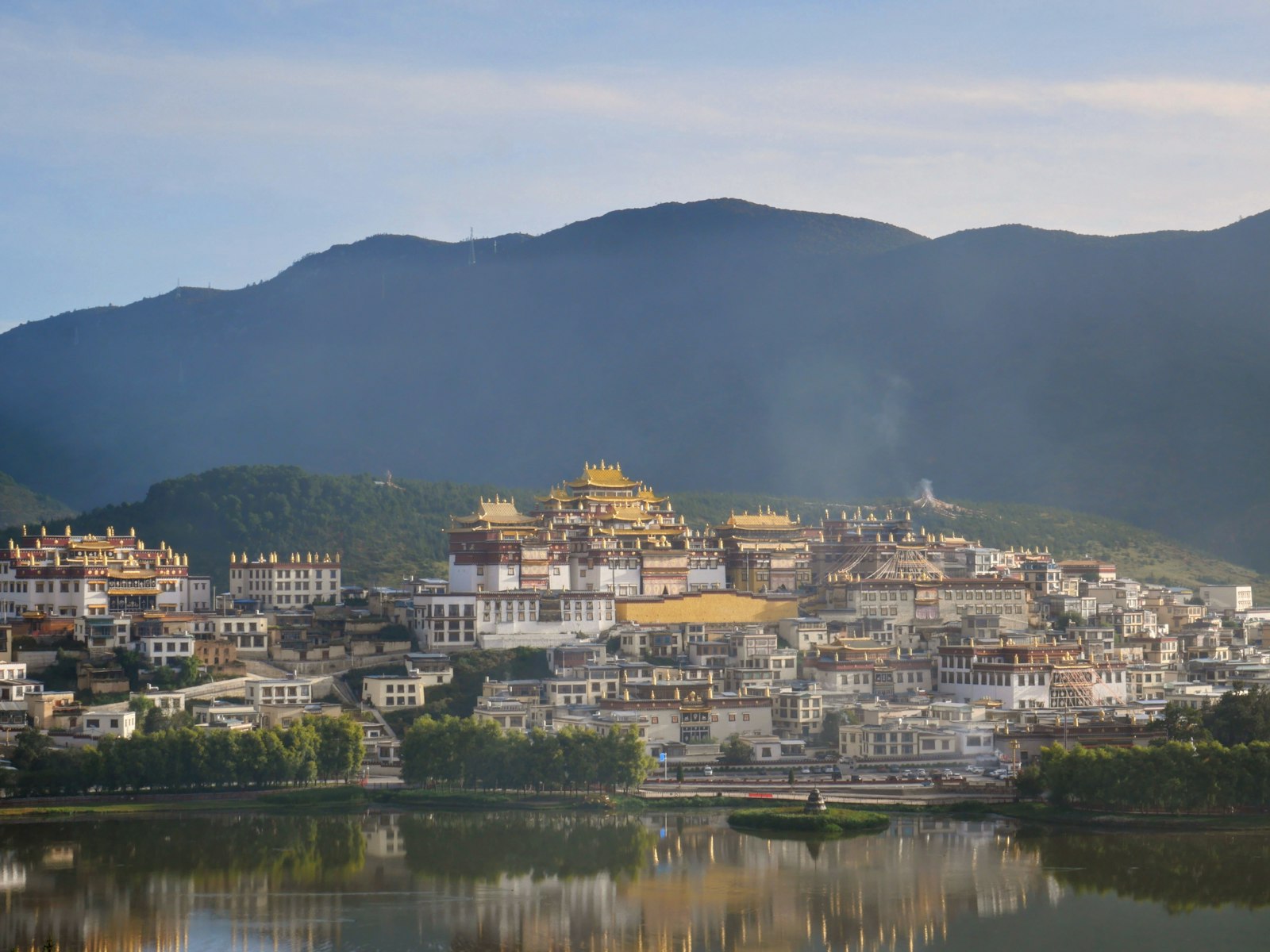
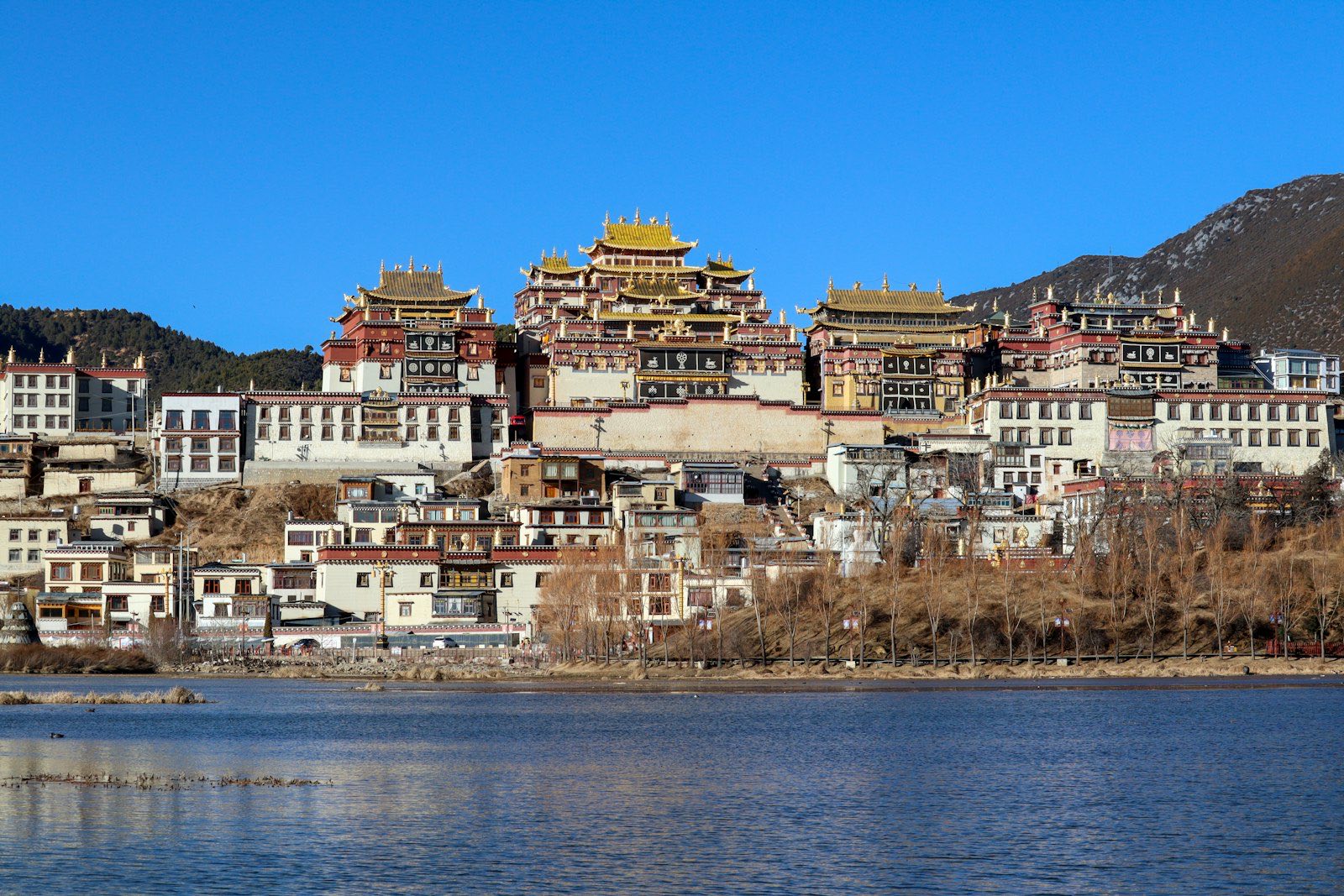
This is the one you came to Shangri-La for, so don't rush it — give it a full morning. Ganden Sumtseling (松赞林寺 / Sōngzànlín), 5 km north of town, is the largest Tibetan Buddhist monastery in Yunnan — a working Gelugpa (Yellow Hat) complex of golden roofs and whitewashed halls stacked up a hillside, so visually close to Lhasa's Potala that locals call it the "Little Potala." Hundreds of monks still live and study here. Get there early and you share the chanting halls with worshippers, not selfie sticks.
Tickets — the bundle vs. the à la carte trick
- The default on every booking platform is the ¥90 package = ¥55 entrance + ¥20 round-trip scenic shuttle + ¥15 guided tour.
- At the gate you can buy the pieces separately — ¥55 entrance + ¥10 one-way shuttle — and skip the guide if you'd rather wander.
- Older figures (¥85, or ¥115 at the ticket window) still float around; ¥55 entrance and the ¥90 bundle are what current online listings show (checked Feb 2026 sources) — confirm on Trip.com before you go.
- Hours: listings vary from about 07:30–08:00 to 18:00–19:00 (one recent guide says 07:40–18:30), with last entry reported around 16:00 — confirm the day's hours on the booking page.
Getting there — pick your trade-off
| Method | Cost | Time | When to pick it |
|---|---|---|---|
| City Bus No. 3 → visitor center, then scenic shuttle up | ¥1–2 bus + ¥10 shuttle | ~30 min | Budget, daytime; the local move. You can't drive to the gate — everyone takes the shuttle up the last stretch. |
| Didi / taxi from Dukezong → visitor center | ~¥15–30 | ~15 min | You want door-to-center speed; still board the shuttle for the final climb. |
| The ¥90 bundle (shuttle pre-included) | bundled | — | You're booking on Trip.com anyway and don't want to fumble for shuttle change on arrival. |
Insider: Go right at opening. The morning light hits the gold roofs, the air's clear before the afternoon cloud builds, and you'll catch monks at study before the tour buses arrive mid-morning. Walk the kora (the clockwise pilgrim circuit) around the base with the local worshippers — it's the part the day-trippers skip and the part that actually feels like Kham. Carry your passport; it's the ID tied to your online ticket and gets glanced at occasionally at entry.
Want Songzanlin done right — picked up at your guesthouse, a guide who can actually explain what the monks are chanting, and how to buy your ticket? Tell us your dates on WhatsApp.
Ask us →🌲 Pudacuo National Park: Tickets, Hours & How to Get There
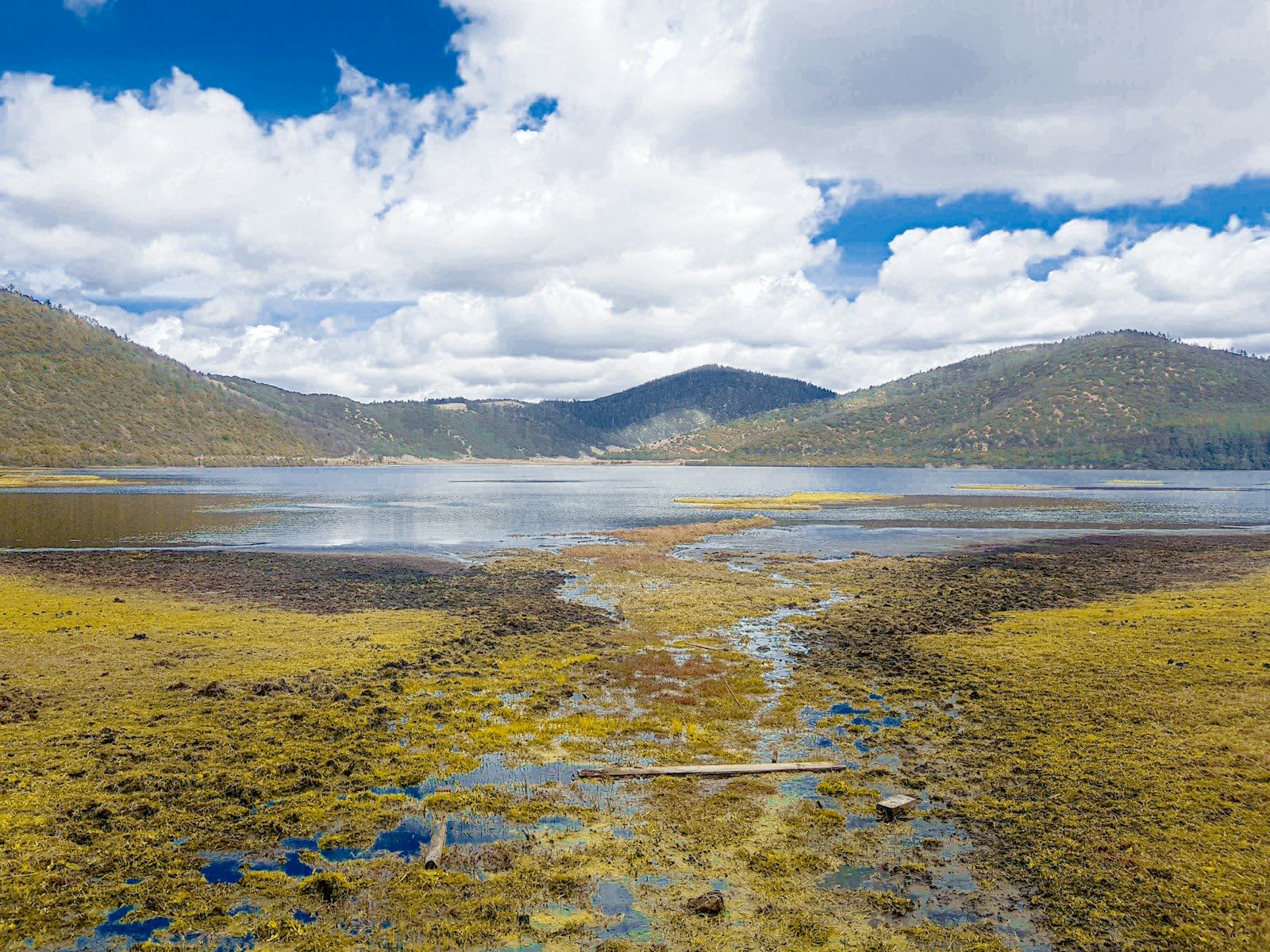
The first park in China to carry the "national park" name (2007), and a full half-day minimum — the park is huge and the eco-bus does the heavy lifting. Pudacuo (普达措, "Potatso") is built around two alpine lakes — Shudu Lake (属都湖) and Bita Lake (碧塔海) — and the Militang pasture, in spruce-and-meadow plateau scenery. Reports differ on how much of Bita Lake and Militang is open: some listings say the core areas have been closed since 2017 for ecological restoration, others describe a Bita boardwalk, and Shudu Lake is the reliably open highlight — check what's open before you go. You won't be walking the whole thing: the sightseeing bus is mandatory and shuttles you between boardwalk sections where you get off and stroll. Note the altitude here climbs to ~3,500–4,100 m — higher than town. Pace yourself, and skip it if day one left you with a thumping head.
Tickets & hours
- ¥138 total = ¥68 entrance + ¥70 sightseeing bus (the bus is included, unlimited rides that day). It is a real-name combined ticket sold on the booking platforms. Optional Shudu Lake boat: listings quote roughly ¥50–65 — check at the pier.
- ¥138 total (¥68 entrance + ¥70 eco-bus) matches Chinese and English listings in 2024–26; since Bita Lake access has been restricted, confirm what's open on Trip.com or the park hotline +86-887-8232533.
- Hours: typically from ~08:00–08:30 (one source lists 07:30 in summer) to ~16:00–16:30, last entry around 16:00 (sources differ by season and by a few minutes — confirm).
Getting there — two clean options
- Local bus from Shangri-La Bus Station (or Dukezong): typical run departs ~09:30, returns ~15:00–15:30, round-trip ~¥30. Tell the driver "Pǔdácuò."
- Didi or a chartered car if you want to set your own clock — roughly 30 min from town.
Insider: Book the ticket online (Trip.com) the night before in peak season (Jul–Oct), or you'll lose 40 minutes in the gate queue while your acclimatization window burns. Start at Shudu Lake first thing — the morning mist coming off the water before the crowds arrive is the shot. Bring a layer: it's a good 5–8°C colder up here than in town, and the wind off the lakes bites.
🛕 Dukezong Old Town & the Giant Prayer Wheel
This is your basecamp, your dinner, your nightlife and your morning stroll all in one — and it's free to wander. Dukezong (独克宗古城) is a Tibetan "Moonlight City" with some 1,300 years of history on the old Tea-Horse Road — rebuilt after a January 2014 fire and fully reopened in January 2016: cobbled lanes, timber Tibetan houses, guesthouses, restaurants and butter-tea cafés all knotted around Moonlight Square (月光广场). The old town itself is free, open-access, 24/7. You'll sleep here, eat here, and end every night here.
The headline sight: the giant prayer wheel on Guishan Hill (龟山公园). Crowning the little park above Moonlight Square is a gilded prayer wheel ~21 m tall and ~60 tons — billed as the world's largest — and so massive it takes several people heaving on the handrails together to set it spinning. Joining strangers to push it is half the fun. Park admission is free.
Check before you go: a free timed reservation may apply
The official "Dukezong Ancient Town" WeChat mini-program has a Guishan Park reservation function, and some Chinese sources report timed reservations with evening crowd limits since summer 2025, while other listings still show the park as open all day with no ticket. We couldn't confirm from a single official notice whether it is enforced on a given night. Treat it as "you may need a free timed reservation; if your foreign WeChat account can't get one, ask at the gate or on-site window." Don't let it stop you showing up. (Confirm on the mini-program or on-site; sources conflict.)
Insider — go twice, at the two magic hours:
- 08:00–10:00: quiet lanes, clear plateau light, locals doing their morning kora around the wheel. Best for photos and for actually turning it without a scrum.
- After 19:00: the wheel is lit gold against the night sky, Moonlight Square fills up, and the bonfire dancing kicks off (see Nightlife below). This is the postcard.
🚡 Shika Snow Mountain: Cable Car, Price & Hours
The easiest 4,400 m you'll ever stand on — but respect the number. Shika (石卡雪山), ~7 km from downtown, hauls you by cable car from alpine meadow up to a summit boardwalk at ~4,449 m — the highest easy-access viewpoint near town, with the snow peaks of the Hengduan range rolling out in every direction. This is serious altitude: go slow up top, and if you're feeling any AMS, skip it — there'll be other days.
- Cable car: about ¥220 (entrance and cable car together, per several listings; online packages can run a little lower). Diqing has run time-limited rail-ticket discounts — a 20% cable-car discount for train-ticket holders ran in winter 2024–25, which is where a ¥176 price comes from — so ask whether one is on, but don't count on it. Two sections — Section 1 to Yala Qingbo pasture (3,764 m), Section 2 to the summit (~4,449 m).
- Hours: roughly 08:00 to 16:00–16:30 for the last ride (listings range from 16:10 to 18:00 and shorten in winter — confirm before you go).
Insider: Do Shika on day 2 or 3, not day 1 — give your body the town's 3,300 m before you tack on another 1,100 m of cable car. Morning is clearest; afternoon cloud swallows the view. Move like you're underwater up top: slow steps, no running for the railing, breathe. The summit boardwalk is short and gentle, which is exactly why it's the plateau's most foreigner-friendly high-altitude hit.
🐎 Napa Lake & Yila Grassland — and the Balagezong canyon detour
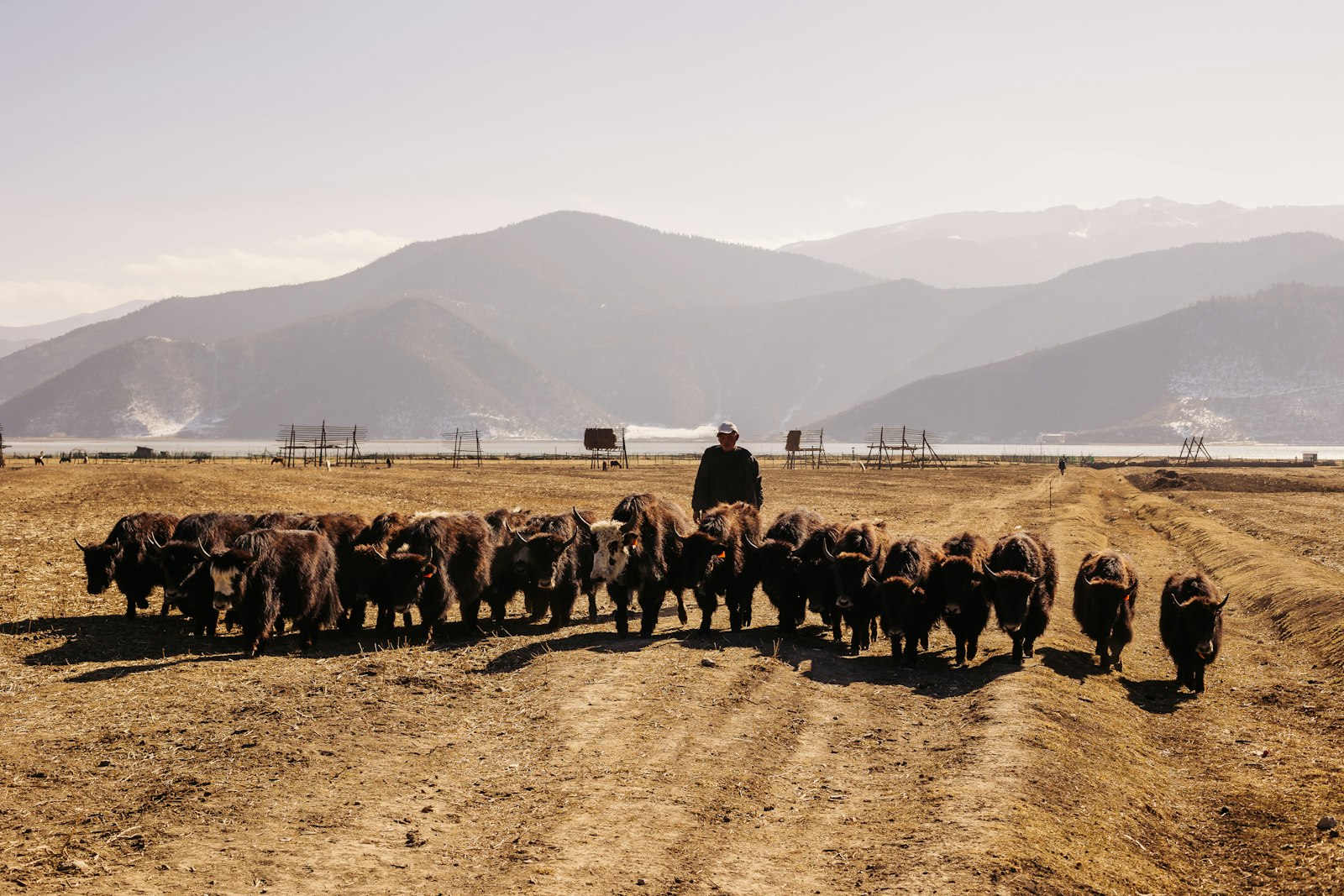
Napa Lake / Napahai (纳帕海) — free to roam, ~8 km from town
A shape-shifting alpine wetland that's a mirror-flat lake in the rainy season (Jun–Sep) and an open grazing meadow the rest of the year — winter brings the rare black-necked cranes. Entry to the open area is free. What you pay for are the fenced horse-ranch photo spots and the horse rides.
- Horse riding is unregulated and prices swing wildly by operator and route — roughly ¥100/hour up to ¥150–280 for a ~30-min premium loop. Agree the exact price and route before you get on the horse — this is the one place tourists get stung. A "hold-a-lamb" photo runs ~¥20.
- Best season: summer & autumn. Half-day at most; it's close enough to pair with a lazy town morning.
Balagezong (巴拉格宗) Grand Canyon — the big-ticket day trip
Roughly 60 km northwest (about 1–2 h each way, depending on the source): a dramatic canyon with a snow peak, the old Bala village, a holy stupa, and a ~1,106 m cliffside glass walkway with a near-700 m drop at Echo Cliff.
- Combo ticket ¥170 (¥110 entrance + ¥60 in-park shuttle). Add-ons: Holy Stupa bus +¥75, Echo Cliff zip-line ¥120, canyon rafting ¥120.
- No self-driving in: tourism buses leave the east gate of Dukezong, dep around 08:00–08:30 (Mar–Oct) / 09:00 (Nov–Feb), round-trip roughly ¥50–60 (sources differ; a bus-plus-ticket bundle is sold at about ¥220). The in-park shuttle is included in admission.
- Insider: This eats a whole day — don't pair it with anything. Take the first 08:00 bus so you're at the glass walkway before the midday tour crush. (Full day-trip detail in Part 4.)
🍲 What to Eat in Shangri-La: Yak, Butter Tea & Tibetan Food — a foreigner's field guide
This is Kham Tibetan food, not Sichuan — think yak, barley and butter, not chili oil. The yaks here graze on wild herbs at ~3,500 m, and you taste it. You'll eat well and cheaply; the trick is knowing what to order and not being shy about the butter tea.
What to order (the regional canon)
- Yak-meat hotpot (牦牛肉火锅) — the signature dish, a herby plateau cousin of Sichuan hotpot built on yak.
- Matsutake / pine-mushroom chicken hotpot (松茸鸡火锅) — only in season, roughly Jun–Sep; if you're here then, this is the splurge.
- Tsampa / barley cakes (糌粑), butter tea (酥油茶), yak yogurt, momos (Tibetan dumplings), deep-fried yak cheese, air-dried yak meat, blood sausage, grilled yak skewers, and sweet milk tea.
Where locals and travelers actually rave (verify menus on 大众点评 / Dianping)
| Spot | Known for | Where |
|---|---|---|
| Zhaxi Dele Tibetan Restaurant (扎西德勒) | Butter tea & yak momos | Dukezong old town |
| Akhustonpa Tibetan Restaurant | Tibetan hotpot and grass-fed yak; deep-fried yak cheese; ingredients sourced from the owner's village (per Tripadvisor reviews) | Dukezong old town |
| Kailash Restaurant | Momos, fried barley | 2F, end of Shambhala Old Street |
| Dukezong Night Market | Yak skewers, blood sausage, sweet tea — cheap street eats | Old town lanes |
Budget reality: Tibetan food here is cheap. Street snacks run ¥10–30; a yak hotpot for two lands roughly in the ¥100–200 range. No reliable per-head averages are published for these specific spots, so treat those as ballpark and confirm on Dianping — don't trust anyone quoting an exact figure they can't source.
How not to embarrass yourself: Butter tea (yak butter + salt + tea) tastes like savory broth, not your idea of "tea" — sip it as you would soup, and a host will keep topping your bowl as a courtesy, so leave it near-full when you're truly done. Tsampa is roasted barley flour you knead with your fingers into a dough ball — watch the table next to you once and you've got it.
You will struggle to spend ¥200 feeding two people a feast up here
A plate of yak skewers off the night market is a few ¥. A pot of butter tea is pocket change. A full yak hotpot for two tops out around ¥100–200, matsutake in season included. The plateau's best food is its simplest — a Tibetan grandmother's momos beat any hotel restaurant, and you'll pay a tenth of what a "Himalayan experience" dinner costs back home. Eat where the Tibetan families are eating.
🔥 Shangri-La Nightlife: The Bonfire Dance at Moonlight Square
Forget clubs — the best night in Shangri-La is free, starts at 19:30, and ends with you holding a stranger's hand. Every single evening on Moonlight Square (月光广场) / Sifang Street, locals light a bonfire and start the Guozhuang (锅庄) circle dance — a Tibetan group dance where everyone links hands and shuffles in a big ring to live stringed instruments. Travelers are not just tolerated, they're waved in. It's genuinely un-commercialized — this is what the town does for itself, and you get to join. Kick-off is around 19:30 and it wraps up around 21:00 (times drift with the season); just show up, watch one round to catch the footwork, then jump in.
After the dance, where to drink
- Pijiangpo (皮匠坡) street — "the most prosperous spot in the old town," lined with bars and teahouses.
- Around Guishan Park / Moonlight Square — mellow Tibetan old-town bars with live folk music, butter tea on one table and beer on the next.
The vibe is folk-music-and-firelight, not EDM — no megaclubs up here, and you wouldn't want them. It's safe to wander the lanes late. Exact drink prices aren't published — a local beer runs a few ¥, cocktails are modest by Western standards; confirm on the spot.
The most authentic night of your China trip will cost you exactly ¥0
No cover, no bottle service, no tourist-trap "cultural show" ticket. Just a real bonfire, real Tibetan music, and real locals who'll pull a clueless foreigner into the circle and laugh with (not at) you when you fumble the steps. The "China nightlife is either sketchy or fake" assumption dies hard on Moonlight Square — this is a 3,300 m mountain town where the whole community dances together every night and you're invited. Show up at 19:30 and stay till the fire dies down.
Want a local to walk you into the Guozhuang dance and the right old-town bars afterward — no tourist traps, just the real Dukezong night? Ask us on WhatsApp.
Ask us →Sources — Part 3 (verified June 2026)
Attractions & tickets: Trip.com travel-guide pages (Songzanlin, Pudacuo, Shika, Balagezong, Napahai) · eastchinatrip.com & topchinatravel.com (Songzanlin, Dukezong nightlife) · travelchinaguide.com (Pudacuo, Shika, Balagezong) · chinaexplorertour.com (Pudacuo pricing) · chinabusguide.com (Pudacuo bus) · gowesternchina.com (prayer wheel) · tripadvisor.com (Guishan Park, Tibetan restaurants).
Food & nightlife: chinahighlights.com & hungryroamer.com (Tibetan food) · yunnanexploration.com (Napahai, nightlife) · eastchinatrip.com (Napahai horse riding). The restaurant table lists spots named in Tripadvisor and chinahighlights write-ups; we could not confirm current addresses or opening status independently, so check Dianping before you walk over.
Plateau prices — horse rides, old-town meals, drinks — are unregulated and shift by season and operator; confirm the load-bearing ones on Trip.com or Dianping before you commit.
Day Trips from Shangri-La
The town itself — the giant golden prayer wheel, the monastery, the Tibetan old town — is maybe a day and a half. The reason you came this far up is what's around it. You're in Kham, and within a couple hours' drive you've got one of the deepest river canyons on earth, a plateau national park, an alpine canyon with a glass walkway, and — if you push north — the most sacred snow mountain in Yunnan glowing pink at dawn. The catch: you're at ~3,300m, and almost every trip below climbs higher. Acclimatize in town first, then go further.
🚌 First, the transport logic (read this once — it's not like the rest of China)
Forget bullet trains and metro lines up here. Shangri-La is the end of the rail line, and getting to the day trips means tourism buses, the odd public bus, or a chartered car / Didi. Three things unlock all of it:
- Most day-trip buses leave from one of two places: the Shangri-La Bus Station (香格里拉客运站) for long-distance runs (Tiger Leaping Gorge, Pudacuo), or a gate of Dukezong Old Town (the east gate for Balagezong) for the dedicated scenic shuttles. Times are fixed and early — miss the morning departure and you've usually missed the day.
- Didi works in Shangri-La. Log in through the WeChat or Alipay mini-program (no separate app registration needed for foreigners), and it takes Visa / Mastercard / JCB as well as WeChat Pay / Alipay. For the further canyons a half-day charter is often saner than juggling bus times — negotiate a round-trip rate with the driver.
- Book the big-ticket sites on Trip.com (English UI, takes foreign cards) the night before in peak season (Jul–Oct). At the gate you scan a QR through WeChat/Alipay. Some free sites want a WeChat reservation that can trip up foreign accounts — the on-site ticket window is your fallback every time.
Carry your physical passport. It's the ID attached to online tickets and gets spot-checked at some gates. (Bring it; confirm at each gate — requirements vary.)
You don't need a Tibet permit to stand in the Tibetan Himalaya
Lhasa makes foreigners buy a Tibet Travel Permit, hire a licensed guide, and join an organized tour. Shangri-La doesn't — not for any of this. It's in Yunnan's Diqing prefecture, not the Tibet Autonomous Region, so you roam every day trip on this page completely independently, same as anywhere else in China. The one hard line: from here you can travel up to the TAR border, but you cannot cross overland into Tibet proper (toward Lhasa) without the full permit. Everything in this guide is on the legal side of that line.
🐯 Tiger Leaping Gorge Day Trip — the one you don't skip
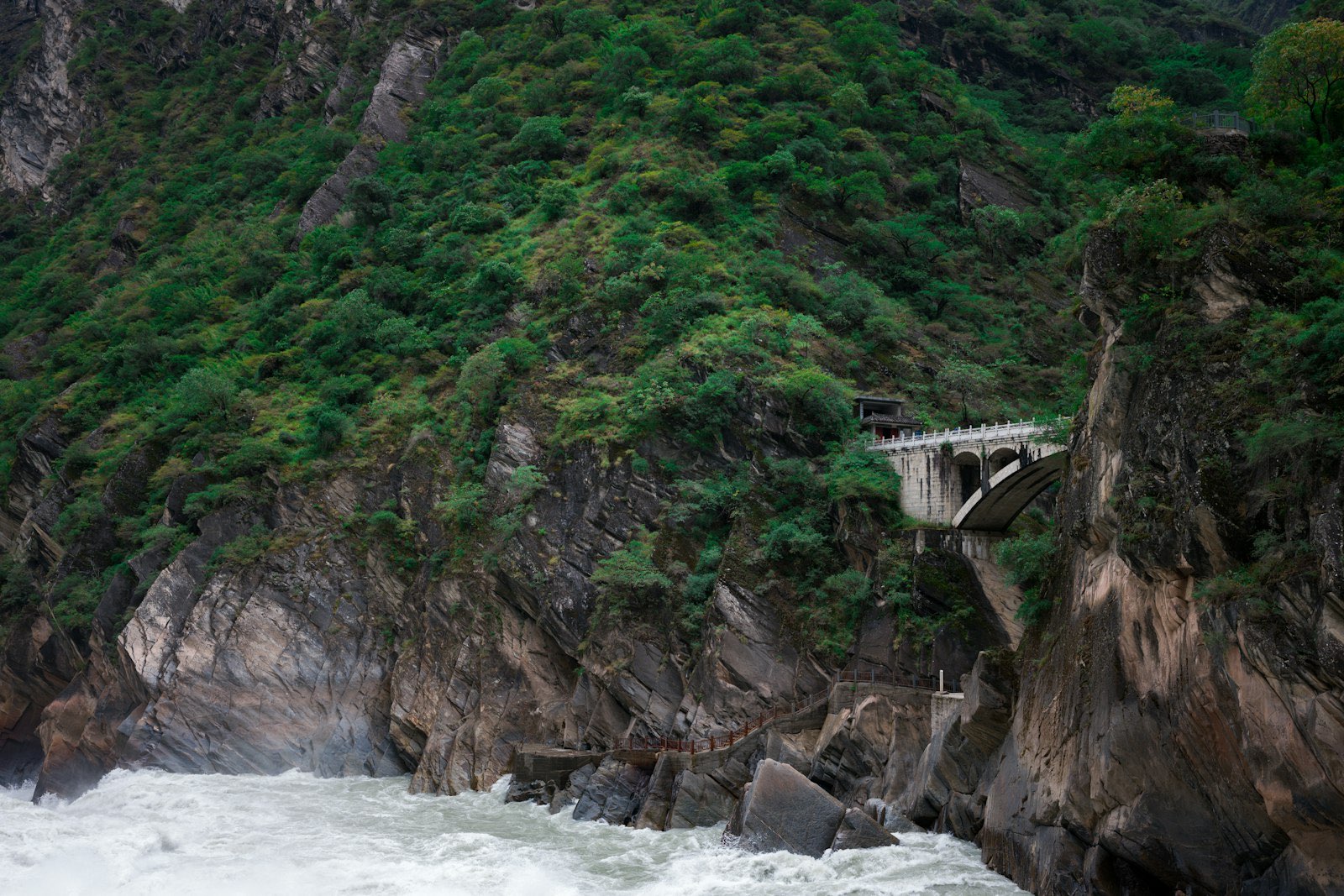
Bottom line: if you do one thing outside town, make it this. Tiger Leaping Gorge (虎跳峡) is one of the deepest river canyons in the world — the upper Yangtze (here called the Jinsha) crammed into a chasm between two snow massifs of roughly 5,400–5,600m (Haba and Jade Dragon), the water exploding white around the boulder a tiger supposedly leapt off to escape a hunter. It straddles the Shangri-La / Lijiang line, which means you can knock it out as a half-day platform visit or walk the legendary two-day high trail — and either way it's the natural bridge between the two towns.
Two completely different trips — pick before you go
| What you get | Time | Catch | |
|---|---|---|---|
| 🚶 Upper Gorge viewing platforms | The famous roaring narrows from above, the midstream rock, the postcard. Drive in, walk down to the water, walk back. | 1–2 hrs at the gorge | The descent/return is steep; an optional escalator/stair package (roughly ¥70–120) at the Upper Gorge spares your knees if you want it. |
| 🥾 The high-trail trek (Qiaotou → Tina's) | A world-class 2-day hike along the cliff high above the river — the "28 Bends," guesthouses with terrace views, the real thing. | 2 days / 1 night | You start at Hutiaoxia (Qiaotou) town, not the platforms — take a bus that stops there. Best months Apr–Jun, Sep–Oct. |
Getting there from Shangri-La
- Bus: direct departures from the Shangri-La Bus Station, first bus around 08:00, then roughly hourly on some listings (others show only a couple of runs), fare about ¥28–44, ~2–3 hours to Qiaotou. (Times and fares vary by source — confirm at the station or on the Diqing bus WeChat account.) For the trek, ride to Qiaotou and start the high trail from there.
- Tickets: the gorge is ticketed, with separate entrances on the Shangri-La and Lijiang sides — prices change, so check at the gate which entrance you're buying. On the middle-gorge local footpaths, the families who built and maintain the ladders may charge a small toll of ~¥10–15 each. Open roughly 08:00–17:30 on some listings, 09:00–18:00 on others. (Entry, escalator and footpath fees vary by section & operator; confirm at the ticket office.)
Insider play: the classic move is to make the gorge your transition day — most trekkers do Shangri-La → gorge → Lijiang (or the reverse), so you're not backtracking. If you're only here for the view and not the hike, the platform visit pairs neatly with the drive south to Lijiang anyway. Take the early bus; the light's better and you beat the tour coaches to the narrows.
🌲 Pudacuo (Potatso) National Park Day Trip — China's first, and the easy one
Bottom line: the most accessible big-nature day from town, and the gentlest on your itinerary (logistically — not altitude-wise). Pudacuo (普达措) was the first park in China to be named a "national park" (2007), and it's a clean, well-run park built around two alpine lakes — Shudu Lake and Bita Lake — and the Militang pasture, stitched together by an eco-bus because the park is genuinely large. Spruce forest, mirror water, grazing yaks, boardwalks. Bita Lake and Militang have had restricted access for ecological restoration, so Shudu Lake is the part to count on — check what's open on the day.
The altitude reality check: the park sits roughly 3,500–4,100m — higher than Shangri-La town. This is exactly the day where the elevation sneaks up on people because the walking feels flat and easy. Do it after you've had a day or two in town to adjust, not on arrival day. Walk slow, ride the eco-bus between the far stops rather than hiking every leg, and you'll be fine.
Getting there & in
- Bus: runs from the Shangri-La Bus Station and Dukezong, e.g. departing ~09:30, returning ~15:00–15:30, round-trip ~¥30. Or a Didi / half-day charter if you want to set your own clock.
- Ticket: ¥138 = ¥68 entrance + ¥70 sightseeing bus (the bus is included and unlimited for the day — essential, the park's too big to walk end-to-end). Optional Shudu Lake boat, roughly ¥50–65 (paid at the pier). (¥138 matches Chinese and English listings in 2024–26; confirm the live price and what's open on Trip.com or the park hotline +86-887-8232533.)
- Hours: typically from ~08:00–08:30 (one source lists 07:30 in summer) to ~16:00–16:30 (last entry ~16:00). (Sources differ by season and by a few minutes; confirm.)
Insider play: book online in peak season (Jul–Oct) to skip the ticket queue, and start at the lake furthest from the gate, riding the eco-bus out and ambling the boardwalks back as the day-trip buses are still arriving. Bring a layer — it's notably colder and windier up here than in town, even in summer.
🏞️ Balagezong Grand Canyon Day Trip — the cliff-walk thrill
Bottom line: the adrenaline pick — a dramatic canyon most foreigners have never heard of. Balagezong (巴拉格宗) is roughly 60 km northwest, about 1–2 hours' drive depending on the source, and it stacks a lot into one valley: a deep gorge, a snow peak, the old Tibetan village of Bala, a holy stupa, and the showstopper — a glass walkway bolted to the cliff at Echo Cliff, roughly 1,106m long with about a 700m vertical drop under your feet.
Getting there (no self-drive — this matters)
- Tourism buses leave from the east gate of Dukezong Old Town, departing around 08:00–08:30 (Mar–Oct) / 09:00 (Nov–Feb), round-trip roughly ¥50–60, 1–2 hrs each way, with return runs in the afternoon (confirm times at the Dukezong information point). The in-park shuttle is included in your admission.
- Combo ticket ¥170 (¥110 entrance + ¥60 in-park shuttle). Add-ons, paid on site: Holy Stupa +¥75, Echo Cliff zip-line ¥120, canyon rafting ¥120. (Confirm current add-on prices at the gate.)
The honest call: it's a full day committed to one canyon, and the glass walkway is either your thing or it isn't (vertigo sufferers, the zip-line and rafting are the better spend). But the drive in is gorgeous and the village + stupa give it real Tibetan texture beyond the thrill stuff. Catch the 08:00 bus — the later winter departure eats your daylight.
🐎 Napa Lake & Yila Grassland — the half-day right on the doorstep
Bottom line: the closest escape, and a different lake depending on when you come. Napa Lake / Napahai (纳帕海) is a seasonal alpine wetland just ~8 km from town — in the rainy season (roughly Jun–Sep) it fills into a full mirror lake; in the dry season (Oct–Apr) it drops to an open grazing meadow, and in winter it hosts black-necked cranes. The Yila grassland wraps around it. Entry to the area is free.
What you actually pay for: the charges are at the fenced horse ranches and photo spots — horse riding and the staged shots. Prices are unregulated and swing wildly by operator and route: roughly ¥100/hour at the low end up to ¥150–280 for a ~30-minute premium loop; a "hold a lamb" photo runs about ¥20. (Prices are unregulated; agree the route and the total before you get on the horse, and confirm locally.)
Insider play: it's a half-day, very easy as an add-on to a lazy town day — Didi out, wander the free grassland, and only deal with a horse operator after you've pinned the exact price and route in writing or on a calculator screen. Best light and fullest lake are summer and autumn.
Stitching Shangri-La into a bigger Yunnan loop — Lijiang, Tiger Leaping Gorge, maybe Meili — and want the buses worked out, the altitude paced and the right Tibetan guesthouses booked? Send us your dates on WhatsApp.
Send dates →⛰️ Go Further: Meili Snow Mountain & Deqin — the overnight that's worth a detour
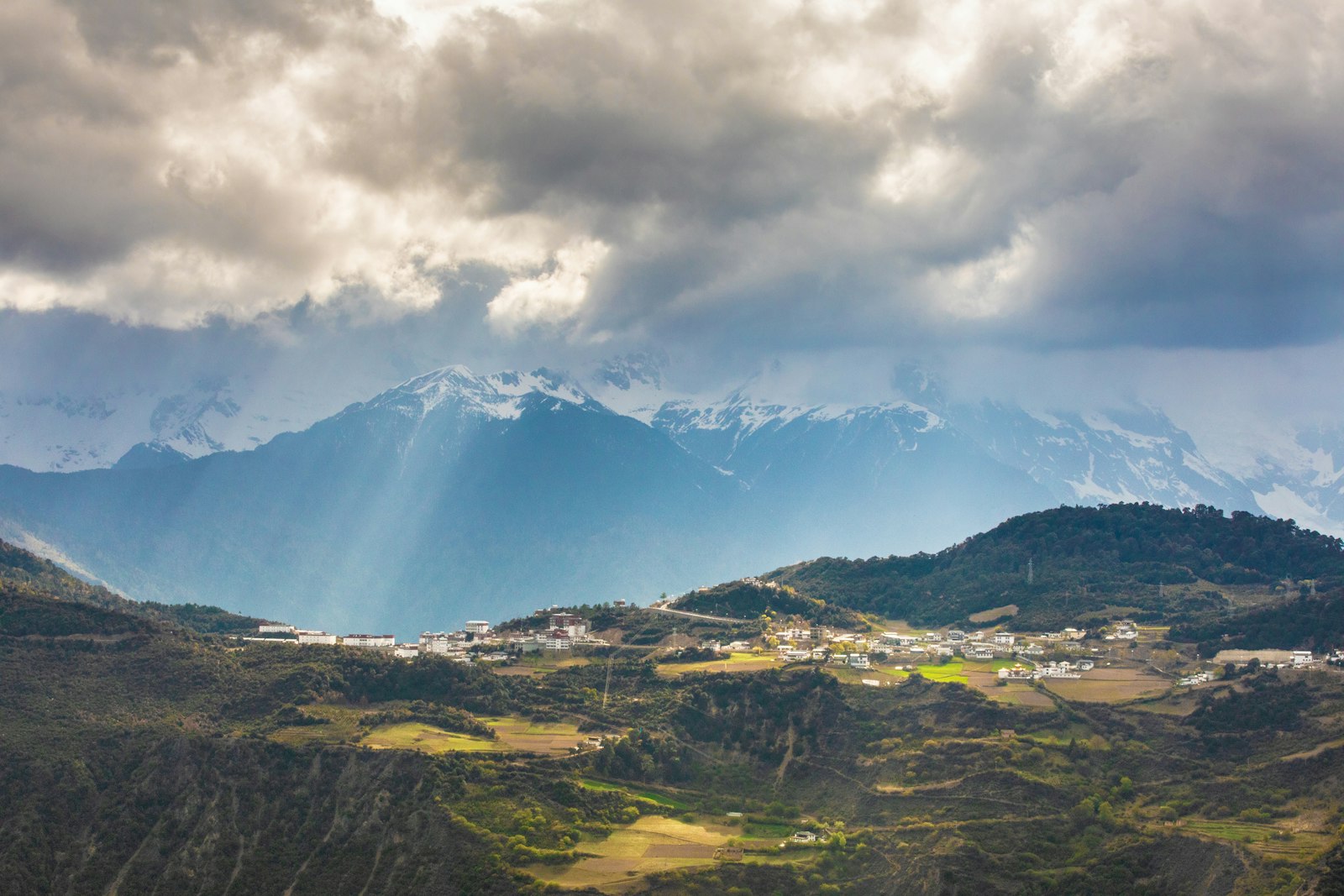
Bottom line: not a day trip — a 1–2 night extension, and the most jaw-dropping thing in the region. Meili Snow Mountain (梅里雪山), crowned by Kawagebo at 6,740m, is the most sacred peak in Yunnan and one of the holiest in all of Tibetan Buddhism — never summited, by local wish. It's ~4 hours' drive northwest (about 180 km on the G214; the public bus takes 5–6 hours) of Shangri-La toward the TAR border (still inside Diqing, still no permit needed), and the trophy is sunrise on Meili from the Feilai Temple viewpoint above Deqin (德钦) — that wall of glaciers catching the first pink light. The hardcore branch off here for the multi-day Yubeng Village (雨崩) trek.
Why it's a separate beast: the drive is long and winding (often broken at Benzilan en route), the viewpoint payoff is at dawn, and you want to be there the night before — so this is an overnight (or two), not something you bus out and back in a day. Build it as the northern cap of your trip, after you've fully acclimatized in town. (Confirm Benzilan→Deqin road conditions and bus schedules before committing — mountain roads here change with weather and season.)
🗓️ Shangri-La Itinerary: 2, 3 & 5 Days — paced for altitude
These plug straight into Part 3 (Songzanlin Monastery, the old town & giant prayer wheel, the nightly bonfire dance, yak hotpot) and the day trips above. The whole plan is built around acclimatizing first — the gentlest stuff up front, the high parks once your body's caught up. Times assume a base in or beside Dukezong Old Town. Tap a day to open the plan.
⏱️ 2 Days — the essential Shangri-La
Day 1 Arrive gently, ease into the altitude
- On arrivalCheck into a Dukezong guesthouse, then do almost nothing strenuous. This is altitude day one; the first 24 hours are the hardest. Hydrate, skip the alcohol, eat light.
- AfternoonA slow, flat wander through Dukezong Old Town's cobbled lanes (free, open). Get your bearings around Moonlight Square.
- Late PMClimb gently up to Guishan Park for the giant golden prayer wheel (~21m, ~60 tons — it takes a few people to turn it) and the rooftop view. (Full details: Part 3.)
- ~19:30The nightly Guozhuang (锅庄) circle dance and bonfire on Moonlight Square — locals and travelers join hands, everyone's welcome, no ticket. The single most authentic evening here.
- DinnerYour first yak hotpot or a butter-tea-and-momos Tibetan spot in the old town. (Where to eat: Part 3.)
Day 2 The monastery & the grassland
- 08:30Bus No. 3 (¥1–2) to the Songzanlin Monastery visitor center, then the scenic shuttle (¥10) up to the "Little Potala." Go at opening before the coaches. (Tickets/route: Part 3.)
- 12:30Back to town for lunch.
- 14:00Half-day at Napa Lake / Yila Grassland (free entry, ~8 km out) — wander the meadow, photograph the mirror lake (summer) or the cranes (winter). Horse riding only if you've pinned the price.
- EveningA teahouse-and-beer crawl along Pijiangpo (皮匠坡) street, the liveliest corner of the old town, then back for the bonfire if you missed it.
⏱️ 3 Days — the sweet spot (add a national park)
Days 1–2 As above
Run the 2-day plan, unrushed — by now you're acclimatized, which is exactly the point before Day 3 climbs higher.
Day 3 Pudacuo National Park
- 09:30Bus from the Shangri-La Bus Station / Dukezong to Pudacuo (round-trip ~¥30), or a half-day charter.
- All dayThe ¥138 park (entrance + unlimited eco-bus): boardwalk Shudu Lake (plus Bita Lake and the Militang pasture if they're open — check first). Remember you're at 3,500–4,100m — slow and steady, ride the bus between far stops. Optional Shudu Lake boat (~¥50–65).
- ~15:00Return bus to town. Easy Tibetan dinner; you've earned the butter tea.
⏱️ 5 Days — the full Kham loop
Days 1–3 The 3-day plan above
Town, monastery, grassland + Pudacuo, fully acclimatized.
Day 4 Balagezong Grand Canyon (or Shika Snow Mountain)
Option A — Balagezong: catch the 08:00 tourism bus from the east gate of Dukezong (round-trip roughly ¥50–60, 1–2 hrs each way). Full day in the canyon — the ¥170 combo, the glass walkway at Echo Cliff, Bala village and the holy stupa.
Option B — Shika Snow Mountain (石卡雪山): ~7 km from town, cable car about ¥220 up to a ~4,449m summit viewpoint — the highest easy-access view near town. Serious altitude — only if you're feeling strong; skip it the moment you feel AMS coming on. (Details: Part 3.)
Day 5 Tiger Leaping Gorge → onward to Lijiang
- ~08:00Bus from the Shangri-La Bus Station toward Tiger Leaping Gorge (~¥28–44, 2–3 hrs; confirm times at the station).
- The gorgeEither the Upper Gorge platforms (1–2 hrs, ticketed — check the price at the gate, optional escalator package) for the roaring narrows, or start the 2-day high trail from Qiaotou if you've got the legs and the days.
- OnwardMost travelers carry straight on to Lijiang from here rather than doubling back — a perfect, downhill-all-the-way finale.
- Or +1 dayPoint north instead to Meili Snow Mountain / Deqin for a dawn at the Feilai Temple viewpoint — the region's single greatest sight, as an overnight.
Want this turned into a real plan — buses pre-checked, altitude paced day by day, an oxygen-room guesthouse in the old town, a Tibetan-speaking guide? Send us your dates on WhatsApp.
Send dates →🛏️ Where to Stay in Shangri-La: Best Areas — with real price bands
No booking links, no commission — just where to sleep and what you'll actually pay. The honest answer for almost everyone is the same: base in or right beside Dukezong Old Town. Here's the breakdown, with a band for a clean double in low/shoulder season — rates climb in the Jul–Oct peak and over holidays, so confirm live on your booking app.
| Area | Best for | Why here | Rough nightly band |
|---|---|---|---|
| 🏮 Dukezong Old Town (独克宗古城) | Almost everyone | Walkable to the giant prayer wheel, Moonlight Square's nightly bonfire, and the best Tibetan restaurants. Atmospheric Tibetan-style guesthouses, many advertising oxygen-enriched rooms — genuinely useful at this altitude. | Average ~¥350–550 (~US$52–82) for a clean double; weekend nights higher |
| 🎒 Old-town budget guesthouses | Backpackers & solos | Same atmospheric lanes, simpler rooms — beds well under the average above, with the same walk-to-everything location. | Budget guesthouse beds well below ¥350; confirm live |
| 🛎️ Higher-end / resort hotels | Comfort-seekers | A handful of larger resort-style hotels (some a little outside the old-town core) for travelers who want full amenities and reliable heating at altitude. | Runs above the old-town average; confirm live on Trip.com |
My honest pick: stay inside or on the edge of Dukezong, and if you're worried about the altitude, book a guesthouse that advertises an oxygen-enriched room — it's a real comfort on night one. You want to be able to walk to the bonfire, the prayer wheel and a yak-hotpot dinner, not commute. (Guesthouse names float on the booking apps — pick on live reviews and your dates rather than a fixed list; no booking links per site policy.)
A Tibetan-style room in a Tea-Horse Road old town runs about US$50–80 a night
A clean double inside Dukezong — the kind with carved wood, a courtyard, and an oxygen-enriched room option for the altitude — averages ~US$52–82 a night (¥350–550), and backpacker beds run well under that. You're sleeping in a Tea-Horse Road town at 3,300m for less than a chain motel back home.
Sources — Part 4 (verified June 2026)
Transport & buses: chinabusguide.com & travelchinaguide.com (day-trip buses from Shangri-La Bus Station / Dukezong gates) · chinaguidelines.com & Trip.com (Didi via WeChat/Alipay, takes Visa/MC/JCB).
Day trips & tickets: chinahighlights.com & novo-monde.com & Trip.com (Tiger Leaping Gorge — first bus ~08:00, ~¥28–44, entry ticketed by side (no official price source — check at the gate), escalator packages ~¥70–120, footpath toll ~¥10–15 reported) · chinaexplorertour.com, travelchinaguide.com & Qunar / Bendibao Kunming (Pudacuo ¥138 = ¥68 + ¥70, hotline +86-887-8232533; 09:30 / 15:30 bus ¥30 round trip) · Trip.com, Qunar & travelchinaguide.com (Balagezong ¥170 combo = ¥110 + ¥60, east-gate bus ~¥50–60; Shika cable car ~¥220) · yunnanexploration.com & eastchinatrip.com (Napahai free entry, horse riding ¥100/hr–¥150–280) · chinahighlights.com & thelandofsnows.com (Meili / Kawagebo 6,740m, Feilai Temple, Yubeng; overnight, still permit-free).
Hotels / price bands: Trip.com, Tripadvisor (Dukezong guesthouses avg ~¥350–550 / ~US$52–82 a clean double; oxygen-enriched rooms common).
Know Before You Go
🧠 Altitude, culture & health — the fine print
Up here, two things matter more than anywhere else in China: the altitude, and the Tibet-permit question (short version: you don't need one — but read why). Both are below.
⛰️ Altitude — what to actually expect at 3,300m (read this one)
Shangri-La's town center sits at roughly ~3,300m (sources range 3,100–3,450m). That's lower than Lhasa (3,656m), but high enough that most visitors feel mild altitude symptoms (AMS) — headache, breathlessness, poor sleep — for the first day or two. Most people adjust within 2–3 days; the first 24 hours are the hardest.
How to make it easy on yourself:
- Arrive overland, climbing gradually: the classic ladder is Kunming → Dali → Lijiang → Shangri-La, a day or two each. Taking the train up from Lijiang (2,400m) to Shangri-La (3,300m) is itself good acclimatization — dramatically gentler than flying straight in.
- Day one: slow your pace, hydrate hard, skip alcohol and big heavy meals, rest. Don't climb Shika Snow Mountain or hit Pudacuo on arrival day.
- Diamox (acetazolamide) is an option some travelers use — per the CDC Yellow Book, typical prophylaxis is 125mg every 12 hours starting the day before you ascend. It's a prescription drug: talk to your doctor before you fly, don't self-medicate.
- Book a guesthouse with an oxygen-enriched room (common in Dukezong) if you're anxious about it — see Part 4.
If symptoms get severe (confusion, breathlessness at rest, persistent vomiting) the only real fix is descending — but for the ordinary mild stuff, a slow first day sorts most people out.
🏔️ Do you need a Tibet permit? (no — and here's the exact line)
No. Shangri-La is in Yunnan's Diqing Tibetan Autonomous Prefecture, not the Tibet Autonomous Region (TAR). The Tibetan areas of Yunnan, Sichuan, Qinghai and Gansu require no Tibet Travel Permit, no mandatory guide, and no organized group tour — you travel free and independent (FIT), exactly like anywhere else in China. Only the TAR (Lhasa side) needs the permit-plus-guide-plus-tour package.
The one hard line to respect: from Yunnan you may travel up to the border of the TAR without a permit — but you cannot cross overland into Tibet proper (heading toward Lhasa) without the full Tibet permit. Within Diqing itself — Shangri-La, Pudacuo, Meili Snow Mountain, Deqin — you're completely free.
🤝 Culture shocks & etiquette (Tibetan-region edition)
- No tipping. Anywhere. Restaurants, taxis, guesthouses — none of it. It causes confusion, not gratitude.
- At the monastery & prayer wheels, go clockwise. Walk around stupas, prayer wheels and temples clockwise, spin prayer wheels clockwise, and at Songzanlin keep your voice down — it's a working monastery, not a museum. Ask before photographing monks; some inner halls forbid photos.
- The bonfire dance is genuinely open to you. The nightly Guozhuang circle dance on Moonlight Square isn't a paid show — locals genuinely welcome travelers joining hands. Just follow the step, don't barge the center.
- Carry your own tissues + hand sanitizer. Public restrooms (often squat toilets) frequently have neither paper nor soap.
- You order by scanning a QR code at most restaurants — point your camera at the table sticker, tap, pay, food arrives. Menus are usually Chinese — Google Translate's camera (on your eSIM) reads them instantly.
- Strangers may ask for a photo with you — genuine friendly curiosity this far off the standard trail, not a scam. Smile, say yes or politely wave it off.
- Tap water is NOT drinkable — and at altitude you'll want to drink more than usual. Boil it (every room has a kettle) or buy bottled.
💰 What's dirt-cheap vs. surprisingly pricey
Absurdly cheap (spend freely):
- City buses — Bus No. 3 to Songzanlin is ¥1–2; the shuttle up from the visitor center is ¥10.
- Street food — yak skewers, blood sausage and sweet tea at the Dukezong night market run a few yuan each.
- A Tibetan meal — budget yak hotpot and momos are cheap; a yak hotpot for two lands roughly in the ¥100–200 range, street snacks ¥10–30. (No reliable per-head figures are published for specific spots — confirm on 大众点评 / Dianping.)
- Old-town beer & teahouses — a local beer is a few yuan; cocktails and craft are modest by Western standards.
- The free stuff — Dukezong Old Town, Guishan Park, the bonfire dance, and Napa Lake's grassland all cost nothing to enter.
Surprisingly pricey (budget for it):
- The big scenic tickets — Pudacuo ¥138, Shika cable car ¥220, Balagezong ¥170: the nature here is ticketed and it adds up fast. Budget for the parks specifically.
- Horse riding at Napa Lake — unregulated and negotiable; easy to overpay if you don't fix the price first (¥100/hr up to ¥150–280 for a short premium loop).
- Western food & specialty coffee — scarce up here and priced accordingly when you find it.
🚑 Emergencies & health (save these before you fly)
- Altitude first — see the dedicated box above. Slow day one, hydrate, no alcohol, descend if symptoms turn severe.
- Don't drink the tap water — bottled or boiled only; your room kettle is your friend, and you'll want extra fluids at this elevation.
- Sun is fierce at 3,300m — thin air, strong UV. Sunscreen, hat, sunglasses, even on cool days.
- Pack real layers — nights are cold year-round and winter runs roughly −9°C to 12°C; even summer evenings bite. The day trips (Pudacuo, the snow mountains) are colder and windier than town.
- Pharmacies (药店) stock the basics cheaply, no prescription for simple stuff — point or show a translated note. Travel insurance that covers high-altitude travel is strongly worth having up here.
❓ FAQ — straight answers to what everyone actually asks
Do I need a Tibet permit to visit Shangri-La?
No. Shangri-La is in Yunnan's Diqing prefecture, not the Tibet Autonomous Region, so foreigners need no Tibet Travel Permit, no guide, and no group tour — you travel completely independently, like anywhere else in China. The only limit: you can go up to the Tibet border from here, but you can't cross overland into Tibet proper (toward Lhasa) without the full permit. Everything in and around Shangri-La (Pudacuo, Meili, Deqin) is permit-free. (Full breakdown: Part 1.)
Do I need a visa to visit Shangri-La in 2026?
It depends on your passport — and there's a catch here US travelers must know. 50 countries (most of Europe, Australia, NZ, Japan, Korea, UK & Canada since 17 Feb 2026) get 30 days visa-free and can fly/train straight in (that list currently runs to 31 Dec 2026 for most countries). But the 240-hour visa-free transit scheme (57 countries incl. the US) does not cover Diqing — its Yunnan stay zone is only 9 cities/prefectures (Kunming, Lijiang, Dali, etc.), and Shangri-La isn't one of them. So US citizens (and others relying on 240h transit) should get a proper tourist (L) visa rather than try to reach Shangri-La on transit. Always confirm with your nearest Chinese embassy/consulate and en.nia.gov.cn. (Full breakdown: Part 1.)
How bad is the altitude in Shangri-La — will I get sick?
Most people feel mild symptoms for a day or two, then adjust. The town is at ~3,300m — lower than Lhasa, but enough for a headache, breathlessness and bad sleep at first; most adjust within 2–3 days. The trick is to arrive overland, climbing gradually (Kunming → Dali → Lijiang → Shangri-La) — the train up from Lijiang is itself good acclimatization, far gentler than flying straight in. Day one: go slow, hydrate, skip alcohol. Book a guesthouse with an oxygen-enriched room if you're anxious. (Full altitude box: Part 5.)
What's the best way to get to Shangri-La?
Take the train up from Lijiang — it's the smart move. The Lijiang–Shangri-La railway (opened Nov 2023) runs Fuxing C- and D-series trains the 139 km in roughly 1h10–1h50 depending on the service (most are about 1.5 hours, vs roughly 2.5–4 hours by bus), second-class fare ~¥55–80, and you can rail through from Kunming / Dali with changes. It costs about the same as the bus, is clearly faster, and climbing 2,400m → 3,300m by train helps you acclimatize. There's also Diqing Shangri-La Airport (DIG) if you fly. The bus from Lijiang (~2.5–4 hrs, roughly ¥60–72, several departures a day) is the backup. Book trains on 12306 / Trip.com. (Full getting-in: Part 1.)
How do I get from Shangri-La airport (DIG) into town?
It's close — roughly 5–6.5 km (sources differ), 15–20 min to the old town. A taxi is the usual choice: about ¥30 on Chinese-language sources, more on some English guides, so insist on the meter or agree the fare first. Some guides mention an airport bus (roughly ¥10–15) to the town bus station with a city bus or taxi onward, but others say there's no shuttle to the old town — ask at arrivals rather than counting on it. (Short flat-ish hop.)
When's the best time of year to visit Shangri-La?
Late spring (May–Jun) and autumn (Sep–Oct) — clear skies, comfortable temps, wildflowers in spring and golden grasslands plus fall colour in autumn. Autumn is the prime window. Summer is the rainy season (Jun–Sep, >70% of annual rain) — Napa Lake fills to a mirror but trails get muddy. Winter (Nov–Mar) is long, cold (roughly −9°C to 12°C) and snowy, with black-necked cranes at Napa Lake. (Full season guide: Part 1.)
How many days do I need in Shangri-La?
3 days is the sweet spot: a gentle altitude day plus the old town, Songzanlin Monastery, Napa Lake, and one national park (Pudacuo). 2 days covers the town essentials if you're tight. 5 days lets you add Balagezong or Shika Snow Mountain and exit south via Tiger Leaping Gorge to Lijiang — and a 6th–7th day opens up an overnight to Meili Snow Mountain / Deqin.
Is Songzanlin Monastery worth it, and how do I get there?
Yes — it's the headline sight, Yunnan's largest Tibetan Buddhist monastery, a working Gelugpa community nicknamed the "Little Potala," ~5 km north of town. Take Bus No. 3 (¥1–2) to the visitor center, then the scenic shuttle (¥10) up — you can't drive to the gate. The standard online bundle is ¥90 (¥55 entrance + ¥20 round-trip shuttle + ¥15 guided tour); on site you can buy the ¥55 entrance + ¥10 single shuttle separately. Opening hours are listed anywhere from about 07:30–08:00 until 18:00–19:00 depending on the source, with last entry reported around 16:00 — confirm on the booking page. Go at opening, before the tour coaches. (Older figures of ¥85 or ¥115 still float around; ¥90 is the current bundle on the sources we checked, confirm on Trip.com. Full details: Part 3.)
How much are Pudacuo, Shika and Balagezong, and how do I reach them?
These are the big scenic tickets and they add up. Pudacuo National Park is ¥138 total (¥68 entrance + ¥70 eco-bus, bus already included) — a local bus runs from the Shangri-La Bus Station / Dukezong, departing around 09:30 and returning ~15:00–15:30, round-trip about ¥30. Shika Snow Mountain's cable car is about ¥220 (online packages run a little lower, and Diqing has run time-limited rail-ticket discounts, so ask whether one is on), about 7 km from town. Balagezong Grand Canyon is a ¥170 combo ticket (¥110 entrance + ¥60 in-park shuttle); there's no self-driving in, so you take the tourism bus from the east gate of Dukezong, departing around 08:00–08:30 (Mar–Oct) / 09:00 (Nov–Feb), round-trip roughly ¥50–60. Prices and hours move with the season — confirm the load-bearing ones on Trip.com before you commit. (Details: Parts 3 and 4.)
Is there anything to do in Shangri-La at night?
Yes, and it's the best free thing in town. Every night around 19:30, locals and travelers gather on Moonlight Square (月光广场) for the Guozhuang (锅庄) circle dance and bonfire — you join hands and dance, everyone's welcome, zero cost. Beyond that, mellow bars and teahouses cluster along Pijiangpo (皮匠坡) street and around Guishan Park — live folk music, butter tea and beer rather than clubs. It's safe to wander the old town late. (Full nightlife: Part 3.)
What should I eat in Shangri-La?
Tibetan food, built around the yak. The signature is yak-meat hotpot (the yaks graze on wild herbs at ~3,500m); in season (~Jun–Sep) try matsutake / 松茸 mushroom-and-chicken hotpot. Also: tsampa (barley cakes / 糌粑), butter tea (酥油茶), yak yogurt, momos (Tibetan dumplings), deep-fried yak cheese, dried yak meat, and grilled yak skewers from the Dukezong night market. Spots locals and visitors rave about include Zhaxi Dele, Akhustonpa and Kailash in the old town — check the menu and current prices on 大众点评 / Dianping, since reliable per-head figures aren't published. (Full food guide: Part 3.)
Is Tiger Leaping Gorge a day trip or an overnight from Shangri-La?
Both — your call. As a day trip, bus from the Shangri-La Bus Station (first departure around 08:00, roughly hourly, about ¥28–44, 2–3 hrs — confirm at the station) to the Upper Gorge platforms for a 1–2 hour look at the roaring narrows (ticketed — prices change, check at the gate; optional escalator/stair packages of roughly ¥70–120). As the 2-day high-trail trek, start from Qiaotou town and walk the cliff route (best Apr–Jun, Sep–Oct). Either way, most people use it as the bridge south to Lijiang rather than backtracking. (Full details: Part 4.)
📣 Plan it with us
Want the whole thing handled?
The train up from Lijiang, an oxygen-room guesthouse in the old town, your days paced so the altitude never bites, the fiddly day-trip buses pre-checked, and a guide who knows the monastery and which yak-hotpot joint. That's exactly what we do — real humans, real local knowledge. Tell us your dates and what you're into, and we'll take it from there.
Plan your Shangri-La trip on WhatsApp
All sources (verified June 2026)
Tibet permit / Meili: thelandofsnows.com (Tibet Travel Regulations, updated Jan 2026). Altitude: en.wikipedia.org (Shangri-La, Yunnan elevation), visit-yunnan.com (altitude-sickness guide), chinadiscovery.com (weather), CDC Yellow Book (Diamox). Visa/transit: en.nia.gov.cn (National Immigration Administration), chinadiscovery.com & visityunnanchina.com & windhorsetour.com (240h Yunnan transit zone — Diqing excluded). Getting in / trains / buses: en.wikipedia.org (Lijiang–Shangri-La railway), travelchinaguide.com & chinatrainbooking.com (trains), chinabusguide.com & chinadiscovery.com (buses), agatetravel.com & kupi.com (DIG airport). Attractions & tickets: Trip.com guide pages (Songzanlin, Napa Hai, Balagezong, Shika, Tiger Leaping Gorge), eastchinatrip.com & topchinatravel.com (Songzanlin), chinaexplorertour.com & travelchinaguide.com (Pudacuo/Potatso), chinahighlights.com & novo-monde.com (Tiger Leaping Gorge), yunnanexploration.com & eastchinatrip.com (Napahai). Food & nightlife: chinahighlights.com, hungryroamer.com, Tripadvisor, yunnanexploration.com, topchinatravel.com. Getting around / Didi: chinaguidelines.com, Trip.com. Hotels / price bands: Trip.com, Tripadvisor. eSIM & payment: unusualnomad.com, traveltomtom.net, cybernews.com, realchinatrip.com, ltl-school.com, Alipay/WeChat help centers.
⚠️ Live-confirm before travel: seasonal opening hours, exact ticket bundles (Songzanlin ¥90, Pudacuo ¥138, Balagezong add-ons), unregulated horse-riding and restaurant prices, and nightly hotel rates all shift. Tickets/hours → the attraction's official channel or Trip.com; visa & the 240h-transit-zone gap for Shangri-La → en.nia.gov.cn + your nearest Chinese consulate; the Tibet-permit border line → trusted Tibet-travel sources. The railway runs Fuxing C- and D-series EMUs (140 km/h design speed), opened Nov 2023 — a regional bullet train, not 350 km/h HSR. Also live-confirm: whether Guishan Park (the giant prayer wheel) needs a timed reservation on your night, and whether Bita Lake / Militang are open at Pudacuo.