🧭 TL;DR — the honest bottom line
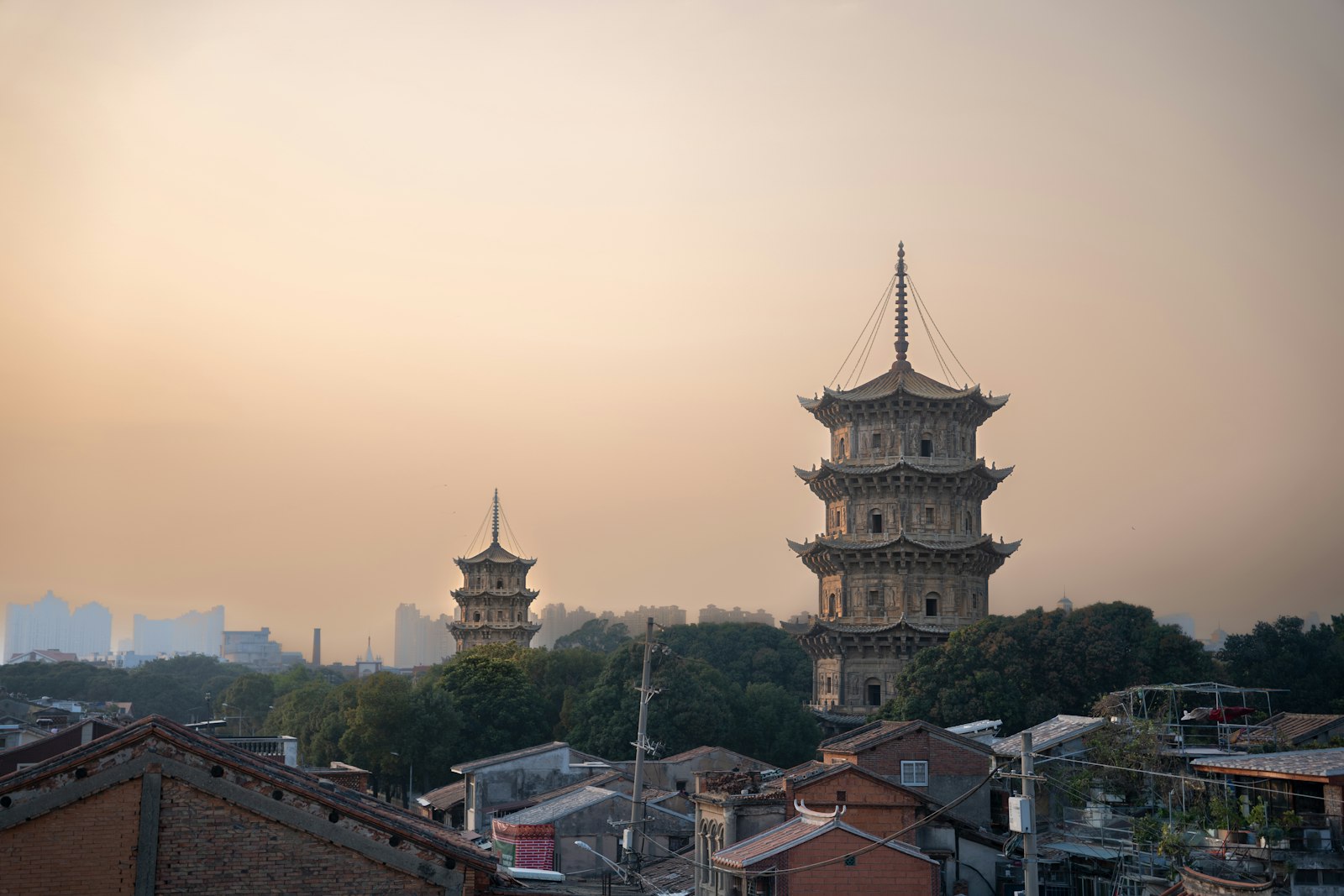
Here's what nobody tells you before you come: Quanzhou is the China that almost no foreigner has reached — and the easiest one to walk into. A thousand years ago this was the greatest port on earth, the "Emporium of the World," and it left behind a compact old town stuffed with 22 UNESCO World Heritage sites — a 686 AD temple with China's tallest stone pagodas, a 1009 mosque standing next door to an incense-thick folk temple, oyster-shell villages where women wear crowns of fresh flowers. Almost all of it is free. Give it 2–3 days (5 with day trips) and you'll wonder why it isn't on every list.
Two things to do before you fly: set up an eSIM (so Google and WhatsApp work) and bind a card to Alipay and WeChat Pay (you'll need WeChat for museum reservations). Sort those two and the rest of this guide is just the fun part.
No time to read all of this? Tell us your dates and we'll build your Quanzhou (and wider Fujian) plan for you — on WhatsApp, real humans. (One message, no obligation.)
Message us →📌 This guide is long because it's complete — use the menu to jump. Everything below is named, priced, and verified June 2026; we flag anything that drifts so you can double-check the load-bearing details.
Before You Go
🛂 Do You Need a Visa for Quanzhou? — Visa-Free Entry Explained
Let's get the good news out of the way first, because it's better than most people expect: you can very likely walk into Quanzhou without arranging a visa at all — and thanks to how this particular province's transit zone is drawn, the door you walk through covers the whole of Fujian. Which route you use comes down to one thing: what passport you hold.
| Route | Who it's for | Max stay | The catch |
|---|---|---|---|
| 30-day visa-free | 50 countries — most of Europe, the UK & Canada (added 17 Feb 2026), plus Japan, S. Korea, Australia, NZ and more | 30 days | Ordinary passport. Tourism/business/visiting friends — no onward-ticket rule, no zone limit, full mainland access. The simpler track if you qualify. The current policy runs through 31 Dec 2026 for most countries. |
| 240-hour (10-day) transit | 57 countries incl. the USA, Mexico, Ukraine, UAE, Qatar (many of them, such as the UK & Canada, can also use the simpler 30-day track) | 10 days | You must hold an onward ticket to a third country/region and enter via an approved port. Quanzhou's airport (JJN) is on the approved list. |
✓ verified Oct 2026 The 30-day country list changes often — reconfirm your nationality on the official site before booking.
🇺🇸 Americans — read this carefully (🇬🇧🇨🇦 UK & Canada: you're now 30-day visa-free)
Brits & Canadians: good news — since 17 Feb 2026 you're now on the 30-day visa-free list, so you can skip the transit dance and just fly in for up to 30 days (no onward ticket needed). US citizens are not on the 30-day visa-free list, but they are on the 240-hour visa-free transit list. To use it, you must meet the policy's conditions, including entry through an approved port and a confirmed onward ticket to a third country or region different from your departure country or region. The magic word is transit. China has to believe you're passing through on your way somewhere else, so before you land you need an onward flight booked out of mainland China to a third country or region. Easy third stops within a short hop: Seoul, Singapore, Bangkok, Tokyo. The official notices say only "a third country or region", and none of the official pages we read names Hong Kong or Macao either way; reading them as qualifying is an inference, not an official rule. If your plan depends on it, confirm with your airline or the National Immigration Administration's 24-hour hotline, +86 12367 (English available), before you book. Land at Quanzhou → spend up to 10 days → fly onward.
Quanzhou Jinjiang International Airport (JJN) is an officially approved 240-hour transit port — it was added in the December 2024 expansion alongside Fuzhou and Wuyishan.
Your 10-day visa-free transit lets you roam ALL of Fujian — not just Quanzhou
Older transit rules kept you inside the city you entered — Fujian's zone used to be just Xiamen. Since December 2024, the permitted zone at Fujian's ports is the entire province — the official wording expands the area in Fujian, Hubei and Shaanxi "to the entire respective provinces." Translation: enter at Quanzhou and you can legally road-trip the whole region for 10 days — Quanzhou + Xiamen + Gulangyu Island + Fuzhou + Wuyishan, all on one transit entry. Plan a loop, not a single stop.
More on this: China Essentials — visa-free & 240-hour transit →Two things that quietly sink people
① The 240 hours don't start when you land — they start at 00:00 the next day, so your arrival day is a freebie; still, plan your exit flight with a buffer. ② "Third country/region" means different from where you flew in from — a US→Quanzhou→back-to-US ticket does not qualify; you must exit to somewhere else first.
Policy and country lists shift — always reconfirm your nationality on the official en.nia.gov.cn before you book the flight.
🗓️ Best Time to Visit Quanzhou
Aim for October or November — that's the sweet spot, full stop. Crisp, clear, comfortable, and you've dodged both the wet heat and the worst of typhoon season.
| Season | Months | The real story |
|---|---|---|
| 🍂 Autumn (best) | Oct–Nov | Crisp and clear, the most comfortable window of the year. Caveat: a late typhoon can still reach the coast in October — check the forecast. |
| ❄️ Winter (great) | Dec–Feb | Mild, easy, walkable. Spring Festival (late Jan–mid Feb) brings Minnan folk performances + lantern festivals — the most atmospheric time, but crowded. |
| 🌧️ Spring | Mar–Apr | Still good, though it turns damp as the May–June plum-rain months approach. |
| ☀️ Summer (avoid) | Jun–Sep | Hot, very humid, and typhoon season (peak July–September, worst in August). The one upside: seafood harvest peaks now — a real tradeoff if you came to eat. |
The short version: Oct–Nov is the bullseye, the mild winter is a close second, and you should treat June–September as the "only if you must" months — the humidity is genuinely sapping and typhoons can scramble your plans. Always confirm a 10-day forecast before you pack.
✈️ How to Get to Quanzhou: Airport & High-Speed Rail
Quanzhou sits on the Fujian coast about 100 km northeast of Xiamen, and it's well plugged into both the air and the new bullet-train network.
The airport — Quanzhou Jinjiang International (JJN)
About 12 km south of downtown, in neighbouring Jinjiang. It's mostly domestic flights plus some regional international routes — and, crucially, it's an approved 240-hour visa-free transit port (see Visa above). Getting from JJN into town is cheap and easy — full breakdown in Part 2.
Onward by high-speed rail — Quanzhou is on the new Fuzhou–Xiamen line
The 350 km/h line opened on 28 September 2023, and trains run frequently, which makes Quanzhou an effortless base for the whole Fujian loop the transit rule already allows.
| To | Time (high-speed) | Fare | Why bother |
|---|---|---|---|
| Xiamen | 30–60 min | from ¥26 (2nd class) | The obvious day trip — Gulangyu Island, beaches, café culture. Trains run all day, from early morning to about 23:45 on Trip.com's listing. The cheapest fares are ¥26-ish; faster G trains to central Xiamen cost more, so check the fare for the exact train. |
| Fuzhou | ~40–60 min | roughly ¥60–85 (2nd class) | Fujian's capital — Three Lanes & Seven Alleys old quarter. Range taken from Trip.com and Ctrip listings; check 12306 for your train. |
Book trains on the official 12306 website (it has an English version) or at the station counter with your passport — more on the mechanics of that in Part 4.
Beyond Fujian: direct high-speed trains also run from Quanzhou to Shenzhen and Guangzhou (both roughly 3½ hours on the fastest trains) and to Hangzhou (about 4 hours) — an easy onward leg if you're on the 30-day visa-free track. On the 240-hour transit rule, check the permitted-area table on en.nia.gov.cn before you leave Fujian.
💴 Quanzhou Travel Budget: What It Costs (per day, excluding flights)
Quanzhou is a smaller, less touristy city than Xiamen — which means it's even kinder to your wallet, especially given that nearly every temple here is free to enter. Rough daily budgets:
| Style | Per day (ex-flights) | What that buys you |
|---|---|---|
| 🎒 Backpacker | ~¥150–300 | Hostel dorm or basic room (~¥80–200/night), street snacks + noodle shops, city buses at ¥1–7 |
| 💺 Mid-range (most people) | ~¥400–750 | Comfortable mid-range chain hotel (~¥300–550/night), sit-down restaurants, Didi when you're lazy, the odd paid sight |
| ✨ Comfort | ~¥900+ | 4–5★ hotel (~¥600–1,000+/night), private guide, a long seafood feast, taxis door-to-door |
The single biggest budget lever here is gloriously simple: the headline sights cost almost nothing. Quanzhou's whole pitch is 22 UNESCO World Heritage sites, and most of the temples — Kaiyuan, Guandi, Tianhou, the Confucius Temple — are free. So your real spend is just food, your bed, and getting around. Eat at the old-town noodle stalls and move by bus/Didi and you'll live very well firmly in the mid-range. (Room rates move daily — treat as "from ~¥X, confirm live on your booking date.")
Sources — Part 1 (verified June 2026)
Visa & 240h transit: en.nia.gov.cn (National Immigration Administration — 30-day unilateral list + 240-hour transit policy; 10-day expansion effective 17 Dec 2024, Indonesia added as 55th country 12 Jun 2025; Kyrgyzstan and Vietnam added 20 Aug 2026, bringing the list to 57; the 240 hours count from 00:00 the day after entry); english.www.gov.cn/news/202412/17 (official expansion announcement + Fujian whole-province zone wording: "The areas in Fujian Province, Hubei Province, and Shaanxi Province are expanded to the entire respective provinces"). JJN confirmed on the 240-hour port list. US not on the 30-day list → uses 240h transit; UK & Canada added to the 30-day list 17 Feb 2026 (valid through 31 Dec 2026, english.www.gov.cn/news/202602/15). fujian.gov.cn (18 Dec 2024): Fujian's stay area widened from Xiamen to the whole province, six Fujian ports including JJN. Re-checked against these pages on 29 Sep 2026.
Best season: chinadiscovery.com/fujian/quanzhou/quanzhou-weather.html (best window Oct–next Jun for less rain); typhoon season runs roughly July–October and peaks in August–September, with plum rain in May–June (Fujian tropical-cyclone climatology studies; re-checked Sep 2026).
Airport & high-speed rail: travelchinaguide.com / Wikipedia (JJN ~12 km from downtown, south of the old town; one English Fujian-government page says "north", which conflicts with the map); Trip.com and Ctrip train listings checked Sep 2026 (Quanzhou↔Xiamen 18–25 min to Xiamen North and ~50 min to Xiamen station on the fastest trains, 2nd class from about ¥26; Quanzhou↔Fuzhou 38–60 min, roughly ¥60–85; direct trains to Shenzhen 3h23m, Guangzhou 3h37m, Hangzhou 3h57m at the fastest); Fuzhou–Xiamen high-speed line opened 28 Sep 2023.
Budget / where to stay: thechinajourney.com + chinadiscovery.com/fujian/quanzhou/where-to-stay.html (hostel ~¥80–200; mid-range chain ~¥300–550; 4–5★ ~¥600–1,000+/night — confirm live).
Arrival & Essentials
The three things that turn China from "intimidating" into "effortless." Do the first two before you fly — fifteen minutes at home saves you a stressful first hour at the airport. And one honest heads-up for Quanzhou specifically: this is a smaller, less internationalised city than Xiamen, so expect limited English — which makes the two setup steps below matter even more.
📱 Internet & VPN in China: Get an eSIM before you fly
Let's be blunt about the thing everyone whispers about: mainland China blocks Google, Instagram, WhatsApp, Gmail, and most Western apps. Your normal SIM will roam onto a Chinese network and hit that exact same wall.
The clean, legal, no-drama fix: an international travel eSIM that routes your data through a server outside the mainland — so Google Maps, WhatsApp, Instagram, all of it just works, with no separate VPN to fiddle with. You install it as a second line; your home number stays put for calls and texts.
| eSIM | Best for | VPN? | The honest take |
|---|---|---|---|
| Nomad | Multi-city + the Fujian rail loop | No | The most stable when you're moving — survives tunnels, train Wi-Fi gaps, the Quanzhou→Xiamen→Fuzhou hop your visa already allows. Top pick if Quanzhou is one stop on a bigger trip. |
| Airalo | One or two cities, budget | No | The most popular, cheapest, dead-simple. Plenty for a Quanzhou-and-Xiamen trip. |
| Holafly | Heavy data users | No | Unlimited-data plans + 24/7 support. Great if you stream or hotspot a lot — just check the fair-use cap. |
| Saily | Privacy-minded | No | By the NordVPN team, strong privacy. Solid for fixed-data plans, less ideal for movement-heavy routes. |
How it actually goes: buy online → you get a QR code by email → scan it to install (takes 2 min) → leave it off until you land → flip it on as the plane taxis in, and you're online before you reach baggage claim. Only needs an email — no Chinese ID, no registration. Buy it at home on your own Wi-Fi; do not count on installing it after you land, because the activation pages can themselves sit behind the wall.
One phone really does replace everything
Wallet, train tickets, bus card, translator, museum reservations, dinner orders — in Quanzhou they all collapse into a single phone the moment you're set up. Most people pay by phone these days, though cash is still legal tender. Here it goes a step further: the city's state museums are booked through a WeChat official account or mini-program, and your city-bus fare is just a QR code in Alipay — so the phone isn't a convenience, it's the key to the city. Get your eSIM + Alipay + WeChat sorted before you fly and you operate like a Quanzhou native by day two.
More on this: China Essentials — paying with Alipay & WeChat →💳 How to Pay in China: Alipay & WeChat for Foreigners
Most people in Quanzhou pay by phone, right down to the lady selling you a plate of sea-worm jelly, but cash is still legal tender: since 1 February 2026, staffed businesses must accept it. Keep some small notes as a backup (is cash accepted in China?). Don't count on foreign cards at small shops; bigger hotels, malls and major sights are more likely to take them. The great news for 2026: Alipay and WeChat Pay both take a foreign Visa/Mastercard directly, no Chinese bank account needed. Do this at home before you fly — identity verification runs smoother on your home connection, and you want it working the second you land.
Set up Alipay (your main wallet)
- Download Alipay from your app store and register with your home mobile number (you'll get an SMS code).
- Open "Cards" → "Add Bank Card" and enter a real Visa or Mastercard. ⚠️ Use a normal physical credit/debit card — prepaid and virtual/online-only cards are frequently rejected. This is the #1 reason setup fails.
- Complete passport verification (photo of passport + a quick selfie). Approval is usually minutes.
- Add a backup: download WeChat Pay and bind a second physical card the same way. In Quanzhou this is more than a nice-to-have — the Maritime Museum gates entry behind a real-name WeChat reservation (more on that in Part 3), so having WeChat live on your phone saves you headaches on the ground.
The limits & fees you need to know ✓ verified Jun 2026
| Figure | |
|---|---|
| Payments under ¥200 | Fee-free (0%) |
| Payments over ¥200 | ~3% service fee |
Alipay and WeChat Pay set spending limits for foreign cards — see Essentials. Check your current limit in the app.
The practical read: the under-¥200 fee-free rule covers basically everything you'll buy in Quanzhou — noodle soup, bus fares, coffee, temple incense, a flower headdress, a beer on West Street. The ~3% only bites on bigger hits like a hotel night or a whole seafood dinner. Still, carry some cash and a second physical card as a fallback — rare, but cards do occasionally get declined and you don't want to be stuck.
🚕 Getting Around Quanzhou: Buses, Didi & Airport Transfer
First, the thing nobody tells you up front so you don't waste an afternoon looking for a station: Quanzhou has no operating metro. A Metro Line 1 has been planned for years but has not opened, and the city's first rail line — the R1 intercity line to Xiamen and Zhangzhou — was only moving into full construction in mid-2026, so you'll get around on buses, taxis, and Didi. The silver lining is that the old town is genuinely compact and walkable — West Street ↔ Kaiyuan Temple ↔ Tumen Street ↔ the Confucius Temple ↔ Tianhou Temple are all an easy stroll apart.
From the airport (JJN) into town
| Option | Route | Time | Cost | When to pick it |
|---|---|---|---|---|
| City bus K603 | Airport → downtown | ~40–50 min | ¥1–4 | Cheapest. Runs 06:40–21:30 from the airport, every 8–10 min. |
| City bus K901 | Airport ↔ Railway Station (on to Shishi) | varies | ¥1–7.5 | If you're connecting straight to/from a train — it does not run through the old town. From the station 06:30–19:10, every 15–30 min. |
| Taxi | Airport → downtown | ~30 min | ¥30–60 | Default for most arrivals (¥40–50 to rail station). Rank is outside the Domestic Terminal. |
| Didi | Airport → your hotel | ~30 min | similar to taxi | Late arrival, heavy bags, or door-to-door. Pay via Alipay/WeChat-linked foreign card; confirm fare in-app. |
Riding the city buses: fares run ¥1–7. Don't fumble for coins — open Alipay or WeChat → set up the "Transport" / 乘车码 QR once → scan the same code at the reader on every bus.
Using Didi (set it up before you fly — it takes ~10 min): Didi is China's Uber and it works fine for foreigners. It has an English interface, takes a foreign Visa/Mastercard linked through Alipay or WeChat Pay (the "bridge method"), and you register with your home phone number — no Chinese SIM or bank needed. There's even a WeChat mini-program version so you don't have to install a separate app.
In a less-English-friendly city like Quanzhou, Didi plus an offline translation app is the combo that makes the whole place click — you skip the "how do I tell the driver where I'm going" problem entirely, because the destination is already pinned in the app. Taxis are widely available too, but for a foreigner Didi is usually the smoother ride.
"Wait — is it safe to walk around Quanzhou at night?"
Yes — and not in a hand-wavy way. You are 2×+ more likely to be robbed in San Francisco or Chicago than in a major Chinese city; with dense CCTV, opportunistic street crime barely exists. Quanzhou is a laid-back temple town, and the West Street (西街) strip stays lively and well-lit late — a perfectly normal place to wander after dinner. The one honest local caveat: some old-town side alleys are dimly lit, so stick to the main West Street drag after dark and you're golden. Solo evening strolls and a late Didi back to the hotel are completely routine.
Setting up Alipay, an eSIM, and a Fujian loop sounds like a lot? Tell us your dates and we'll sort the whole Quanzhou plan for you — on WhatsApp, real humans.
Message us →✅ Quick recap — the 4 things to do before you fly to Quanzhou
- Check your visa route at en.nia.gov.cn — 30-day visa-free if you qualify, otherwise the 240-hour transit (book an onward ticket to a third country/region; JJN is an approved port). Remember: your transit zone is all of Fujian.
- Buy an eSIM (Nomad / Airalo / Holafly / Saily) and install it at home — but leave it off until you land.
- Bind a physical Visa/Mastercard to Alipay and WeChat Pay (you'll need WeChat for museum reservations).
- Time it for Oct–Nov if you can, and pack for humidity + a small typhoon-season hedge if you're coming July–October.
Sources — Part 2 (verified June 2026)
eSIM: unusualnomad.com, traveltomtom.net, cybernews.com (China eSIM tests 2026 — all route offshore so no extra VPN needed; Nomad rated most stable for multi-city + rail, Airalo cheapest for single-city).
Alipay limits & fees: realchinatrip.com, trip.com, ltl-school.com (<¥200 fee-free · ~3% above — the fee rule is reported by travel sites, not confirmed on an official page; prepaid/virtual cards often rejected — confirm limits in-app). Re-checked Sep 2026.
Airport & city transport: travelchinaguide.com/cityguides/fujian/quanzhou/airport.htm (K603 ¥1–4/06:40–21:30; K901 ¥1–7.5; taxi ¥30–60) + travelchinaguide.com/cityguides/fujian/quanzhou/metro (no operating metro; page updated Aug 2025) + Sina Finance / Quanzhou government news, May–Jul 2026 (the R1 Xiamen–Zhangzhou–Quanzhou intercity line, "Quanzhou's first rail transit project", moving into full construction from mid-2026; no opening date) + chinadiscovery.com/fujian/quanzhou.html (three rail stations; JJN ~12 km from the city center; no metro) + babagoeschina.com (bus QR fares ¥1–7). K901 route: travelchinaguide.com and Bendibao (Quanzhou Railway Station ↔ Shishi via the airport).
Didi: chinaguidelines.com/en/posts/didi-taxi (English interface, foreign cards via Alipay/WeChat bridge, WeChat mini-program option, register with home number).
Things to Do in Quanzhou
A thousand-year-old temple with twin stone pagodas that shrugged off an earthquake, a mosque from 1009 standing steps from an incense-thick folk temple, a fishing village where women wear crowns of fresh jasmine, and a Song-dynasty sea bridge you can still walk end to end. Everything below is named, ticketed, timed, and verified June 2026 — walk in and do it, no second tab needed.
📌 Quanzhou's whole pitch in one line: it holds 22 UNESCO World Heritage sites (inscribed 25 July 2021 as "Quanzhou: Emporium of the World in Song-Yuan China" — China's 56th listing), and the "ticket" to almost all of them is free. This is a temple-and-history city, not a theme park. You won't tick all 22 like a checklist — you'll naturally hit six or eight of them just wandering the old town. Prices and hours shift on Chinese holidays; we flag the few numbers that wobbled across sources so you can give them a 30-second confirm on the spot.
🏯 Kaiyuan Temple: Tickets, Hours & the Twin Stone Pagodas — Quanzhou's 1,300-year-old anchor
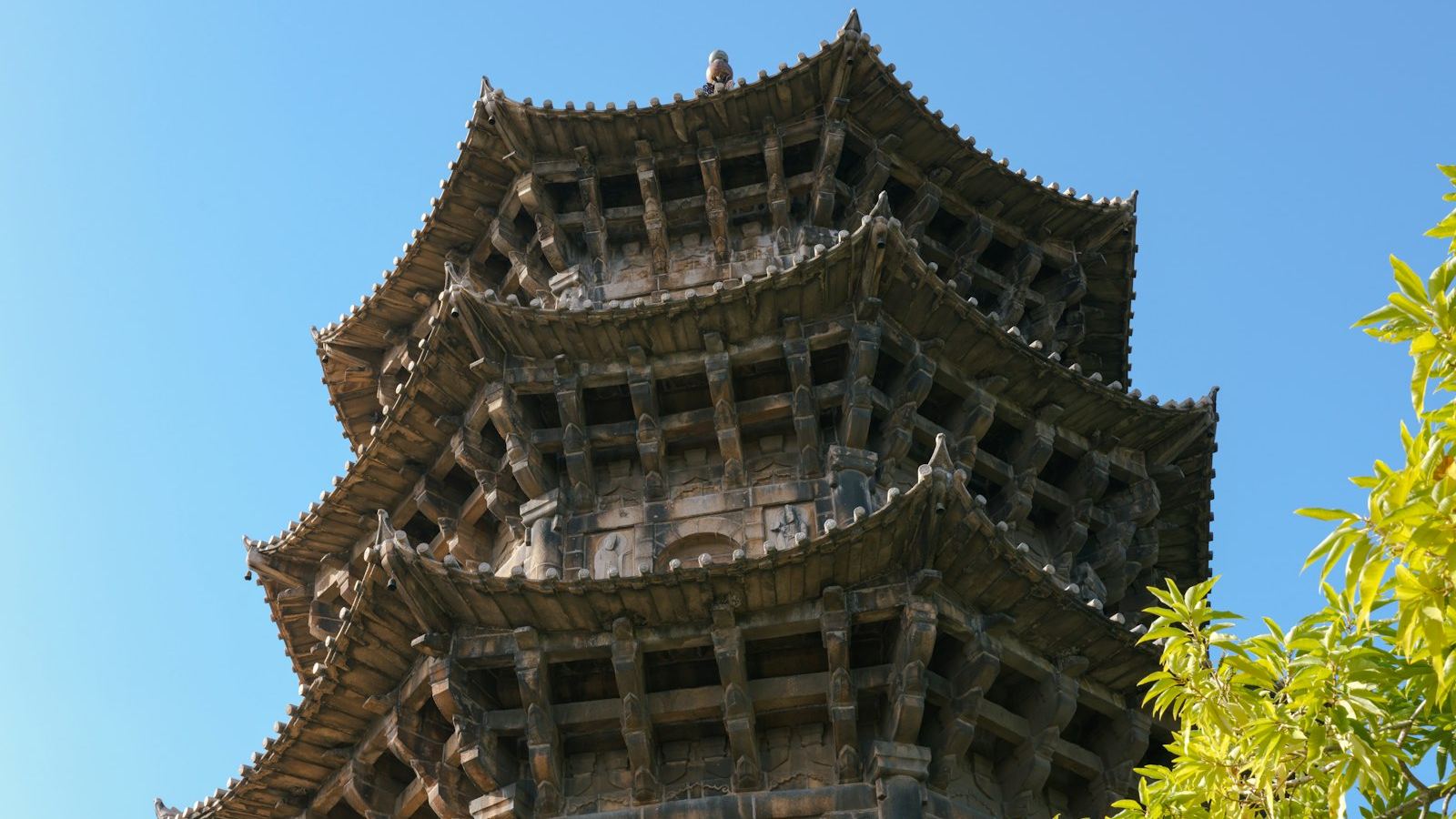
This is the one sight you do not skip — and it's free. Kaiyuan Temple (开元寺) was founded in 686 AD, making it 1,300-plus years old, and it's the largest Buddhist temple in Fujian. But the reason it stops you in your tracks is the pair of stone pagodas flanking the main hall: Zhenguo (镇国, the East pagoda) and Renshou (仁寿, the West pagoda) — the tallest pair of stone pagodas in China, each topping 40 metres, both carved to mimic timber so precisely you have to remind yourself they're solid granite. They rode out a roughly magnitude-8 earthquake in 1604 without falling. Stand between them at the right hour and the whole Maritime Silk Road story suddenly feels real.
- Ticket: FREE. No reservation needed for general entry — just walk in.
- Hours: roughly 06:30–17:40 (last entry around 17:00; a 2024 city-government Q&A gives 06:30–18:00, so leave a buffer).
- Address: No. 176 West Street (西街), Licheng District. Phone +86-595-22383285.
- Time to budget: 1.5–2 hours.
- Also on the grounds: the Quanzhou Bay Ancient Ship Exhibition Hall, where the excavated Song-dynasty ship sits (details in the Maritime Museum section below).
Getting there: You'll almost certainly be staying in or near the old town, and Kaiyuan sits on West Street (西街) — for most travellers it's a flat 10–15 minute walk from a Bell Tower / West Street hotel. From Quanzhou Railway Station, take a Didi or taxi (~20–30 min), or a city bus — local listings show routes 2 and 601 (and others) stopping near the temple, so check your map app. Tell the driver "Kāiyuán Sì" or show the characters 开元寺.
In China, the great temples don't charge admission — and you don't have to 'believe' to walk in
Coming from cathedrals and abbeys that gate you at the door for €10–20, Quanzhou flips the script: Kaiyuan, Guandi, Tianhou, the Confucius Temple — all free. These are living places of worship, not museums, and nobody checks your faith at the gate. You'll see locals lighting incense beside backpackers taking photos, and that's completely normal. The unwritten etiquette is simple: dress so your shoulders and knees are covered, don't point your feet at an altar or a deity, step over the raised wooden door-sills rather than on them, and ask before photographing someone mid-prayer. That's the whole rulebook.
⚠️ Can you climb the pagodas? Read before you queue
Short version: assume you'll admire them from the ground, because that is how visitors see them. The pagoda interiors are not open as part of general entry, and Quanzhou local guides state that the interiors are closed to visitors. A few English-language sites mention a separate WeChat official-account booking, one day in advance, with a tiny daily quota — we could not confirm that any such climb exists, so don't build your visit around going up. Ask at the temple on the day if it matters to you — but the pagodas are genuinely most impressive from below anyway, framed against the temple roofs.
Want Quanzhou's UNESCO old town done right in a day — the temple loop in the correct order, a guide who knows the Silk Road story, train from Xiamen sorted? Tell us your dates on WhatsApp.
Ask us →🕌 The Tumen Street Trio: Qingjing Mosque, Guandi Temple & a 1009 AD Time Capsule — three sights, one block
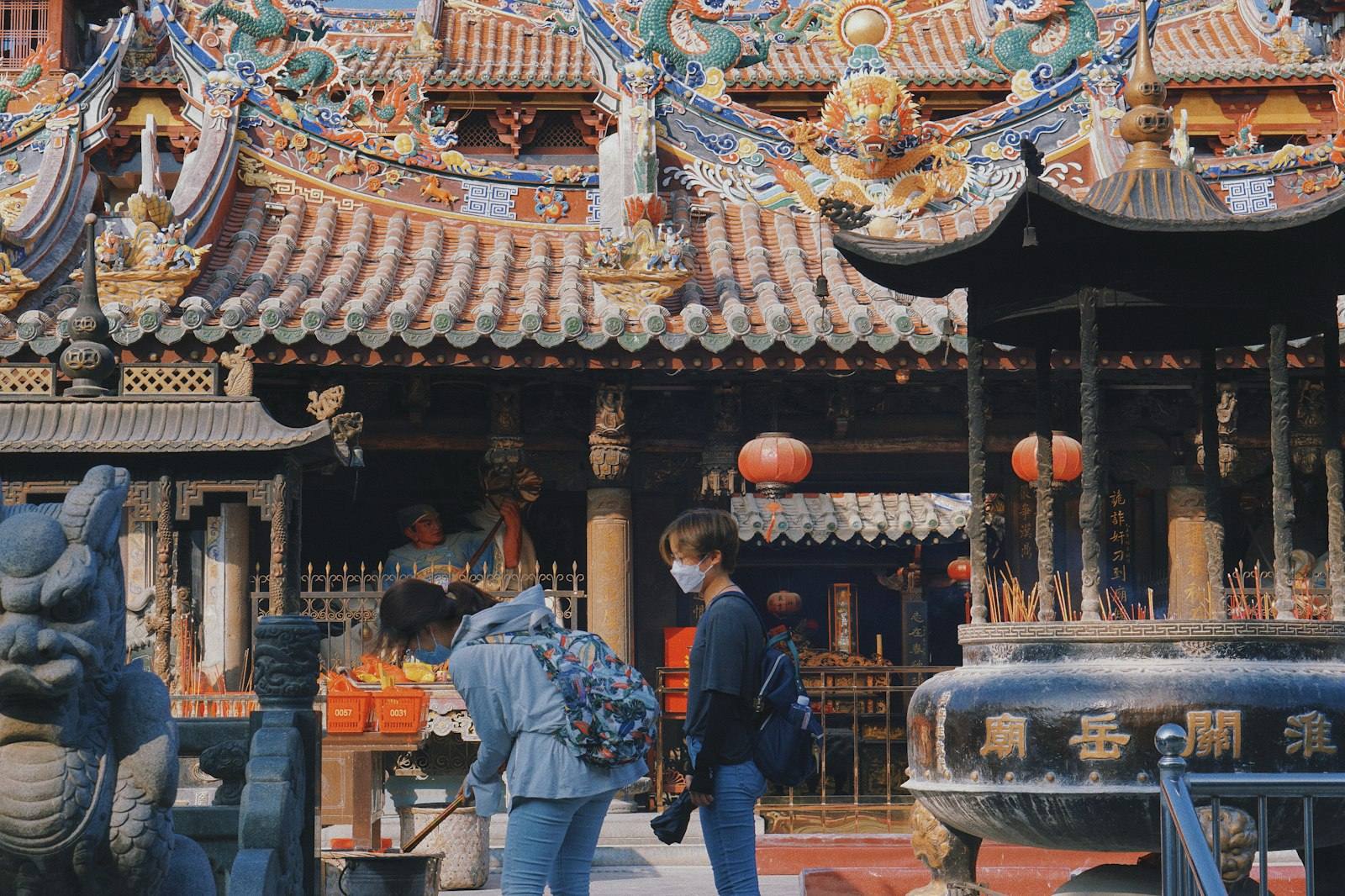
Here's the most efficient — and most quietly mind-bending — block in the city. On Tumen Street (涂门街), a 1,000-year-old mosque stands literally next door to one of Quanzhou's most incense-heavy Chinese folk temples. A muezzin's prayer hall and a Taoist god of war, side by side, both still in use, both a five-minute walk from the Confucius Temple. This single stretch tells you everything about why medieval Quanzhou was called a port "where the merchants of the whole world met." Do all three together; it's one easy hour.
Qingjing Mosque (清净寺) — one of the oldest mosques in China, built 1009 AD
Built in 1009 AD in the Northern Song, in austere Arab-style cut stone — a survivor from the days when Persian and Arab traders ran the docks here. It's one of China's oldest mosques and a UNESCO component site.
- Ticket: Sources disagree — most list ≈¥3, a few say free. Either way it's pocket change; carry a few yuan and confirm at the gate.
- Hours (seasonal): roughly Nov 1–Apr 30: 09:00–17:15; May 1–Oct 31: 09:00–17:45 (some sources say 08:00–17:30 — confirm locally).
- Where: Tumen Street (涂门街), Licheng District — right beside Guandi Temple.
Guandi / Guanyue Temple (关帝庙 / 关岳庙) — free, and the most atmospheric local worship in town
The folk-worship heart of Quanzhou: dense clouds of incense, gold-lacquered halls, and a constant stream of locals praying for luck and protection. You can pick up three free incense sticks at the entrance and join in.
- Ticket: FREE, no reservation.
- Hours: roughly 06:00–18:00.
- Address: Tumen Street (涂门街) — less than 100 metres from the mosque.
- Insider: Come early (6–9am) or after 4pm for the good light and breathing room. Avoid the lunar 1st and 15th of the month — the place is mobbed with worshippers and you'll barely move.
Quanzhou Confucius Temple (府文庙 / Fu Wenmiao) — free
Tang-founded, then layered up over the Song, Yuan, Ming and Qing dynasties. The Dacheng Hall, with its red walls and golden-tiled roof, is the photo everyone takes. Central, a short walk from West Street.
- Ticket: FREE. Hours 09:00–17:00.
⛩️ Tianhou Temple — one of the oldest and highest-ranking surviving Mazu temples, for the sea goddess worshipped across the Chinese world
Bottom line: this is one of the great headquarters of a goddess followed by hundreds of millions. Tianhou Temple (天后宫) was first built in 1196 AD under the Southern Song, and local heritage listings bill it as one of the oldest and highest-ranking surviving Mazu temples (by building standard; the Meizhou ancestral temple's foundation, in 987, is older) — a key shrine in the spread of Mazu (妈祖) worship along China's coast, including Taiwan, and across the whole overseas Chinese diaspora (her ancestral temple is on Meizhou Island, in Putian, further up the Fujian coast). For a port city that sent ships to the edge of the known world, the sea goddess wasn't decoration; she was insurance. It's a UNESCO component site and, like the others, free.
- Ticket: FREE. Hours roughly 07:00–17:00 (last entry 16:30). No reservation needed.
- Where: Tianhou Road, near the old South Gate (Deji Gate) at the south end of the old town, Licheng District — an easy walk or short Didi from the Tumen Street trio.
- Why bother if you've seen the others: It's the architectural showpiece of Quanzhou's temples — the most elaborately carved roofline in the city — and the historical weight is real. If you only have time for two temples, make them Kaiyuan and this one.
🌉 Luoyang Bridge: How to Visit China's Oldest Sea-Crossing Stone Bridge — a 1,000-year-old feat of engineering
This is the one that's worth the trip out of the old town. Luoyang Bridge (洛阳桥) is one of China's four great ancient bridges, built across a tidal estuary between 1053 and 1059 AD — over 730 metres of massive stone slabs laid down nearly a thousand years ago. The genuinely jaw-dropping part is how they did it: the builders pioneered a "raft-foundation" technique (a long underwater base of piled stone) and then farmed oysters on the piers so the shells would cement the whole thing together — biological engineering, in the 11th century. You can still walk the full length. It's a UNESCO component site, and it's free.
- Ticket: FREE. Effectively open all day — you can walk it any time, though some sources say it's staffed 08:00–17:30.
- Time to budget: 1–2 hours including the trip out.
Getting there — it's ~10 km northeast of the centre, so pick your mode:
| Method | Cost | Time | When to pick it |
|---|---|---|---|
| Didi / taxi (easiest) | ≈¥25–40 | ~20–30 min | You want door-to-bridge with zero fuss — the move for most visitors. Say "Luòyáng Qiáo" / show 洛阳桥 |
| City bus 19 → "Luoyang Bridge South" (洛阳桥南站); other lines serve it too, but route numbers have been changing, so check your map app | a few ¥ (¥1–7) | ~45 min+ | Budget, you don't mind the longer ride and a short walk to the bridge mouth |
Insider: Go for low tide if you can — the mud flats and the old stone foundations are exposed and it's far more atmospheric (and photogenic) than at high water. Early morning light along the spans is the shot.
🏰 Chongwu Ancient Stone City: A Ming Sea Fortress & Hui'an Women — the best-preserved granite fort on China's coast
If you want one proper out-of-town adventure, this is it. Chongwu (崇武古城) is the best-preserved Ming-dynasty granite coastal fortress in China, built in 1387 to fend off pirates — kilometres of stone walls running right along dramatic sea cliffs, about 50 km from Quanzhou in Hui'an county. It's also your window onto Hui'an women's culture — a distinctive coastal community famous for their colourful, practical dress (the local saying jokes they wear "a feudal head and a democratic belly"). Sea, stone, wind, and a way of life you won't see elsewhere.
- Ticket: Sources split between an older ¥40–45 and a more recent ¥68 for the scenic area; a combo with the mini-train and feeding can run ¥100-plus. Budget ≈¥40–68 and confirm at the gate. Local reports say the ticket mainly covers the sea-front stone-carving and coast area, and that the walled old town itself can be entered free through a side gate.
- Time to budget: Half a day with travel.
Getting there: There is no rail or metro out here, so it is a bus or a car. Suburban buses to Chongwu are reported to leave from the open-air bus stop in the square outside Quanzhou railway station and from the city's long-distance bus stations — we could not confirm the current fare or journey time, so ask at the counter and budget roughly 1–1.5 hours each way (our estimate). Two other options: a tourist "custom bus" (≈¥15 each way) from the Culture Palace (文化宫) at 09:00, returning from Chongwu at 17:00 — reserved at least 24 hours ahead in the "Colorful Quanzhou" (多彩泉州) WeChat mini-program and only run if about 15 people sign up (listed by Quanzhou Bendibao; confirm it still operates) — or a bus to Hui'an town first, then a local bus (reports mention lines 211 and 225). Didi/taxi is faster but pricier for the distance — fine if you're splitting it 3–4 ways.
⚠️ Don't get stranded
Public transport back to Quanzhou stops in the early evening (the custom tourist bus leaves Chongwu at 17:00, and we could not confirm the last scheduled bus, so plan around about 17:00). This is a real cut-off out on the coast — check the exact last departure at the station when you arrive so you're not scrambling for an expensive long-haul Didi after dark. Go in the morning, give yourself a buffer.
📿 Quanzhou Maritime Museum: The Maritime Silk Road, Decoded — free, and the key to the whole city
Do this before the temples if you can — it's the decoder ring for everything else. The Maritime Museum (海外交通史博物馆, formally the Quanzhou Overseas Transport History Museum) is where the abstract "Emporium of the World" tag turns concrete. The main building holds the religious carvings, tombstones and trade relics left by the Arab, Persian and Indian merchants who lived here, and the museum also runs a branch — the Quanzhou Bay Ancient Ship Exhibition Hall — inside the Kaiyuan Temple grounds, where a real excavated Song-dynasty seagoing ship (found in Quanzhou Bay in 1974, about 24 metres of hull surviving) anchors the entire Maritime Silk Road story. Walk out of here and the mosque-next-to-temple thing on Tumen Street suddenly makes sense.
- Main museum (425 Donghu Street, Fengze District): FREE. Open Tuesday–Sunday, about 09:00–17:30 with last entry at 17:00 (a 2024 listing gave a 17:00 close, so leave a buffer). CLOSED MONDAYS (except public holidays, when hours run longer). A short Didi from the old town.
- Ship hall (inside Kaiyuan Temple, 176 West Street): free, and a May 2026 local listing gives 09:00–17:30 (last entry 17:00), closed Mondays — and reports it also closes on the 26th day of each lunar month (we could not double-check that, so ask before you go). The hall was shut for conservation work around the ship's 50th anniversary in 2024–25 and local listings show it open again — confirm before you plan around it.
- Booking and your passport: local guides (September 2025) say the main museum requires a real-name reservation through its WeChat official account or the "Haisi Tourism Hui" mini-program, booked up to about two weeks ahead, and the form asks for a name, phone number and ID. We could not confirm that a foreign passport is accepted, so carry your passport, try the reservation before you go, and ask your hotel to help if it rejects a foreign ID.
🌸 Xunpu Village & the 簪花围 Flower Crowns: How to Visit Quanzhou's Viral Oyster-Shell Village
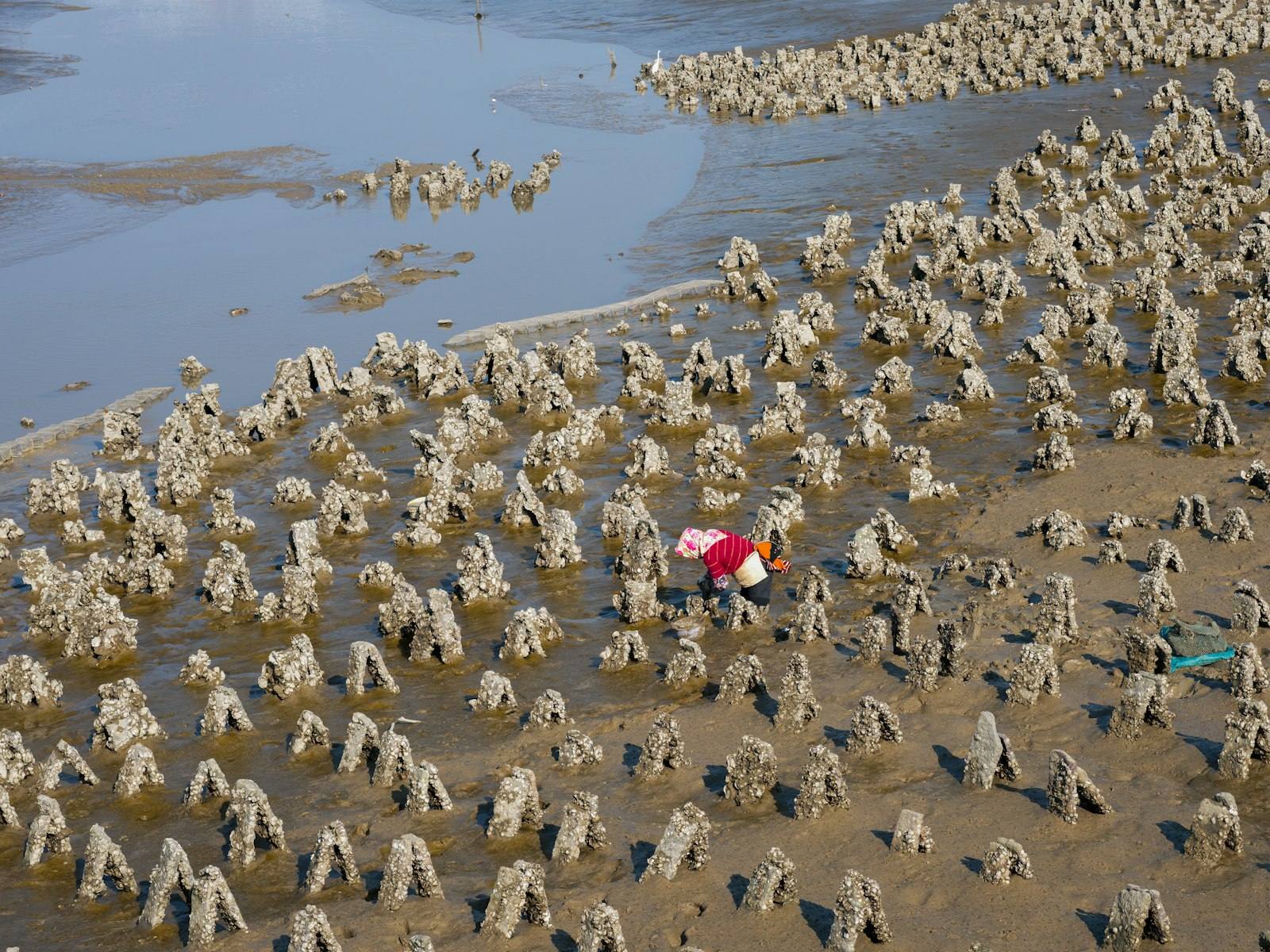
This is the photo that put Quanzhou on Chinese social media — and it's a genuinely lovely morning. Xunpu (蟳埔) is a working fishing village about 10 km from the centre, famous for two things. First, houses built from oyster shells (蚝壳厝) — generations packed discarded shells into the walls, and the result glitters white in the sun. Second, the zanhua wei (簪花围) — the local women's tradition of wearing a crown of fresh flowers (jasmine, magnolia) coiled around a bun, a centuries-old everyday hairstyle that's become a massive draw. You can have it done yourself.
- Village entry: FREE — just wander in.
- The flower-crown + costume photo experience: ≈¥40 at village studios for the simple zanhua plus an outfit; fancier "intangible-heritage" full sets cost more (confirm in the studio). Loose flower garlands are sold in the market (ask the price first).
Getting there: City bus 44 or 39 (local listings also show K8 and K301; check your map app for the current line). Didi is easiest — about 30 minutes by car from downtown. Show the driver 蟳埔, and navigate to the Xunpu wharf or folk-culture village rather than the village entrance.
Insider: Go early in the morning. You get the fresh-off-the-boat seafood market in full swing, quiet lanes for photos before the day-trippers arrive, and the soft light that makes the oyster-shell walls glow. Sit for the flower crown first, then walk the village wearing it — that's the order everyone wishes they'd done.
Their houses are built from oyster shells, and the women wear crowns of fresh flowers — and a ¥40 ticket lets you join in
This isn't a staged "ethnic village" performance — Xunpu is a real fishing community where people genuinely live in oyster-shell houses and older women still wear the zanhua wei flower crown to the market every day. For about ¥40 a studio will pin a crown of live jasmine and magnolia into your hair, dress you in the costume, and send you out to wander the lanes. It's one of the most photographed experiences in southern China right now, and unlike a lot of "viral" spots it's still cheap, still local, and still free to simply walk through.
Want the Xunpu flower-crown morning planned — which studio, the good early-light slot and how to book it, plus a driver who knows the back lanes? Message us on WhatsApp.
Message us →🏮 West Street (西街): What to Do on Quanzhou's Oldest Street — the living heart of the old town
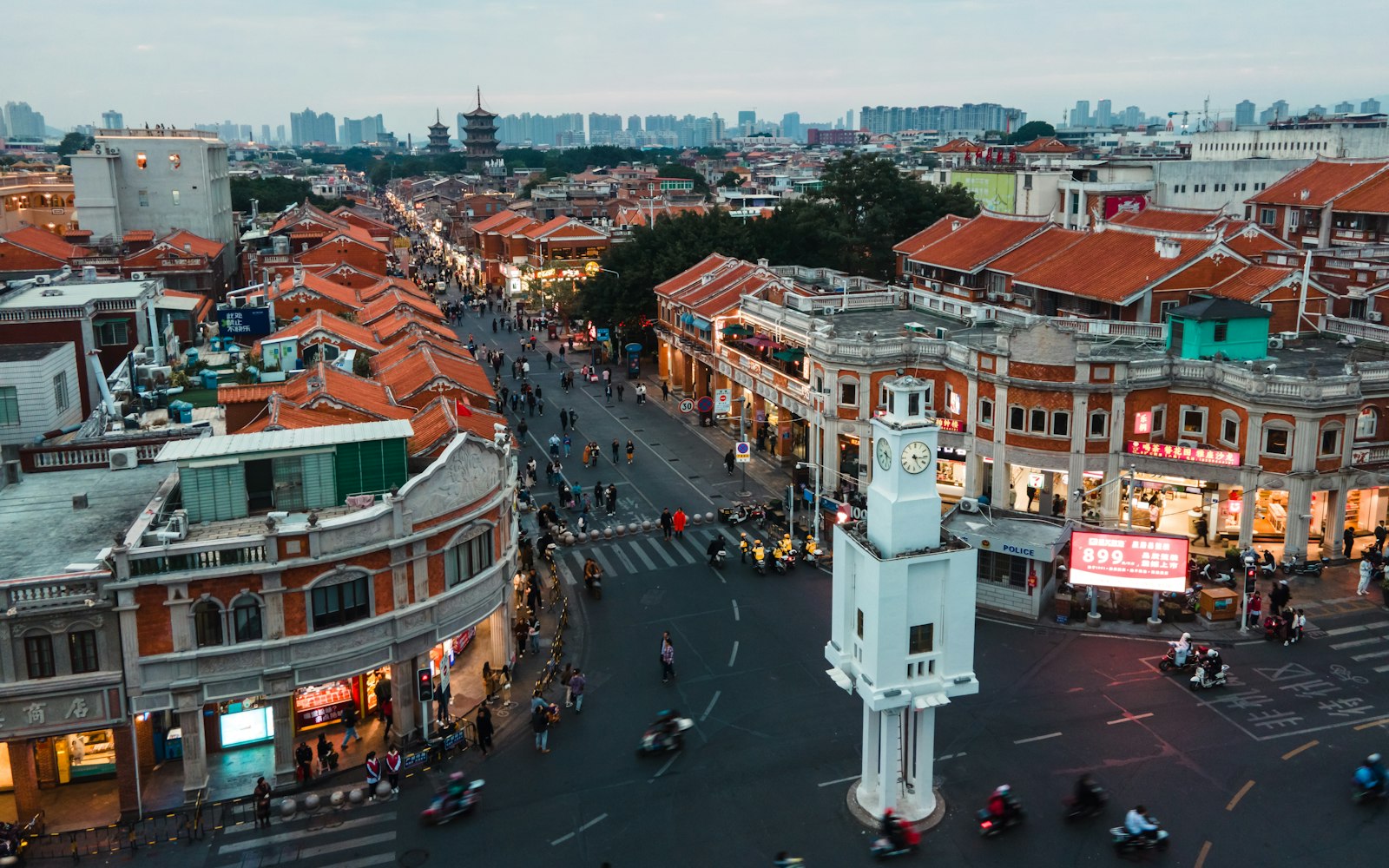
This is your default evening, every night you're here. West Street (西街) is a Tang-dynasty street — laid out around 714–741 AD — running roughly 1,700 metres from the Bell Tower, lined with more than 20 heritage relics and threaded with snack stalls, indie shops, tea spots and old Minnan shophouses with their distinctive arched stone facades. It's the spine that connects Kaiyuan Temple to the rest of the old town, it's free, and it's where the city comes alive after dark.
- Ticket: FREE. Wander any time; shops and stalls liveliest in the evening.
- How to do it: Walk it slowly in the early evening, grab street snacks as you go (this is prime territory for mee sua, oyster omelettes and popiah — see the food answer in the FAQ), and end up at Kaiyuan Temple's lit pagodas roughly halfway along the street. Quanzhou's old town is compact and very walkable — West Street, Kaiyuan, Tumen Street and the Confucius Temple are all within a flat stroll of each other, which is exactly why it's such an easy city to spend three days in.
🗺️ The 22 UNESCO Sites — how to actually think about them
When you read that Quanzhou has 22 UNESCO World Heritage sites (inscribed 25 July 2021), don't picture 22 ticket booths to grind through. The component sites are spread across religious buildings (Kaiyuan, Qingjing Mosque, Tianhou, the Confucius Temple, Islamic tombs, the Manichaean statue at Cao'an), the great bridges (Luoyang and Anping), coastal pagodas, the old ceramic kilns and iron-production sites, and the medieval docks and administrative buildings.
The honest way to use this: treat the inscription as the reason this old town feels the way it does, not as a to-do list. Walking the loop in this Part — Kaiyuan → Tumen Street trio → Tianhou → West Street, plus a half-day each for Luoyang Bridge and Chongwu — naturally puts you inside six to eight of the 22, all for free or a few yuan. That's the right dose. You came to feel the Emporium of the World, not to collect it.
Three days in Quanzhou, mapped to your dates — the old-town temple loop, Xunpu, the sea fortress, all the right timings and a guide who knows the Maritime Silk Road? Tell us on WhatsApp.
Send dates →Sources — Part 3 (verified June 2026)
UNESCO & sites: whc.unesco.org (UNESCO "Emporium of the World" inscription, 25 Jul 2021, 22 component sites) · trip.com (Kaiyuan Temple free + hours; Qingjing Mosque ticket & hours; Guandi/Guanyue Temple free; Luoyang Bridge; Chongwu; Maritime Museum hours + closed Mondays; Xunpu village & flower-crown price) · chinadiscovery.com (Kaiyuan free; Confucius Temple free + hours; West Street) · travelchinaguide.com / gograndchina.com (Tianhou Temple free + hours) · topchinatravel.com (Luoyang Bridge; Maritime Museum; Xunpu) · CITS (Qingjing Mosque & Chongwu ticket figures) · People's Daily / en.people.cn (Xunpu zanhua wei) · chinaexplorertour.com (West Street).
Re-checked 29 Sep 2026: Quanzhou Bendibao (qz.bendibao.com — Kaiyuan Temple free/hours/no reservation/pagoda interiors closed; Qingjing Mosque ¥3, hours; Guandi Temple and Confucius Temple free + hours; Tianhou Temple free, 07:00–17:00 last entry 16:30; Luoyang Bridge free, bus 19; Maritime Museum hours, Monday closure, real-name reservation; Ancient Ship Exhibition Hall inside Kaiyuan Temple, May 2026 listing; Xunpu zanhua ¥40 price note dated Jul 2025 and Aug 2026 transport note) · Quanzhou municipal government interactive Q&A, 4 Feb 2024 (Kaiyuan: no reservation, 06:30–18:00) · quanzhou.gov.cn/gastronomy (Luoyang Bridge 731 m, 1053–1059; Anping Bridge; UNESCO Creative City of Gastronomy designated 31 Oct 2025) · Wikipedia / Trip.com (Anping Bridge 2,070 m, 1138–1151, one of the 22 components; Chongwu ¥68 listing) · Quanzhou Bendibao (m.qz.bendibao.com/traffic/29285.shtm — Culture Palace–Chongwu custom bus, ¥15, 09:00 out / 17:00 back, reserved 24 h ahead, 15 riders minimum; undated listing) · Wikivoyage (Chongwu: suburban buses from the stop outside Quanzhou railway station; scenic area ¥45 as of 2015, old town free from the north gate) · Chinese Wikipedia (Quanzhou bus K701 runs Wanxiang bus station to Hui'an South bus station, ¥6 total, and does not serve Chongwu) · Chinese Wikipedia (Tianhou Temple: built 1196, described as one of the oldest and highest-standard Mazu temples; Meizhou ancestral temple 987) · Michelin Guide Fujian 2025 (张林阿山 Bib Gourmand).
A handful of figures wobbled across sources and are flagged in-text — Qingjing Mosque ticket (≈¥3 vs free), Kaiyuan pagoda climbing (interiors reported closed; assume ground-level viewing), Chongwu ticket (≈¥40–68), the Chongwu bus fare and last return time (custom bus back at 17:00; scheduled last bus unconfirmed), and the Maritime Museum's passport/WeChat reservation step. Confirm the load-bearing ones at the gate before you commit.
Day Trips from Quanzhou
Here's the part nobody tells you before you book: when you clear immigration at Quanzhou's airport (JJN) on the 240-hour transit, China doesn't tie you to one city: since December 2024 the visa-free zone at Fujian's ports is the entire province — official gov.cn wording, not a loophole. Which means every day trip below is 100% legal on your transit stamp: Xiamen and the UNESCO island of Gulangyu, the best-preserved Ming sea fortress in China, the provincial capital Fuzhou, and China's longest surviving ancient stone beam bridge. Let's not waste it.
🚄 First, the train logic (read this once, it unlocks everything)
Almost every day trip below leaves by rail from Quanzhou Railway Station (泉州站), the most-used of the city's three rail stations and the closest to the old town (about 11 km, roughly 25 minutes by car). The other two — Quanzhou East (泉州东) and Quanzhou South (泉州南, out in Jinjiang) — also have Xiamen and Fuzhou trains on the Fuzhou–Xiamen high-speed line that opened in September 2023 and made this whole corner of the coast a 30-minute-hop network. Check the departure station name when you book: the old town is a fair way from all of them, so factor a transfer in.
Getting to the station from the old town (West Street / Bell Tower area)
- Taxi / Didi is the fast and stress-free option — about 11 km, roughly 25 minutes by car. Allow extra at rush hour, and check the fare in the app before you go.
- City buses also run between the old town and the station; ask your hotel or check the route in your map app, since lines get renumbered. (Bus K901 links the station and the airport, not the old town — see Part 2.)
How to actually get a train ticket (the foreigner-proof version)
- Book on Trip.com or the official 12306 website (English version). Trip.com is smoother for non-Chinese passports; 12306 is the source of truth.
- Book 1 day ahead for weekend Xiamen runs — they're frequent through the day, but popular departures fill up.
- Your physical passport is your ticket — tap it at the foreigner gate; if the auto-gate balks, the staffed window beside it waves you through in 10 seconds.
- Arrive 25–30 min early. Chinese high-speed stations are airport-sized.
A bullet train down the coast costs less than a sandwich back home
Quanzhou → Xiamen is 30–60 minutes at up to 350 km/h, with second-class fares from about ¥26 — roughly US$4 — and trains leaving all day from early morning until about 23:45. You barely need to plan around the timetable; check the departure station and fare for your exact train, then turn up and go.
More on this: China Essentials — getting around (rail, metro, Didi) →🏝️ Xiamen + Gulangyu Island Day Trip — the obvious one, and it's a breeze
Bottom line: if you do one day trip, do this one — it's effortless. Half an hour on the bullet train drops you in Xiamen, China's prettiest port city, and from there a short ferry carries you to Gulangyu (鼓浪屿) — a car-free UNESCO island of crumbling colonial mansions, banyan-shaded lanes and piano music drifting out of windows (it's nicknamed "Piano Island"). It's the postcard-beautiful counterweight to Quanzhou's gritty, incense-thick old-town history.
Getting there, step by step
- Train: Quanzhou → Xiamen, 30–60 min, 2nd class from about ¥26, frequent departures from early morning.
- Xiamen station → ferry terminal: taxi/Didi (~¥20) to the Xiagu / Dongdu tourist ferry pier (the Cruise Center terminal — in daytime tourists do not use the downtown pier).
- Ferry to Gulangyu: ~20 min crossing, ¥35 per person round trip.
⚠️ Book the Gulangyu ferry ahead — this is the one that strands people
Tourist-route ferry tickets to Gulangyu need advance online booking + your passport (book in the Xiamen Ferry mini-program inside Alipay; the exact booking window and whether any ticket windows remain vary by report, so follow the steps in our Xiamen guide, linked just below), and popular morning sailings can sell out fast in season. Book as soon as your dates are set — don't leave it to the night before in peak season — and carry your physical passport for the gate. Confirm the current booking channel before you go.
The honest read: Xiamen genuinely deserves its own night or two — Gulangyu, Nanputuo Temple, the seaside ring road, the university campus — so a day trip is the highlight reel, not the whole album. If your dates allow, sleep one night in Xiamen and do it unrushed; the 240h Fujian zone makes that totally legal. If it's a day trip, go early, prioritize the ferry + a slow Gulangyu wander, and train back after dark. (We've got a full Xiamen guide if you want to extend.)
Want Quanzhou + Xiamen + Gulangyu stitched into one clean run — trains booked, and the Gulangyu ferry worked in (we'll show you how and when to book it)? Send us your dates on WhatsApp.
Send dates →🏯 Chongwu Ancient Stone City Day Trip — a Ming sea fortress most foreigners never hear about
Bottom line: the best-preserved Ming-dynasty granite coastal fortress in China — sea cliffs, 600-year-old walls, and a vanishing fishing culture you won't see anywhere else. Built in 1387 to fend off pirates, Chongwu (崇武古城) is a complete walled stone town facing the open sea, ringed by dramatic granite-boulder coastline. It's also the heartland of the Hui'an women (惠安女) — famous for a striking traditional dress (bright headscarves, cropped jackets, silver-buckled belts) that's become an icon of coastal Fujian. This is the "I had the place half to myself" day trip.
Getting there: Suburban buses are reported to run direct to Chongwu from the bus stop outside Quanzhou railway station and the city's long-distance bus stations — the simplest option, though we could not confirm the current fare or journey time, so ask at the counter (budget roughly 1–1.5 hours each way, our estimate). Or reserve the tourist custom bus (≈¥15 each way, 09:00 from the Culture Palace, 17:00 back from Chongwu, booked 24 hours ahead in the "Colorful Quanzhou" WeChat mini-program, runs only if about 15 people sign up). Alternative: bus to Hui'an county, then a local bus the last stretch (reports mention lines 211 / 225).
Tickets: sources disagree — the scenic area has been listed at ¥40–45 historically and ¥68 more recently, with a combo (mini-train + feeding) running ¥100+. Budget ≈¥40–68 and confirm at the gate. Local reports add that the ticket mainly covers the sea-front stone-carving and coast area, and that the walled old town itself can be entered free through a side gate — ask before you buy.
⚠️ The real trap here is the last bus back
This is ~50 km out in Hui'an county and public transport back stops in the early evening (the custom bus leaves Chongwu at 17:00; we could not confirm the last scheduled bus) — miss it and you're negotiating a long, pricey taxi or stuck overnight. Ask the driver the exact last-departure time the moment you arrive, and build your afternoon backwards from it.
Insider play: go mid-morning, walk the full circuit of the ramparts first (the sea-cliff stretch is the money shot), then drop into the old town lanes for lunch — and keep one eye on the clock for that return bus. Allow a full day door-to-door given the roughly 1–1.5-hour each-way ride.
🌉 Luoyang Bridge — 1,000 years of engineering, basically next door
Bottom line: a half-day add-on, not a full expedition — and a genuine marvel. Built 1053–1059 AD, Luoyang Bridge (洛阳桥) is one of China's four great ancient bridges: ~730 metres of massive stone slabs marching across a tidal estuary, on a foundation technique so clever it's in the engineering textbooks — they bred oysters on the piers to cement the stones together (the world's first known use of biology as construction glue). It's a UNESCO component site and it's free to walk.
Getting there: ~10 km NE of the centre. Bus 19 → "Luoyang Bridge South" stop (洛阳桥南站; other lines also serve it, but route numbers have been changing), or taxi / Didi, 20–30 min, ≈¥25–40.
Tickets & timing: free; effectively walkable all day (some sources say staffed ~08:00–17:30). Go near low tide if you can — the exposed mudflats and oyster beds under the spans are half the magic. Allow 1–2 hrs.
Pair it: Luoyang Bridge sits on the road out toward Hui'an/Chongwu, so history buffs sometimes chain Luoyang Bridge in the morning → Chongwu in the afternoon — but watch that Chongwu last bus, and know it makes for a long day.
🌊 Anhai & Anping Bridge Day Trip — for the "I want the deep cut" traveler
Bottom line: the day trip for people who've already done the headliners and want something quietly extraordinary. In Anhai (安海), Jinjiang — south of the city — stands Anping Bridge (安平桥), the longest surviving ancient stone beam bridge in China, an impossibly long low causeway striding across shallow water. It's one of the 22 UNESCO component sites, far less touristed, and the kind of place where you'll mostly hear birds and your own footsteps on a thousand-year-old slab.
Bonus for the food-curious: Anhai is the most famous home of tusun (土笋冻) — the chilled savoury jelly set from a small sea worm, Quanzhou's most "wait, really?" delicacy (Anhai's version even holds a protected geographical-indication listing). Eating it at the source is a proper pilgrimage.
Reality check: this is a genuine deep cut — sparser English signage, fewer foreign visitors, and you'll lean on Didi + an offline translation app to get around Jinjiang. If you've got a tight schedule, do Xiamen/Gulangyu or Chongwu first; come here on a longer stay when you want the road less travelled. (Getting to Anhai: city/intercity buses toward Jinjiang/Anhai, or Didi — confirm current bus routes locally.)
🏛️ Fuzhou Day Trip — the provincial capital, an hour up the line
Bottom line: doable, but better as an overnight on a longer Fujian loop. Fujian's capital Fuzhou is ~1 hour up the high-speed line, and its headline draw — Three Lanes and Seven Alleys (三坊七巷), a beautifully preserved warren of Ming–Qing lanes and mansions — is a worthy half-day on its own.
⚠️ Fare check
Second-class fares on the Trip.com and Ctrip listings we checked run roughly ¥60–85 depending on the train and the Quanzhou station it leaves from — check 12306 or Trip.com for the live price before you commit.
The honest read: as a pure day trip Fuzhou competes with Xiamen and loses on charm-per-hour for most first-timers. Where it shines is as stop two on a 240h Fujian run — Quanzhou → Fuzhou → (Wuyishan, if you've got the days) — all legal on the same transit stamp. Slot it in if you're chaining cities, skip it if Quanzhou + Xiamen already fill your time.
One entry stamp, the whole province — not just one city
Under the old transit rules you were tied to the city you entered — Fujian's zone used to be just Xiamen. Enter at Quanzhou (or any Fujian port) today and the rule book hands you the entire province for 10 days — Quanzhou, Xiamen, Gulangyu, Fuzhou, even Wuyishan's tea mountains, no extra paperwork. It's a very good reason to base your Fujian trip here.
Full breakdown: Part 1 visa section →🗓️ Quanzhou Itinerary: 2, 3 & 5 Days — hour-by-hour, actually strung together
These plug straight into Part 3 (Kaiyuan Temple, the Tumen Street temple cluster, Xunpu flower-headdress village, the food crawl, West Street at night) and the day trips above. Times assume a central base around West Street / Bell Tower / Tumen Street — the compact, walkable old-town core. Tap a day to open the hour-by-hour plan.
⏱️ 2 Days — the essential Quanzhou
Day 1 UNESCO old town: temples, pagodas & West Street
- 06:30Early start. Walk to Kaiyuan Temple (开元寺) for opening (06:30–17:40, free) — the twin Song-era stone pagodas with the morning light and the monks, before the crowds. (Full playbook: Part 3.)
- 09:00Breakfast the local way: a bowl of 面线糊 (mee sua) at 水门国仔 (Shuimen Guozai), Shuimen Alley No. 21 — the famous old shop, roughly ¥10–20 a bowl, add your own toppings.
- 10:00–12:30The Tumen Street (涂门街) temple cluster, all walkable, all free or near-free: Qingjing Mosque (1009 AD, ≈¥3 — confirm locally), Guandi Temple next door (grab your 3 free incense sticks), and Confucius Temple nearby.
- 13:00Lunch on the go: 海蛎煎 (oyster omelette), 润饼 (popiah), a bowl of Quanzhou beef soup.
- 14:30–16:30Tianhou Temple (天后宫) — one of the oldest and highest-ranking surviving Mazu sea-goddess temples in China (free, last entry 16:30) at the old town's south end.
- 17:00West Street (西街) as the lanterns come on: snack stalls, indie shops, old Minnan shophouses. Dinner here, then a 姜母鸭 (ginger duck) claypot if you've still got room.
Day 2 Xunpu flower headdresses, the sea & a Maritime Silk Road museum
- 08:30Didi to Xunpu Village (蟳埔, ~10 km, ~30 min) — fishing village of oyster-shell houses (蚝壳厝) and the viral 簪花围 (zanhua wei) flower-crown hairstyle. Go early for the fresh seafood market and quiet photo lanes.
- 09:30Do the flower-headdress + costume photo experience (≈¥40) at a village studio; loose flower garlands are sold in the market. (Free to wander the village itself.)
- 12:00Back toward town for lunch.
- 14:00–16:30Quanzhou Maritime Museum (海外交通史博物馆) — free, closed Mondays, about 09:00–17:30 (last entry 17:00), with the Maritime Silk Road relics; the excavated Song-dynasty ship itself sits in the Ancient Ship Hall inside Kaiyuan Temple (free, also closed Mondays and, per one local listing, on the 26th of each lunar month), so add it if you're passing the temple. Bring your passport; expect a WeChat reservation / ID check.
- 17:30Tea, a wander, and one last West Street dinner. Try 土笋冻 (tusun jelly, roughly ¥10–30 a plate) if you're brave.
⏱️ 3 Days — the sweet spot (add Xiamen + Gulangyu)
Days 1–2 As above
Run the 2-day old-town + Xunpu plan, but breathe — linger longer over the temples and the food, and add a West Street bar night (Day 1 or 2).
Day 3 Xiamen + Gulangyu Island
- 07:30Train Quanzhou → Xiamen (book the night before). 30–60 min, from about ¥26.
- 08:45Taxi (~¥20) to the Xiagu/Dongdu ferry pier; ferry to Gulangyu (~20 min, ¥35 round trip) — book the ferry slot ahead + carry passport.
- 09:30–14:00Slow-wander car-free Gulangyu: colonial villas, banyan lanes, sea views, a seafood lunch.
- 14:30Back across, optional stroll on the Xiamen seaside ring road or Nanputuo Temple before the train.
- EveningTrain back to Quanzhou (frequent until late evening), or sleep in Xiamen and keep exploring — the Fujian-wide transit zone covers it.
⏱️ 5 Days — the full Maritime-Silk-Road run
Days 1–3 The 3-day plan above
Quanzhou old town + Xunpu + Xiamen/Gulangyu, unrushed.
Day 4 Chongwu sea fortress + Hui'an coast
- 08:30Bus from Quanzhou railway station (or the pre-booked 09:00 custom bus, ≈¥15) to Chongwu (roughly 1–1.5 hr; confirm fare and timetable at the counter). Ask the driver the last return-bus time on arrival.
- 10:00–14:00Walk the Ming granite ramparts and the sea-cliff coastline, lunch in the old-town lanes, soak up the Hui'an-women culture.
- 15:30Catch the return bus (well before the early-evening cut-off; the custom bus leaves at 17:00). Optional Luoyang Bridge stop on the way back if timing allows.
Day 5 Slow Quanzhou, or push to Fuzhou / Anhai
Option A (slow): A pure eat-and-drift day — late mee-sua breakfast, a long temple-and-teahouse afternoon, the Luoyang Bridge at low tide, one more ginger-duck dinner. The day people actually remember.
Option B (deep cut): Anhai + Anping Bridge (China's longest surviving ancient stone beam bridge) plus tusun jelly at its most famous home — for travelers who want the road less travelled.
Option C (chaining cities): train to Fuzhou (~40–60 min) for Three Lanes & Seven Alleys — best if you're continuing your Fujian loop rather than returning to Quanzhou.
Want this turned into a real plan — trains booked, the Gulangyu ferry planned (we'll show you how to book it), the Chongwu day timed so you don't miss the last bus, a guide who knows the Silk Road story? Send us your dates on WhatsApp.
Send dates →🛏️ Where to Stay in Quanzhou: Best Areas — with real price bands
No booking links, no commission — just where each type of traveler should sleep and what you'll actually pay. Rough nightly bands below are directional aggregate data; rates spike on weekends and holidays, so confirm live on your booking app.
| Area | Best for | Why here | Rough nightly band |
|---|---|---|---|
| 🏮 West Street / Bell Tower (old-town core) | First-timers | Walk to Kaiyuan Temple, the Tumen Street temples, the food crawl and the West Street bars. The compact heart of everything — where I'd put a first-timer, full stop. Named picks: JI Hotel Quanzhou Xijie Zhongshan Road (mid-range chain), Elan Select Hotel (West Street Bell Tower). | Mid-range chains ~¥300–550; budget below |
| 🎒 Old-town budget & hostels | Backpackers & social travelers | Same walkable core, lighter on the wallet — boutique homestays in restored Minnan shophouses plus proper hostels. Named picks: Jinjiang Star (West Street Kaiyuan), Over the Mountain Hostel. | Dorms & basics ~¥80–200 |
| 🏨 4–5★ comfort | Comfort-seekers & families | Full-service rooms, pools, big breakfasts. The central 5★ Quanzhou Hotel is the classic, ~8 km from the rail station. Trade-off: newer 4–5★ towers often sit a little outside the most atmospheric lanes, so you walk or Didi into the old town. | ~¥600–1,000+ |
My honest pick: stay in the West Street / Bell Tower old-town core — the entire reason to come to Quanzhou is the dense, walkable medieval town, and basing in the middle of it means you roll out of bed into temples, mee sua and lantern-lit lanes. Only trade out to a 4–5★ tower if you specifically want a pool and a big breakfast. Treat every quoted rate as "from ~¥X, confirm live on your booking date" — Quanzhou hotel prices move daily.
A walkable medieval-old-town base costs what a roadside motel costs back home
A clean mid-range room steps from a 1,300-year-old temple and China's tallest stone pagodas runs ~¥300–550 a night; a bed in a restored Minnan shophouse hostel can start ~¥80. You don't choose between "in the heart of the UNESCO old town" and "affordable" here — that trade-off doesn't exist.
Sources — Part 4 (verified June 2026)
Visa / whole-Fujian zone: english.www.gov.cn (17 Dec 2024 expansion — Fujian zone expanded to the entire province).
Trains / fares: Trip.com and Ctrip train listings, checked Sep 2026 (Quanzhou–Xiamen 2nd class from about ¥26, 30–60 min, trains from early morning to about 23:45; Quanzhou–Fuzhou roughly ¥60–85, 38–60 min; three Quanzhou stations — Quanzhou, Quanzhou East, Quanzhou South) · chinadiscovery.com/fujian/quanzhou.html (Quanzhou Railway Station most used, ~11 km / 25 min from the old town) · travelchinaguide.com (K901 links the station, the airport and Shishi; taxi from the airport to the station ¥40–50).
Gulangyu ferry: chinadiscovery.com (~20 min); 2026 local reports (¥35 round trip, real-name booking online with ID/passport; the booking window differs between reports, so this guide defers to the Xiamen guide for the current steps).
Chongwu & Luoyang & Anping: trip.com / CITS (Chongwu ticket ≈¥40–68 conflicting) · Quanzhou Bendibao (Culture Palace–Chongwu custom bus ¥15, 09:00 out / 17:00 back, 24 h advance booking) · Wikivoyage (suburban buses from outside Quanzhou railway station; fare, journey time and last scheduled bus not confirmed; the K701 city bus does not go to Chongwu) · Tencent News 2023 and 2026 listings (Chongwu old town can be entered free via a side gate) · trip.com / topchinatravel.com / quanzhou.gov.cn (Luoyang Bridge free, 731 m, built 1053–1059; bus 19; K502 has since been renamed a tourist line) · Wikipedia and quanzhou.gov.cn (Anping Bridge, 2,070 m, 1138–1151, one of the 22 UNESCO components).
Hotels / price bands: thechinajourney.com, chinadiscovery.com, Trip.com, Tripadvisor (hostel ~¥80–200; mid-range ~¥300–550; 4–5★ ~¥600–1,000+ — confirm live). The named hotels (JI Hotel Xijie Zhongshan Road, Elan Select Bell Tower, Jinjiang Star Kaiyuan Temple, Over the Mountain Hostel, Quanzhou Hotel) were each found listed on Trip.com or other booking sites on 29 Sep 2026; the price bands were not re-verified.
Know Before You Go
🧠 Culture, money & health — the fine print
🤝 Culture shocks & etiquette (the 6 that trip up first-timers)
- No tipping. Anywhere. Restaurants, taxis, hotels, the lady doing your flower headdress in Xunpu — none of it. Trying to tip causes confusion, not gratitude. Keep your change.
- Carry your own tissues + hand sanitizer. Public restrooms (and many squat toilets) often have neither paper nor soap. The single most useful thing in your bag.
- You order by scanning a QR code at most restaurants — point your camera at the table sticker, a menu opens, you tap, you pay. (Menu's usually Chinese — Google Translate's camera, running on your eSIM, reads it instantly.)
- Temples are working places of worship, not theme parks. At Kaiyuan, Guandi, Tianhou and the mosque, dress modestly, keep your voice down, and ask before photographing people praying. The 3 free incense sticks at Guandi are an offering — take the ritual seriously and you'll be welcomed.
- Quanzhou speaks less English than Xiamen. This is a smaller, less touristed city — expect limited English signage and menus. Didi (with its built-in navigation) plus an offline translation app aren't a nice-to-have here, they're how you get around. Frame it as part of the charm: you're somewhere most foreigners haven't reached.
- Strangers may ask to take a photo with you — foreign faces are still a novelty away from the big tourist hubs. It's genuine friendly curiosity, not a scam. Smile, say yes or politely wave it off.
💰 What's dirt-cheap vs. surprisingly pricey
Absurdly cheap (spend freely):
- High-speed rail — Quanzhou → Xiamen is from about ¥26, 30–60 min.
- The big sights are free — Kaiyuan, Guandi, Tianhou, Confucius Temple, Luoyang Bridge, the Maritime Museum, even Xunpu village entry. This is a city where the headline experiences cost nothing.
- Local food — a bowl of 面线糊 (mee sua) roughly ¥10–20, 土笋冻 (tusun jelly) roughly ¥10–30 a plate, oyster omelettes and beef soup for pocket change.
- City buses — ¥1–7.5 depending on the route, paid by Alipay/WeChat QR.
- The Xunpu flower-headdress photo — ≈¥40 for the experience that's all over social media.
Surprisingly pricey (budget for it):
- Imported goods & Western groceries — familiar shampoo, cheese, branded snacks carry a premium.
- Western food & brunch — a "normal" Western breakfast can cost more than three local meals.
- Specialty coffee — third-wave cafés price near Western levels; a flat white isn't the ¥10 bargain the noodles are.
- A whole ginger-duck claypot — the food's cheap overall, but a shared 姜母鸭 is priced by pot size (a Michelin-listed shop averages about ¥83 a head on a Ctrip listing; check the menu before you order) — a "splurge" by local standards, still a steal by yours.
🚑 Emergencies & health (save these before you fly)
- Don't drink the tap water — bottled or boiled only. Your hotel kettle is your friend; ice in proper restaurants/cafés is fine, street stalls use your judgment.
- Seafood is the local glory — and the one thing to be a little careful with. Quanzhou is a coastal Minnan city built on oysters, sea worms and shellfish. Eat it where it's busy and fresh (packed local spots = high turnover = safe), go easy your first day if your stomach's sensitive, and you'll be fine.
- Pharmacies (药店) are everywhere, well-stocked, cheap, and need no prescription for basics — point to the problem or show a translated note.
- For anything serious, head to a major public hospital and ask for the international/VIP desk; travel insurance is still strongly worth having.
📅 Best time to visit & festivals (the seasonal cheat sheet)
- Best window: October–April. The sweet spot is Oct–Nov (crisp, clear, comfortable) and the mild winter (Dec–Feb).
- Avoid June–September — hot, very humid, and peak typhoon risk (typhoon season runs roughly July–October and peaks in August–September, so even early autumn carries some risk — check the forecast).
- The trade-off: seafood harvest peaks June–September — exactly the hot, sticky months — so the keenest foodies sometimes brave the heat.
- Festival angle: Spring Festival (late Jan–mid Feb) brings big Minnan folk performances and lantern festivals — the most atmospheric time, but crowded.
❓ FAQ — straight answers to what everyone actually asks
Do I need a visa to visit Quanzhou in 2026?
Probably not. Quanzhou's Jinjiang International Airport (JJN) is an approved port for the 240-hour (10-day) visa-free transit, open to 57 nationalities as of Aug 2026 (US, UK, Canada, the EU countries, Australia, NZ, Japan, Korea, and more) — you must meet the policy's conditions, including entry through an approved port and an onward ticket with a confirmed date and itinerary, leaving within 240 hours for a third country or region different from your departure country or region (e.g. Seoul or Bangkok; whether Hong Kong or Macao counts is our inference, not an official rule, so confirm with your airline or the immigration hotline, +86 12367, before you book). Some nationalities also qualify for the simpler 30-day unilateral visa-free entry (no onward ticket needed), and as of 17 Feb 2026 the UK and Canada are on the 30-day list too (currently valid through 31 Dec 2026) — US travellers still use the 240h track. Crucially, the Fujian zone covers the whole province, so you can roam to Xiamen and Fuzhou freely. Always confirm against the official en.nia.gov.cn before booking. (Full breakdown: Part 1.)
Can I really travel to Xiamen and Fuzhou on the Quanzhou 240-hour transit?
Yes — and this is Quanzhou's secret weapon. Since December 2024 the permitted zone for 240-hour transit travellers in Fujian is the entire province, not just one city (official gov.cn wording: the areas in Fujian, Hubei and Shaanxi were "expanded to the entire respective provinces"). Enter at Quanzhou's JJN and you can legally spend your 10 days anywhere in Fujian — Quanzhou + Xiamen + Gulangyu + Fuzhou + Wuyishan — no extra permits. Before that change Fujian's zone was just Xiamen. You can also cross provinces within the permitted areas of the 24 participating provinces, but check the area table on en.nia.gov.cn before planning beyond Fujian.
Will Google, WhatsApp, and Instagram work in Quanzhou?
Not on local WiFi/SIM — but there's a clean fix. China blocks Google, WhatsApp, Instagram, etc. The simple workaround: install an international travel eSIM (Airalo, Nomad, Holafly, Saily) before you fly — it routes your data offshore, so all your apps just work, no separate VPN needed. Set it up at home; it activates the moment you land — which matters more in Quanzhou than in big tourist cities, because English help on the ground is thinner. (eSIM comparison: Part 2.)
Does Quanzhou have a metro/subway?
No — and you should plan around that. As of mid-2026 Quanzhou has no operating metro: the once-planned Metro Line 1 has not opened, and the city's first rail line, the R1 intercity line (Xiamen–Zhangzhou–Quanzhou), was only moving into full construction in mid-2026 according to local reports. You'll get around on city buses (¥1–7), taxis, and Didi. The good news: the old town (West Street ↔ Kaiyuan ↔ Tumen Street ↔ Confucius Temple ↔ Tianhou Temple) is compact and very walkable, so you mostly stroll, and Didi covers the rest.
How do I get from Quanzhou airport (JJN) into the city?
Three options, about 12 km from downtown (the airport is in Jinjiang, south of the old town). Cheapest: city bus K603 to downtown, ~40–50 min, ¥1–4, every 8–10 min from ~06:40. Rail-bound: bus K901 links the airport and the railway station (it does not run through the old town), ¥1–7.5. Easiest: taxi ¥30–60 (¥40–50 to the rail station), ~30 min, from outside the Domestic Terminal — or Didi, similar price, paid via your Alipay/WeChat-linked foreign card. (Full options: Part 2.)
Can I really pay everywhere with just my foreign card?
Yes — via QR, not the card itself. Bind your Visa/Mastercard inside Alipay or WeChat Pay (do it before you arrive) and you scan-to-pay almost everywhere — temple snack stalls, mee-sua shops, city buses, taxis. The same Transport QR in the app pays for every city bus. Don't count on foreign cards at small shops; bigger hotels, malls and major sights are more likely to take them. Keep some cash as backup. Alipay and WeChat Pay set spending limits for foreign cards — see Essentials. Check your current limit in the app. A ~3% fee is reported on payments above ¥200. (Setup steps: Part 2.)
How many days do I need in Quanzhou?
2 days for the city itself — the UNESCO old town (Kaiyuan, the Tumen Street temples, Tianhou), Xunpu flower-headdress village, the food crawl, and West Street at night. 3 days if you want to add the easy Xiamen + Gulangyu day trip. 5 days if you want the full Maritime-Silk-Road run with Chongwu's sea fortress and a deeper dip into Fujian. Quanzhou rewards slow — its 22 UNESCO sites are spread across the city, so don't try to checklist them all in a day.
Is Quanzhou's Kaiyuan Temple free, and can I climb the famous pagodas?
Entry is free (roughly 06:30–17:40, no reservation needed for general entry) — Fujian's largest Buddhist temple, founded 686 AD, with the tallest pair of stone pagodas in China. But climbing the pagodas is a different story: Quanzhou local guides say the pagoda interiors are not open to visitors, so you view them from the ground. A few English sites mention a limited WeChat-booked climb, but we could not confirm that it exists. Assume you'll admire them from below (which is still spectacular) and treat any climb as a bonus only if the temple confirms it on the day. (Full playbook: Part 3.)
What is the Xunpu flower headdress and how do I try it?
It's the zanhua wei (簪花围) — a fishing-village hairstyle from Xunpu (蟳埔), ~10 km from the centre, where women wreathe their hair in rings of fresh flowers (jasmine, magnolia). It's gone hugely viral on social media. Village entry is free; the flower-crown + costume photo experience runs ≈¥40 at village studios (fancier "intangible-heritage" full sets cost more — confirm in the studio), and loose garlands are sold in the market (ask the price first). Get there by city bus 44 or 39 (local listings also show K8 and K301; check your map app), or just Didi (about 30 minutes from downtown). Go early morning for the fresh seafood market and quiet photo lanes. (Full playbook: Part 3.)
What should I eat in Quanzhou, and is it spicy?
Quanzhou is a UNESCO Creative City of Gastronomy (designated Oct 2025) and the cradle of Minnan (Hokkien) cooking — and it's NOT a spicy cuisine (this isn't Sichuan). The must-tries: 面线糊 (mee sua / misua soup, roughly ¥10–20 a bowl) for breakfast — try 水门国仔 at Shuimen Alley No. 21; 姜母鸭 (ginger duck claypot) — the Michelin Bib Gourmand pick 张林阿山 on Xinhua North Rd is the famous one; and the daredevil classic 土笋冻 (tusun jelly, roughly ¥10–30 a plate), a chilled savoury jelly set from a small sea worm. Round it out with 润饼 (popiah), 海蛎煎 (oyster omelette) and Quanzhou beef soup.
Is Quanzhou safe at night — especially for solo women?
Very. Quanzhou, like Chinese cities generally, is extremely safe to walk at night — busy, CCTV-covered, with virtually no street crime. The one honest caveat: some old-town alleys are dimly lit, so stick to the main West Street strip, which stays lively till late with bars and snack stalls. Women routinely walk home alone here. You'll feel safer at midnight than in most Western cities. (Full context: the safety box in Part 2.)
Which day trip should I pick if I only have one?
Xiamen + Gulangyu Island. It's the easiest by far — 30–60 minutes on the bullet train (from about ¥26), then a 20-minute ferry to a car-free UNESCO island — and it's legal on the 240-hour transit rule since the zone covers all of Fujian. Chongwu (Ming sea fortress, roughly 1–1.5 hr by bus) is the atmospheric runner-up if you'd rather have history and dramatic coastline than a pretty island — just mind the last bus back (early evening; the custom bus leaves at 17:00). Luoyang Bridge is the easy half-day add-on, not a full day out. (Full breakdown: Part 4.)
📣 Plan it with us
Want the whole thing handled?
Flights, trusted hotels in the heart of the old town, pre-booked bullet trains, the Gulangyu ferry planned (we'll show you how to book it), the Chongwu day timed so you never miss the last bus, and a local guide who knows the Maritime Silk Road story (and the best mee-sua shop). That's exactly what we do — real humans, real local knowledge. Tell us your dates and what you're into, and we'll build your custom Quanzhou (and wider Fujian) itinerary.
Plan your Quanzhou trip on WhatsApp
All sources (verified June 2026)
Visa & entry: en.nia.gov.cn (National Immigration Administration), english.www.gov.cn (17 Dec 2024 expansion + Fujian whole-province zone; 12 Jun 2025 Indonesia 55th country; 20 Aug 2026 Kyrgyzstan and Vietnam added, 57 countries; UK and Canada 30-day visa-free 17 Feb–31 Dec 2026), fujian.gov.cn (18 Dec 2024, Fujian stay area widened from Xiamen to the whole province). Transport: travelchinaguide.com (JJN airport transfer K603/K901/taxi), chinadiscovery.com (three Quanzhou rail stations, no metro), Quanzhou government and Sina Finance news May–Jul 2026 (R1 intercity line, the city's first rail line, entering full construction), 12306 / Trip.com / Ctrip, babagoeschina.com, chinaguidelines.com (Didi). Trains/ferry: Trip.com and Ctrip (Quanzhou–Xiamen 30–60 min, from about ¥26; Quanzhou–Fuzhou roughly ¥60–85; direct trains to Shenzhen, Guangzhou and Hangzhou); Gulangyu ferry ~20 min, ¥35 round trip, real-name advance booking (chinadiscovery.com plus 2026 local reports). Attractions/tickets: whc.unesco.org (UNESCO inscription, 22 sites, 25 Jul 2021), trip.com, chinadiscovery.com, travelchinaguide.com, gograndchina.com, topchinatravel.com, CITS, chinaexplorertour.com, People's Daily / en.people.cn (Xunpu), Quanzhou Bendibao (qz.bendibao.com, opening hours and reservations, re-checked Sep 2026). Food: quanzhougastronomy.com (UNESCO Creative City of Gastronomy, designated 31 Oct 2025), quanzhou.gov.cn, Michelin Guide Fujian 2025 (张林阿山 ginger duck, Bib Gourmand). eSIM & payment: unusualnomad.com, traveltomtom.net, cybernews.com, realchinatrip.com, trip.com, ltl-school.com, Alipay/WeChat help centers. Hotels: thechinajourney.com, chinadiscovery.com, Trip.com, Tripadvisor.
⚠️ Live-confirm before travel: seasonal opening hours, exact fares, and nightly hotel rates shift. The flagged items — Qingjing Mosque ticket (≈¥3 vs free), Chongwu ticket (≈¥40–68), bus fare and last bus time, Kaiyuan pagoda climbing, Maritime Museum and Ancient Ship Hall reservation/passport rule and hours, which Quanzhou rail station your train uses and its fare, Gulangyu ferry booking, the 30-day visa-free country list (currently valid through 31 Dec 2026 for most countries), Alipay/WeChat payment limits — should each be confirmed on the official channel or on arrival. Visa → en.nia.gov.cn; tickets/hours → the attraction's official channel or Trip.com; trains → 12306.