
🧭 TL;DR — the honest bottom line
Here's what you have to know before anything else: Tibet is the one part of China you genuinely cannot do on your own. To reach Lhasa as a foreigner you must book a tour through a licensed Tibetan agency, hold a Tibet Travel Permit only that agency can get you, and travel with a licensed Tibetan guide the whole time — and no, China's visa-free policies don't change that. Sort that, and what's waiting is the most moving place in the country: the Potala Palace stacked against the mountains, pilgrims prostrating at the Jokhang, monks debating at Sera, sweet tea at 3,656m, and a turquoise sacred lake over a 4,790m pass. Give Lhasa 3–4 days (more for the lakes).
Two realities shape this trip more than any other in China. One: the permit-and-guide rule — plan it weeks ahead, with a licensed agency (it's genuinely the only way in). Two: the altitude — Lhasa is high enough that your first day's only job is to rest. Respect those two and Tibet is pure wonder.
Tibet must be done on a licensed guided tour, arranged through a licensed Tibetan agency. Tell us your dates and we'll plan your Lhasa route, explain exactly how the permit and the tour work, and book your flights or train to get there. (One message, no obligation.)
Message us →📌 This guide is long because it's complete — use the menu to jump. Everything below is named, priced, and verified June 2026; we flag anything that drifts so you can double-check the load-bearing details — and for Tibet, always reconfirm permit policy with a licensed agency before booking flights.
Before You Go
🛂 Can Foreigners Visit Tibet Independently? The Tibet Travel Permit, Explained
Read this first — it's the one thing that trips up almost every first-timer, and getting it wrong means a cancelled trip.
Here's the headline, plainly: as a foreign tourist you cannot travel to Tibet on your own. Not in 2026. To enter the Tibet Autonomous Region you must (1) book an organised tour through a licensed Tibetan travel agency, (2) hold a Tibet Travel Permit that only that agency can apply for on your behalf, and (3) be accompanied by a licensed Tibetan guide for the duration of your trip. There's no winging it, no solo backpacking, no turning up with just a passport. This isn't a formality you can dodge — it's checked when you board the flight or train to Lhasa, and again at hotels and checkpoints once you're there.
Once you've absorbed that, the rest is genuinely manageable — and honestly, a good guide in Tibet is a gift, not a chore. Here's how the paperwork stacks up.
The two documents you need — and they are not the same thing
People constantly confuse the China visa with the Tibet Travel Permit. They're separate, and you may need both.
| Document | What it does | Who issues it | The catch |
|---|---|---|---|
| China entry (visa or visa-free) | Gets you into mainland China | Chinese embassy, or visa-free policy | Many nationalities now enter China visa-free — but this alone does not get you into Tibet. |
| Tibet Travel Permit (TTB) | Gets you into Tibet, on a booked tour | Tibet Tourism Bureau, applied for by your agency only | Free itself, but only obtainable by booking a tour. ~8–9 working days to process; send documents ~20 days ahead. |
✓ verified Jun 2026 The Permit itself costs nothing — the Tibet Tourism Bureau issues it free. What you pay for is the tour that makes the Permit possible (guide, driver, vehicle, hotels, tickets).
"Wait — visa-free China still can't get me into Tibet?"
Correct, and this catches people out constantly. China's headline 2026 visa-free policies — the 30-day visa exemption for 50 countries and the famous 240-hour (10-day) visa-free transit — do not apply to Tibet. The Tibet Autonomous Region is not one of the 24 provinces covered by the 240-hour transit (neither are Xinjiang, Qinghai or Gansu). And even if you enter mainland China visa-free, you still need a Tibet Travel Permit and a booked tour to set foot in Tibet. Visa-free gets you to Chengdu or Beijing; only a licensed Tibetan agency gets you to Lhasa.
More on this: China Essentials — visa-free & 240-hour transit →How it actually works, step by step
- Pick a licensed Tibetan travel agency and confirm an itinerary. Non-negotiable — only a registered Tibet agency can apply for your Permit. (We'll walk you through how this works and how far ahead to start — jump to the bottom if you'd rather just message us.)
- Sort your China entry. If your nationality is visa-free for China, that covers the mainland leg. If not, get a Chinese tourist (L) visa from an embassy first — your passport + visa details go on the Permit application.
- Send your agency scans of your passport (and China visa, if you have one) at least ~20 days before your Tibet start date. Processing at the Tibet Tourism Bureau takes roughly 8–9 working days (urgent service 4–5 days, extra fee).
- Receive your Permit (couriered, or handed over on arrival depending on how you enter) and travel with your guide. You'll need the physical Permit to board a Tibet-bound flight/train and to clear checkpoints.
Two things worth knowing
① For sights beyond Lhasa — Yamdrok Lake, Shigatse, Everest Base Camp — you'll need additional permits (an Aliens' Travel Permit and sometimes a military permit), which your agency also arranges. Build these into your timeline. ② Hong Kong & Macau SAR passport holders are the main exception to the entry-permit rule (tour/guide requirements still apply), and diplomatic/journalist travel runs on different rules entirely.
Policy here shifts and is strict — always confirm the current rules with a licensed agency before you book flights.
⛰️ Altitude Sickness in Lhasa: What 3,656m Actually Feels Like
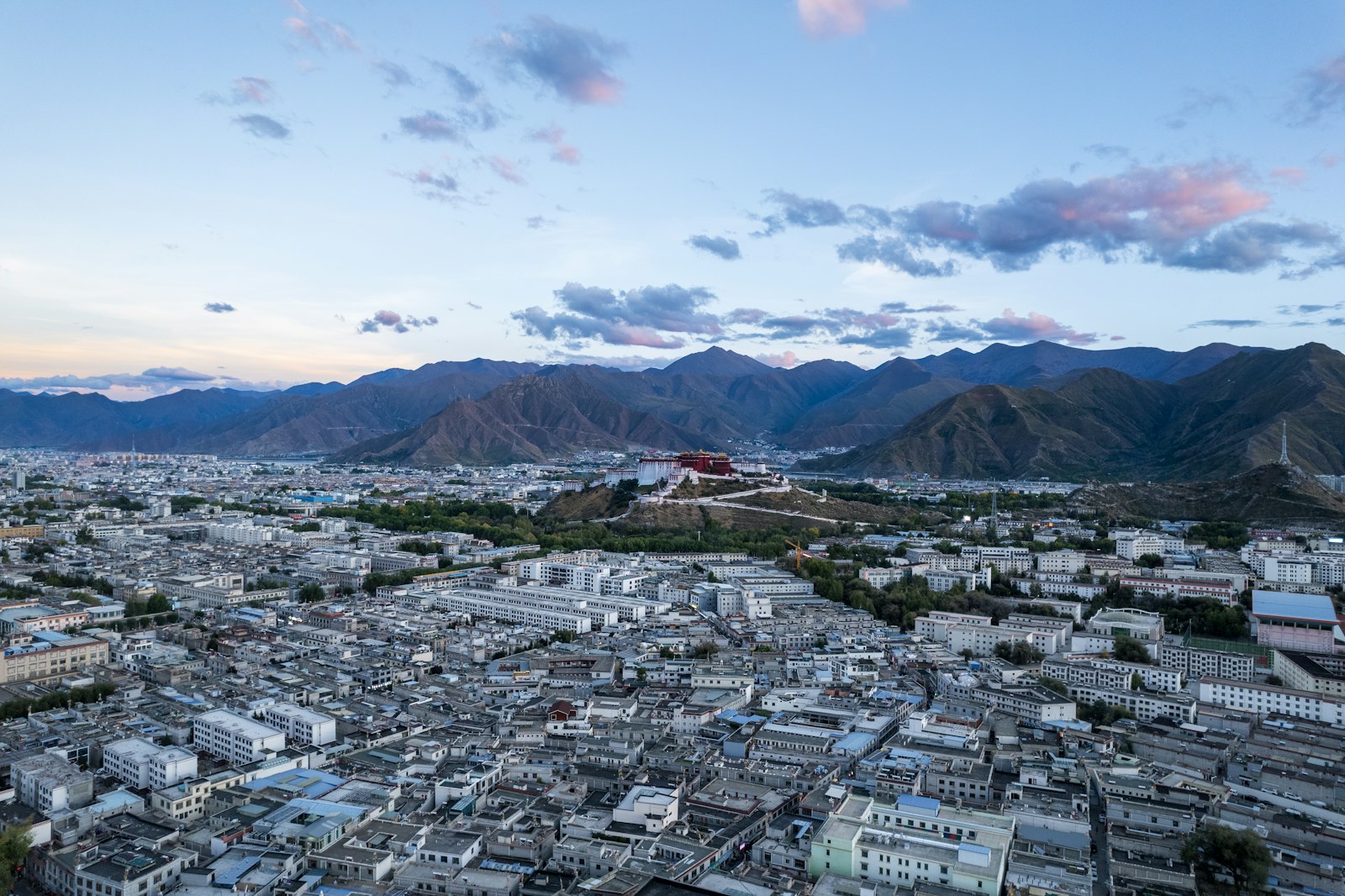
Lhasa sits at 3,656 metres (11,995 ft) — high enough that altitude sickness is a genuine, common reality, not a scare story. In a study of tourists arriving in Lhasa, 36.7% experienced acute mountain sickness (AMS), with symptoms usually showing up within the first 12 hours. Headache, fatigue, dizziness, broken sleep and breathlessness are the classics. The good news: for most healthy travellers it's manageable and passes in a day or two — if you respect it.
Here's how to give yourself the easiest possible arrival:
- Do almost nothing on day one. The single most effective thing. Rest, hydrate, walk slowly, no sightseeing marathons. Your itinerary should bake in 2–3 light days in Lhasa before anything higher.
- Walk, don't run. Gentle strolling is fine and even helpful; sprinting up Potala's steps on day one is not.
- Hydrate hard, skip the booze. Drink far more water than feels normal; lay off alcohol and heavy meals the first couple of days.
- Consider Diamox (acetazolamide) — the one drug clinically proven to help prevent AMS and speed acclimatisation. It's prescription-only in most countries, so talk to your doctor before you fly; typically started ~24 hours before reaching altitude.
- Flying in hits harder than the train. Land from sea level and you jump to 3,656m in hours; the Qinghai–Tibet train climbs gradually and many find it gentler.
- Heart or lung conditions — or pregnancy? See a doctor before booking. This is non-negotiable advice, not ours to override.
Oxygen is everywhere here — most Lhasa hotels offer in-room oxygen, pharmacies sell canned oxygen, and your guide carries some. Mild symptoms are normal; severe symptoms (confusion, a relentless worsening headache, breathlessness at rest, a wet cough) mean descend and get medical help — do not push on. ✓ verified Jun 2026
🗓️ Best Time to Visit Lhasa
Aim for April–May or, best of all, late September–October. You want sunshine, clear mountain views, and a dodge around the summer rains. October in particular gives crisp, dry days, 9+ hours of sun, and the sharpest views of snow-capped peaks.
| Season | Months | Daytime temp | The real story |
|---|---|---|---|
| 🌸 Spring (great + cheaper) | Apr–May | 12–16°C | Warming up, fewer crowds, lower prices. An underrated window — come early and save. |
| ☀️ Summer (peak + wet) | Jun–Aug | up to ~25°C | Warmest and busiest, but the rainy season — August is wettest (rain most days). Clouds can hide the peaks. Book well ahead. |
| 🍁 Autumn (best) | Sep–Oct | ~13–20°C | The sweet spot. Rain eases, skies clear, views at their absolute best. Late Sep–Oct is the connoisseur's pick. |
| ❄️ Winter (cheap + empty) | Nov–Mar | days above freezing; nights to −15°C | Low season: deep discounts, almost no crowds, often blue skies by day. Brutally cold at night; some high routes close, but Lhasa itself is very doable. |
One bonus to time for if you can: the Shoton (Yogurt) Festival — around 12 August 2026 — when a giant thangka is unveiled at Drepung Monastery at dawn and Tibetan opera fills Norbulingka. It's one of Lhasa's great spectacles.
✈️ How to Get to Lhasa: Flights & the Qinghai–Tibet Railway
You reach Lhasa one of two ways — fly (fast, but a hard altitude jump) or take the Qinghai–Tibet Railway (slow, spectacular, gentler on your body). Both require your Tibet Travel Permit to board.
Fly in — Chengdu is the main gateway
Chengdu is the single biggest air gateway to Lhasa — the most flights, the shortest hop, and the city where many travellers also handle permit logistics and acclimatise for a night first. The flight to Lhasa Gonggar Airport (LXA) takes about 2h 25m, with daily departures and, in 2026, well over a thousand flights a week on the route. Peak-season (May–Oct) one-way fares typically run US$150–350.
Chengdu isn't your only option — there are direct flights from Xi'an, Xining, Chongqing, Beijing, Shanghai, Guangzhou and Kunming too — but if you're choosing a connection, Chengdu is the path of least resistance.
Take the train — the world's highest railway
The Qinghai–Tibet Railway is a genuine bucket-list journey. From Xining (the standard starting point, since the high-altitude section begins there) it's about 19.5–21.5 hours over 1,956 km, climbing past Qinghai Lake, the Gobi, the Tanggula Pass (the world's highest railway point) and herds of wild antelope. Carriages are oxygen-enriched. Fares from Xining: hard seat ~US$31, hard sleeper ~US$69, soft sleeper ~US$108.
Trains to Lhasa also run all the way from Xi'an, Chengdu, Chongqing, Beijing, Shanghai and Guangzhou — gorgeous, but those add many more hours. The real advantage isn't just scenery: the gradual climb helps you acclimatise, so train arrivals often feel altitude less acutely than fly-ins. The trade-off is time, and the fact that sleeper tickets (especially soft sleepers) sell out fast in peak season — your agency books these as part of your tour.
The journey to Lhasa is one of the great train rides on earth
The Qinghai–Tibet Railway tops out at the Tanggula Pass — the highest point of any railway in the world — rolling past turquoise Qinghai Lake, snow peaks and wild antelope, all from an oxygen-enriched carriage. Beyond the views, the slow climb is the smart way up: your body adjusts on the way, so you often arrive in Lhasa feeling far better than people who flew. If you can spare the time, train in (at least Xining → Lhasa) and fly out.
Ask us to book the Tibet train →💴 Lhasa & Tibet Travel Budget: What It Really Costs
Tibet works differently from the rest of China on money, for one reason: you're required to be on a tour, so your "budget" is mostly the tour price — which bundles your permit, guide, driver, vehicle, hotels, entry tickets and often meals into one figure. That's not a markup to resent; it's genuinely most of your on-the-ground cost in a single line.
| Style | Per person, per day (tour-inclusive) | What that buys you |
|---|---|---|
| 🎒 Budget (join a small group) | from ~US$100/day | Shared small-group tour, simpler hotels, guide + driver split across the group. The cheapest legal way in. |
| 💺 Comfort (private guide) | from ~US$200/day | Your own guide, driver and vehicle, better hotels, a pace set entirely by you. |
| ✨ Luxury | from ~US$400/day | Top hotels (St. Regis, Shangri-La, Songtsam), seamless everything. |
A typical full Tibet trip lands around US$950–2,500 per person depending on length, route and style; a short 4–5-day Lhasa-only small-group tour can start near US$486. For standalone hotels (if your package lets you choose), Lhasa runs roughly US$60–90/night budget in low season (US$100–150 peak), mid-range US$150–300, luxury US$250–600+. (~¥7.1 = $1 as of Jun 2026; rates drift.)
Because Tibet must be done on a licensed tour, this is where planning matters most — we'll map a compliant Lhasa/Tibet itinerary and explain exactly how the permit and the licensed guide are arranged. Tell us your dates on WhatsApp.
Message us →Sources — Part 1 (verified June 2026)
Tibet Travel Permit & independent-travel rules: chinahighlights.com/tibet/visa-document.htm; tibettravel.org/tibet-travel-permit/tibet-permits.html; experiencetibet.org; gototibet.com/tibet-permit/ (permit free, ~8–9 working days, apply ~20 days ahead via licensed agency; licensed guide required throughout; independent travel not permitted; HK/Macau exception; Aliens' Travel Permit for areas beyond Lhasa).
Visa-free does NOT cover Tibet: gototibet.com/blog/can-foreigners-go-to-tibet.html; wondersoftibet.com/visa-free-travel-to-china-and-tibet/; chinaodysseytours.com (240-hour transit zone excludes Tibet/Xinjiang/Qinghai/Gansu; visa-free China entry still needs TTB Permit + tour); en.nia.gov.cn for the underlying China policy.
Altitude/AMS: ncbi.nlm.nih.gov/pmc/articles/PMC4888367/ (AMS 36.7%, onset within 12h, Lhasa 3,656–3,658m); yowangdu.com/tibet-travel/avoiding-altitude-sickness.html; tibettravel.org/tibet-travel-advice/healthy.html (rest day 1, Diamox prescription-only/start 24h prior).
Climate / best time: tibettravel.org best-time + monthly-temperature pages; climatestotravel.com Lhasa (Apr–Oct best, Oct driest, Aug rainiest, winter nights to −15°C; Shoton Festival ~Aug 12, 2026).
Getting there: tibetdiscovery.com/flight-to-lhasa/chengdu-lhasa-flight/; tibettravel.org/tibet-train/xining-to-lhasa-train.html (Chengdu↔Lhasa ~2h25m, peak one-way ~$150–350; Xining→Lhasa 1,956km/~19.5–21.5h, soft sleeper from ~$108, oxygen-enriched).
Budget: experiencetibet.org & windhorsetour.com Tibet trip cost 2026 (group from ~$100/day, private ~$200/day, luxury ~$400/day, full trip ~$950–2,500pp; Lhasa hotels budget $60–150, luxury $250–600).
Arrival & Essentials
Three things turn Tibet from intimidating into smooth: get online, get paying, and treat day-one acclimatisation as your actual job. Sort the first two before you fly — fifteen minutes at home — and your guide handles much of the rest.
📱 Internet & VPN in Tibet: Get an eSIM before you fly
Tibet is part of mainland China, so the same wall applies: Google, Instagram, WhatsApp, Gmail and most Western apps are blocked on local networks, and your home SIM roaming onto a Chinese network hits the same block.
The clean, legal fix is an international travel eSIM that routes your data through a server outside the mainland — so Google Maps, WhatsApp and the rest just work, with no separate VPN to wrestle with. You install it as a second line and keep your home number for calls.
| eSIM | Best for | VPN? | The honest take |
|---|---|---|---|
| Nomad | Multi-city China + Tibet | No | Most stable when you're moving between cities — a good shout if Tibet is one leg of a bigger China trip via Chengdu or Xi'an. |
| Airalo | One or two stops, budget | No | Most popular, cheapest, dead-simple. Fine for a Lhasa-focused trip. |
| Holafly | Heavy data users | No | Unlimited-data plans + 24/7 support. Good if you stream/hotspot; check the fair-use cap. |
| Saily | Privacy-minded | No | By the NordVPN team. Solid for fixed-data plans. |
How it goes: buy online → get a QR code by email → scan to install (2 min) → leave it off until you land → flip it on as the plane taxis in. Only needs an email — no Chinese ID. Buy it at home on your own Wi-Fi; don't count on installing after you land, since activation pages can themselves sit behind the wall. Coverage note: signal is strong in Lhasa and along main roads; out at remote lakes and passes it naturally thins — download offline maps first.
One phone really does replace everything
Wallet, train tickets, translator, maps, dinner orders, shop payments — all collapse into one phone the moment you're set up. Most people pay by phone these days, though cash is still legal tender. Get your eSIM + Alipay sorted before you fly and you operate like a local from day one — just keep a little cash for the high country, where signal drops.
More on this: China Essentials — paying with Alipay & WeChat →💳 How to Pay in Tibet: Alipay & WeChat for Foreigners
Like the rest of China, most people in Tibet pay by phone, but cash is still legal tender: since 1 February 2026, staffed businesses must accept it. Keep some small notes as a backup (is cash accepted in China?). Don't count on foreign cards at small shops; bigger hotels, malls and major sights are more likely to take them. The 2026 good news: Alipay and WeChat Pay both accept a foreign Visa/Mastercard directly, no Chinese bank account needed. Set this up at home before you fly — verification is smoother on your home connection.
Set up Alipay (your main wallet)
- Download Alipay and register with your home mobile number (you'll get an SMS code).
- Open "Cards" → "Add Bank Card" and add a real Visa or Mastercard. ⚠️ Use a normal physical credit/debit card — prepaid and virtual/online-only cards are frequently rejected. This is the #1 reason setup fails.
- Complete passport verification (passport photo + a quick selfie). Usually approved in minutes.
- Add WeChat Pay too with a second physical card as backup.
The limits & fees you need to know ✓ verified Jun 2026
| Figure | |
|---|---|
| Payments under ¥200 | Fee-free (0%) |
| Payments over ¥200 | ~3% service fee |
Alipay and WeChat Pay set spending limits for foreign cards — see Essentials. Check your current limit in the app.
The Tibet-specific read: QR pay covers Lhasa completely — sweet-tea houses, taxis, Barkhor shops, monastery shops. But out in the high country (remote lakeside stalls, a nomad selling yak-wool, a far-flung viewpoint), signal drops and some vendors prefer cash. Carry a stash of small notes for day trips beyond the city. Your guide will steer you right.
🚕 Getting Around Lhasa: Airport Transfer, Taxis & the City on Foot
Your guide and driver handle most logistics in Tibet — but here's the lay of the land so nothing feels like a black box.
From Gonggar Airport into Lhasa
The airport is about 60 km southwest of the city, a smooth 1–1.5 hours on the expressway. On a tour, your driver meets you at arrivals (the easy default). Otherwise:
| Option | Time | Cost | When to pick it |
|---|---|---|---|
| Your tour driver (default) | ~1–1.5 hr | included | You're on a tour — they're waiting at arrivals. Easiest by far. |
| Airport shuttle bus | ~1 hr | ¥30 | Budget. Gate 5, Terminal 3 arrivals, ~05:00–19:30, leaves when full → CAAC office near the Potala. |
| Taxi | ~50 min | ¥200–260 | Door-to-door, late arrival, or heavy bags. |
Around the city
Lhasa is compact and the historic core is walkable once you've acclimatised.
- On foot: the Barkhor old town around the Jokhang is best walked — but go gently on day one; the altitude makes every gradient feel steeper.
- Taxis: the everyday workhorse — flagfall ¥10 for the first 3 km, then ¥2.5/km. Easiest for point-to-point if you don't speak Mandarin/Tibetan.
- City buses: cheapest at a few yuan; buses 6, 9, 25 reach the Barkhor area.
- Bikes: rental shops and hostels rent bikes (~¥20/day ordinary, ¥30/day mountain bike) — lovely after you've adjusted, not on arrival.
One Lhasa-specific rule for getting around
The Barkhor is a sacred pilgrimage circuit (kora) — pilgrims walk it clockwise. Walk clockwise too, even just strolling. It costs you nothing and it's the single easiest way to show respect in this city. (Full etiquette in Part 5.)
"Wait — is Lhasa safe?"
Yes, reassuringly so. Like the rest of China, Lhasa is well-lit, low on street crime, and blanketed in CCTV. Walking the Barkhor at night, surrounded by pilgrims and butter-lamp light, is one of the calmest experiences you'll have anywhere. Here the real "risk" isn't people at all — it's the altitude and the sun. Respect those two (rest day one, hydrate, hat + serious sunscreen) and Lhasa is gentle on you.
Sources — Part 2 (verified June 2026)
eSIM: unusualnomad.com, traveltomtom.net, cybernews.com (China eSIM tests 2026 — all route offshore / no separate VPN; Nomad most stable multi-city, Airalo cheapest single-trip).
Alipay limits & fees: realchinatrip.com, trip.com, ltl-school.com (<¥200 fee-free · ~3% above; prepaid/virtual cards often rejected; confirm limits in-app).
City transport: tibettravel.org/flights-to-tibet/airport-transfer-in-lhasa.html; asiaodysseytravel.com; thingstodoinlhasa.com/transportation/; tibettravel.org/tibet-travel-guide/lhasa-transportation.html (Gonggar ~60km/1–1.5h, shuttle ¥30, taxi ¥200–260; city taxi ¥10 first 3km + ¥2.5/km; buses 6/9/25 to Barkhor).
Things to Do in Lhasa
Pilgrims prostrating full-length on stone, butter lamps glowing in thousand-year-old halls, monks slapping their palms in fierce afternoon debate, sweet milk tea by the glass for pennies. Everything below is named, priced and verified June 2026. One thing to remember: because foreigners travel Tibet on a licensed guided tour, your agency books and times all these tickets for you — the official systems reject foreign passports, so this isn't a do-it-yourself list.
🏯 Potala Palace: Tickets, Timed Entry & How to Visit

This is the icon — the one image of Tibet everyone carries in their head, and it does not disappoint. The former winter palace of the Dalai Lamas climbs thirteen storeys up Marpo Ri hill: a thousand-plus rooms of gilded stupa-tombs, chapels thick with incense and butter smoke, ancient murals, and the private quarters at the top. A UNESCO World Heritage Site and the spiritual centre of gravity for the whole region.
Here's what to understand, because the Potala is the most tightly controlled sight in Tibet:
- Strict daily quota + timed entry. Only 2,300 tickets a day, and in peak season they sell out. You're given a specific entry time, and once inside the main building your visit is capped at about one hour on a fixed one-way route — dwell time is limited to protect the structure. Miss your slot and you miss the palace.
- Peak season is May 1 – Oct 31, open ~09:00–15:40. Route 1 (the full visit) is ¥200; Route 2 is ¥100.
- Real-name, passport-matched. The ticket is tied to the exact passport you booked with — bring that passport, and only that, on the day.
- Foreigners can't self-book it. The official WeChat ticketing mini-program effectively requires a verified Chinese account/ID, so foreign passports get stuck. In practice your tour agency holds the booking — which, since you're required to be on a tour anyway, is exactly how it's meant to work.
On the day — the things that actually matter
- Pace yourself on the climb. The approach is a real uphill haul at altitude — precisely why you don't do the Potala on arrival day. Take the steps slowly; locals do too.
- No photos inside the chapels. Photography is prohibited within the interior halls (bags/liquids are screened). Shoot the exterior and views all you like; put the camera away indoors.
- Go in the morning if your slot allows — clearer light on the white walls, and you've got the day's energy for the steps.
- The free classic photo is from Potala Square out front, or the pavilion across the road — golden hour and after-dark (the palace is lit) are stunning, and cost nothing.
Booking reality ✓ verified Jun 2026
Quota-limited (2,300/day), timed entry, ~1-hour internal cap, and not bookable on a foreign passport via the official system — so it must be locked in weeks ahead by your agency. Peak season (May–Oct) routinely sells out.
Potala tickets are quota-limited, timed, and can't be booked on a foreign passport — we'll tell you how it's booked and how far ahead to start. Tell us your dates on WhatsApp.
Message us →🛕 Jokhang Temple & the Barkhor Kora — the beating heart of Tibetan Buddhism
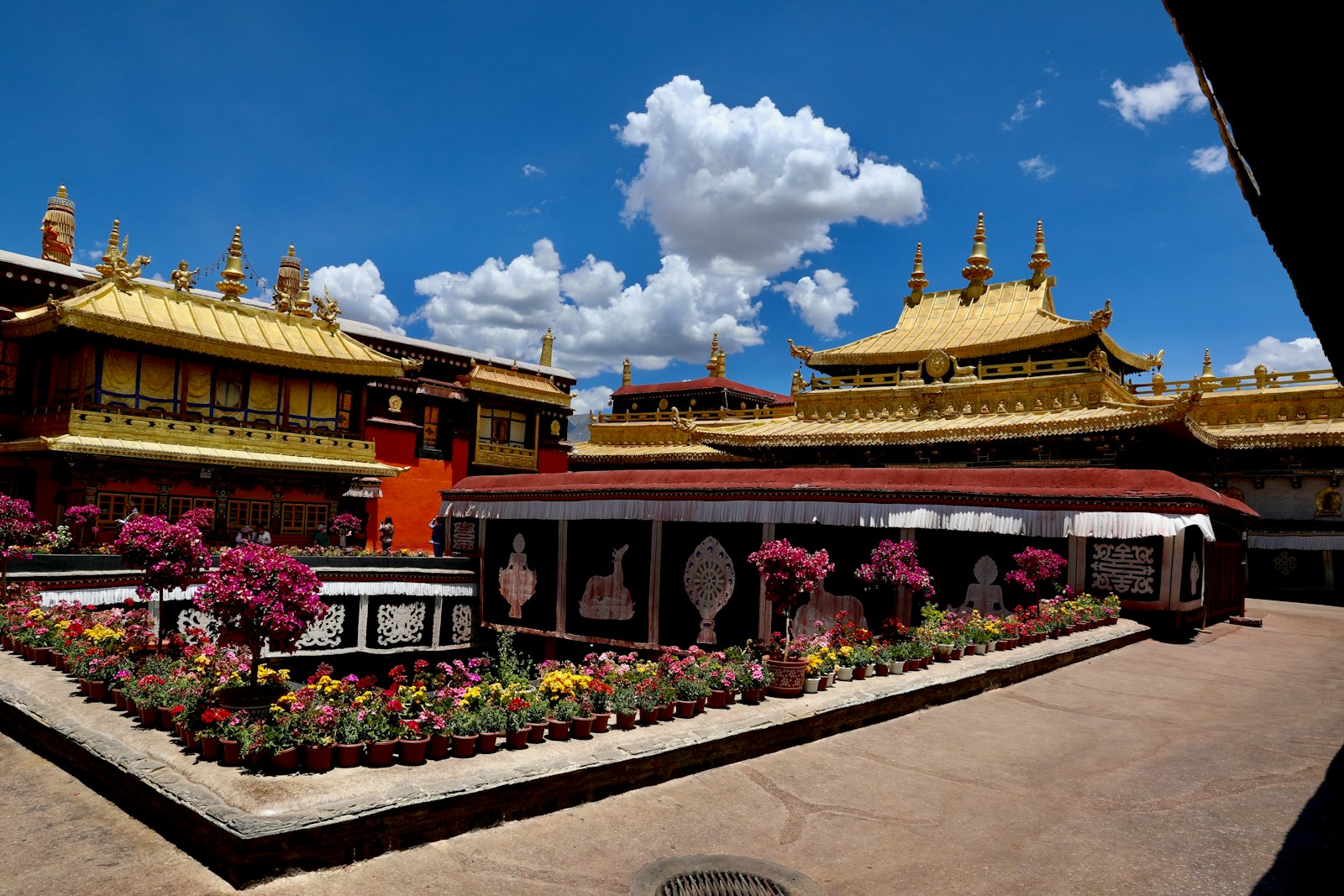
If the Potala is Tibet's icon, the Jokhang (大昭寺) is its soul — the holiest temple in all of Tibetan Buddhism, founded in the 7th century and home to the revered Jowo Shakyamuni statue. The air inside is thick with the smell of yak-butter lamps; the murmur of mantras never stops. But the most moving thing here often isn't inside at all — it's the pilgrims prostrating themselves full-length on the stone forecourt, some having travelled for months, dropping to the ground again and again. Stand quietly and watch; this is faith you can feel.
- Ticket ¥85, open ~09:00–18:00 (last entry ~16:30), year-round. Booking is real-name, at least a day ahead — again, your guide handles this, as foreign passports stumble on the self-serve mini-program.
- Go early for the morning pilgrim flow and the best light on the golden rooftops (the rooftop view of the Potala across the city is superb).
Walk the Barkhor kora
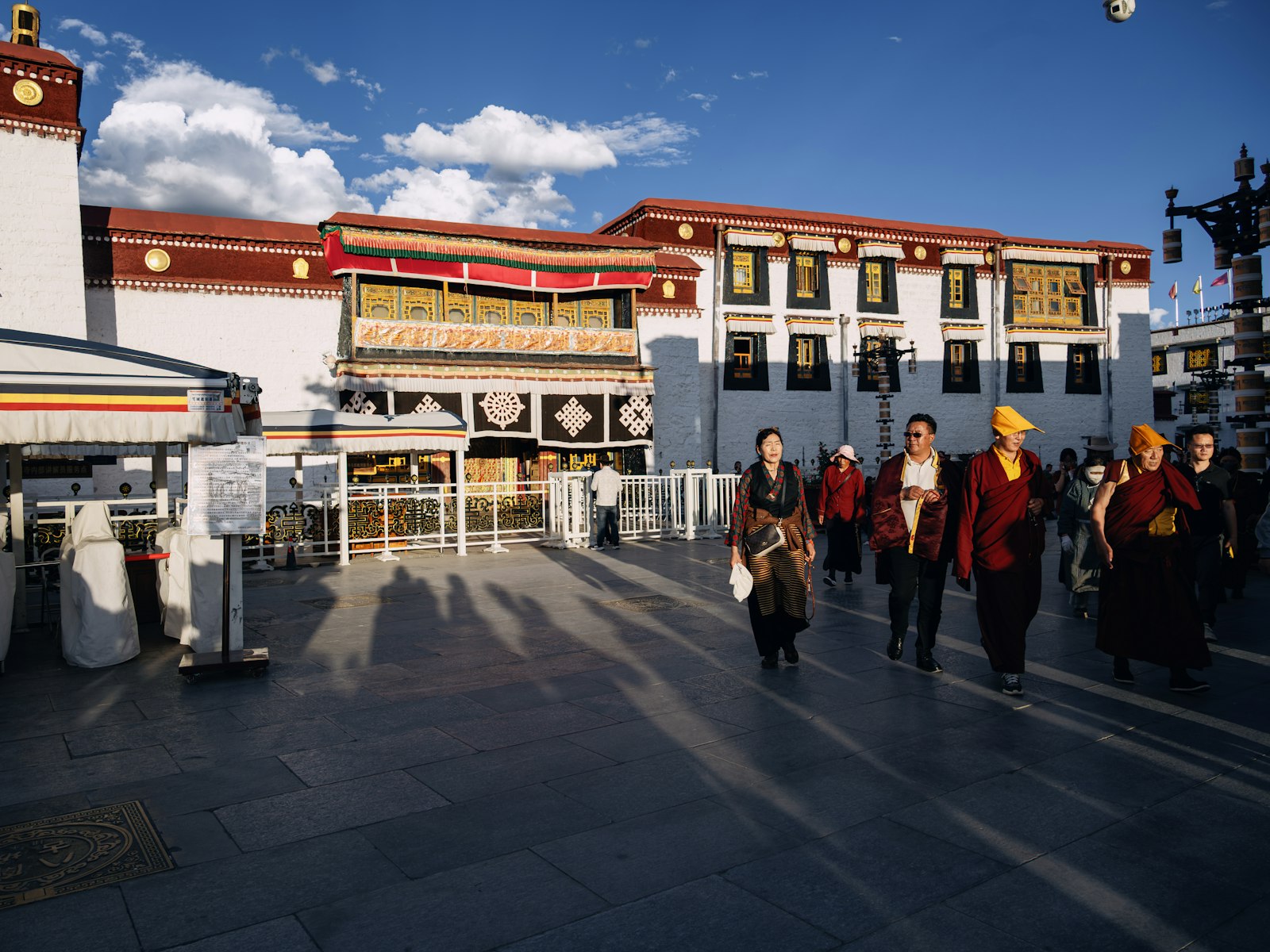
Ringing the Jokhang is the Barkhor (八廓街) — both a sacred pilgrimage circuit (kora) and Lhasa's oldest market street, a ~1.5 km elliptical loop that takes 30–40 minutes to walk. It's free and open 24 hours (shops ~09:00–20:00).
This is where Lhasa is most alive: pilgrims thumbing prayer beads and spinning hand-held prayer wheels, hundreds of fixed Mani prayer wheels along the walls, stalls of turquoise, prayer flags, incense and yak-wool. Walk it clockwise — always — with the flow of pilgrims; spin the wheels clockwise with your right hand as you pass. Do a lap by day for the market, and another at dusk, when butter-lamp light spills out and the whole circuit hums with the evening kora.
The most powerful 'sight' in Lhasa is free, and it's not a building
Everyone photographs the Potala — but the experience people remember is the Barkhor at dusk: hundreds of pilgrims walking the kora clockwise, prayer wheels turning, butter lamps glowing, the low murmur of om mani padme hum. It costs nothing, it's open all night, and it's the realest thing in the city. One rule, please: this is a place of worship, not a photo set — don't shoot pilgrims' faces head-on or stick a lens into someone's prayer. Walk with them, spin a wheel, and just be there.
Read: Temple & kora etiquette →☸️ Sera Monastery: the Famous Afternoon Monk Debates
This is the most entertaining hour you'll spend in Lhasa, full stop. Every afternoon at Sera Monastery (色拉寺), the resident monks pour into a tree-shaded courtyard and stage their debates (辩经) — a centuries-old method of testing Buddhist philosophy where the standing monk fires a question and slams his palm down theatrically as he challenges the seated monk's answer. It's loud, animated, full of laughter and showmanship, and you don't need a word of Tibetan to be riveted.
- Debates run ~15:00–17:00, every afternoon except Sunday. Get there early to claim a spot at the edge of the courtyard.
- Ticket ¥50 (peak, Apr–Oct) / ¥25 (low season); monastery open ~09:00–16:00, main halls closing by ~17:00.
- Etiquette in the debate courtyard: photos are usually tolerated here (the one monastic setting where it commonly is) — but no flash, stay at the edges, and don't get between debating monks. Your guide will tell you the day's rule.
🏛️ Two more for a deeper day: Drepung & Norbulingka
You won't run out of monasteries in Lhasa — your guide builds a sensible route — but these two round out the classic set:
- Drepung Monastery (哲蚌寺) — once the largest monastery in the world, a whitewashed monastic city tumbling down a hillside ~10 km west of town. The Drepung kora and the great assembly hall are the highlights, and it pairs naturally with Sera (Drepung in the morning, Sera's debate in the afternoon). Ticket ¥60, open ~09:00–16:00 (many halls close ~15:30).
- Norbulingka (罗布林卡) — the summer palace of the Dalai Lamas, a leafy walled park of palaces, pavilions and gardens. Calmer and greener than the Potala; lovely in late spring/summer, and the heart of the Shoton Festival opera in August. Ticket ¥80, open ~09:30–17:30 (hours vary seasonally — confirm with your guide).
🍵 What to Eat in Lhasa: Sweet-Tea Houses & Tibetan Food
Tibetan food is its own world — built for a cold, high place: barley, yak, dairy, warmth. Approached with curiosity (not as a dare), it's genuinely lovely, and the social heart of it is the sweet-tea house.
Start in a sweet-tea house — the real Lhasa
Forget fancy restaurants for a moment. The most authentically Lhasa thing you can do over food is sit in a sweet-tea house (甜茶馆), where locals spend hours. A glass of sweet milk tea (cha ngarmo) costs around ¥0.7 — yes, under one yuan — poured from a giant kettle, and you nurse glass after glass while the room buzzes. Pair it with momos (Tibetan dumplings) or Tibetan noodles (thukpa) for a few yuan more. Two big, beloved, easy-to-find ones near the Barkhor: Guangming Gangqiong Sweet Tea House (光明港琼甜茶馆) and Jiri Sweet Tea House.
The dishes to know
- Momos (Tibetan dumplings) — steamed or fried, yak/beef or veg. The friendliest entry point; everyone likes momos.
- Thukpa — hearty Tibetan noodle soup, perfect on a cold day.
- Yak butter tea (po cha) — the famous one. Savoury, salty, buttery — a taste of place, not dessert. Try it; it grows on you, and it genuinely helps with the dry, high air.
- Tsampa — roasted barley flour, the Tibetan staple, mixed with butter tea into a dough. Order it once to understand the cuisine's backbone.
- Yak meat — stir-fried, dried, or in stews; lean and good.
A sit-down classic: Makye Ame
For a proper meal with atmosphere and a Barkhor view, Makye Ame (玛吉阿米) sits at the southeast corner of Barkhor Street in a storied ochre-yellow Tibetan building (wrapped in a famous legend about the 6th Dalai Lama). It's touristy, yes, but the rooftop is a genuine pleasure and the food is solid — Tibetan sweet tea, stone-grilled beef, lamb chops with potato, grilled wild mushrooms. Around ¥75–80 per person.
Tibet's most authentic meal costs less than a dollar
A glass of sweet milk tea in a packed Lhasa tea house runs about ¥0.7 — under ten US cents. Locals settle in for hours: refill after refill, a plate of momos, the whole room talking. You could spend a long, warm, deeply local afternoon here for the price of a single coffee back home — and it'll teach you more about Lhasa than any monument. Sit down, order tea, stay a while.
Ask us for the real tea-house spots →Sources — Part 3 (verified June 2026)
Potala Palace: chinadragontravel.com/potala-palace-ticket-booking-guide-and-travel-tips/; tibettravel.org/tibet-travel-guide/potala-palace-travel-guide.html & book-potala-ticket-in-advnce.html; experiencetibet.org "How to Visit Potala Palace" (2,300/day quota, timed entry, ~1-hour internal limit, peak May 1–Oct 31 09:00–15:40, Route 1 ¥200/Route 2 ¥100, real-name passport, foreign passports can't self-book → agency books).
Jokhang & Barkhor: us.trip.com/travel-guide/attraction/lhasa/jokhang-temple-75938/; chinaexpeditiontours.com; chinadragontravel.com Barkhor; intotravelchina.com (Jokhang ¥85, 09:00–18:00 last entry 16:30; Barkhor free, ~1.5km/30–40min, clockwise kora + prayer-wheel etiquette; don't photograph pilgrims head-on).
Sera / Drepung / Norbulingka: chinahighlights.com/lhasa/attraction/sera-monastery.htm; tibettravel.org sera-monastery-monk-debate.html; trip.com & thechinaguide.com (Sera debates ~15:00–17:00 daily exc. Sunday, ¥50 peak/¥25 low, 09:00–16:00; Drepung ¥60, 09:00–16:00; Norbulingka ¥80, ~09:30–17:30).
Food & tea houses: experiencetibet.org sweet-tea-houses blog; greattibettour.com/lhasa-travel-tips/lhasa-restaurants.html; tripadvisor.com Makye Ame; tibettravel.org/blog/makye-ame-restaurant-in-lhasa/ (sweet tea ~¥0.7/glass, Guangming Gangqiong & Jiri tea houses; momos/thukpa/po cha/tsampa; Makye Ame SE Barkhor ~¥74–79 pp).
Day Trips from Lhasa
Beyond the city, Tibet opens into turquoise sacred lakes and high passes — and these are exactly the trips where the permit-and-guide reality matters most. Everything beyond Lhasa needs your Tibet Travel Permit plus, usually, an Aliens' Travel Permit, and a licensed guide and driver — there's no public bus to hop and no self-drive. The flip side: your guide and driver turn a logistically impossible day into an easy, spectacular one.
🚐 First, the day-trip reality (read this once)
Two things shape every excursion out of Lhasa:
- Permits, again. Sights like Yamdrok Lake sit in areas needing the Tibet Travel Permit and an Aliens' Travel Permit, arranged by your agency — so tell them ~20 days ahead which day trips you want, or the paperwork won't be ready.
- Altitude, again. These trips climb well above Lhasa — Yamdrok's viewpoint pass is ~4,790m, Namtso ~4,718m. Acclimatise in Lhasa for at least 2 days first. Don't do a high lake on arrival day; you'll be miserable and it can be dangerous.
🏔️ Yamdrok Lake Day Trip — the turquoise sacred lake
The classic Lhasa day trip, and the easiest of the big lakes to fit in. Yamdrok Yumtso (羊卓雍措) is one of Tibet's three great sacred lakes (with Namtso and Manasarovar) — a long, fjord-like ribbon of impossibly turquoise water held among brown mountains, venerated for centuries as a protector lake. It's about 114 km southwest of Lhasa, ~2.5 hours' drive, and the magic moment is cresting the Kamba La pass (4,790m), where the lake suddenly unfurls below you in electric blue.
| Yamdrok detail | |
|---|---|
| Distance / drive | ~114 km / ~2.5 hr each way from Lhasa |
| Viewpoint altitude | Kamba La pass — 4,790m |
| Feasibility | Comfortable full-day round trip with a car + guide |
| Permits | Tibet Travel Permit + Aliens' Travel Permit (agency sorts both) |
- At the pass: it's high and windy — bring a real layer even in summer, go slow, and don't sprint around for photos. Decline a paid photo with the decorated yaks/dogs if you'd rather not (a small fee is expected if you do).
- Respect it as sacred: locals revere this lake — walk gently, don't litter, don't wade in to pose.
🏞️ Going further: Namtso Lake (and why it's not really a day trip)
If you have more days and want the truly jaw-dropping one, Namtso (纳木措) is the highest saltwater lake in the world at ~4,718m — roughly 240 km / ~4 hours each way from Lhasa, so realistically an overnight, not a day trip. There are basic guesthouses and tent camps at Tashi Dor by the shore. Best June–September for green grasslands and clear water. Because it's higher and farther than Yamdrok, it demands solid acclimatisation first — a typical small-group Lhasa + Namtso tour spends ~2 days adjusting in Lhasa before going up, and runs from roughly US$645 per person for ~6 days.
Here, 'having a guide' isn't a tax — it's the only way the trip exists
Out beyond Lhasa there are no tourist buses to hop, no rental car you can self-drive, and the permits literally won't issue without a licensed agency. So the guide-and-driver you're required to have? They're what makes a turquoise lake at 4,790m a relaxed day instead of an impossible one: permits pre-cleared, oxygen in the car, someone who knows exactly how fast to take the pass and where the view is best. In Tibet, the rule that feels restrictive on paper is the thing that makes the wild stuff easy.
Let us plan your Tibet day trips →Yamdrok, Namtso, Everest Base Camp — every trip beyond Lhasa needs permits + a guide arranged weeks ahead. Tell us where you want to go and your dates; we'll map the route and tell you how and when to set it up, on WhatsApp.
Send dates →Sources — Part 4 (verified June 2026)
Day-trip permits & altitude: tibettravel.org/tibet-travel-guide/yamdrok-lake/; tibetdiscovery.com; asiaodysseytravel.com/tibet/lhasa-to-yamdrok-lake.html (areas beyond Lhasa need Tibet Travel Permit + Aliens' Travel Permit via agency, arrange ~20 days ahead; acclimatise ≥2 days in Lhasa first).
Yamdrok Lake: tibettravel.org/tibet-travel-guide/yamdrok-lake/; tibettour.org/yamdrok-lake-tibet.html (~114km/~2.5h, Kamba La pass 4,790m, one of three sacred lakes, full-day round trip).
Namtso Lake: tibettour.org/lhasa-tours/lhasa-namtso-lake-tour.html; tibetdiscovery.com/what-to-see/namtso-lake/; chinatibettrain.com (~240km/~4h, 4,718m highest saltwater lake, overnight at Tashi Dor, best Jun–Sep, 6-day group tour from ~$645pp).
Know Before You Go
🧠 Health, etiquette & the things that matter most here
⛑️ Altitude health — the one thing you must take seriously
- Rest on arrival day. No sightseeing — let your body adjust. Build 2–3 gentle days in Lhasa before anything higher.
- Hydrate hard, skip alcohol and big meals for the first couple of days. Walk slowly; don't run or over-exert.
- Diamox (acetazolamide) is the only clinically-proven preventive — it's prescription-only, so ask your doctor before you fly (typically started ~24h before reaching altitude).
- Oxygen is widely available — most hotels offer it, pharmacies sell canned oxygen, your guide carries some. Mild headache/breathlessness is normal.
- Red flags = descend + get help: confusion, a severe worsening headache, breathlessness at rest, or a wet/bubbly cough. Don't push on.
- Pre-existing heart/lung conditions or pregnancy: consult a doctor before booking.
🙏 Temple & monastery etiquette (please read before you go in)
- Walk clockwise. Around any temple, stupa, prayer-wheel row or kora — always clockwise. Spin prayer wheels clockwise, with your right hand.
- Remove your hat indoors; dress modestly (shoulders and knees covered).
- No photos inside chapels of the Potala and most monastery halls — and never photograph pilgrims head-on or mid-prostration. Ask, or simply don't. The debate courtyard at Sera is the usual exception (no flash, stay at the edges).
- Don't touch statues, monks' robes, religious objects, or anyone's head. Don't point your feet at altars or step over people praying.
- Don't climb on mani stone piles or remove stones/prayer flags as souvenirs.
- Keep your voice down and switch off phone sounds inside halls.
🕊️ Cultural respect & sensitive topics
- Lhasa is a deeply religious, living pilgrimage city — you're a guest in people's faith, not at an attraction. Quiet, warm and unobtrusive goes a long way.
- Politics is genuinely sensitive here. Don't raise contentious political topics with locals or your guide — it can put them at real risk, not just create awkwardness. Keep conversations about culture, daily life, food, family.
- Ask before photographing people, especially monks, elders and pilgrims. A smile and a gesture is enough; accept "no" gracefully.
- A small phrase goes far: "Tashi delek" (hello / blessings) is the warm, all-purpose Tibetan greeting.
- No tipping in shops/restaurants, though tipping your private guide and driver at the end of a multi-day tour is appreciated and customary.
💰 What's cheap vs. what adds up in Tibet
- Dirt cheap: sweet tea (~¥0.7/glass), momos and local noodles, city taxis and buses, temple-shop trinkets.
- The big line item is the tour itself — permit + guide + driver + vehicle + hotels bundled (from ~$100/day group, ~$200/day private). That's most of your budget, by design.
- Flights to/from Lhasa swing a lot by season — peak (May–Oct) is dearest; winter is cheapest.
- Bottled water, sunscreen and lip balm you'll buy constantly (the sun and dryness are fierce) — cheap, but stock up.
🚑 Emergencies & practical health (save before you fly)
- Tap water isn't drinkable — bottled or boiled only; hotels provide kettles/bottles.
- Sun protection is non-negotiable at this altitude: high-SPF sunscreen, lip balm, sunglasses, a hat. The UV is intense even when it's cold.
- Pharmacies (药店) are common in Lhasa and stock altitude meds, painkillers and basics.
- Travel insurance covering high altitude and emergency evacuation is strongly recommended — serious altitude illness may need a fast descent or transfer.
- Tell your guide immediately if you feel unwell; they're trained for altitude situations and carry oxygen.
🛏️ Where to Stay in Lhasa: Best Areas
Two areas make sense for almost everyone (your tour usually books this, but here's the logic). Rough nightly bands — they spike in peak season (May–Oct), so confirm live.
| Area | Best for | Why here | Rough nightly band |
|---|---|---|---|
| 🛕 Barkhor / Old Town | First-timers, culture | In the historic Tibetan core — walk to the Jokhang, step straight onto the kora, atmospheric guesthouses and tea houses at your door. ~5-min taxi to the Potala. | Budget ~$60–90 (low); mid-range plenty |
| 🏯 Potala Palace area | Views | Hotels with rooftop decks and floor-to-ceiling windows facing the lit-up Potala at night. A touch more polished. | Mid ~$150–300; luxury above |
Rough Lhasa prices: budget ~US$60–90/night low season (US$100–150 peak), mid-range US$150–300, luxury (St. Regis, Shangri-La, Songtsam) US$250–600+. Whatever you pick, choose somewhere with reliable oxygen support given the altitude, and book well ahead in peak season.
Your one big cost is the tour — and it quietly covers almost everything
It feels steep at first that Tibet "must" be a tour from ~$100/day — until you realise that figure folds in your permit, licensed guide, driver, private vehicle, hotels and entry tickets. Compared to piecing a trip together yourself in most countries, an all-in Tibet package is often better value — and here it's not optional anyway. The sweet tea, the momos, the city taxis? Those stay almost free.
Plan your Tibet trip with us →❓ FAQ — straight answers to what everyone actually asks
Can foreigners visit Tibet independently, or do I need a permit?
You cannot go independently — and yes, you need a permit. As a foreign tourist you must (1) book a tour through a licensed Tibetan travel agency, (2) hold a Tibet Travel Permit that only that agency can obtain for you, and (3) travel with a licensed Tibetan guide throughout. There's no solo/self-drive option and no permit-on-arrival. The permit itself is free; you pay for the required tour. (Full breakdown: Part 1.)
Can I use China's visa-free entry (240-hour transit or 30-day) to get into Tibet?
No. Tibet is not one of the 24 provinces covered by the 240-hour visa-free transit (neither are Xinjiang, Qinghai or Gansu), and 30-day visa-free entry doesn't replace the separate Tibet Travel Permit — neither gets you into Tibet on its own. However you enter China, you still need a Tibet Travel Permit and a booked tour to reach Lhasa.
Do I also need a Chinese visa?
Depends on your nationality. If you're from a country with 30-day visa-free entry to China, that covers the mainland leg. If not, you need a Chinese tourist (L) visa from an embassy first — because your visa details go on the Tibet Travel Permit application. Either way, the Tibet Permit is separate and additional.
How far in advance do I need to arrange everything?
Send your passport (and China visa if applicable) to your agency at least ~20 days before your Tibet start date — the Tibet Tourism Bureau takes about 8–9 working days to process the permit (urgent service 4–5 days for an extra fee). Peak-season flights, trains and Potala tickets also sell out, so earlier is better.
Is altitude sickness in Lhasa really a big deal?
It's common but usually manageable. Lhasa is 3,656m, and around 37% of arriving tourists get some acute mountain sickness, typically within 12 hours — headache, fatigue, breathlessness, poor sleep. Rest on day one, hydrate, skip alcohol, walk slowly, and consider prescription Diamox (ask your doctor before flying). Most people feel much better within 1–2 days. Anyone with heart/lung conditions or who is pregnant should see a doctor first. (Full guide: Part 1.)
Should I fly to Lhasa or take the train?
Both need your permit to board. Flying (from Chengdu, ~2h25m, the main gateway) is fast but a hard altitude jump. The Qinghai–Tibet train (Xining→Lhasa, ~19.5–21.5h, oxygen-enriched carriages) is slow and spectacular, and the gradual climb often makes for an easier arrival. If you have the time, train in and fly out. (Details: Part 1.)
How many days do I need in Lhasa?
Plan at least 3–4 days for Lhasa itself — with the first day deliberately quiet to acclimatise, then the Potala, Jokhang/Barkhor, Sera's debate, and Drepung/Norbulingka. Add 1–2 more for a day trip to Yamdrok Lake, and more again for Namtso (an overnight) or Everest Base Camp.
How do I get Potala Palace tickets as a foreigner?
You don't book them yourself — the official WeChat system effectively needs a verified Chinese account, so your tour agency books them against your passport. The Potala has a hard 2,300/day quota, timed entry, and a ~1-hour internal limit, so it must be locked in ahead; in peak season it sells out. Bring the exact passport you booked with. (Details: Part 3.)
When is the best time to visit Lhasa?
April–May and especially late September–October — sunny, dry, clear mountain views. July–August is warmest but the rainy season (cloud can hide the peaks); winter is freezing at night but cheap, quiet and often blue-skied by day. Time it for the Shoton Festival (~Aug 12, 2026) if you can.
What should I eat — and is Tibetan food approachable?
Very. Start in a sweet-tea house (a glass of sweet milk tea is ~¥0.7) with momos (dumplings) and thukpa (noodle soup). Be brave with yak butter tea (po cha) and tsampa for the true local staples. For a sit-down meal with a Barkhor view, Makye Ame (~¥75–80pp) is the famous pick. (Details: Part 3.)
Can I pay with my foreign card / phone in Lhasa?
Yes in the city — bind a Visa/Mastercard to Alipay or WeChat Pay before you fly and scan-to-pay everywhere from tea houses to taxis. Alipay and WeChat Pay set spending limits for foreign cards — see Essentials. Expect a ~3% fee above ¥200. Carry cash for day trips, though — out at remote lakes and passes, signal drops and some vendors are cash-only.
Is Lhasa safe?
Yes — very low street crime, well-lit, heavy CCTV; walking the Barkhor at night feels serene. The real risks here are altitude and intense sun, not people. One note: avoid sensitive political conversations, which can put locals and your guide at risk.
📣 Plan it with us
Want the whole thing handled?
Tibet is the one place in China you genuinely cannot DIY — which is exactly why it pays to plan it well. We'll map a compliant Lhasa and Tibet route, pace the days for the altitude, explain exactly how the Tibet Travel Permit, the licensed guide and vehicle, the Potala's timed entry and the Yamdrok or Namtso permits work and how far ahead to start, and book your flights and train around it. Real humans, real Tibetan local knowledge. Tell us your dates and what you want to see, and we'll take it from there.
Plan your Lhasa & Tibet trip on WhatsApp
All sources (verified June 2026)
Permit & entry: chinahighlights.com/tibet/visa-document.htm; tibettravel.org/tibet-travel-permit/tibet-permits.html; gototibet.com/tibet-permit/ & /blog/can-foreigners-go-to-tibet.html; experiencetibet.org; wondersoftibet.com; chinaodysseytours.com; en.nia.gov.cn (independent travel banned, licensed guide required, permit free via agency ~8–9 working days/apply ~20 days ahead, HK/Macau exception, Aliens' Travel Permit beyond Lhasa; visa-free China entry & 240h transit do not cover Tibet).
Altitude/health: ncbi.nlm.nih.gov/pmc/articles/PMC4888367/; yowangdu.com/tibet-travel/avoiding-altitude-sickness.html; tibettravel.org/tibet-travel-advice/healthy.html. Transport: tibetdiscovery.com flight + Qinghai-Tibet Railway pages; tibettravel.org airport-transfer + lhasa-transportation; asiaodysseytravel.com; thingstodoinlhasa.com. Attractions: chinadragontravel.com (Potala, Barkhor); tibettravel.org Potala/Sera/Yamdrok; us.trip.com & trip.com (Jokhang, Drepung, Norbulingka); chinahighlights.com Sera; thechinaguide.com. Food: experiencetibet.org, greattibettour.com, tripadvisor.com, tibettravel.org Makye Ame. Day trips: tibettour.org & tibetdiscovery.com (Yamdrok, Namtso), chinatibettrain.com. Hotels/cost: experiencetibet.org & windhorsetour.com Tibet trip cost; tibetdiscovery.com & thingstodoinlhasa.com where-to-stay; tibettravel.org luxury hotels. eSIM/payment: unusualnomad.com, traveltomtom.net, cybernews.com, realchinatrip.com, trip.com.
⚠️ Live-confirm before travel: Tibet permit policy is strict and shifts — always reconfirm with a licensed agency before booking flights. Seasonal opening hours, exact fares and nightly hotel rates also drift; tickets/hours via your agency or the attraction's official channel; the underlying China visa policy via en.nia.gov.cn.