🧭 TL;DR — the honest bottom line
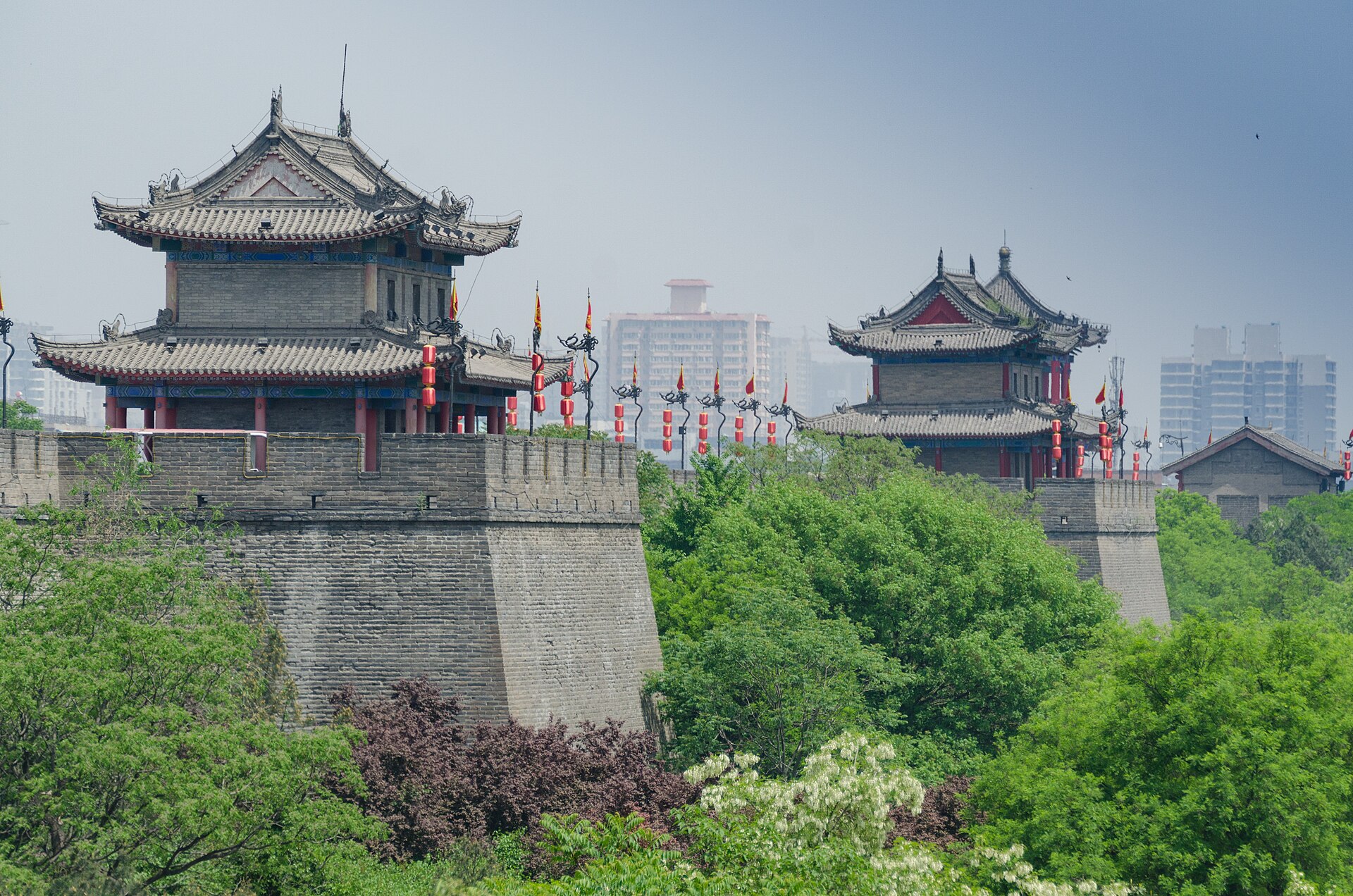
Here's what nobody tells you before you come: Xi'an is where China actually begins. It's the city where an army of 8,000 clay soldiers has stood guard for 2,200 years, where you can rent a bike and ride a complete 14 km loop on top of a Ming-dynasty wall, and where the best meal of your trip costs a handful of yuan, eaten standing up in a 1,000-year-old lane. The Terracotta Army at dawn, cumin-lamb roujiamo in the Muslim Quarter, a free Tang-dynasty light show the size of a stadium — and many passports now get in visa-free. Give it 2–3 days (4–5 with day trips) and you'll leave plotting your return.
Two things to do before you fly: set up an eSIM (so Google and WhatsApp work) and bind a card to Alipay (so you can pay for anything — most Muslim Quarter stalls show QR codes, though under the 2026 rules a staffed stall must still take cash). Sort those two and the rest of this guide is just the fun part.
No time to read all of this? Tell us your dates and we'll build your Xi'an plan for you — on WhatsApp, real humans. (One message, no obligation.)
Message us →📌 This guide is long because it's complete — use the menu to jump. Everything below is named, priced, and verified June 2026; we flag anything that drifts so you can double-check the load-bearing details.
Before You Go
🛂 Do You Need a Visa for Xi'an? — China's Visa-Free Entry, Explained
Here's the headline most travel sites bury: over the last two years China quietly became one of the easiest big countries in Asia to walk into. Two routes cover almost everyone reading this, and which one you use comes down to one thing — what color your passport is. Xi'an is wired for both: Xianyang International (XIY) is an officially approved entry port for the 240-hour transit scheme, and the 30-day waiver covers all of mainland China.
| Route | Who it's for | Max stay | The catch |
|---|---|---|---|
| 30-day visa-free | 50 countries — most of Europe, UK, Canada, Australia, New Zealand, Japan, Korea, Brazil | 30 days | Ordinary passport valid for your whole stay (airlines often ask for 6 months). Tourism / business / visiting friends — no onward-ticket rule. |
| 240-hour (10-day) transit | 57 countries incl. the USA, plus most of Europe, UK, Russia | 10 days | You must hold an onward ticket to a third country/region and enter via an approved port (XIY qualifies). |
✓ verified Oct 2026 Lists shift often — reconfirm your nationality on the official site before booking.
🇺🇸 Americans, read this carefully — it trips people up
US citizens are not on the 30-day visa-free list, but they are on the 240-hour visa-free transit list. To use it, you must meet the policy's conditions, including entry through an approved port and a confirmed onward ticket to a third country or region different from your departure country or region. The trick is the word transit. China has to believe you're passing through to somewhere else — so you need an onward flight booked out of mainland China to a third country or region before you land. Easy third stops within reach: Seoul, Bangkok, Singapore, Tokyo. The official notices say only "a third country or region", and none of the official pages we read names Hong Kong or Macao either way; reading them as qualifying is an inference, not an official rule. If your plan depends on it, confirm with your airline or the National Immigration Administration's 24-hour hotline, +86 12367 (English available), before you book. Land at Xi'an Xianyang (XIY) → spend up to 10 days → fly onward. Canada and Australia, note the flip side: you are on the 30-day list, so you get the simpler route with no onward-ticket gymnastics.
Two things that quietly sink people
① The 240 hours don't start when you land — they start at 00:00 the next day (GMT+8), so your arrival day is effectively a freebie. ② "Third country" means different from where you came from — a US→Xi'an→back-to-US ticket does not qualify; you must exit to somewhere else first.
The 240h window now lets you move between the permitted areas of all 24 participating provinces (some provinces only allow certain cities — check the area table on nia.gov.cn), so a Xi'an → Chengdu → Chongqing loop is fine inside the 10 days. Policy and country lists shift — always reconfirm your nationality on the official en.nia.gov.cn before you book the flight.
🗓️ Best Time to Visit Xi'an
Aim for spring (Mar–May) or autumn (Sep–Nov) — those are the windows, full stop. Dry, clear, comfortable, and you dodge both the furnace-summer and the tour-bus swarms.
| Season | Months | Temp | The real story |
|---|---|---|---|
| 🌸 Spring (best) | Mar–May | 10–25°C | Dry, fewer than 10 rainy days a month, cherry / peach / peony blossoms all over the city. Book ahead — locals know it too. |
| 🍁 Autumn (best) | Sep–Nov | Sep 16–25°C · Oct 10–20°C | Clear skies, golden leaves late in the season. Nov drops fast to 3–12°C — pack a real layer by then. |
| ☀️ Summer | Jun–Aug | often >35°C, sometimes >40°C | Hot, humid, packed with the domestic-vacation crowd, and hotels get pricey and hard to book. A wall ride at 40°C is a commitment. |
| ❄️ Winter | Dec–Feb | cold | Quiet and cheap, ticket prices drop at the big mountains — but bundle up and expect grey. |
Avoid the two big Chinese holiday weeks if you possibly can — Labour Day / May Day (May 1–5) and National Day / Golden Week (Oct 1–7) turn the Terracotta Army, the City Wall and the Muslim Quarter into a shoulder-to-shoulder scrum, and push hotel prices to their annual peak. The shoulder weeks on either side are bliss.
✈️ How to Get to Xi'an: Xianyang Airport & High-Speed Rail
Xi'an is one of inland China's great crossroads — it's been one for about three thousand years — and today that means one big international airport plus a high-speed rail web that makes day trips and onward cities effortless.
✈️ Xi'an Xianyang International (XIY)
The catch worth knowing up front: the airport sits roughly 40 km northwest of the center, so the ride in is a real leg of the trip, not a hop. Three ways to cover it, ranked:
| Option | Route | Time | Cost | When to pick it |
|---|---|---|---|---|
| Metro Line 14 | T2/T3 → Xi'an North Railway Stn, transfer Line 2 to Bell Tower | ~1.5h to Bell Tower | ¥2–7 | Cheapest. Operates 06:00–23:26. Best if you're light on bags. |
| Airport Shuttle Bus | Direct to the Bell Tower area, no transfers | 60–90 min (traffic) | ¥25 flat | Best with luggage — one seat, no metro stairs or changes. |
| Didi / Taxi | Door-to-door | ~45–60 min | app estimate (taxi start fare ¥9–10 + distance) | Late arrival, heavy bags, or a hotel far from a metro stop. The 40 km adds up. |
🚄 Onward by high-speed rail — Xi'an is a hub
| To | Time (high-speed) | Why bother |
|---|---|---|
| Mount Huashan / 华山 | ~30 min | China's most precipitous sacred mountain — the marquee day trip (full how-to in Part 4). |
| Luoyang | ~1.5h | Longmen Grottoes — thousands of carved Buddhas in a river cliff. |
| Pingyao | ~3h | A perfectly preserved Ming/Qing walled town. Not on a 240-hour transit — Pingyao is outside Shanxi's permitted area (Taiyuan + Datong only). |
| Chengdu / Chongqing | ~4h | Pandas and hotpot — easy add-on inside a 240h window. |
Book trains on the official 12306 website (English version) or at the station with your passport — more in Part 4.
Following the Silk Road west? Dunhuang's Mogao Caves and desert are a direct flight from Xi'an.
💴 Xi'an Travel Budget: What It Costs (per day, excluding flights)
China is going to feel cheaper than you expect — especially for what you get here, where the headline sights are state-run and street food is the main event. Rough daily budgets:
| Style | Per day (ex-flights) | What that buys you |
|---|---|---|
| 🎒 Backpacker | ¥200–350 (~$28–49) | Hostel dorm/budget room inside the wall, street food in the Muslim Quarter, metro everywhere |
| 💺 Mid-range (most people) | ¥350–700 (~$49–98) | Comfortable 3–4★ hotel, sit-down restaurants, Didi when you're lazy, the big sights (Terracotta Army ¥120, City Wall ¥54) |
| ✨ Comfort | ¥800+ (~$112+) | 5★ or heritage hotel, private guide, the Tang Dynasty dinner show with the good seats |
The single biggest budget lever isn't your hotel — it's how you eat and move. Roujiamo and biangbiang noodles for a handful of yuan, plus metro/Didi instead of taxis, keeps you firmly in the mid-range while living very well. (~¥7.1 = $1 as of Jun 2026; rates drift.)
Sources — Part 1 (verified June 2026)
Visa & 240h transit: en.nia.gov.cn (National Immigration Administration — unilateral visa-exemption list, 30-day policy valid through 31 Dec 2026 for most countries; 240-hour transit (NIA, 20 Aug 2026), 57 nationalities, XIY an approved port); cross-checked chinavigators.com (30-day list — USA excluded, on 240h; Canada + Australia included) & chinadiscovery.com / travelchinaguide.com 2026 240h guides.
Best season: travelchinaguide.com best-time-to-visit-xian; chinahighlights.com Xi'an weather (spring 10–25°C, autumn Sep 16–25°C / Oct 10–20°C / Nov 3–12°C, summer often >35°C; avoid May 1–5 & Oct 1–7).
Airport → city: travelchinaguide.com xian-airport-to-city-center & xian-metro-line-14 (Line 14 ¥2–7 / 06:00–23:26; shuttle bus ¥25; taxi start fare ¥9–10; airport ~40 km NW).
High-speed rail / day trips: chinadiscovery.com china-trains schedules (Xi'an North → Huashan North ~30 min); travelchinaguide.com.
Budget / accommodation bands: numbeo Xi'an, babagoeschina.com & wanderinchina.com (backpacker ¥200–350 / mid ¥350–700 / luxury ¥800+).
Arrival & Essentials
The three things that turn China from "intimidating" into "effortless." Do the first two before you fly — fifteen minutes at home saves you a stressful first hour at the airport.
📱 Internet & VPN in China: Get an eSIM before you fly
Let's be blunt about the thing everyone whispers about: mainland China blocks Google, Instagram, WhatsApp, Gmail, and most Western apps. Your normal SIM will roam onto a Chinese network and hit that same wall.
The clean, legal, no-drama fix: an international travel eSIM that routes your data through a server outside the mainland — so Google Maps, WhatsApp, Instagram, all of it just works, with no separate VPN to fiddle with. You install it as a second line; your home number stays for calls and texts.
| eSIM | Best for | VPN? | The honest take |
|---|---|---|---|
| Nomad | Multi-city + high-speed rail | No | The most stable one when you're moving — survives tunnels, train Wi-Fi gaps, city-hopping. Top pick if Xi'an is one stop on a bigger China trip (and the Huashan day trip means tunnels). |
| Airalo | One or two big cities, budget | No | The most popular, cheapest, dead-simple. Plenty for a city-based Xi'an trip. |
| Holafly | Heavy data users | No | Unlimited data plans + 24/7 support. Great if you stream/hotspot — check the fair-use cap. |
| Saily | Privacy-minded | No | By the NordVPN team, strong privacy. Solid for fixed-data plans. |
How it actually goes: buy online → you get a QR code by email → scan it to install (takes 2 min) → leave it off until you land → flip it on as the plane taxis in, and you're online before you reach baggage claim. Only needs an email — no Chinese ID, no registration. Buy it at home on your own Wi-Fi; do not count on installing it after you land, because activation pages can themselves be behind the wall.
One phone really does replace everything
Wallet, keys, train tickets, translator, tour guide, metro card, bike unlock, dinner orders, museum tickets — all collapse into one phone the moment you're set up. Most people pay by phone these days, though cash is still legal tender. In the Muslim Quarter, most stalls show QR codes, but under the 2026 rules a staffed stall must still take cash — carry small notes. Get your eSIM + Alipay sorted and you operate exactly like a Xi'an native by day two.
More on this: China Essentials — paying with Alipay & WeChat →💳 How to Pay in China: Alipay & WeChat for Foreigners
Most people pay by phone, but cash is still legal tender: since 1 February 2026, staffed businesses must accept it. Keep some small notes as a backup (is cash accepted in China?). Don't count on foreign cards at small shops; bigger hotels, malls and major sights are more likely to take them. In the Muslim Quarter, most stalls show QR codes, but under the 2026 rules a staffed stall must still take cash — carry small notes. The great news for 2026: both apps take a foreign Visa/Mastercard directly, no Chinese bank account needed. Do this at home before you fly — identity verification is smoother on your home connection, and you want it working the second you land.
Set up Alipay (your main wallet)
- Download Alipay from your app store and register with your home mobile number (you'll get an SMS code).
- Open "Cards" → "Add Bank Card" and enter a real Visa or Mastercard. ⚠️ Use a normal physical credit/debit card — prepaid and virtual/online-only cards are frequently rejected. This is the #1 reason setup fails.
- Complete passport verification (photo of passport + a quick selfie). Approval is usually minutes.
- Add a small backup: download WeChat Pay and bind a second physical card the same way — handy if one card ever gets declined.
The limits & fees you need to know ✓ verified Jun 2026
| Figure | |
|---|---|
| Payments under ¥200 | Fee-free (0%) |
| Payments over ¥200 | ~3% service fee |
Alipay and WeChat Pay set spending limits for foreign cards — see Essentials. Check your current limit in the app.
The practical read: the under-¥200 fee-free rule covers the vast majority of what you'll buy here — street food, metro, coffee, taxis, snacks, a ¥54 wall ticket. The ~3% only bites on bigger hits like a hotel or the Tang dinner show. Still, carry some cash and a second physical card as a fallback — rare, but cards do occasionally get declined and you don't want to be the person who can't pay.
🚕 Getting Around Xi'an: Metro, Didi & the Tourist Spine
Xi'an's metro is clean, fast, English-signed, and absurdly cheap — 9 lines now running — and Didi (China's Uber) fills every gap. The good news for a sightseer: one line does most of the heavy lifting.
Ride Line 2 (the blue line) — it's the tourist spine. It strings together the Bell Tower, the City Wall (Yongningmen Station = the main South Gate), and Xi'an North Railway Station for your day trips. Learn that one line and the old town is yours.
Metro fares — distance-based, capped at ¥8
| Distance | Fare |
|---|---|
| ≤ 6 km | ¥2 |
| 6–10 km | ¥3 |
| 10–14 km | ¥4 |
| 14–20 km | ¥5 |
| 20–26 km | ¥6 |
| longer | up to ¥8 |
Riding the metro: machines take cash + Alipay/WeChat Pay, or open Alipay → search the "Metro" / 乘车码 mini-program → scan the QR at the gate to enter and exit (it auto-charges by distance). Prefer a card? The rechargeable Chang'an Tong transit card works on both metro and buses.
Using Didi (set it up before you fly — it takes ~10 min): Didi has a full English app, takes foreign Visa/Mastercard (or link Alipay/Apple Pay), and you register with your home phone number — no Chinese SIM or bank needed. Official taxi start fare is ¥9–10 plus per-km if you'd rather flag one.
- At the airport and big stations, don't book from inside the terminal — walk to the signed 网约车 (wǎngyuē chē) ride-hailing pickup zone first; the app even shows step-by-step photos of the walk. Expect a small platform/pickup fee of ¥5–15 on top of the fare.
- The chat has a built-in English↔Chinese translator. When the driver arrives, they'll ask for the last 4 digits of your registered phone number to confirm it's you — just show them your screen. The app shows the fare estimate, surge included, before you confirm.
"Wait — China is THIS safe?"
You are 2×+ more likely to be robbed in San Francisco or Chicago than in a major Chinese city. Women routinely walk home alone past midnight; with dense CCTV, opportunistic street crime barely exists. In Xi'an that means a 10pm wander through the Muslim Quarter with a skewer in one hand and your phone out, or a solo late Didi back from the bars on Defu Lane, is completely, boringly normal.
Visa route unclear, or want the Terracotta Army + Huashan planned (we'll show you how to book them)? Tell us your dates — real humans build your Xi'an plan on WhatsApp.
Message us →Sources — Part 2 (verified June 2026)
eSIM: unusualnomad.com, traveltomtom.net, cybernews.com (China eSIM tests 2026 — Nomad most stable, Airalo cheapest, all route offshore / no separate VPN).
Alipay limits & fees: realchinatrip.com, trip.com, ltl-school.com (<¥200 fee-free · ~3% above; prepaid/virtual cards often rejected; confirm limits in-app).
Metro / Didi / payment: travelchinaguide.com Xi'an subway, trip.com Xi'an metro map (9 lines, distance fare ¥2–8, Line 2 = Bell Tower / Yongningmen / North Stn, Chang'an Tong card); chinaxiantour.com get-around-Xi'an (taxi start ¥9–10); Muslim Quarter cash: since 1 February 2026 a stall where a person collects payment must accept cash (is cash accepted in China?).
Things to Do in Xi'an
2,200-year-old clay soldiers staring back at you, a city wall wide enough to cycle the whole 14 km on top, a Muslim Quarter that fries and grills past midnight, a Tang-dynasty fountain show the size of a stadium — free. Everything below is named, priced, and verified June 2026. Walk in and do it, no second tab needed.
🏺 Terracotta Army: Tickets, Best Time & How to Visit — beat the buses, not the queue
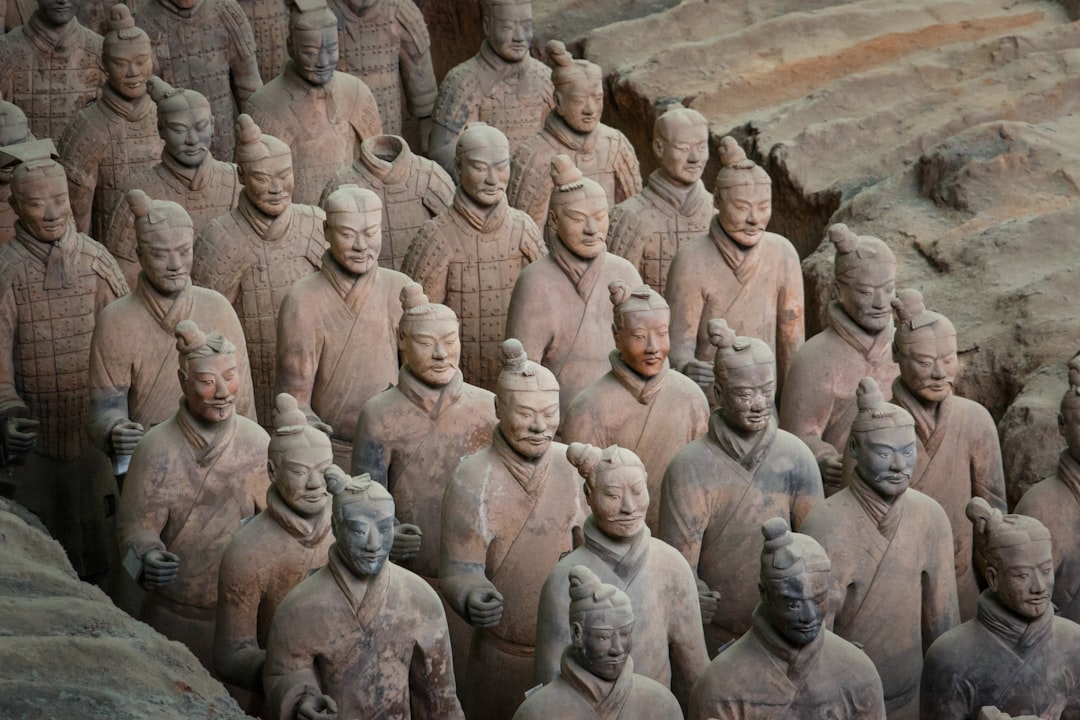
This is the reason you flew to Xi'an: an army of ~8,000 life-sized clay soldiers, each with a different face, buried for 2,200 years to guard China's first emperor. It is genuinely one of the great sights on earth — and it's 40 km east of the city in Lintong, with no metro to the door yet, so the difference between a magical morning and a hot, shoulder-to-shoulder slog is entirely about timing and logistics. Here's how to get it right.
The play: go early, go on a weekday, do Pit 1 last. The site opens its ticket office at 08:30. Aim to be scanning in by opening. Everyone who walks through the gate makes a beeline for Pit 1 (the famous big one) first — so that's exactly where the crush is at 9am. Reverse it: do the smaller Pit 3 and Pit 2 plus the bronze-chariots exhibition hall first while the crowd is jammed into Pit 1, then walk into Pit 1 around mid-morning as the tour groups cycle out. Budget 3–4 hours total.
What your ticket covers
One ticket — ¥120, the same all year — gets you all 3 pits + the Lishan Garden / Qin Shi Huang Mausoleum Site Park + the free inter-site shuttle bus between them. Confirm the price on the official site bmy.com.cn before you go.
Booking — online, real-name, under your passport name: Book on the official website or its WeChat channel before you travel. The museum's website doesn't say how many days ahead tickets go on sale, so check the booking calendar for your dates early; our Terracotta Army tickets guide has the official channels, routes and sources. The crucial part for foreigners: you enter by scanning your passport at the checkpoint — so book under your exact passport name, the ticket is valid only for the date you picked, and there's no refund once it's used.
Getting there — pick your trade-off
| Method | Cost | Time | When to pick it |
|---|---|---|---|
| Metro Line 9 → Huaqingchi, then bus Lintong You 613 or Lintong 602 to the Terracotta Army stop | check locally | check locally | The museum's own route. |
| Metro Line 3 → Tonghuamen, walk to the Qinfeng depot, then the scenic-area direct bus (兵马俑景区直通车) | check locally | check locally | The other route on the museum's directions page. Check the fare and timetable with the operator. |
| Private car / day tour | varies | half day | You want zero logistics, A/C, and English narration. |
Your passport is your ticket — no paper, no line at the window
At the Terracotta Army (and increasingly across Xi'an), foreigners don't queue at a ticket booth at all: you book online under your passport name, then scan the passport itself at the gate. No printout, no QR you'll lose, no "where do I collect it." The flip side — book the right date, because it's locked to that day and non-refundable once scanned.
Want the Terracotta Army done properly — car at your hotel, an English-speaking guide who actually explains the pits, and exactly how to book your tickets? Tell us your dates on WhatsApp.
Ask us →🚲 Xi'an City Wall: Tickets & Cycling the Wall — the best 14 km you'll ride in China
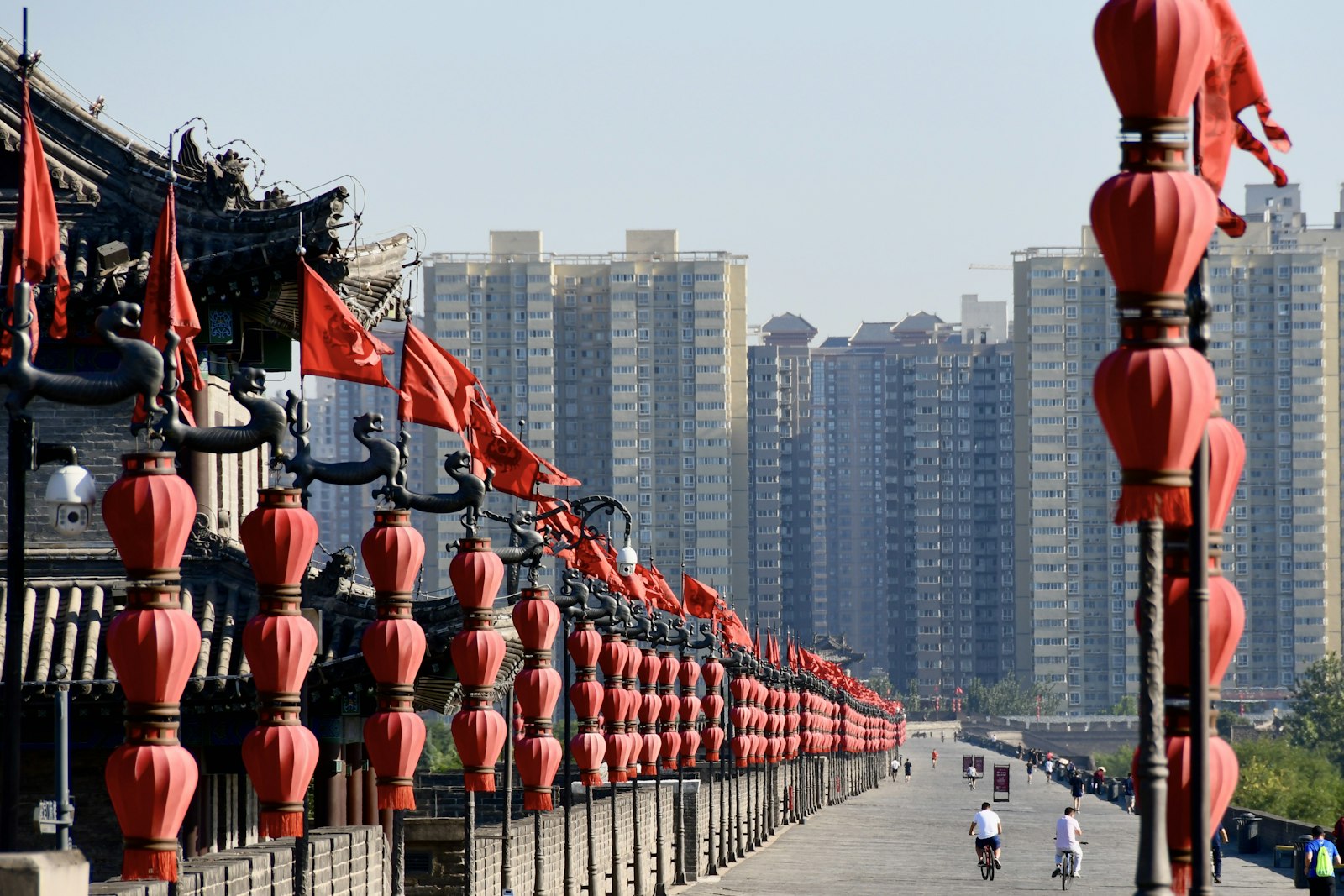
Xi'an has the most complete ancient city wall in China — and the top of it is a flat, 14 km loop you can rent a bike and ride right around. Most "old city walls" in the world are a photogenic fragment. This one is the real, unbroken Ming-dynasty rectangle, 12–14 m wide on top, wrapping the entire old town. Cycling the full circuit is the single most fun hour in Xi'an, and you do it above the traffic.
- Entry: ¥54 per person. Free for children under 120 cm and seniors 70+; half-fare for 120–140 cm.
- Hours: South Gate 08:00–22:00 (closes 20:00 Nov 1–Mar 31); the bike-rental stations at the other gates run 08:00–00:00 year-round.
- Bike rental (on top of the wall): single ¥45 / 3 hours, tandem ¥90 / 3 hours, plus a ¥100 deposit. Overtime is ¥5 per 10 min (single) / ¥10 per 10 min (tandem) — but 3 hours is wildly more than you need.
- Rent and return at any of the four gates (East / South / West / North), so you don't have to loop back to where you started.
How to actually do it: Enter at the South Gate (Yongningmen) — the grandest and most scenic stretch — via Metro Line 2 → Yongningmen Station. Grab a single bike, and ride. The full loop is ~14 km; a relaxed circuit with photo stops is about 90 minutes to 2 hours, well inside your 3-hour rental. Go late afternoon so you finish as the wall's lanterns come on and the light goes gold over the watchtowers.
Know before you saddle up: there's no cycling for under-12s, over-65s, or pregnant riders — if that's your group, walk a section instead, or split a tandem. The surface is old brick: it's flat but bumpy, so it's a cruise, not a race.
🍜 What to Eat in Xi'an: Muslim Quarter & Street Food — a foreigner's field guide
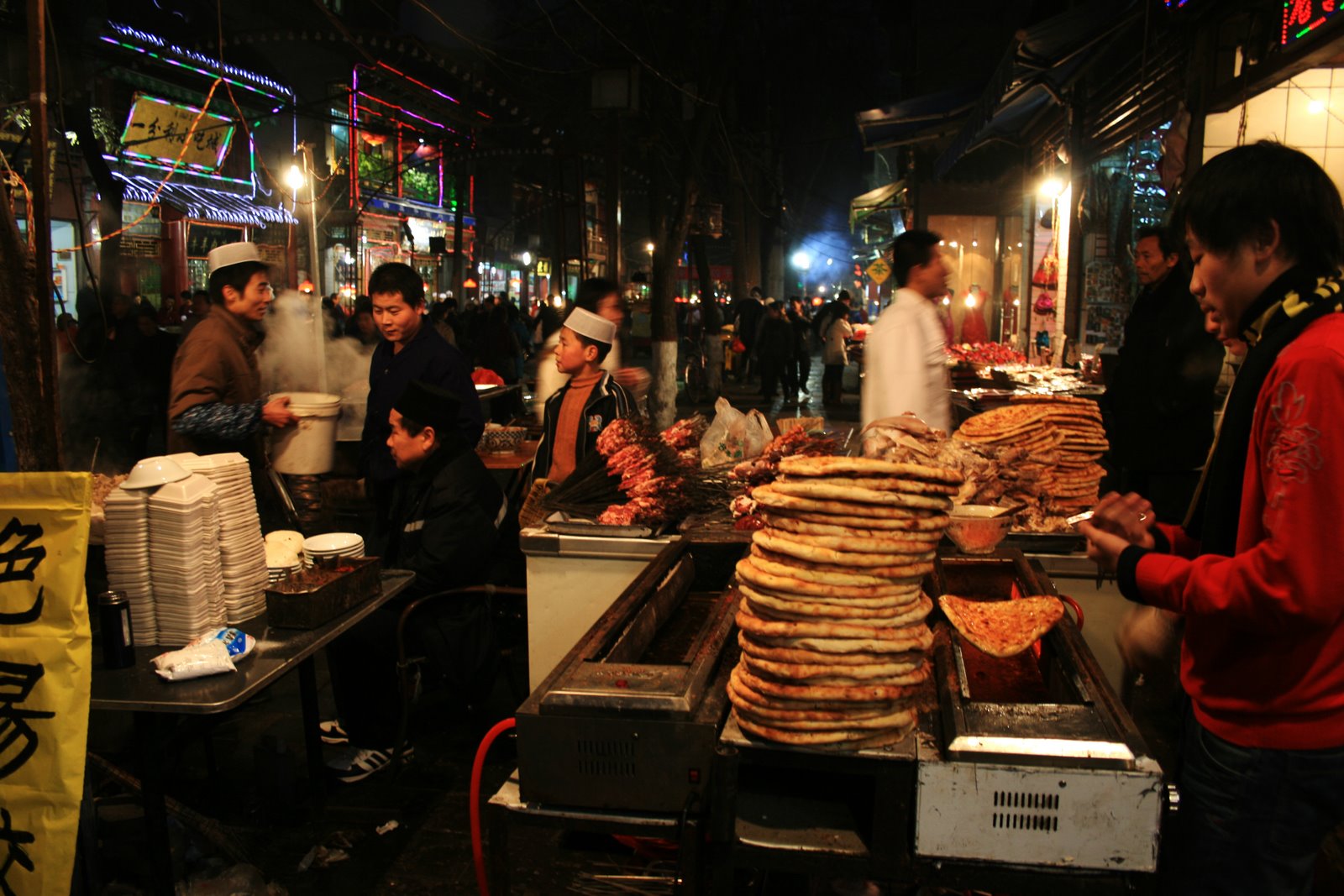
Xi'an food is the great surprise of the trip: this was the eastern end of the Silk Road, so the food is wheat, lamb, cumin and chili — closer to Central Asia than to the rice-and-stir-fry China you're picturing. Ground zero is the Muslim Quarter (回民街 / Huimin Jie), a warren of lanes behind the Drum Tower that fries, grills, pulls and steams late into the night. One rule before you start: most stalls show QR codes, but under the 2026 rules a staffed stall must still take cash — carry small notes. Set up Alipay or WeChat Pay before you arrive (see Part 2) and you'll glide.
The dishes to hunt down
- Roujiamo (肉夹馍, the "Chinese burger") — a crisp oven-baked flatbread split and stuffed with slow-stewed meat; the Muslim Quarter version is cured beef or lamb ("làzhī roujiamo"), not pork. ¥5–15. The single best cheap bite in the city — start here.
- Biáng biáng noodles (biángbiáng面) — wide, hand-ripped belt-noodles served "dry" under a slick of hot oil, chili, garlic and vinegar; the character for biáng is so complex it's basically a party trick. Street price ¥10–30.
- Lamb skewers (羊肉串) — cumin-and-chili charcoal skewers, the soundtrack-and-smell of the whole quarter. ¥15–20 each.
- General street-food range here is ¥8–30 an item — graze, don't sit down for one big meal.
Sit-down classics worth a proper stop (named, with per-head)
| Dish | Where (named restaurant) | Per person | Notes |
|---|---|---|---|
| Yangrou Paomo (lamb stew you crumble flatbread into) | Lao Sun Jia 老孙家 (est. 1898; branches on Dong Dajie) | ¥30–50 | The heritage name. You tear the flatbread into pea-sized bits yourself, hand the bowl back, it comes back full of stew. |
| Yangrou Paomo (alt) | Tong Sheng Xiang 同盛祥 | ~¥45 | The other historic paomo house; same crumble-it-yourself ritual. |
| Guantang Baozi (soup dumplings) | Jia San 贾三灌汤包子馆, 93 North Yard Gate, Huimin Jie (near the Drum Tower) | ~¥35–50 (confirm on Dianping) | Famous lamb-and-broth soup dumplings; exact per-head not pinned in our sources, so confirm on 大众点评. |
| Liangpi (cold "skin" noodles) | Wei Jia Liangpi 魏家凉皮 (many branches) | ~¥15 | The reliable everyday chain — chewy cold noodles in chili-vinegar sauce, perfect in summer. |
| Liangpi (locals' pick) | Shuan Ma Zhuang Gan Mian Pi, South University Road (30+ years) | ¥8–15 | The grittier, more-authentic version locals actually queue for. |
Paomo, decoded so you don't look lost: at Lao Sun Jia or Tong Sheng Xiang, you're handed a bowl with two hard flatbreads. Tear them into fingernail-sized pieces with your hands (smaller = better; it's half the fun and locals take it seriously), then give the bowl back — the kitchen fills it with rich lamb-and-vermicelli stew and returns it. Add the pickled garlic and chili on the side. It's a 20-minute ritual and a full meal.
You'll fight to spend more than ¥30 on the best bite in town
A cured-lamb roujiamo is ¥5–15. A plate of liangpi cold noodles is ~¥15. A heroic bowl of paomo at a 120-year-old house is ¥30–50. Xi'an's most famous food is its cheapest food, eaten standing up in a 1,000-year-old lane. A blowout street-food crawl through the Muslim Quarter rarely cracks ¥80 a head.
🌃 Xi'an at Night: Tang Dynasty Show & Great Tang Everbright City — the Tang light show
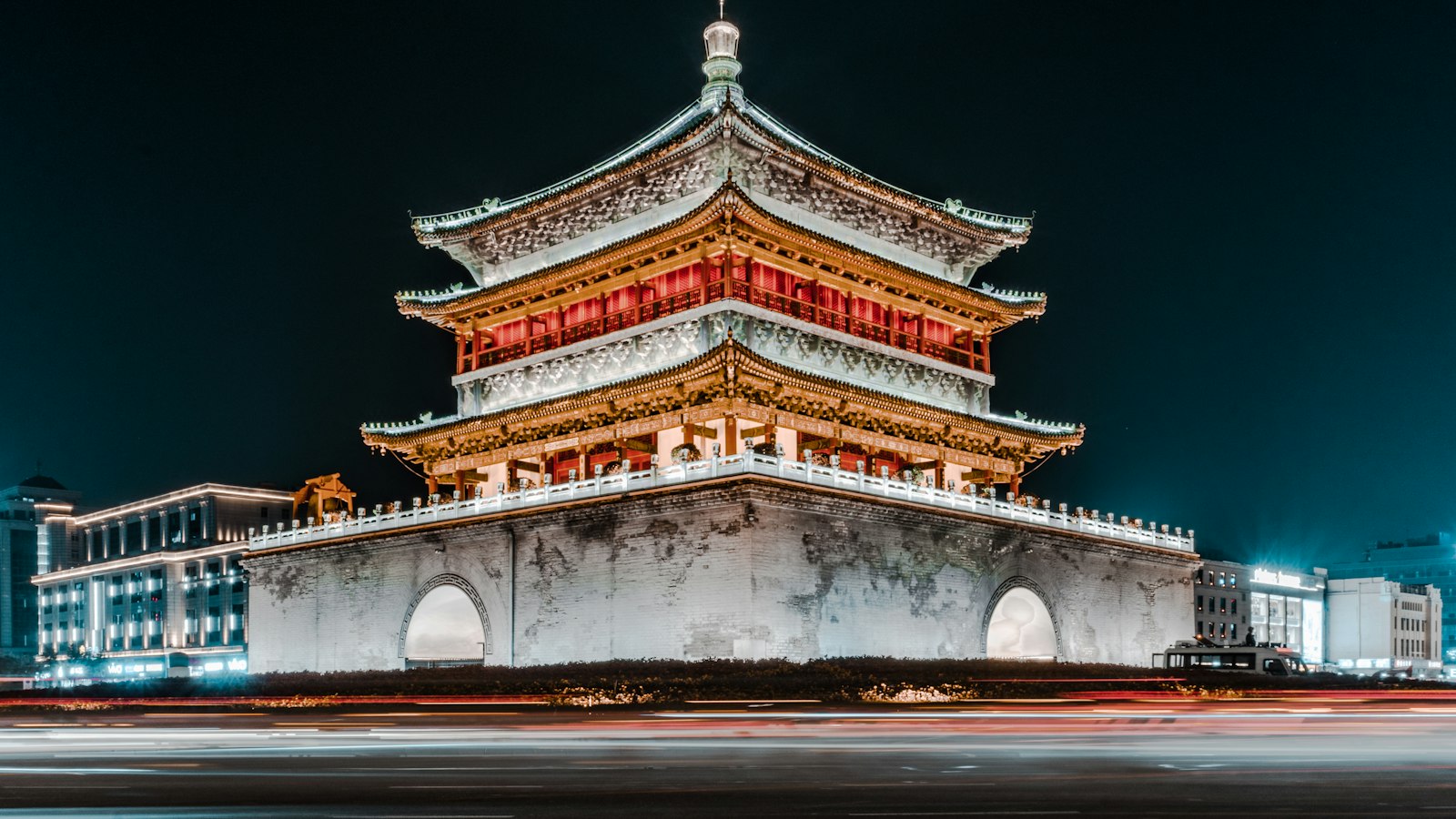
Xi'an was Chang'an, capital of the Tang dynasty and once the biggest city on earth — and modern Xi'an leans all the way into that after dark. There are two completely different "Tang night" experiences here, and people constantly mix them up. Here's the clean version.
Great Tang Everbright City (大唐不夜城 / Datang Buyecheng) — free, do this one
A vast open-air pedestrian boulevard of Tang-style pavilions, costumed performers, buskers and light installations, running between the Big Wild Goose Pagoda and the Tang Paradise area. It's free, best at night, and it's the single most atmospheric stroll in the city — think a kilometre of golden palace-style architecture lit up, full of people in rented Tang robes taking photos.
- Cost: Free to walk. Open-air, best after dark.
- Pair it with the pagoda fountain (below) — they're right next to each other.
Big Wild Goose Pagoda North Square fountain show (大雁塔北广场音乐喷泉) — free
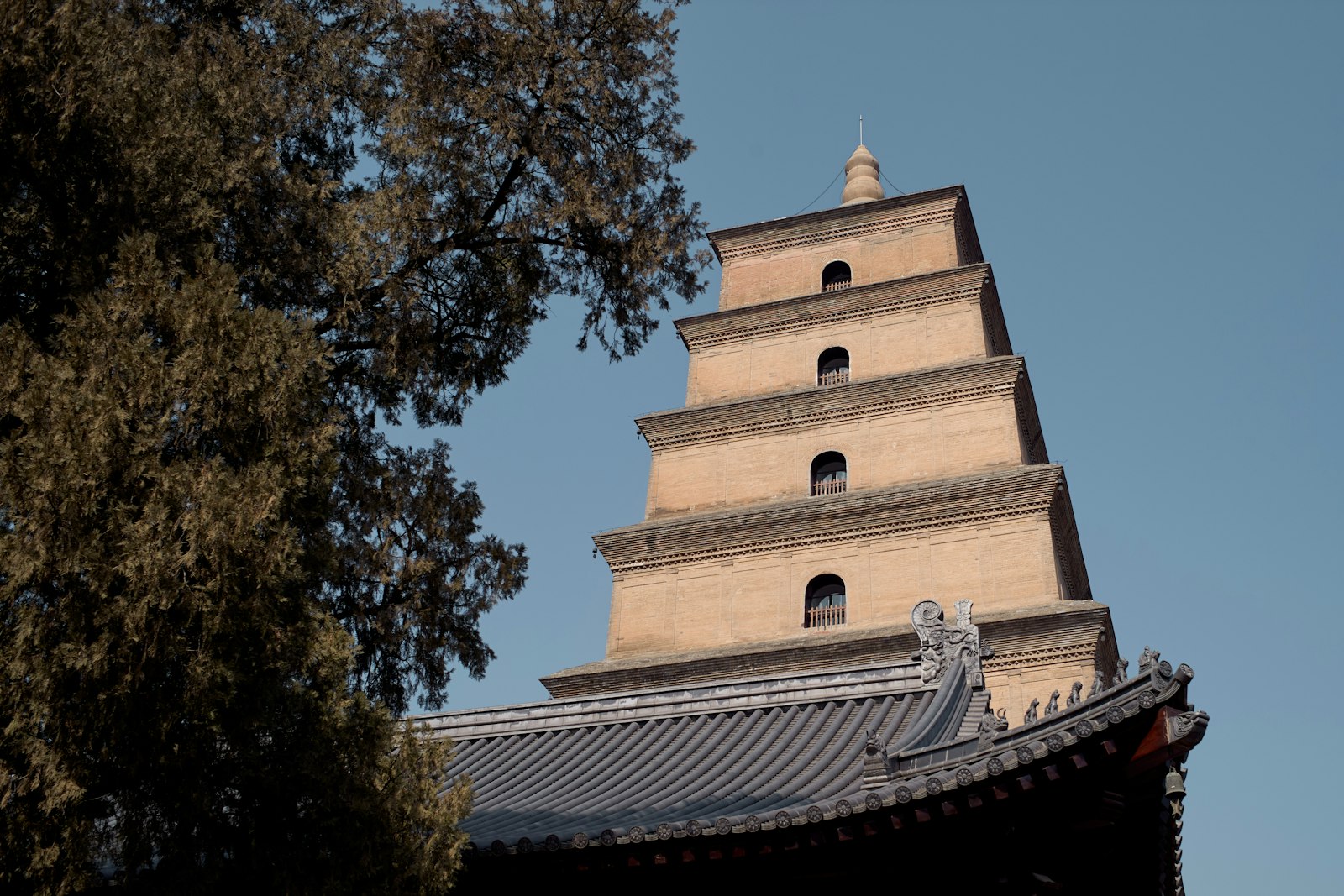
Beside the pagoda, the North Square music-fountain show is billed as Asia's largest, and it runs at set times each evening — completely free to watch. Jets choreographed to music, the lit pagoda behind. Check the day's showtimes on a sign at the square (they shift by season) and arrive 15 minutes early for a front spot.
Tang Dynasty Show + Dumpling Banquet (the ticketed dinner-theatre) — the splurge
The classic Xi'an evening for first-timers: a seated Tang-era music-and-dance show (8 sections of court music, costumes, the works) with an optional dumpling banquet, at the Shaanxi Grand Opera House, 161 Wenyi Road.
| Option | Price | What you get |
|---|---|---|
| Dumpling Banquet only | ¥150 | The famous multi-shape dumpling dinner, no show. |
| Show only | ¥268 | The Tang music-and-dance performance. |
| Combo: Show + Dumpling Banquet | ¥398 | Both — the standard tourist pick. |
- Times: dinner 19:00, show 20:00.
- Metro: Yongningmen Station, Exit D2.
- Flexibility: free change/cancel by email up to 24 h prior.
Want a Tang-dynasty night planned — which show (and how to book seats) or a guided walk through the lit-up Everbright City, fountain showtimes checked, car there and back? Message us on WhatsApp.
Message us →🍺 Xi'an Nightlife: Bars on De Fu Lane — craft beer under antique shopfronts
Here's the thing nobody tells foreigners: once the historical sightseeing is done, Xi'an has a small, surprisingly cool bar scene — and it's safe and cheap. The hub is De Fu Lane (德福巷 / Defu Xiang), a short lane near the South Gate packed with 50+ bars, cafés and art spaces tucked under restored antique grey-brick shopfronts. One walkable street, pick your mood.
The named spots worth knowing
- Park Qin — the only Terracotta-Warriors-themed bar in China: live music, clay warriors standing by your table. A perfect, only-in-Xi'an drink.
- Aer — rooftop cocktail bar with skyline views; go at sunset.
- Vice Versa — café by day, underground cocktail bar + rooftop by night; the long-running expat favorite.
- Waking Lotus — premium mixology if you want a serious cocktail.
- De Fu Lou Café & Bar — one of Xi'an's first bars; local and imported beers at fair prices, a safe first stop.
The practical bits
Prices: beer ¥30–60 a glass, cocktails ¥45–90. Hours: most run 18:00–02:00, with live shows around 21:30. Deal to look for: some bars run a "Sunset Discount" — 30% off drinks Sun–Thu before 20:00. Getting home: Didi is your friend for the 2am exit — the metro stops around 23:00.
A craft beer is ¥30 and you'll walk back safe at 2am
A glass of beer on De Fu Lane runs ¥30–60, a proper cocktail ¥45–90 — and Xi'an, like China's other big cities, is somewhere you can genuinely wander home alone after midnight without a second thought. The "China is sketchy after dark" assumption is just flat wrong; the bigger risk is missing the free fountain show because you were in a bar.
Want a local to take you out in Xi'an — De Fu Lane done right, no tourist traps, plus the food lanes most visitors miss? Ask us on WhatsApp.
Ask us →Sources — Part 3 (verified June 2026)
Terracotta Army: bmy.com.cn (official ticketing) · chinaxiantour.com (ticket policy) · travelchinaguide.com (hours) · chinadiscovery.com (booking & passport entry) · wanderinchina.com (Metro Line 9).
City Wall & bikes: chinaxiantour.com (biking on the wall) · travelchinaguide.com (wall tickets/hours).
Food: chinahighlights.com & sinotales.com (Muslim Quarter food & QR-pay) · chinaculturetour.com (Lao Sun Jia paomo) · tripadvisor.com (Jia San soup dumplings) · xiandeeptour.com (local liangpi) · travelchinaguide.com (paomo, liangpi).
Night & nightlife: trip.com (Great Tang Everbright City, North Square fountain) · showxian.com (Shaanxi Grand Opera House, metro exit) · travelchinaguide.com (Tang Dynasty Show) · afar.com & chinawondersguide.com (De Fu Lane bars & prices).
Prices and hours shift on Chinese public holidays and between summer/winter here — confirm the load-bearing ones (Terracotta ¥120; Jia San per-head; daily fountain & show times) on the official page or Dianping before you commit.
Day Trips from Xi'an
Here's the thing nobody tells you about Xi'an: the single most famous sight isn't even in the city. The Terracotta Army sits 40 km east, out past the suburbs in Lintong — so the trip you flew across the world to make is, technically, a day trip. Good news: it's an easy one, and once you've got the train-and-bus logic down, the same logic unlocks Xi'an's other heavy hitter — Mount Huashan, China's most vertigo-inducing sacred peak, a 30-minute bullet train away.
🚄 First, the getting-out-of-town logic (read this once, it saves you a tour booking)
Two facts unlock every day trip below.
Fact one — the Terracotta Army has no metro to its door (yet). It's in Lintong, ~40 km east, and the cleanest way there is the museum's own metro-plus-bus route, not a taxi (the distance fare adds up fast). More on that in its section.
Fact two — everything else leaves from a bullet-train station. Huashan and any onward high-speed trip run from Xi'an North Railway Station (西安北站 / Xi'an Bei) — the giant HSR hub on Metro Line 2 (and Line 4), ~30–40 min from the Bell Tower.
How to actually get a high-speed ticket (the foreigner-proof version)
- Book on Trip.com or the official 12306 website — both have English versions. Trip.com is smoother for non-Chinese passports; 12306 is the source of truth and a touch cheaper.
- Book 1–2 days ahead for Huashan on weekends and holidays — the popular morning departures fill up.
- Bring your physical passport — it is your ticket. Tap it at the gate (foreigner gates are marked; if the auto-gate rejects it, the staffed window beside it waves you through in ten seconds).
- Arrive 30 min early. Xi'an North is one of the largest stations in Asia — security plus finding your platform genuinely eats time.
The bullet train to a 2,000-m holy mountain costs less than your airport coffee
Xi'an North → Huashan North is ~30 minutes on a 300 km/h train, second class ~¥55 — about US$8 — with 50+ departures a day from 06:26. The Terracotta Army? A metro ride and a local bus. China's transport is the cheapest "wow" you'll buy on this entire trip.
More on this: China Essentials — getting around (rail, metro, Didi) →🏺 Terracotta Army Day Trip — the 2,200-year-old reason you're here
Bottom line: this is the one. Non-negotiable, worth every minute, and entirely doable on your own — no tour required. In 1974, farmers digging a well struck a clay head. What they'd hit was the buried army of Qin Shi Huang, China's first emperor — an estimated 8,000 life-sized soldiers, every single face different, plus horses and chariots, standing guard over his tomb for over 2,200 years. There are three excavation pits; Pit 1 is the money shot — the vast hangar of massed infantry you've seen on every postcard. It's a UNESCO World Heritage site and it lands harder in person than any photo prepares you for.
The ticket
- Entry is ¥120, the same all year, and that single ticket is generous — it covers all three pits + the Lishan Garden / Qin Shi Huang Mausoleum Site Park, with a free shuttle bus between the two areas. (Confirm the live price on the official bmy.com.cn before you go.)
- Book ahead on the official website or WeChat. The museum's website doesn't say how many days ahead tickets go on sale, so check its booking calendar early. Critically: foreigners enter by scanning their passport at the checkpoint — so book under your exact passport name, it's valid only for the date you pick, and there's no refund once it's been used.
- Hours: ticket office 08:30–18:30 (Mar 16–Nov 15) / 08:30–18:00 (Nov 16–Mar 15), last check-in ~17:00 / 16:30.
Getting there (two real options, pick by your patience)
| Route | Time | Cost | Catch | |
|---|---|---|---|---|
| 🚇 Metro Line 9 + bus | Line 9 to Huaqingchi, then bus Lintong You 613 or Lintong 602 to the Terracotta Army stop | check locally | check locally | The museum's own route. |
| 🚌 Metro Line 3 + direct bus | Line 3 to Tonghuamen, walk to the Qinfeng depot, then the scenic-area direct bus (兵马俑景区直通车) | check locally | check locally | The other route on the museum's directions page. Check the fare and timetable with the operator. |
Insider play (do this exactly)
Aim to be at the gate near the 08:30 opening. Then — counterintuitively — walk to Pit 1 last, not first. Every tour group stampedes straight into Pit 1 the moment it opens; if you do Pit 2 and Pit 3 (smaller, quieter) first and circle back to Pit 1 mid-morning, you'll catch it as the first wave thins out. The faces are the whole point — you want room to stand at the railing and actually look.
Worth it? Unreservedly. Budget a half to full day door-to-door. If you've got the appetite, the same Line 9 route passes Huaqing Hot Springs, the imperial bathing palace at the foot of Mount Li — an easy bolt-on for a fuller day.
⛰️ Mount Huashan Day Trip — the most precipitous mountain in China (and it knows it)
Bottom line: the most spectacular thing within striking distance of Xi'an — a sheer granite spectacle that's gloriously easy to reach and gloriously hard to climb. Huashan is one of China's Five Great Mountains, famous as the country's most vertical and white-knuckle hike: granite faces, vertigo ridgelines, and the infamous (entirely optional) cliffside plank walk. Five peaks, sea-of-cloud views, Taoist temples clinging to the rock. You do not need to do anything death-defying to get the payoff — the cable cars deliver the views without the terror.
Getting there
- High-speed rail: Xi'an North → Huashan North, ~30 min, second class ~¥55, 50+ trains/day, first ~06:26 / last ~19:35.
- From Huashan North station, a shuttle/taxi runs you the short hop to the tourist center, where a mandatory shuttle bus to the cable-car bases adds ~¥40–60. (Factor this in — it catches people out.)
Tickets & getting up the mountain
- Entrance: ¥180 (Mar–Nov peak) / ¥100 (Dec–Feb off-season).
- Cable cars (this is how you skip the brutal stair-climb): North Peak ~¥80 one-way; West Peak ¥140 one-way / ¥280 round-trip in peak season (¥120 / 240 off-season). Confirm seasonal pricing on the official channel.
The route locals actually recommend: "Up the West Peak cable car, down the North Peak cable car." It hands you the best scenery on the way up, lets you traverse the ridgeline between peaks on foot in the middle, and drops you down the other side — a ~5–6 hour loop that sees the mountain properly without a death-march.
About that plank walk
The viral "Plank Walk in the Sky" (Changkong Zhandao) — a foot-wide board bolted to a 2,000 m vertical face — is real, harnessed, and completely optional. It costs extra, the queue can swallow your whole afternoon, and skipping it costs you nothing of the mountain's beauty. Do it for the bragging rights or don't; either way, the cable-car peaks are the main event.
Pick Huashan if: you have a spare day and want raw mountain drama an easy train-ride away. The honest trade-off: it's a full, physical day — early train out, late train back. If your trip is only 3 days and the Warriors plus the city already fill them, Huashan is the first thing to cut.
🗓️ Xi'an Itinerary: 2, 3 & 5 Days — the points actually strung together
These plug straight into Part 3 (City Wall, Muslim Quarter, Big Wild Goose Pagoda, the Tang show) and Part 4 above. Times assume a central base near the Bell Tower / Drum Tower. Tap a day to open the hour-by-hour plan.
⏱️ 2 Days — the essential Xi'an
Day 1 Warriors morning, old-city evening
- 07:30Out early. Metro Line 9 to Huaqingchi, then the Lintong You 613 or 602 bus toward the Terracotta Army. (Full Warriors playbook above.)
- 08:45–11:30The Warriors: hit Pits 2 & 3 first, save the great hall of Pit 1 for when the first tour wave thins.
- 12:30Back toward town. Lunch in the Muslim Quarter (回民街): roujiamo (the "Chinese burger," ¥5–15) and a bowl of hand-ripped biangbiang noodles (¥10–30). Scan to pay (most stalls show QR codes) and keep small notes handy.
- 14:30–17:00Rent a bike on top of the Ancient City Wall (entry ¥54; single bike ¥45 / 3 hrs). Ride a stretch of the 14 km loop with the old town on one side, the new city on the other.
- 18:00Dinner: a proper sit-down yangrou paomo (lamb-and-flatbread stew) at a Muslim Quarter institution.
- 20:00Stroll Great Tang Everbright City (大唐不夜城) after dark — the free, illuminated Tang-themed promenade by the Big Wild Goose Pagoda. Pure spectacle, costs nothing.
Day 2 Pagodas, Tang dynasty & a banquet finale
- 09:30Big Wild Goose Pagoda / Da Ci'en Temple (Metro Line 3/4 to Dayan Pagoda Station). Temple admission ¥40–50; climbing the pagoda is +¥25–30 for the rooftop view over the city.
- 12:30Lunch nearby, then coffee. The Qujiang district around the pagoda is calmer and greener than the old town.
- 14:30–16:30Wander back through the city, or hit a museum (the Shaanxi History Museum if you pre-booked — it's free but heavily reserved).
- 18:00Reset at the hotel.
- 19:00The Tang Dynasty Show at the Shaanxi Grand Opera House (Metro Yongningmen, Exit D2): dinner at 19:00, show at 20:00 — eight sections of Tang-era music and dance. Dumpling Banquet only ¥150 · show only ¥268 · combo ¥398. A grand last night.
⏱️ 3 Days — the sweet spot (add Huashan)
Days 1–2 As above
Run the 2-day plan, but breathe — linger longer in the Muslim Quarter, add a foot massage before dinner, and do the full wall loop instead of a stretch.
Day 3 Mount Huashan
- 06:30Bullet train Xi'an North → Huashan North (~30 min; book the night before).
- 07:30Shuttle to the tourist center, then the West Peak cable car up (¥140 one-way peak).
- 08:30–13:00Traverse the ridgeline on foot, peak to peak — the sea-of-clouds views, the Taoist temples, the vertigo. (Plank walk only if you're a thrill-seeker and the queue's short.)
- 13:30Down the North Peak cable car; shuttle back to the station.
- 15:30Train back; central Xi'an by late afternoon. Easy dinner — your legs have earned it.
⏱️ 5 Days — the full Shaanxi
Days 1–3 The 3-day plan above
City essentials + Warriors + Huashan, unrushed.
Day 4 Slow Xi'an + the museums you skipped
- MorningThe Shaanxi History Museum (book ahead — it's free and famously oversubscribed) or the Stele Forest for China's great calligraphy in stone.
- AfternoonThe Drum Tower & Bell Tower up close, then drift the side lanes off the Muslim Quarter where the locals actually eat — liangpi (cold skin noodles, ~¥15) and lamb skewers (¥15–20).
- EveningDe Fu Lane (德福巷) — the bar street. A craft beer under the antique shopfronts (¥30–60), or a cocktail at the Terracotta-themed bar.
Day 5 A second day trip, or pure drift
Option A (more history): a second day trip — Famen Temple (a finger-bone relic of the Buddha under a vast modern complex) or the Han Yang Ling tomb museum. (We pin Huashan and the Warriors as the verified marquee trips; confirm these two on Trip.com when you book.)
Option B (slow): an eat-and-drift day — late breakfast, a long wander, one more paomo, a final sunset from the City Wall. Often the day people remember most.
Want this turned into a real plan — the Warriors visit planned (we'll show you how to book it), the Huashan train booked, a guide who knows which paomo joint? Send us your dates on WhatsApp.
Send dates →🛏️ Where to Stay in Xi'an: Best Areas — with real price bands
No booking links, no commission — just where each type of traveler should sleep and what you'll roughly pay. Nightly bands below are for a clean 3–4★ double in low/shoulder season — they spike hard in summer, the May Day week (May 1–5), and National Day (Oct 1–7), so confirm live on your booking app.
| Area | Best for | Why here | Rough nightly band |
|---|---|---|---|
| 🔔 Bell Tower & Drum Tower | First-timers | Dead-center of the old city, walk to the Muslim Quarter and City Wall, on Metro Lines 2 & 6. Where I'd put a first-timer, full stop. | Mid ~¥350–600 (~$50–85); plenty of 4–5★ above |
| 🏯 South Gate / Yongningmen | History-first & backpackers | The grandest City Wall gate and its main access; ~20-min walk to the Muslim Quarter. The hostel scene clusters inside the wall here. | Budget from ~¥200 (~$28); hostels cheaper |
| 🕌 Big Wild Goose Pagoda / Qujiang | Quieter stays & Tang-culture fans | Greener, calmer, newer — steps from the pagoda, the night fountain, and Great Tang Everbright City. You commute to the old town. | Mid ~¥350–600 (~$50–85) |
| 🏙️ High-Tech Zone (Gaoxin) | Luxury & business | Xi'an's modern business district — 2026 home of the new Rosewood, Four Seasons, Shilla Monogram. Polished, but far from the sights. | Luxury ¥800+ (~$110+) |
My honest pick: Stay Bell Tower / Drum Tower and walk to almost everything that matters — the wall, the Muslim Quarter, two metro lines for the Warriors and the pagoda. You only need to base elsewhere if luxury (Gaoxin) or absolute quiet (Qujiang) is the point. For heritage-grand, the Sofitel Legend People's Grand Hotel sits a ~10-minute walk from the Bell Tower.
"Inside the ancient walls, walk to everything" costs what a budget motel costs back home
A clean mid-range double a few minutes from the Bell Tower runs roughly $50–85 a night, and a hostel bed inside the City Wall starts near $28. "Historic and central" and "affordable" aren't a trade-off here — they're the same room.
Sources — Part 4 (verified June 2026)
Trains/fares: chinadiscovery.com (trains, cable car, route), travelchinaguide.com, Trip.com / 12306.
Terracotta Army: chinadiscovery.com (tickets + how to visit), travelchinaguide.com (hours + how-to-visit), bmy.com.cn (official ticketing and directions), wanderinchina.com (transport).
Mount Huashan: chinadiscovery.com (trains, cable car, route), travelchinaguide.com (tickets).
Hotels / price bands: babagoeschina.com (where to stay), wanderinchina.com (accommodation); aggregated public nightly-rate ranges across major travel-booking platforms (June 2026).
Know Before You Go
🧠 Culture, money & health — the fine print
🤝 Culture shocks & etiquette (the 6 that trip up first-timers)
- No tipping. Anywhere. Restaurants, taxis, hotels, the noodle master pulling your biangbiang — none of it. Trying to tip causes confusion, not gratitude. Keep your change.
- Muslim Quarter stalls: QR codes first, small notes second. Most stalls show QR codes, but under the 2026 rules a staffed stall must still take cash — carry small notes. Set up Alipay or WeChat Pay before you arrive (Part 2) so you can scan like everyone else.
- You order by scanning a QR code at most sit-down places — point your camera at the table sticker, a menu opens, you tap, you pay, food arrives. (Menu's usually Chinese — Google Translate's camera, on your eSIM, reads it instantly.)
- Tap water is NOT drinkable — locals boil it or drink bottled. Every hotel room has a kettle and free bottles; restaurants serve hot water or tea by default.
- Strangers may ask to take a photo with you — especially with kids, or away from the big sights. It's genuine friendly curiosity, not a scam or a setup. Smile, say yes or wave it off politely.
- Personal space & volume run differently — expect closer queuing, louder restaurants, some throat-clearing. It's cultural, not rude. Roll with it.
💰 What's dirt-cheap vs. surprisingly pricey
Absurdly cheap (spend freely):
- High-speed rail — the 30-min bullet train to Huashan is ~¥55.
- Street food — roujiamo ¥5–15, biangbiang noodles ¥10–30, liangpi ~¥15, lamb skewers ¥15–20. Most snacks land ¥8–30.
- Metro & Didi — metro ¥2–8 by distance; cross-town Didi often modest (taxi start fare ¥9–10).
- The big sights — the Warriors are ¥120, the City Wall ¥54, the pagoda ¥40–50. World-class history at supermarket prices.
Surprisingly pricey (budget for it):
- Huashan's add-ons stack up — entrance (¥100–180) + the mandatory shuttle (¥40–60) + cable cars (up to ¥280 round-trip) means the "cheap" mountain can run ¥300+ before lunch.
- Imported goods & Western groceries — familiar shampoo, cheese, or branded snacks carry a premium.
- Western food & specialty coffee — a Western breakfast or a flat white runs Western-city prices, often more than three local meals.
- Bar-street cocktails — beer's cheap (¥30–60), but imported-spirit cocktails on De Fu Lane run ¥45–90.
🚑 Emergencies & health (save these before you fly)
- Don't drink the tap water — bottled or boiled only. Your hotel kettle is your friend; ice in proper restaurants/cafés is fine, street stalls use your judgment.
- "My mouth is numb!" — Shaanxi food is more savory-spicy than Sichuan's, but you'll still meet chili oil and the odd numbing Sichuan pepper. It's a harmless tingling effect, not an allergy — sip warm tea; yogurt or milk cuts heat faster than water.
- Xi'an is dusty and dry — spring sees the odd dust day and the air can be hazy in winter. Pack lip balm and a small bottle of water; sensitive lungs may want a mask on grey days.
- Pharmacies (药店) are everywhere — well-stocked, cheap, no prescription for basics. Point to the problem or show a translated note. Major hospitals have international/VIP desks; travel insurance is still strongly worth it.
❓ FAQ — straight answers to what everyone actually asks
Do I need a visa to visit Xi'an in 2026?
Probably not — but Americans, read carefully. 50 countries get 30 days visa-free (most of Europe, plus UK, Canada, Australia, New Zealand, Japan, South Korea, Brazil) — valid through Dec 31, 2026 for most countries, no onward ticket needed. US citizens are not on the 30-day visa-free list, but are eligible for 240-hour visa-free transit if they meet the policy's conditions, including entry through an approved port and an onward ticket with a confirmed date and itinerary, leaving within 240 hours for a third country or region different from their departure country or region (e.g. Seoul or Bangkok; whether Hong Kong or Macao counts is our inference, not an official rule, so confirm with your airline or the immigration hotline, +86 12367, before you book). Xi'an Xianyang (XIY) is an approved entry port for both routes. Always confirm against the official en.nia.gov.cn before booking. (Full breakdown: Part 1.)
How do I get from Xi'an airport (XIY) into the city?
Xianyang International (XIY) is ~40 km out, so plan for it. Three options: Airport Shuttle Bus straight to the Bell Tower area, ¥25 flat, 60–90 min — best with luggage. Metro Line 14 from T2/T3 to Xi'an North, then transfer to Line 2 for the Bell Tower — ¥2–7, ~1.5 hrs total (operates 06:00–23:26), the cheapest. Or Didi/taxi door-to-door, ~45–60 min (taxi start fare ¥9–10, but the distance fare adds up over 40 km). (Full options: Part 2.)
How do I actually get to the Terracotta Army on my own?
You don't need a tour. The museum's own directions: Metro Line 9 to Huaqingchi, then bus Lintong You 613 or Lintong 602 to the Terracotta Army stop; or Metro Line 3 to Tonghuamen, walk to the Qinfeng depot, then the scenic-area direct bus. The ¥120 ticket covers all three pits, the Lishan Garden, and the free inter-site shuttle. Book online before you go, under your exact passport name, on the museum's official site or WeChat — foreigners scan their passport to enter, and the ticket is valid only for the date you choose. The museum's site doesn't say how many days ahead tickets go on sale; our Terracotta Army tickets guide has the official routes and booking steps. (Full Warriors playbook: Part 4.)
Will Google, WhatsApp, and Instagram work in Xi'an?
Not on local WiFi or a Chinese SIM — but there's a clean fix. China blocks Google, WhatsApp, Instagram, and the rest. Install an international travel eSIM (Airalo, Nomad, Holafly, Saily) before you fly — it routes your data offshore so every app just works, no separate VPN needed. Set it up at home; it activates the moment you land. (eSIM comparison: Part 2.)
Can I really pay everywhere with just my foreign card?
Yes — via QR, not the card itself. Bind your Visa/Mastercard inside Alipay or WeChat Pay (do it before you arrive) and you scan-to-pay almost everywhere — from Muslim Quarter food stalls to taxis to ticket counters. In the Muslim Quarter, most stalls show QR codes, but under the 2026 rules a staffed stall must still take cash — carry small notes. Don't count on foreign cards at small shops; bigger hotels, malls and major sights are more likely to take them. Alipay and WeChat Pay set spending limits for foreign cards — see Essentials. Expect a ~3% fee above ¥200. (Setup steps: Part 2.)
How many days do I need in Xi'an?
2–3 days covers the city and the Terracotta Army comfortably (Warriors morning, City Wall, Muslim Quarter, Big Wild Goose Pagoda, the Tang show). Add a 4th or 5th day for Mount Huashan and the museums you'd otherwise skip. Two full days is the honest minimum; three is the sweet spot.
Can I bike the Xi'an City Wall — and how much?
Yes, and it's one of the best things you'll do here. Wall entry is ¥54; on top, rent a single bike for ¥45 / 3 hrs or a tandem for ¥90 / 3 hrs (¥100 deposit), at any of the four gates. The full loop is ~14 km — about 1.5–2 hours at an easy pace. The South Gate (Yongningmen, Metro Line 2) is the main, most scenic access. Note: no riding for under-12s, over-65s, or if pregnant. (Full wall guide: Part 3.)
Is Mount Huashan dangerous? Do I have to do the plank walk?
No, and absolutely not. Huashan's reputation comes from the optional "Plank Walk in the Sky" — a board bolted to a vertical cliff — but it's harnessed, costs extra, and you can skip it entirely with zero loss to the day. The smart route is West Peak cable car up, North Peak cable car down (a ~5–6 hr loop), which serves the sea-of-cloud views and ridgeline temples without any death-defying climb. Entrance ¥100–180 by season, plus the mandatory ¥40–60 shuttle. (Full playbook: Part 4.)
What should I eat in Xi'an — and where?
Xi'an is one of China's great food cities, and most of it is street food. The must-eats: roujiamo (肉夹馍), the crisp-bun "Chinese burger" stuffed with stewed meat (¥5–15); biangbiang noodles, wide hand-ripped noodles under chili oil (¥10–30); yangrou paomo, lamb stew over torn flatbread — try Lao Sun Jia 老孙家 (est. 1898, ¥30–50) or Tong Sheng Xiang 同盛祥 (~¥45); liangpi cold skin noodles from Wei Jia Liangpi 魏家凉皮 (~¥15); and guantang baozi (soup dumplings) at Jia San 贾三灌汤包子馆 in the Muslim Quarter (~¥35–50, confirm on 大众点评). Most stalls show QR codes. (Full food guide: Part 3.)
When's the best time of year to visit Xi'an?
Spring (Mar–May) and autumn (Sep–Nov) — roughly 10–25°C, dry, clear, blossoms in spring and golden leaves in late autumn. Avoid summer (Jun–Aug): daily highs often top 35°C (sometimes 40°C), humid, crowded, and hotels are pricey and hard to book. Also dodge the two big holiday weeks — May Day (May 1–5) and National Day (Oct 1–7) — when domestic crowds and prices peak. (Full season guide: Part 1.)
Is Xi'an safe at night, especially for solo travelers?
Very. Like China's other big cities, Xi'an is well-lit, busy late, blanketed in CCTV, and almost free of street crime. The Muslim Quarter and Great Tang Everbright City buzz well into the night with families and tourists. Solo travelers, including women, routinely walk back late without trouble — you'll likely feel safer at midnight here than in most Western cities. (Full context: the safety box in Part 2.)
Which day trip should I pick if I only have time for one?
The Terracotta Army — it's the whole reason most people come to Xi'an, and it's an easy half-to-full day from the city by metro and bus. If you've already seen the Warriors and have one more day for something completely different, Mount Huashan is the spectacular pick — a 30-min bullet train to sheer granite peaks and cable-car views. Warriors for history and the icon; Huashan for drama and mountains.
📣 Plan it with us
Want the whole thing handled?
Flights, trusted hotels inside the right neighborhood, the Terracotta Army planned (we'll show you how to book it on your passport), the Huashan bullet train booked, and a local guide who knows which paomo joint and which Muslim Quarter stall. That's exactly what we do — real humans, real local knowledge. Tell us your dates and what you're into, and we'll take it from there.
Plan your Xi'an trip on WhatsApp
All sources (verified June 2026)
Visa & entry: en.nia.gov.cn (unilateral 30-day exemption list), chinadiscovery.com (240-hour transit), chinavigators.com (30-day country list). Transport: travelchinaguide.com (Xianyang airport-to-city, Metro Line 14, subway), chinaxiantour.com. Terracotta Army: chinadiscovery.com, travelchinaguide.com, bmy.com.cn (official ticketing), wanderinchina.com. Mount Huashan: chinadiscovery.com (trains, cable car, route), travelchinaguide.com (tickets). City Wall & bikes: chinaxiantour.com, travelchinaguide.com. Big Wild Goose Pagoda & Tang show: chinahighlights.com, travelchinaguide.com, showxian.com. Food: chinaculturetour.com, travelchinaguide.com, sinotales.com, xiandeeptour.com. Nightlife: afar.com, chinaxiantour.com, chinawondersguide.com. Hotels: babagoeschina.com, wanderinchina.com.
⚠️ Live-confirm before travel: seasonal opening hours, exact fares, and nightly hotel rates shift. Terracotta Army price (¥120) → the official bmy.com.cn; Huashan seasonal cable-car/entrance prices → the official scenic-area channel; visa eligibility → en.nia.gov.cn; everything else → Trip.com or the attraction's official channel.