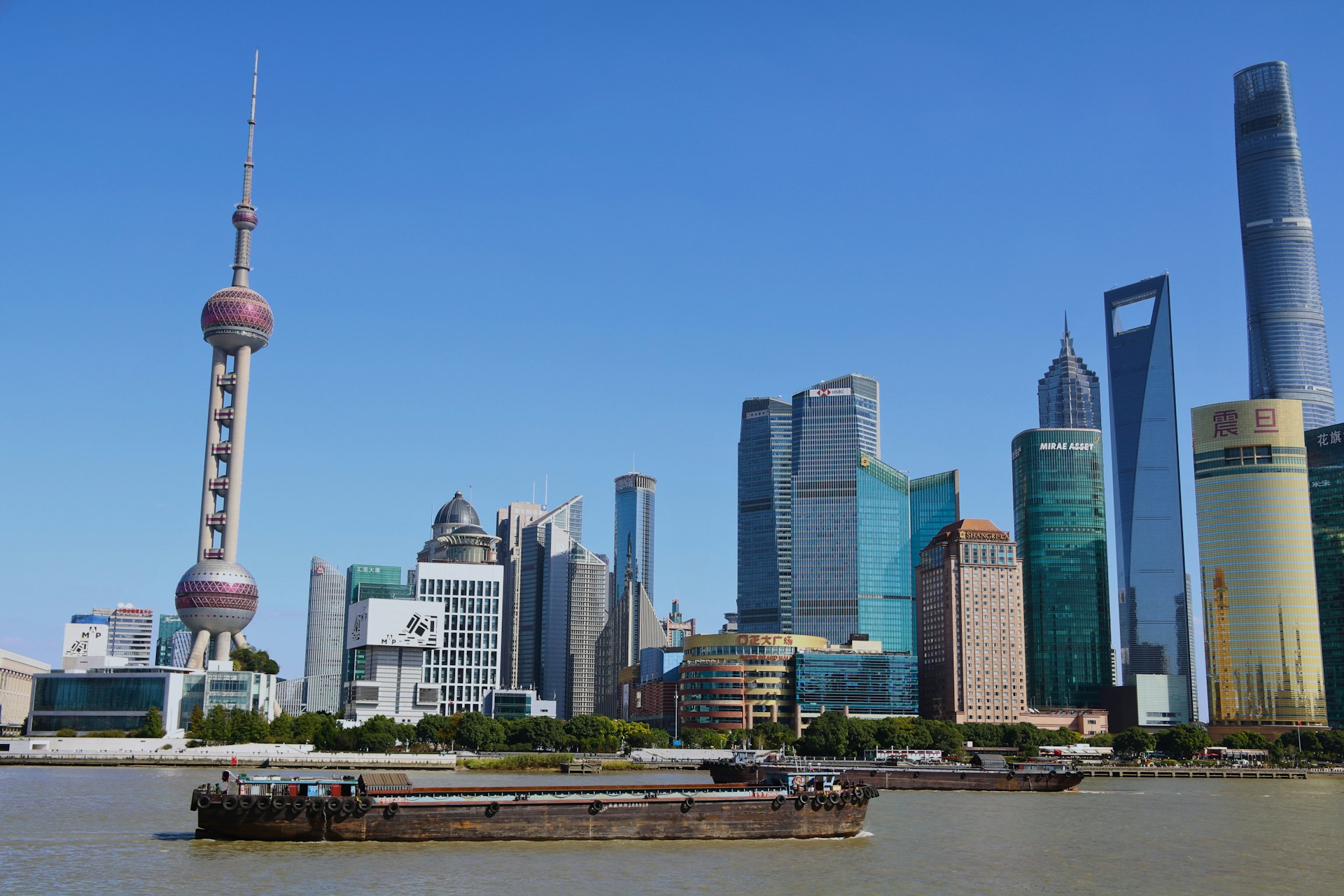
🧭 TL;DR — the honest bottom line
Here's what nobody tells you before you come: Shanghai is the easiest big city on earth to fall for China. It's the city where you'll walk a free colonial waterfront facing a sci-fi skyline, eat the world's best soup dumplings for less than the price of a coffee, ride the planet's fastest train for the cost of a sandwich, and wander home alone at 2am without a second thought — and where many passports now get in visa-free. A 632-metre tower, a 400-year-old garden hiding behind a snack bazaar, plane-tree streets made for an aimless bike, and bullet trains that turn UNESCO gardens into a 23-minute morning errand. Give it 3–4 days (5 with day trips) and you'll leave plotting your return.
Two things to do before you fly: set up an eSIM (so Google and WhatsApp work) and bind a card to Alipay (so you can pay for anything). Sort those two and the rest of this guide is just the fun part.
No time to read all of this? Tell us your dates and we'll build your Shanghai plan for you — on WhatsApp, real humans. (One message, no obligation.)
Message us →📌 This guide is long because it's complete — use the menu to jump. Everything below is named, priced, and verified June 2026; we flag anything that drifts so you can double-check the load-bearing details.
Before You Go
🛂 Do You Need a Visa for Shanghai? — Visa-Free Entry Explained
Here's the part most travel sites bury under ten paragraphs: for a huge share of the people reading this, the answer is simply no — you can walk into Shanghai with nothing but your passport and a return flight. China spent the last two years quietly turning into one of the easiest big countries in Asia to enter. Two routes cover almost everyone, and which one applies to you comes down to a single thing — the cover of your passport.
| Route | Who it's for | Max stay | The catch |
|---|---|---|---|
| 30-day visa-free | 50 countries — most of Europe, Australia, NZ, Japan, Korea, plus UK + Canada (added 17 Feb 2026) | 30 days | Ordinary passport valid for your whole stay (airlines often ask for 6 months). Straight tourism — no onward-ticket rule. |
| 240-hour (10-day) transit | 57 countries incl. the USA, Brazil, Argentina, Chile, Mexico | 10 days | You must hold an onward ticket to a third country/region and enter via an approved port. |
✓ verified Oct 2026 Lists shift often — reconfirm your nationality on the official site before booking.
🇺🇸 Americans, read this carefully — it's the #1 thing people get wrong
US citizens are not on the 30-day visa-free list, but they are on the 240-hour visa-free transit list. To use it, you must meet the policy's conditions, including entry through an approved port and a confirmed onward ticket to a third country or region different from your departure country or region. Re-read that last condition, because it trips up Americans constantly. The magic word is transit: China has to believe you're passing through on your way to a third place, so you need an onward flight out of mainland China to a different country or region, booked before you land.
This is where people sink themselves: a New York → Shanghai → New York round trip does NOT qualify — same country on both ends. You need a genuine third stop, and the fix is easy:
- ❌ New York → Shanghai → New York = does not qualify (apply for a tourist L-visa instead).
- ✅ New York → Shanghai → Seoul → New York = meets the third-country condition (Korea is the third country); the other transit conditions still apply.
- ⚠️ New York → Shanghai → Hong Kong → New York = unconfirmed. The official notices say only "a third country or region", and none of the official pages we read names Hong Kong or Macao either way; reading them as qualifying is an inference, not an official rule. If your plan depends on it, confirm with your airline or the National Immigration Administration's 24-hour hotline, +86 12367 (English available), before you book.
Shanghai's approved 240-hour ports are Pudong International Airport (PVG), Hongqiao International Airport (SHA), and the Shanghai Port International Cruise Terminal. And here's the upgrade most people miss: Shanghai sits inside the Yangtze River Delta mega-zone (Shanghai + Jiangsu + Zhejiang + Anhui) — so on one 240-hour permit you can freely run out to Suzhou, Hangzhou, Nanjing, even Huangshan and come back.
At the airport — the actual mechanics
Tell your airline at check-in that you'll apply for 240-hour visa-free transit in Shanghai → fill in the Foreigner Arrival Card online before you fly (s.nia.gov.cn, since 20 Nov 2025) or on paper on arrival → at immigration, say you're using the 240-hour visa-free transit → they stamp a Temporary Entry Permit into your passport. Build in extra time.
Policy and country lists shift — the UK and Canada were excluded for years and only got added in February 2026. Always reconfirm your exact nationality on the official en.nia.gov.cn before you book, and if you're on the 240h route, double-check your onward ticket truly goes to a third country/region.
🗓️ Best Time to Visit Shanghai
Aim for autumn — September to November is the sweet spot, no contest. The summer heat, the rains and the typhoons have all faded, prices settle back down, and the city is built for walking again. Spring is the runner-up.
| Season | Months | Temp | The real story |
|---|---|---|---|
| 🍁 Autumn (best) | Sep–Nov | comfortable | The consensus #1 window. Crowds, rain and heat all gone; perfect for walking the Bund and the Concession. |
| 🌸 Spring (good) | Mar–May | ~15°C / 59°F | Pleasant and green — but pack a light rain layer (~9 rainy days vs autumn's ~6). |
| ☀️ Summer | Jun–Aug | ~27°C / 80°F | Hottest, wettest, most typhoon-prone. July = hottest + most crowded, and hotels/airfares spike. |
| 🌫️ Winter | Dec–Feb | cold + damp | Rarely snows (mostly rain). The upside: costs run ~30% lower and it's the thinnest crowds of the year. |
Two weather windows worth circling in red:
- 🌧️ Plum Rain Season (梅雨 méiyǔ): mid-June to early July. Persistent rain, heavy humidity, barely any sun. (Reading this in early June? That's right now — pack accordingly.)
- 🌀 Typhoon season: late July–September. Strong wind and heavy rain can land hard, though the odds drop sharply after mid-September.
And as everywhere in China, dodge the public holidays if you can — Labour Day (early May), National Day / Golden Week (1–7 Oct) and Spring Festival (late Jan/Feb) pack every garden, water town and Bund railing shoulder-to-shoulder. The shoulder weeks on either side are bliss.
✈️ How to Get to Shanghai: Two Airports & High-Speed Rail
Shanghai is the great gateway to eastern China — two big international airports, and a high-speed rail network so good that Suzhou and Hangzhou become afternoon trips. First, the thing that genuinely confuses arrivals.
The two airports — and the one rule everyone gets wrong
- Pudong International (PVG) — the big one, ~30 km east of the city. Most international long-hauls land here. It's the airport with the famous Maglev.
- Hongqiao International (SHA) — west, and much closer to the center. More domestic and regional flights; quicker into town.
⚠️ The Maglev runs from Pudong ONLY — there is no Maglev at Hongqiao. People assume both airports have it; they don't. (More on the Maglev below — it's a genuine bucket-list ride.)
Onward by high-speed rail — Shanghai is a hub
Trains leave from Shanghai Hongqiao Railway Station (next to SHA airport):
| To | Time (high-speed) | 2nd-class fare | Why bother |
|---|---|---|---|
| Suzhou 苏州 | ~23–30 min | from ¥21 (~$3) | Classical gardens, canals. 350+ trains a day — basically a metro. Covered by your visa-free zone. |
| Hangzhou 杭州 | ~45 min–1.5h | ¥47–120 | West Lake. 120+ train pairs a day. Also inside the visa-free zone. |
Book trains on the official 12306 website (English version) or via Trip.com/Klook. Your passport is your ticket — bring it to the gate, where you'll do a face/passport scan to board. Buy 1–3 days ahead for popular times. (Full day-trip mechanics are in Part 4.)
💴 Shanghai Travel Budget: What It Costs (per day, excluding flights)
Shanghai is China's most expensive city — and it'll still probably feel cheaper than you expect for what you get. The trick is that the everyday stuff (metro, street food, coffee, Didi) is absurdly affordable; it's the hotels and the rooftop cocktails that climb. Rough daily budgets:
| Style | Per day (ex-flights) | What that buys you |
|---|---|---|
| 🎒 Backpacker | ~¥250–400 (~$35–56) | Hostel dorm / budget room, street food + noodle and dumpling shops, metro everywhere |
| 💺 Mid-range (most people) | ~¥450–800 (~$63–113) | Comfortable 3–4★ hotel, sit-down restaurants, Didi when you're lazy, a couple of paid sights |
| ✨ Comfort | ¥1,000+ (~$140+) | 4–5★ hotel, skyline-view rooms, fine dining, a Bund rooftop bar with the good view |
The single biggest budget lever in Shanghai isn't your hotel — it's how you eat and how you drink. A ¥13–23 basket of soup dumplings and a metro pass keeps you living beautifully in the mid-range; a single rooftop cocktail on the Bund (¥100–200) can cost more than that entire day of eating. Mix high and low on purpose. (~¥7.1 = $1 as of Jun 2026; rates drift.)
Sources — Part 1 (verified June 2026)
Visa & 240h transit: en.nia.gov.cn (National Immigration Administration — unilateral visa-exemption list, official "as of 17 Feb 2026," UK + Canada added that date, valid through 31 Dec 2026 for most countries); chinadiscovery.com 240-hour + Shanghai visa-free guides; mychina.guide; chinavigators.com (PVG/SHA/cruise terminal as approved ports; YRD zone incl. Suzhou/Hangzhou/Nanjing/Huangshan; USA on 240h only, not 30-day).
Climate / best time: travelchinaguide.com, chinahighlights.com, climatestotravel.com Shanghai (autumn best; plum rain mid-Jun–early-Jul; typhoon late-Jul–Sep; winter ~30% cheaper; ~1,200mm/yr).
High-speed rail: travelchinaguide.com (Shanghai–Suzhou), chinadiscovery.com (Shanghai–Hangzhou) — Suzhou ~23–30 min from ¥21, 350+ trains/day; Hangzhou ~45min–1.5h, ¥47–120, 120+ pairs/day.
Budget: numbeo Shanghai 2026 + on-the-ground rates (hostel ~$35–50, 3–4★ $50–100, luxury 5★ $250+).
Arrival & Essentials
The three things that turn China from "intimidating" into "effortless." Do the first two before you fly — fifteen minutes at home on your own Wi-Fi saves you a stressful first hour at the airport, because some of the setup pages are themselves blocked once you land.
📱 Internet & VPN in China: Get an eSIM before you fly
Let's be blunt about the thing everyone whispers about: mainland China blocks Google, Instagram, WhatsApp, Gmail, and most Western apps. Your normal SIM will happily roam onto a Chinese network — and hit that exact same wall.
The clean, legal, no-drama fix is an international travel eSIM that routes your data through a server outside the mainland, so Google Maps, WhatsApp, Instagram — all of it — just works, with no separate VPN to fiddle with. You install it as a second line; your home number stays active for calls and texts.
| eSIM | Best for | VPN? | The honest take |
|---|---|---|---|
| Nomad | Multi-city + high-speed rail | No | The most stable one when you're moving — survives tunnels and train-Wi-Fi gaps. Top pick if Shanghai is one stop on a Suzhou/Hangzhou loop. |
| Airalo | One or two big cities, budget | No | The most popular, cheapest, dead-simple. Plenty for a city-based Shanghai trip. |
| Holafly | Heavy data users | No | Unlimited-data plans + 24/7 support. Great if you stream or hotspot a lot — just check the fair-use cap. |
| Saily | Privacy-minded | No | By the NordVPN team, strong privacy. Solid for fixed-data plans, less ideal for movement-heavy routes. |
How it actually goes: buy online → you get a QR code by email → scan it to install (about 2 minutes) → leave it off until you land → flip it on as the plane taxis to the gate, and you're online before you reach baggage claim. It only needs an email — no Chinese ID, no registration. Buy and install it at home on your own Wi-Fi; do not count on setting it up after you land, because the activation pages can themselves be behind the wall.
💳 How to Pay in China: Alipay & WeChat for Foreigners
Most people in Shanghai pay by phone, but cash is still legal tender: since 1 February 2026, staffed businesses must accept it. Keep some small notes as a backup (is cash accepted in China?). Don't count on foreign cards at small shops; bigger hotels, malls and major sights are more likely to take them. The great news for 2026: Alipay and WeChat Pay both take a foreign Visa/Mastercard directly, no Chinese bank account needed. Set this up at home before you fly — identity verification is smoother on your home connection, and you want it working the second you land.
Set up Alipay (your main wallet)
- Download Alipay from your app store and register with your home mobile number (you'll get an SMS code — pick your country code manually).
- Open "Cards" → "Add Bank Card" and enter a real Visa or Mastercard. ⚠️ Use a normal physical credit/debit card — prepaid and virtual / online-only cards are frequently rejected. This is the #1 reason setup fails.
- Complete passport verification (photo of your passport + a quick selfie). Approval is usually minutes.
- Add a backup: download WeChat Pay and bind a second physical card the same way — handy if one card ever gets declined.
The limits & fees you need to know ✓ verified Jun 2026
| Figure | |
|---|---|
| Payments under ¥200 | Fee-free (0%) |
| Payments over ¥200 | ~3% service fee |
Alipay and WeChat Pay set spending limits for foreign cards — see Essentials. Check your current limit in the app.
The practical read: the under-¥200 fee-free rule covers the overwhelming majority of what you'll actually buy in Shanghai — soup dumplings, metro rides, coffee, taxis, snacks. The ~3% only bites on the bigger hits, like a hotel night or a fancy dinner. Still, carry a little cash and a second physical card as a fallback. It's rare, but cards do occasionally get declined, and you do not want to be the person at the dumpling window who can't pay.
One phone really does replace everything in Shanghai
Wallet, keys, metro card, train tickets, translator, tour guide, bike unlock, restaurant orders, museum tickets — all of it collapses into one phone the moment you're set up. Pay by QR, scan a turnstile into the metro, unlock a shared bike, summon a Didi, all from the same screen — and yes, foreigners can now link a foreign card to every one of these. Most people pay by phone these days, though cash is still legal tender. Sort your eSIM + Alipay and by day two you're operating exactly like a Shanghai native.
More on this: China Essentials — paying with Alipay & WeChat →🚕 Getting Around Shanghai: Metro, Maglev, Didi & Airport Transfer
Shanghai has one of the largest metro systems on earth (~20 lines), it's bilingual and absurdly cheap, and Didi (China's Uber) fills every gap. Here's how to get from the gate to your hotel, ranked by airport.
From Pudong (PVG) into town — ~30 km east
| Option | Time | Cost | When to pick it |
|---|---|---|---|
| 🚄 Maglev 磁悬浮 | ~7–8 min | ¥50 (¥40 w/ same-day boarding pass) | The experience ride — but it only goes PVG ↔ Longyang Rd, where you transfer to Metro Line 2. Not door-to-door, but you have to do it once. |
| 🚇 Metro Line 2 | ~67 min to People's Square | ¥7 | Default for budget + simplicity. Direct, cheapest, English signage. First train ~06:00, last ~22:30. |
| 🚕 Taxi | 45–70 min | ¥150–190 day / ~¥190–240 night + toll | Late arrival or heavy bags. Use the official taxi rank, have your hotel name written in Chinese. |
| 📱 Didi | similar to taxi | ~¥150–250 | English app, auto-sets the airport pickup zone by terminal. |
From Hongqiao (SHA) into town — west, much closer
| Option | Time | Cost | When to pick it |
|---|---|---|---|
| 🚇 Metro Line 2 (T2) / Line 10 (T1) | ~30–35 min | ¥7–8 | Default — frequent (~every 6–12 min), cheap, runs ~05:35–22:50. No Maglev here. |
| 🚕 Taxi / Didi | 60–90 min by destination | ¥200–300 | Heavy bags or a far-flung hotel. |
The fastest public train on Earth, for the price of a sandwich
The Shanghai Maglev hits 431 km/h (268 mph) in its two daily high-speed windows — that's the fastest commercial train on the planet, and it covers the 30 km from Pudong airport in about 8 minutes. The ticket? ¥50, or just ¥40 if you flash your same-day boarding pass. It only runs PVG ↔ Longyang Rd (you hop onto Metro Line 2 there), so it's a "do it once for the thrill" ride more than a practical commute — but at this price, do it once.
More on this: China Essentials — getting around (rail, metro, Didi) →Riding the metro (the foreigner-friendly bit): open Alipay → "Transport" → set city to Shanghai → Metro → scan the QR at the turnstile on the way in and out; the fare auto-deducts. WeChat Pay works the same way, and the official "Shanghai Metro DADUHUI" app now even lets international visitors link a Mastercard directly. Fares are distance-based: ¥3 base (0–6 km), +¥1 per extra 10 km — most downtown trips land ≤¥6. Doing a lot of riding? Grab a 1-Day Pass (¥18, unlimited 24h) or 3-Day Pass (¥45, unlimited 72h). For route-planning in English, the MetroMan app is the best, and it works offline.
Using Didi (set it up before you fly — ~10 min): download "DiDi Chuxing (滴滴出行)" — the domestic app. ⚠️ The international "DiDi Rider" app does not work in mainland China, so make sure you've got the right one. It has a full English interface, in-app bilingual chat translation, and 24/7 English support. Register with your home phone number (pick the country code manually), and pay via a Visa/Mastercard linked through Alipay/WeChat (most reliable way to dodge card declines).
- At airports and big stations, don't book from inside the terminal — walk to the signed 网约车 (wǎngyuē chē) ride-hailing pickup zone first; the app auto-sets the right zone for your terminal and even shows walking photos. When the driver arrives, they'll confirm with the last 4 digits of your registered phone number — just show them your screen.
- Cycling option: Shanghai's plane-tree streets in the former French Concession are made for shared bikes — Hellobike (yellow), Meituan (yellow), Qingju/Didi (blue). Easiest for tourists: unlock Hellobike via the Alipay mini-program, scan the QR on the bike. Roughly ¥2 for the first 25–30 min, then ~¥1.5 per extra 30 min. Dirt cheap, and the best way to wander the Concession.
"Wait — Shanghai is THIS safe at night?"
Forget the "China after dark is sketchy" myth. Shanghai is very safe at night — the nightlife zones are well-lit, crowded and patrolled, opportunistic street crime is rare, and 24/7 taxis and Didi mean getting home is trivial whatever the hour. Women routinely walk back alone past midnight; a solo 2am Didi or a late noodle run is completely normal here. The honest risk in Shanghai isn't crime — it's an overpriced "tea ceremony" or "art student" scam near tourist drags, not your safety.
Sources — Part 2 (verified June 2026)
eSIM: unusualnomad.com, traveltomtom.net, cybernews.com (China eSIM tests 2026 — Nomad most stable, Airalo cheapest, all route offshore / no separate VPN).
Alipay limits & fees: realchinatrip.com, trip.com, kkday.com (<¥200 fee-free · ~3% above; prepaid/virtual cards often rejected; confirm limits in-app).
Airports, Maglev & metro: us.trip.com Maglev guide, chinaairlinetravel.com (PVG + SHA metro), travelchinaguide.com (Line 2), welcomepickups.com (PVG taxi) — Maglev ¥50/¥40 w/ boarding pass, PVG↔Longyang Rd only, 431 km/h; PVG Line 2 ¥7/~67min; SHA Line 2/10 ¥7–8/~30–35min; metro ¥3 base / ≤¥6 most trips / 1-Day ¥18 / 3-Day ¥45.
Didi & bikes: trip.com, chinavigators.com, chinasurvivalkit.com (domestic "DiDi Chuxing" not "DiDi Rider"; English app; foreign cards via Alipay/WeChat; 网约车 pickup zone); shanghai.gov.cn (official) + sg.trip.com (Hellobike via Alipay, ~¥2 first 25–30 min).
Things to Do in Shanghai
A colonial waterfront you walk for free, a 632-metre tower you ride to the 118th floor, a 16th-century garden hiding behind a snack bazaar, soup dumplings you have to eat in the right order, plane-tree streets made for an aimless bike, and a rooftop-bar night you'll walk home from alone at 2am. Everything below is named, priced, and verified June 2026 — walk in and do it, no second tab needed.
📌 Prices move; opening hours shift on Chinese public holidays, and the big-ticket sights (the towers, Disneyland) now sell timed-entry tickets online only. When a single number really matters to your plan, give it a 30-second confirm on the official page — we flag the volatile ones.
🌃 The Bund & Pudong Skyline: Free Walk + Tower Tickets — the dusk play
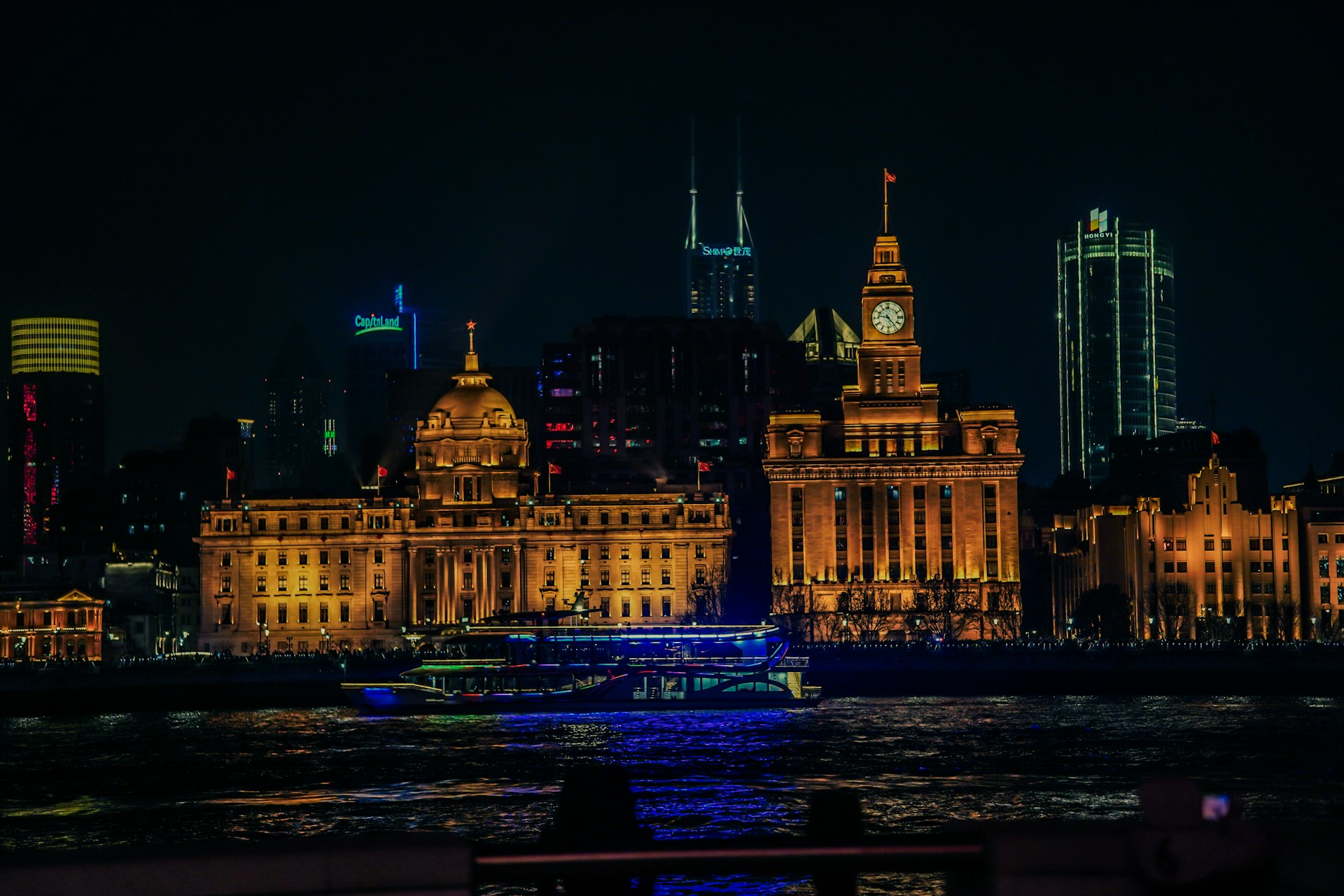
The single best thing in Shanghai is free, and it peaks for about 20 minutes a day. The Bund (外滩 / Wàitān) is a 1.5 km riverside promenade of grand 1920s colonial banks and trading houses, facing the sci-fi Pudong skyline across the Huangpu River. No ticket, no reservation, open 24 hours. The trick is when: come at dusk, stand on the raised walkway with your back to the old stone facades, and watch both banks switch their lights on at once — colonial Europe behind you, the future in front. Then decide whether you want to go up into that future.
Going up — pick your tower: Two observation decks dominate the Pudong skyline, and you do not need both.
Shanghai Tower (上海中心) — China's tallest, the one to pick
The 632-metre giant with the twist — its 118th-floor "Top of Shanghai" deck is the highest in the city and the cleaner choice for a pure skyline view.
- Ticket: ¥180 adult (rises to ¥199 on holidays); child 101–140 cm ¥95; student-ID ¥120; under 1 m free.
- Hours: roughly 08:30–21:30/22:00, last entry ~20:30–21:00.
- Book it, step by step: ① Buy a timed-entry slot online (Trip.com / Klook / official) — you get a QR code. ② For the best light, target a 16:30–18:30 slot so you catch daylight, sunset and the lit-up night skyline in one visit — these slots sell out, so book earlier in the day. ③ On arrival, exchange the QR for a ticket at B1 (basement level), then up you go.
Oriental Pearl Tower (东方明珠) — the retro one with the glass floor
The 1990s "spaceship-on-skewers" tower. Less tall, but its ticket is a bundle: the observation spheres come with the Shanghai History Museum (78m) and the Transparent Skywalk (259m glass floor) thrown in.
- Ticket: 2-sphere deck from ~¥199 (~US$28); 3-sphere incl. the 351m "Space Capsule" ~¥299 (~US$42).
- Hours: listings vary between ~08:00–22:00 and 09:00–21:00 — confirm the day's hours on the official site before you go.
Want the Bund-at-dusk timing nailed and the golden sunset slot picked for your tower visit (we'll show you how to book it), plus a guide who knows where to stand? Tell us your dates on WhatsApp.
Ask us →🏯 Yu Garden Tickets & Hours (豫园) + City God Temple (城隍庙)
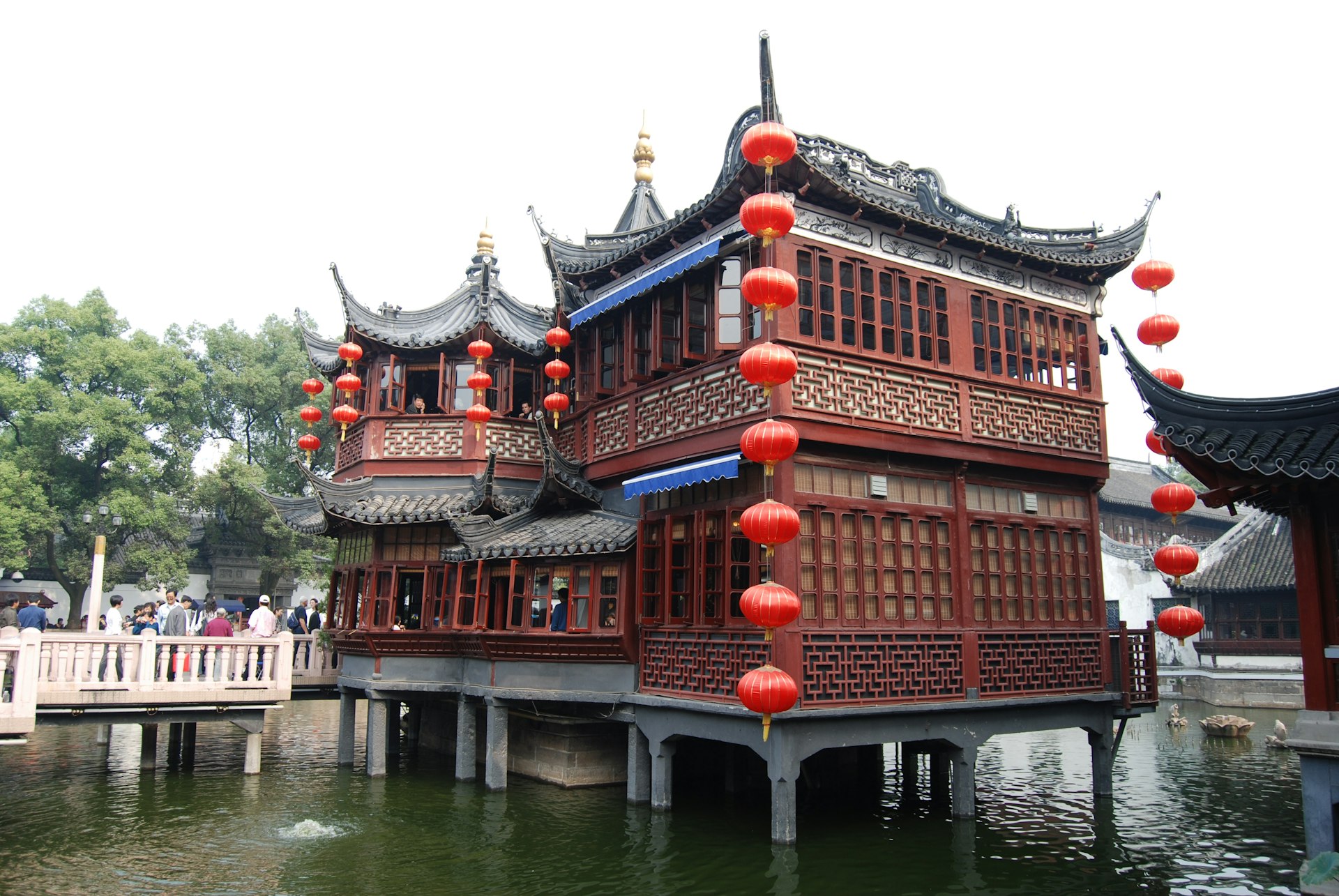
This is Shanghai's one slice of old China — and it closes on Mondays, which catches people out constantly. Yu Garden (豫园 / Yùyuán) is a 400-year-old Ming-dynasty classical garden: rockeries, koi ponds, dragon-topped walls and pavilions, tucked behind the buzzing City God Temple bazaar in the old town.
- Ticket: ¥40 (Apr–Jun & Sep–Nov), ¥30 the rest of the year. Under 130 cm / under 6 free; seniors 60+ and minors 6–18 half price.
- Hours: 08:30–17:30 (Apr–Oct) / 08:30–17:00 (Nov–Mar). CLOSED MONDAYS. Write that on your hand — turning up on a Monday is the classic Shanghai face-palm.
- Book: online via the WeChat Official Account, Trip.com, Meituan or Qunar — or just buy at the gate (it rarely sells out the way the Forbidden City does).
- Address: No. 137 Anren St, Huangpu District.
The bazaar around it is free. The City God Temple (老城隍庙 / Chénghuángmiào) — a working Taoist temple, ~08:30–16:30, entrance ~¥10 — sits inside a maze of swooping-roof shophouses selling snacks, silk, tea and souvenirs. You don't pay to wander it.
🏮 Top Free Things to Do in Shanghai — Nanjing Road, Tianzifang & Xintiandi
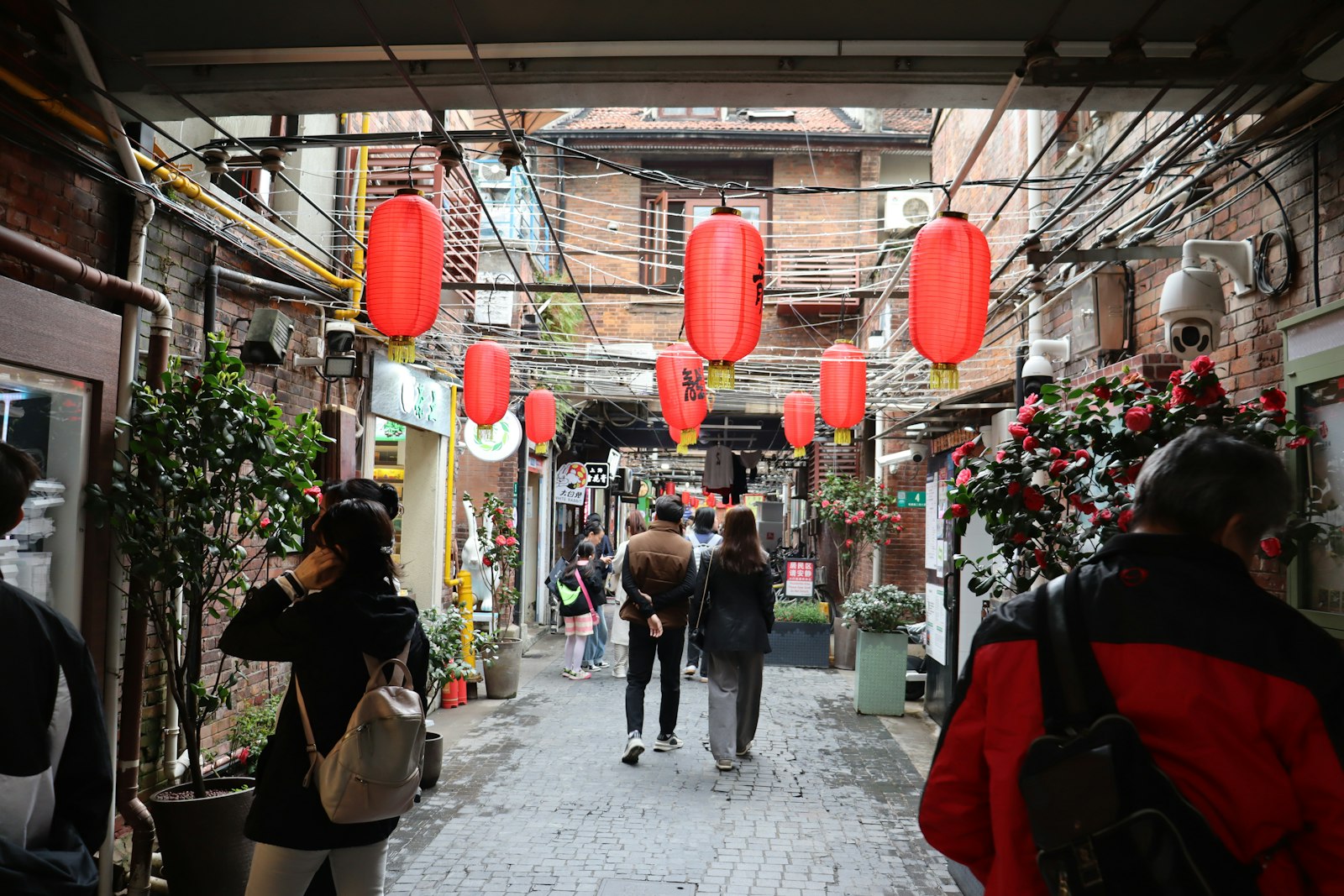
Here's the good news: a huge share of Shanghai's best wandering is free — you only pay for what you eat or buy. Three you shouldn't miss, each with the exact metro stop and the one thing worth your time.
Nanjing Road (南京路) — the walking artery — free
The main pedestrian shopping street, a neon-lit river of people linking People's Square to the Bund. It's loud, commercial and very touristy — and it's still the classic Shanghai stroll, especially lit up at night.
- The move: walk it west-to-east in the evening and let it spit you out directly onto the Bund at the river — one continuous, free, lights-on walk. No ticket, no plan needed.
Tianzifang (田子坊) — the arty maze — free
A warren of shikumen (石库门) stone-gate lanes — Shanghai's signature brick-and-lintel terraced houses — packed into a labyrinth of indie boutiques, galleries, tiny cafés and rooftop bars. The bohemian counterpoint to the polished malls.
- Free to wander. Metro Line 9 → Dapuqiao Station, Exit 1. There's a map at each entrance — you will get pleasantly lost, that's the point.
Xintiandi (新天地) — the upscale shikumen district — free
The same shikumen architecture as Tianzifang, but restored glossy and pricey — designer dining, wine bars, a beautiful place to people-watch over a drink.
- Free to enter (you pay for food/drinks). Metro Line 8/9/13 nearby.
🍃 Former French Concession (法租界): the Best Walk in Shanghai — by bike
If the Bund is the postcard, the French Concession is the city locals actually love. Laid out by the French in the early 1900s, it's a grid of leafy streets lined with London plane trees, 1920s art-deco villas, independent cafés, wine bars and boutiques. There's no ticket and no single "sight" — the streets are the attraction, and the only right way to do it is slowly, on foot or on a shared bike.
Do it on a bike — this is what the bikes are for. The Concession's flat, tree-shaded lanes are the single best place in Shanghai to ride a shared bike (see Part 2 for the how-to):
- Grab a Hellobike via the Alipay mini-program (easiest for foreigners), scan the QR on the bike, and just drift.
- Cost: about ¥2 for the first 25–30 min, then ~¥1.5 per extra 30 min — an entire lazy afternoon of riding costs less than a coffee.
🥟 What to Eat in Shanghai: Xiaolongbao & Shanghainese Food — a foreigner's field guide
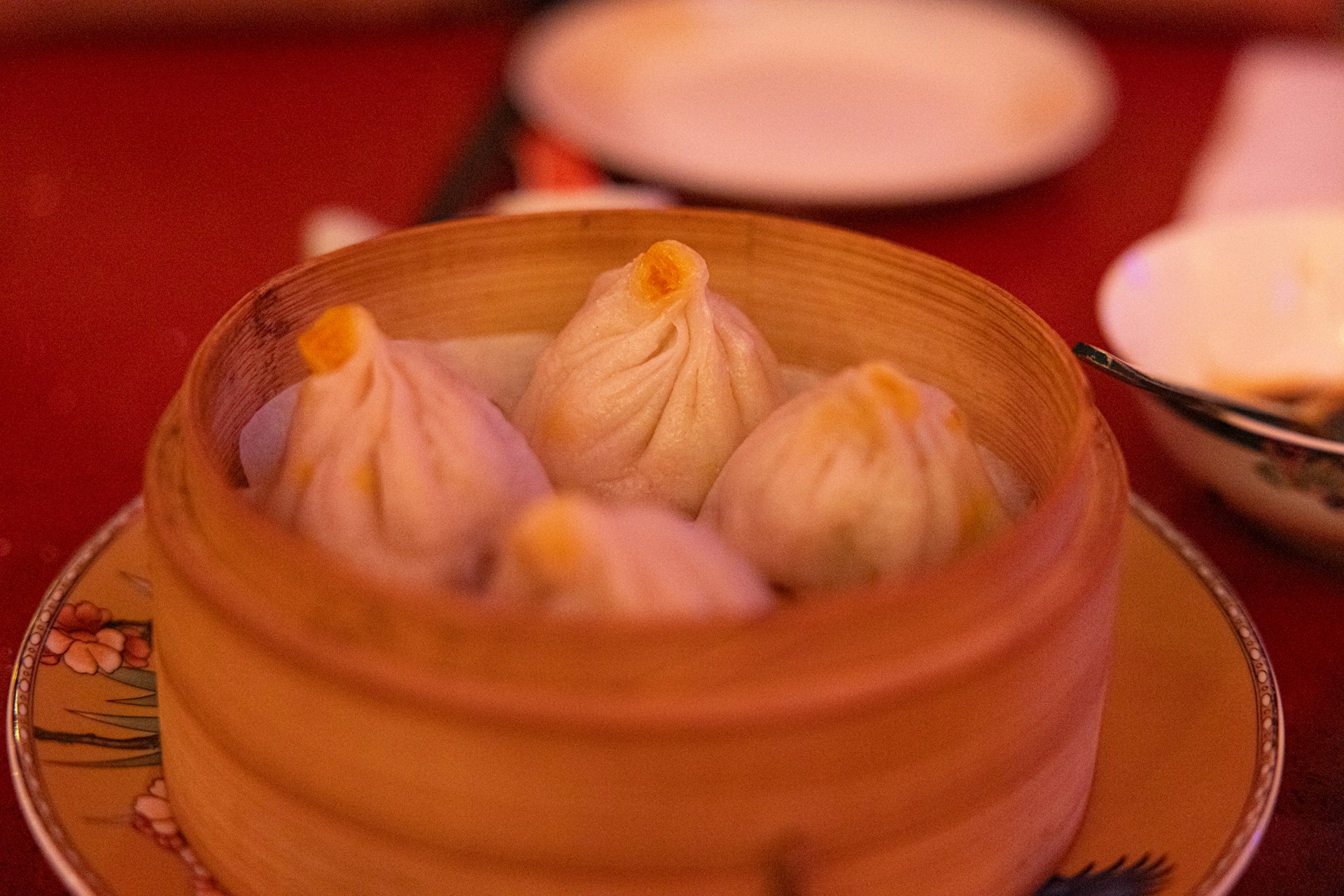
Shanghai food is sweeter, gentler and more delicate than the fiery Sichuan stuff — this is the place to eat if spice scares you. The icon is the soup dumpling, and there's a right way to eat it that keeps you from a scalded mouth and a soup-stained shirt.
Xiaolongbao (小笼包) — the soup dumpling, eaten properly
Xiaolongbao are steamed dumplings with hot soup sealed inside the skin — bite wrong and you get a chin full of boiling broth. The ritual, decoded:
- Lift one gently by its topknot onto your soup spoon (the skin is thin and tears — be delicate).
- Nibble a small hole in the side and sip or slurp the soup out first. Let it cool a few seconds — it is genuinely lava-hot when it arrives.
- Dress it: dip in the black vinegar with slivered ginger on the table, then eat the whole dumpling.
- Pay by scanning the table QR (Alipay/WeChat); say "mǎi dān / 买单" if you want a human to bring a bill.
Where to eat xiaolongbao — two real options
| Restaurant | Vibe | Per person | Where |
|---|---|---|---|
| Jia Jia Tang Bao (佳家汤包) | Old-school, cash-and-go, the locals' thin-skin favourite since 1986 — no frills, just the best dumplings | ~¥50–100 | Flagship 127 Huanghe Rd (黄河路), near People's Square (also branches on Yuyuan Rd & Pudong) |
| Din Tai Fung (鼎泰丰) | Polished, reliable, English menus, the easy first-timer pick; famous 18-fold XLB | per-basket price varies by branch — confirm locally | Multiple branches (Xintiandi, malls) |
- At Jia Jia: the pork XLB run ~¥23 for 12, and the basic small pork dumplings ~¥13. It's a tiny, brisk, queue-and-go spot — go early, it sells out.
- At Din Tai Fung: it's the foreigner-friendly safety net — bilingual menus, consistent quality, but long waits are normal — use their virtual queue / ticket system or arrive before the rush. The exact Shanghai per-basket RMB price shifts by branch, so confirm on the spot (the menus floating around online are global/US ones and aren't reliable for Shanghai).
Benbang cuisine (本帮菜) — the rest of the Shanghainese canon
"Benbang" means "local style" — rich, soy-braised, faintly sweet home cooking. The dishes to name:
- Hongshao rou (红烧肉) — red-braised pork belly, glossy and sweet, the city's signature dish. Ren He Guan (人和馆) is the rare Michelin-starred-yet-affordable spot, and its hongshao rou (~¥27 a portion) is rated among the best in town.
- Old Jesse (老吉士) — the most famous Benbang institution (since 2004), #41 Tianping Rd (天平路), tel +86-21-6282-9260. Tiny and legendary; reservations essential.
- Also order: drunken crab (raw crab cured in liquor), shengjianbao (生煎包) (pan-fried, crispy-bottomed soup buns — the breakfast cousin of XLB), scallion-oil noodles (葱油面), and in autumn, hairy crab (大闸蟹) — the seasonal obsession.
Budget reality: a humble noodle or bun spot runs ¥20–60 a head; a proper mid-tier Shanghainese sit-down is ¥150–270 a head. You can eat brilliantly here at either end — the dumpling holes-in-the-wall are as good as the white-tablecloth places, just cheaper.
A dozen of Shanghai's best soup dumplings costs about ¥13 — less than a coffee
The food everyone flies here to eat is also some of the cheapest. At Jia Jia Tang Bao, the locals'-favourite dumpling house going since 1986, basic small pork dumplings run ~¥13, and a basket of the famous pork xiaolongbao is ~¥23 for twelve. A whole meal of the best dumplings in one of the world's great food cities lands around ¥50–100 a head. The trick isn't finding cheap food — it's that the cheap food is the good food. Eat at the queue-and-go counters, not the malls.
Want a local to take you to the real dumpling counters and a Benbang table that takes reservations — no tourist-trap malls? Ask us on WhatsApp.
Ask us →🌉 Shanghai Nightlife: Rooftop Bars on the Bund & Speakeasies — after dark
Here's what nobody tells foreigners: Shanghai nights are world-class, genuinely safe, and easy to get home from. This is one of Asia's great drinking cities — and the streets are well-lit, crowded and patrolled, with 24/7 taxis and Didi, so you can stay out late and roll home alone without a second thought. Pick your scene:
Bund rooftops
The city's most prestigious rooftop bars, lit Pudong skyline as your backdrop. The "I'm-in-Shanghai" cocktail moment.
Cocktails ¥100–200Found 158 (Jing'an)
A sunken open-air complex of bars & restaurants with rooftop terraces — younger, international, less formal.
Per-head ¥50–120French Concession
Plane-tree streets hiding the best hidden cocktail and wine bars — intimate, design-led, where locals drink.
Cocktails ¥80–180The scenes, in detail
- Bund rooftops — the trophy night. The colonial buildings along the Bund hide the city's most prestigious rooftop bars, with the lit Pudong skyline as your backdrop. Cocktails ~¥100–200; the premium speakeasies run ¥150–300. ⚠️ One correction worth knowing: the legendary rooftop Bar Rouge has closed — the space now operates as a club called KEV, so don't go hunting for Bar Rouge. Plenty of other Bund rooftops are still open; pick a current one on Dianping the day you go.
- Found 158 (Jing'an) — the sunken-garden party pit. A sunken open-air complex of bars and restaurants with rooftop terraces, quirky design, and a crowd that skews younger and more international. Budget-to-mid, ~¥50–120. Popular with foreigners — a good first-night landing spot, in the trendy, restaurant-dense Jing'an district (see Part 4 for why it's also the smartest area to stay).
- Former French Concession — speakeasies & wine bars. The Concession's plane-tree streets hide Shanghai's best hidden cocktail and wine bars — intimate, design-led, the spots locals actually drink at. Cocktails citywide run ¥80–180; the craft-beer scene is strong here too.
The practical bits
Getting home: the metro stops around 22:30–23:00, so for the 2am exit, Didi is your friend (set the app up before you head out — see Part 2). Taxis run 24/7 too. Paying: most bars run smoothest on Alipay/WeChat; the bigger venues take cards.
You can walk home alone at 2am here — Shanghai's nightlife districts are some of the safest anywhere
Throw out the "China after dark is sketchy" assumption. Shanghai's nightlife zones are well-lit, crowded and patrolled; street crime is rare, and 24/7 taxis and Didi make getting home effortless. Solo travellers — women included — routinely head home alone well past midnight without a worry. The real risk on a big night out is an overpriced bar tab, not your safety. So have the late one: the Bund rooftop, the Concession speakeasy, the Didi home — relax and enjoy it.
Want a local to take you to the real Bund rooftops and Concession speakeasies — current spots, no closed-down legends — and sort the Didi home? Ask us on WhatsApp.
Ask us →🏰 Shanghai Disneyland Tickets & Tips (上海迪士尼) — book before you fly
Mainland China's only Disney resort, and a genuinely excellent one — but the single most important thing is that tickets are sold online ONLY, never at the gate. Turn up hoping to buy at the entrance and you don't get in.
- Price (dynamic, 4-tier): a 1-day adult ticket runs from ~¥475 (regular/standard, some days ~¥429) up to ¥799 on peak days — weekends and holidays are dearer (a quiet Tuesday might be ¥475, a Saturday ¥719).
- Hours: generally 08:30–21:30, varying by season and events.
- Book it, step by step: ① Prices release on a rolling 30-day basis, so book ≥2 weeks ahead to lock your preferred date at the lower tier. ② Buy on Trip.com or the official app — instant confirmation, English, skip-the-line upgrades available. ③ You get a QR/code for entry; bring your passport (it's tied to the booking).
⚡ Bonus ride: the Maglev (磁悬浮) — the fastest train you'll ever take
You don't have to be flying anywhere to ride it — the Shanghai Maglev is an attraction in its own right, and it's absurdly cheap for what it is.
- What it is: a magnetic-levitation train that tops 431 km/h in its two daily speed windows (09:00–10:45 and 15:00–16:45; 300 km/h otherwise), covering the Pudong Airport ↔ Longyang Road run in about 7.5 minutes.
- Price: ¥50 single, or ¥40 if you show a same-day flight boarding pass.
- ⚠️ Important: it runs from Pudong Airport (PVG) to Longyang Road only — NOT from Hongqiao, and NOT into the city centre. At Longyang Road you transfer to Metro Line 2.
You can ride the world's fastest commercial train — 431 km/h — for about ¥40
This isn't a museum exhibit, it's the regular airport train. The Shanghai Maglev floats on magnets and hits 431 km/h in its morning and afternoon speed windows, doing the Pudong-airport run in ~7.5 minutes — and a single ride is ¥50, or just ¥40 if you flash a same-day boarding pass. For the price of a sandwich you get pinned to your seat watching the speedometer on the cabin wall tick past 400. Just remember it runs from Pudong airport only, not Hongqiao, and not all the way downtown.
More on this: China Essentials — getting around (rail, metro, Didi) →Planning a Shanghai trip and want it all planned — towers, dumplings, a Bund night and the right day for Disneyland — by humans who live here? Tell us your dates on WhatsApp.
Send dates →Sources — Part 3 (verified June 2026)
Attractions & food: travelchinaguide.com (the Bund, Yu Garden, Benbang dining) · us.trip.com (Shanghai Tower, Oriental Pearl, Yu Garden address, City God Temple, Tianzifang, Xintiandi, Maglev) · thetowerinfo.com (Shanghai Tower hours & best-light slots) · whatsupcourtney.com (Nanjing Road) · shanghai.gov.cn (shared bikes) · tripadvisor.com (Jia Jia Tang Bao) · smartshanghai.com (Jia Jia branches) · rachelgouk.com / NOMFLUENCE (Ren He Guan, Old Jesse, rooftop bars) · wanderinchina.com (nightlife venues, prices & night safety) · sg.trip.com & disneyparknerds.com (Shanghai Disneyland tickets, online-only, pricing).
Items flagged confirm locally: Din Tai Fung Shanghai per-basket RMB price (branch-dependent) and exact Oriental Pearl opening hours (sources disagree). Prices and hours shift on Chinese public holidays — confirm the load-bearing ones before you commit.
Day Trips from Shanghai
Shanghai's quiet superpower is where it sits — at the dead center of the Yangtze River Delta, the densest, richest, best-connected corner of China, laced with bullet trains. A 1,700-year-old canal town with stone bridges, the "Venice of the East" and its UNESCO gardens, the lake a thousand poems were written about. All three are an easy day out — and the fastest is closer, in travel time, than getting from one side of Los Angeles to the other.
🚄 First, the train logic (read this once, it unlocks the whole Delta)
Almost every day trip below leaves from Shanghai Hongqiao Railway Station (上海虹桥站) — a colossal hub fused right onto Hongqiao Airport and sitting on Metro Lines 2, 10 & 17, ~30–40 min from the Bund. (A few trains also use Shanghai Railway Station; the booking app tells you which.) The Delta runs hundreds of bullet trains a day, so you rarely wait long — but the popular ones still sell out at peak.
How to actually get a ticket (the foreigner-proof version)
- Book on the official 12306 website (English version, source of truth, slightly cheaper) or Trip.com / Klook (smoothest for non-Chinese IDs).
- Book 1–3 days ahead for Suzhou/Hangzhou on weekends and holidays — popular departures fill up. Off-peak you can often walk up to a machine.
- Bring your physical passport — it is your ticket. At the gate you tap the passport and look at the camera (face + passport scan); foreigner lanes are marked, and if the auto-gate balks, the staffed window beside it waves you through in seconds.
- Arrive 30–40 min early. Hongqiao is airport-sized; security plus finding your platform among dozens eats real time.
The "Venice of the East" is a 23-minute, ¥21 train ride away
Shanghai Hongqiao → Suzhou is 23 minutes on the fastest G-train, second class from ¥21 — roughly US$3 — with 350+ trains a day so you barely plan around a schedule. Hangzhou and West Lake? ~45 min from ¥47. China's high-speed network makes a UNESCO garden city a casual morning out, for less than a sandwich back home.
More on this: China Essentials — getting around (rail, metro, Didi) →🛶 Zhujiajiao Water Town Day Trip — the canal town you can reach by metro
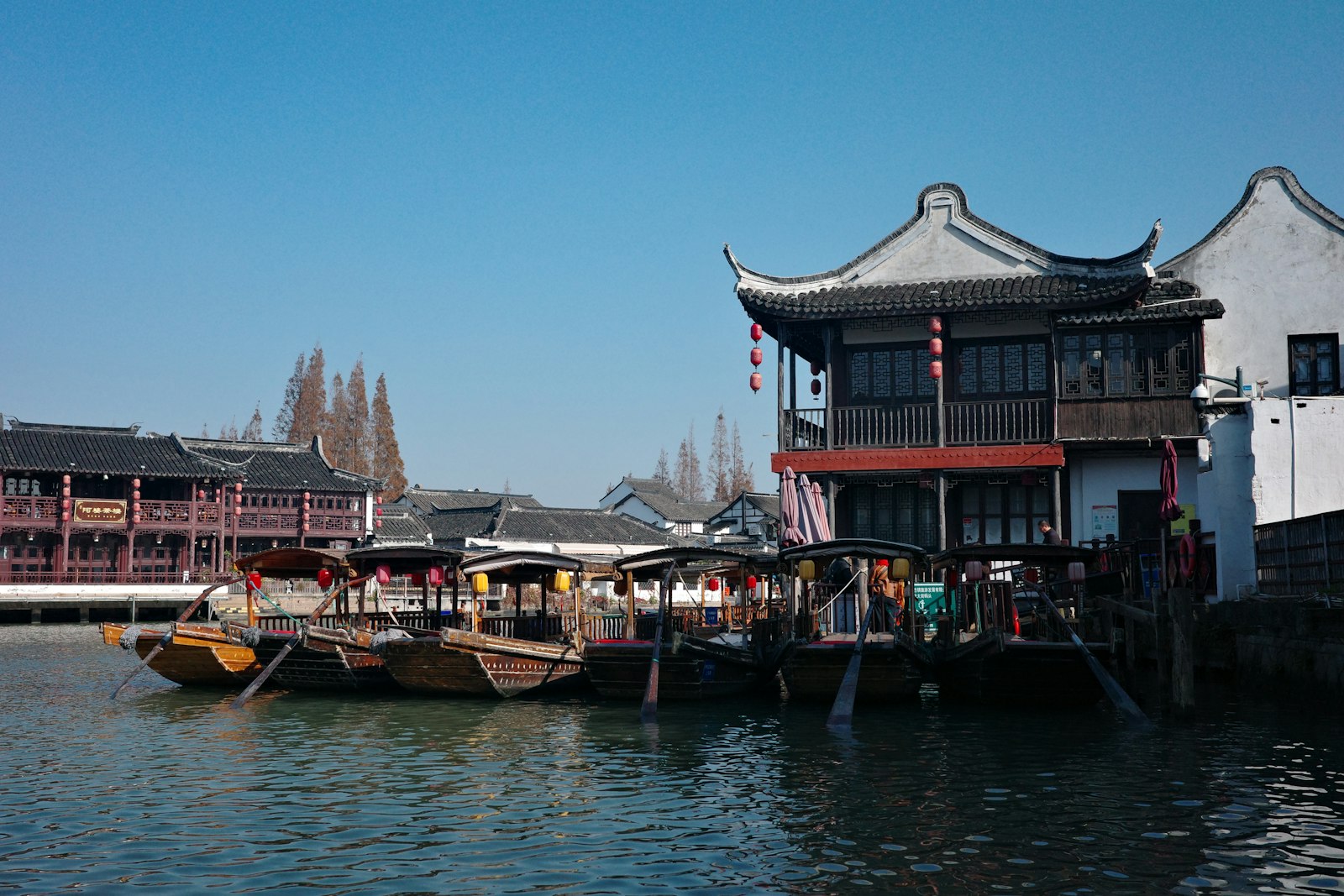
Bottom line: the easiest escape from the city — no train ticket required, just tap in with your metro QR. Zhujiajiao (朱家角) is a 1,700-year-old water town on Shanghai's western edge: arched stone bridges, willow-lined canals, whitewashed Ming-and-Qing houses leaning over the water, and wooden gondolas poled past teahouses. It's the closest "old China" hit to downtown, and the only day trip on this list you can do entirely on the metro — which makes it the no-stress, no-booking pick for a half-day.
Getting there (three ways, cheapest to comfiest)
- Metro (the no-hassle way): Metro Line 17 from Hongqiao Railway Station → Zhujiajiao Station, ~1 hr, then ~2.5 km to the old town — walk it or grab a local bus/Didi the last stretch. Pay with your Alipay/WeChat metro QR, same as any city ride. No reservation, no passport gate, nothing to book.
- Express bus: the Huzhu Express (沪朱高速快线) from Pu'an Road near People's Square, ~1 hr, ¥12, leaving roughly every 30 min — drops you near the scenic-area entrance.
- Taxi / Didi: ~1 hr door-to-door, ¥150–200. Worth it for a group of three or four splitting the fare.
Tickets: The town itself is FREE to wander — you stroll the lanes, cross the bridges, and eat for nothing. You only pay if you want the bundled-attraction passes into specific old houses, gardens and halls: 8-attraction ¥60 / 4-attraction ¥40 / 8-attraction + canal boat ¥80. The individual sites open 08:30–16:30. ✓ Jun 2026 — confirm current bundle prices on Trip.com or at the gate
Insider play (do this)
Go early-morning or stay for golden hour, and skip the middle. Zhujiajiao at 9am — mist still on the canals, locals buying breakfast, half-empty bridges — is a different planet from Zhujiajiao at 1pm, when day-tripper coaches dump their crowds onto the main drag. Eat the local zongzi (粽子) — fat sticky-rice parcels the town is known for — from a canal-side stall, take the short boat ride for the postcard angle, and wander one lane back from the main street where the souvenir stalls thin out and it's just laundry, cats, and old men playing cards.
The one thing that strands people
The last express bus back to Shanghai leaves around 19:30. Metro Line 17 runs later, but still confirm the last train at the station when you arrive — you do not want to be hunting a ¥200 taxi at 9pm. Either catch the early-evening ride or plan to stay over.
🏯 Suzhou Day Trip — classical gardens, 23 minutes away
Bottom line: the single best day trip if you want maximum payoff for minimum effort. Suzhou (苏州) is the "Venice of the East" — a 2,500-year-old canal city famous for its UNESCO-listed classical gardens, the most refined expression of Chinese landscape design anywhere: moon gates, latticed pavilions, mirror-still ponds, rockeries built to look like mountains. And it's 23 minutes from Shanghai on the bullet train. You can be wandering a Ming-dynasty garden before the city you left has finished its coffee.
Getting there
- Train: Shanghai Hongqiao → Suzhou, fastest G-train ~23–30 min (slower D-trains ~1 hr), second class from ¥21, with 350+ trains a day from early morning. Effectively a turn-up-and-go service.
- Station → gardens: Suzhou's metro and abundant taxis/Didi connect the rail station to the garden cluster in the old town in 10–20 min. The famous gardens sit close together, so once you're in the historic core you walk between several.
What to actually see (don't try to do all nine UNESCO gardens): First-timers should pick one or two and go slow — the Humble Administrator's Garden (拙政园) is the grandest and most famous, the Lingering Garden (留园) the other classic. Pair a garden with a wander along Pingjiang Road, the canal-side old street, for snacks and water-town atmosphere without leaving the city. Garden entry fees vary by season and garden — buy on Trip.com or at the gate with your passport. ✓ Jun 2026 — confirm each garden's current ticket on Trip.com
Insider play
Take an early G-train (before 9am), head straight to the Humble Administrator's Garden the moment it opens, and you'll get the rock-and-water tableaux almost to yourself before the tour flags arrive — these gardens were built for solitude, and they're magic empty, oppressive packed. Do the big garden first, lunch on Pingjiang Road, a second smaller garden or the Suzhou Museum (I.M. Pei's modern masterpiece, right next door to the Humble Administrator's) in the afternoon, and a late train home. A full, satisfying day on a ¥21 ticket.
🌊 Hangzhou & West Lake Day Trip — the lake a thousand poems were written about
Bottom line: the most beautiful, the most beloved by the Chinese themselves — and the one that arguably deserves an overnight. Hangzhou (杭州) is built around West Lake (西湖), the most romanticized body of water in China — willow causeways, arched bridges, pagodas on the hills, the whole scene drifting in and out of mist. It has inspired a thousand years of poetry and painting, and it's a UNESCO World Heritage cultural landscape. Marco Polo reputedly called Hangzhou the finest city in the world.
Getting there
- Train: Shanghai Hongqiao → Hangzhou, ~45 min to 1.5 hr depending on the train, second class ¥47–120, with 120+ train pairs a day.
- Station → West Lake: Hangzhou's metro and taxis/Didi reach the lakeside in ~15–25 min from the main stations.
What to do: West Lake is free to walk, and walking (or renting a shared bike, exactly like in Shanghai) is the move — loop the Su Causeway and Bai Causeway, the willow-lined dikes that cut across the water. Add the lakeside Leifeng Pagoda for the classic view, or a boat out to the islands. If tea's your thing, the Longjing (Dragon Well) tea villages in the hills behind the lake are where China's most famous green tea grows.
🗓️ Shanghai Itinerary: 2, 3 & 5 Days — the points actually strung together
These plug straight into Part 3 (the Bund, Pudong towers, Yu Garden, the French Concession, food and nightlife) and the day trips above. Times assume a central base (the Bund / People's Square / Jing'an). Tap a day to open the hour-by-hour plan.
⏱️ 2 Days — the essential Shanghai
Day 1 Old Shanghai: Yu Garden, the Bund & the night skyline
- 09:00Start at Yu Garden (豫园) the moment it opens (08:30) — classical rockeries and pavilions before the crowds. (Closed Mondays — see above.) Entry ¥30–40 by season.
- 10:30Wander the City God Temple bazaar right outside — snacks, the old shopping lanes (free to roam).
- 12:00Soup-dumpling lunch: xiaolongbao at a classic spot (Jia Jia Tang Bao, or Din Tai Fung for the foreigner-easy version).
- 14:00Stroll Nanjing Road from People's Square down toward the river — the buzzing shopping artery (free).
- 15:30–17:30The Bund (外滩): walk the 1.5 km riverfront, colonial facades on one side, the Pudong skyline on the other (free).
- 18:30Cross to Pudong, up a tower for sunset: Shanghai Tower 118th floor (¥180, timed slot) — best light 16:30–18:30.
- 20:00Dinner in Pudong, then back to the Bund at full dark — both skylines lit is the photo you came for.
Day 2 The French Concession, Shanghainese food & a rooftop nightcap
- 10:00Coffee and plane-tree streets in the Former French Concession — grab a shared bike (~¥2) and just drift; the city's loveliest neighborhood.
- 11:30Tianzifang (田子坊): the shikumen-lane maze of galleries, boutiques and cafés (Metro Line 9, Dapuqiao, Exit 1).
- 13:00Lunch: proper Benbang (Shanghainese) cuisine — red-braised pork (hongshao rou), scallion-oil noodles.
- 15:00Xintiandi (新天地): restored shikumen blocks, upscale cafés and the spot for an afternoon drink.
- 17:00Reset at the hotel.
- 19:30Dinner, then a rooftop bar on the Bund for cocktails over the lit skyline (¥100–200 a drink; note Bar Rouge has closed, the space is now the club KEV). A perfect last night.
⏱️ 3 Days — the sweet spot (add Suzhou)
Days 1–2 As above
Run the 2-day plan, but breathe — linger longer on the Bund, add a slow French-Concession café afternoon.
Day 3 Suzhou's classical gardens
- 08:00Early G-train Hongqiao → Suzhou (book the night before). 23 min.
- 09:00–11:30Straight to the Humble Administrator's Garden at opening — the grandest classical garden, crowd-free in the first hour.
- 11:30–13:00Lunch and a wander along canal-side Pingjiang Road.
- 13:30–15:30The Suzhou Museum (I.M. Pei) next door, or a second smaller garden (the Lingering Garden).
- 16:30Train back; downtown Shanghai by early evening. Easy dinner near the hotel.
⏱️ 5 Days — the full Yangtze Delta
Days 1–3 The 3-day plan above
City essentials + Suzhou, unrushed.
Day 4 Zhujiajiao water town + a slow evening
- 09:00Metro Line 17 (or the ¥12 Huzhu Express bus) to Zhujiajiao — the canals before the coach crowds.
- 09:45–13:00Bridges, lanes, a canal boat ride, local zongzi by the water; wander one lane back from the main drag.
- 14:00Back to Shanghai (mind the ~19:30 last express bus — but you'll be back well before).
- 16:00Afternoon in a neighborhood you've skipped — Jing'an Temple and the streets around it, or the Power Station of Art riverside.
- 19:30A relaxed dinner + drinks at Found 158 (Jing'an) — sunken-garden bars, easy crowd.
Day 5 Hangzhou (or a slow Shanghai drift)
Option A (the lake): Early train to Hangzhou (~45 min), a full day looping West Lake by foot or bike — Su Causeway, Leifeng Pagoda, a boat to the islands — late train home. (If your dates allow, stay the night for a West Lake sunset and misty dawn.)
Option B (slow Shanghai): A pure eat-and-drift day — dim sum, a long café afternoon in the French Concession, a museum, one last rooftop. This is how Shanghai locals actually spend a weekend, and it's the day people quietly remember.
Want this turned into a real plan — bullet trains pre-booked, the garden visit planned (we'll show you how to book it), the right hotel by the right metro line, a guide who knows which soup-dumpling joint? Send us your dates on WhatsApp.
Send dates →🛏️ Where to Stay in Shanghai: Best Areas — with real price bands
No booking links, no commission — just where each type of traveler should sleep and what you'll actually pay. Rough nightly bands for a clean 3–4★ double, low/shoulder season (USD approx) — they spike in autumn, holidays, and during big expos, so confirm live on your booking app.
| Area | Best for | Why here | Rough nightly band |
|---|---|---|---|
| 🌉 The Bund / Nanjing Rd (Huangpu) | First-timers | Dead-center: walk to old Shanghai and the riverfront, with the skyline across the water. Where I'd put a first-timer, full stop. | Budget ~$50; mid ~$90; luxury from ~$280 |
| ✨ Jing'an (静安) | Best value-vs-cool | Trendy, packed with top restaurants and bars, anchored by Jing'an Temple, superb metro. Cooler than the Bund, cheaper too. | Mid-range, and notably better value than the Bund or French Concession |
| 🌳 Former French Concession | Couples & aesthetes | Plane-tree streets, boutique hotels in old villas, the café-and-wine-bar heart of the city. Romantic, walkable, characterful. | Mid–upscale; boutique premium |
| 🏙️ Lujiazui / Pudong (陆家嘴) | Business & skyline-view luxury | The modern 5-star cluster — towers, river views, fastest access to Pudong Airport (PVG). Polished but a touch corporate after dark. | Upscale–luxury; some 5★ ~$85–170, top end $250+ |
General bands: hostel/budget ~$35–50 · 3–4★ mid-range $50–100 · upscale $100–250 · luxury 5★ $250+ (some list lower).
My honest pick: First trip? Base on the Bund / Nanjing Road for the walk-out-the-door magic, or in Jing'an if you want the better value and the better dinners — both put the whole metro at your feet, so Pudong, the French Concession and Hongqiao station are all a quick ride. Save Pudong for if you're here on business or chasing a skyline-from-bed view; it's slick but you'll commute for the soul of the city.
A 4★ in the heart of one of the world's great cities costs what a roadside motel costs back home
A clean 4★ a short walk from the Bund runs ~$50–110 a night; a hostel bed is ~$35–50. This is Shanghai — global-finance, skyscraper Shanghai — and "central + affordable" still isn't the trade-off you've been trained to expect.
Sources — Part 4 (verified June 2026)
Trains/fares: travelchinaguide.com (Shanghai–Suzhou high-speed), chinadiscovery.com (Shanghai–Hangzhou high-speed; Shanghai→Zhujiajiao transfer), 12306 / Trip.com, TopChinaTravel.com (Zhujiajiao).
Day-trip tickets/hours: China Discovery & TopChinaTravel (Zhujiajiao bundles + last bus), Trip.com travel-guide pages (Suzhou gardens, West Lake).
Hotels / price bands: Moving Jack, China Highlights, WanderInChina.
⚠️ Live-confirm before travel: Zhujiajiao's last express bus (~19:30) and the garden / bundle ticket prices shift — confirm on arrival or Trip.com.
Know Before You Go
🧠 Culture, money & health — the fine print
🤝 Culture shocks & etiquette (the 6 that trip up first-timers)
- No tipping. Anywhere. Restaurants, taxis, hotels, massage therapists — none of it. Even in cosmopolitan Shanghai, trying to tip causes confusion, not gratitude. Keep your change.
- Carry your own tissues + hand sanitizer. Public restrooms (and the squat toilets you'll still meet outside malls and at older sites) often have neither paper nor soap.
- You order by scanning a QR code at most restaurants — point your camera at the table sticker, a menu opens, you tap, you pay. (Menu's often Chinese-only — Google Translate's camera, on your eSIM, reads it instantly.)
- Tap water is NOT drinkable — locals boil it or drink bottled. Every hotel room has a kettle and free bottles; restaurants serve hot water or tea by default.
- Shanghai runs fast and formal-ish. It's China's most international city — English signage everywhere, staff used to foreigners — but it's also brisk and businesslike. Walk with purpose, mind the rush-hour metro crush, and don't expect small-town curiosity.
- Personal space & volume run differently — expect closer queuing, louder restaurants, and some throat-clearing. It's cultural, not rude. Roll with it.
💰 What's dirt-cheap vs. surprisingly pricey
Absurdly cheap (spend freely):
- High-speed rail — Shanghai→Suzhou is ¥21 / 23 min; Hangzhou from ¥47.
- The metro — most cross-city trips are ¥3–6; a 1-day unlimited pass is ¥18.
- The Maglev — ¥40 with a same-day boarding pass to ride the fastest commercial train on earth (431 km/h).
- Street food & soup dumplings — a great xiaolongbao meal runs ¥20–50; humble noodle joints even less.
- Didi & shared bikes — cross-town Didi often ¥30–60; a shared bike is ~¥2 for half an hour.
Surprisingly pricey (budget for it):
- Cocktails & rooftop bars — Shanghai's bar scene is world-class and priced like it: ¥80–200 a drink on a Bund rooftop, more at premium speakeasies.
- Western food & brunch — a "normal" Western breakfast can cost more than three local meals.
- Specialty coffee — Shanghai has more cafés than any city on earth, and the good ones charge ¥30–45 a flat white, Western-city pricing.
- Big-name attractions — Shanghai Disneyland runs ~¥475 and up; the tower observation decks are ¥180–299. The city is cheap; its marquee tickets are not.
🚑 Emergencies & health (save these before you fly)
- Don't drink the tap water — bottled or boiled only. Your hotel kettle is your friend; ice in proper restaurants/cafés is fine, street stalls use your judgment.
- Plum-rain & typhoon season — mid-June to early July is the humid méiyǔ (plum rain) stretch, and late July–September can bring typhoons. Pack a compact umbrella and a light rain layer; check the forecast before a day trip and don't sweat a typhoon warning — the city handles them routinely.
- Pharmacies (药店) are everywhere, well-stocked, cheap, and no prescription needed for basics — point to the problem, or show a translated note.
- Shanghai has world-class hospitals with international/VIP wings used to foreign patients (e.g. Huashan Hospital, and dedicated international clinics). Travel insurance is still strongly worth having.
❓ FAQ — straight answers to what everyone actually asks
Do I need a visa to visit Shanghai in 2026?
Probably not — but it depends on your passport. 50 nationalities get 30 days visa-free straight tourism (most of Europe, Australia, NZ, Japan, Korea; UK & Canada were added 17 Feb 2026). The big exception: US citizens are not on the 30-day visa-free list, but are eligible for 240-hour visa-free transit if they meet the policy's conditions, including entry through an approved port and an onward ticket with a confirmed date and itinerary, leaving within 240 hours for a third country or region different from their departure country or region (e.g. Seoul or Tokyo; whether Hong Kong or Macao counts is our inference, not an official rule, so confirm with your airline or the immigration hotline, +86 12367, before you book). Both Shanghai airports (Pudong PVG and Hongqiao SHA) plus the cruise terminal are approved entry ports. Always confirm your nationality against the official en.nia.gov.cn before booking. (Full breakdown: Part 1.)
I'm American — can I visit Shanghai without a visa?
US citizens are not on the 30-day visa-free list, but are eligible for 240-hour visa-free transit if they meet the policy's conditions, including entry through an approved port and an onward ticket with a confirmed date and itinerary, leaving within 240 hours for a third country or region different from their departure country or region. So New York → Shanghai → New York does not qualify (same country both ends), but New York → Shanghai → Seoul → New York does. Whether Hong Kong or Macao counts as a third country or region is our inference, not an official rule, so for a New York → Shanghai → Hong Kong → New York trip, confirm with your airline or the immigration hotline, +86 12367, before you book. Tell your airline at check-in, fill the arrival card, and get your temporary entry permit at immigration. Or, for a simple round trip, apply for a tourist L-visa in advance. (Full breakdown: Part 1.)
What's the fastest way from the airport into the city — and is the Maglev worth it?
From Pudong (PVG): the Maglev, then the metro — or just the metro the whole way. The Maglev tops 431 km/h in two daily windows (roughly 09:00–10:45 and 15:00–16:45), 300 km/h otherwise — the fastest commercial train on the planet — and rockets you from PVG to Longyang Road in ~7–8 minutes for ¥40 (with a same-day boarding pass; ¥50 otherwise), where you transfer to Metro Line 2. Note it does not run from Hongqiao and does not go all the way downtown. For a one-seat ride, Metro Line 2 runs PVG → People's Square in ~67 min for ¥7; a taxi is ¥150–190 (more at night), 45–70 min. From Hongqiao (SHA), take Metro Line 2 or 10 into the center (~30–35 min, ¥7–8). (Full options: Parts 2–3.)
Will Google, WhatsApp, and Instagram work in Shanghai?
Not on local WiFi/SIM — but there's a clean fix. China blocks Google, WhatsApp, Instagram, etc. Install an international travel eSIM (Airalo, Nomad, Holafly, Saily) before you fly — it routes your data offshore, so all your apps just work, no separate VPN needed. Set it up at home; it activates the moment you land. (eSIM comparison: Part 2.)
Can I really pay everywhere with just my foreign card?
Yes — via QR, not the card itself. Bind your Visa/Mastercard inside Alipay or WeChat Pay (do it before you arrive) and you scan-to-pay almost everywhere, from soup-dumpling stalls to taxis to the metro turnstile. Shanghai is the most card-friendly city in China — some metro gates even take a foreign contactless card directly, and the official metro app now lets visitors link a Mastercard — but Alipay/WeChat QR is still the most reliable. Keep some cash as backup for tiny vendors. Alipay and WeChat Pay set spending limits for foreign cards — see Essentials. Expect a ~3% fee above ¥200. (Setup steps: Part 2.)
How do I ride the Shanghai metro as a foreigner?
Open Alipay → "Transport" → set city to Shanghai → Metro → scan the QR at the turnstile (entry and exit), and the fare auto-deducts (¥3 base, most trips ≤¥6). WeChat Pay works the same way, and the "Shanghai Metro DADUHUI" app now lets international visitors link a Mastercard. Stations and signage are fully bilingual, and the MetroMan app is the best offline English route-planner. A 1-day unlimited pass is ¥18, a 3-day ¥45. (Full transit guide: Part 2.)
How many days do I need in Shanghai?
3–4 days for the city itself (the Bund, Pudong towers, Yu Garden, the French Concession, food and nightlife). 5 days if you want to add the Delta day trips — Suzhou on day 3, Zhujiajiao on day 4. Add a 6th day, or an overnight, if you want to do Hangzhou and West Lake justice rather than rushing it.
Is Shanghai safe at night — especially for solo women?
Extremely. Shanghai is one of the safest big cities on earth — its nightlife zones are well-lit, crowded late, heavily patrolled and blanketed in CCTV, and street crime is rare. Women routinely walk home alone past midnight, and 24/7 taxis and Didi make getting back effortless. You'll feel safer at 2am here than in most Western cities. (Full context: the safety box in Part 2.)
Which day trip from Shanghai should I pick if I only have one?
Suzhou. Highest impact per hour: a 23-minute, ¥21 bullet train to a 2,500-year-old city of UNESCO classical gardens — doable comfortably in a day. Zhujiajiao is the easiest (metro-only, no booking) if you just want a canal town and a half-day. Hangzhou & West Lake is the most beautiful but really rewards an overnight — don't squeeze it into a tight schedule. (Full breakdown: above.)
Do I need to book Shanghai Disneyland in advance?
Yes — tickets are sold online ONLY, never at the gate. Pricing is dynamic across four tiers, roughly ¥475 (standard) up to ¥799 (peak) — a Tuesday might be ¥475, a Saturday ¥719. Prices release on a rolling 30-day basis, so book at least two weeks ahead for your preferred date via the official app or Trip.com (instant confirmation, skip-the-line upgrades available). The park generally runs 08:30–21:30. (Full breakdown: Part 3.)
Is Yu Garden open every day — and how much is it?
No — Yu Garden is CLOSED on Mondays. Don't build a Monday morning around it. Otherwise it opens 08:30–17:30 (Apr–Oct) / 08:30–17:00 (Nov–Mar), with entry ¥40 (Apr–Jun & Sep–Nov) / ¥30 other months; under 130 cm free. Book on Trip.com, the WeChat official account, or buy at the gate. The surrounding City God Temple bazaar is free to wander any day. (Full breakdown: Part 3.)
When's the best time of year to visit Shanghai?
Autumn (Sep–Nov) — the consensus #1 window: the heat, rainy season and crowds have faded, prices normalize, and it's perfect for city walking. Spring (Mar–May) is also pleasant (~15°C) but a touch rainier. Avoid the plum-rain stretch (mid-June–early July) and typhoon season (late July–Sep) if you can; winter is cold, damp and rarely snowy, but ~30% cheaper with the thinnest crowds. (Full season guide: Part 1.)
📣 Plan it with us
Want the whole thing handled?
Flights, trusted hotels on the right metro line, pre-booked bullet trains to Suzhou and Hangzhou, the tower visit timed for sunset (we'll show you how to book it), and a local guide who knows which soup-dumpling joint and which Bund rooftop. That's exactly what we do — real humans, real local knowledge. Tell us your dates and what you're into, and we'll take it from there.
Plan your Shanghai trip on WhatsApp
All sources (verified June 2026)
Visa & entry: en.nia.gov.cn (National Immigration Administration), chinadiscovery.com, mychina.guide, chinavigators.com. Transport: us.trip.com (Maglev), travelchinaguide.com (Line 2, HSR), chinaairlinetravel.com (PVG + SHA metro), welcomepickups.com (PVG taxi), chinasurvivalkit.com, 12306 / Trip.com / Klook. Attractions/tickets: travelchinaguide.com (the Bund, Yu Garden), us.trip.com (Shanghai Tower, Oriental Pearl, City God Temple, Tianzifang, Xintiandi), thetowerinfo.com, whatsupcourtney.com (Nanjing Rd), sg.trip.com & disneyparknerds.com (Disneyland), TopChinaTravel (Zhujiajiao). Food & nightlife: tripadvisor.com (Jia Jia Tang Bao), smartshanghai.com, rachelgouk.com / NOMFLUENCE (Benbang, rooftops), wanderinchina.com (nightlife & safety). Bikes: shanghai.gov.cn (official), sg.trip.com. eSIM & payment: unusualnomad.com, traveltomtom.net, cybernews.com, realchinatrip.com, kkday.com, Alipay/WeChat help centers. Hotels: Moving Jack, China Highlights, WanderInChina + public nightly-rate ranges across major travel-booking platforms.
⚠️ Live-confirm before travel: seasonal opening hours, exact fares, dynamic Disneyland/garden ticket prices, and nightly hotel rates shift. Tickets/hours → the attraction's official channel or Trip.com; visa → en.nia.gov.cn; Zhujiajiao's last express bus (~19:30) and the garden ticket prices → confirm on arrival / Trip.com.