🧭 TL;DR — the honest bottom line
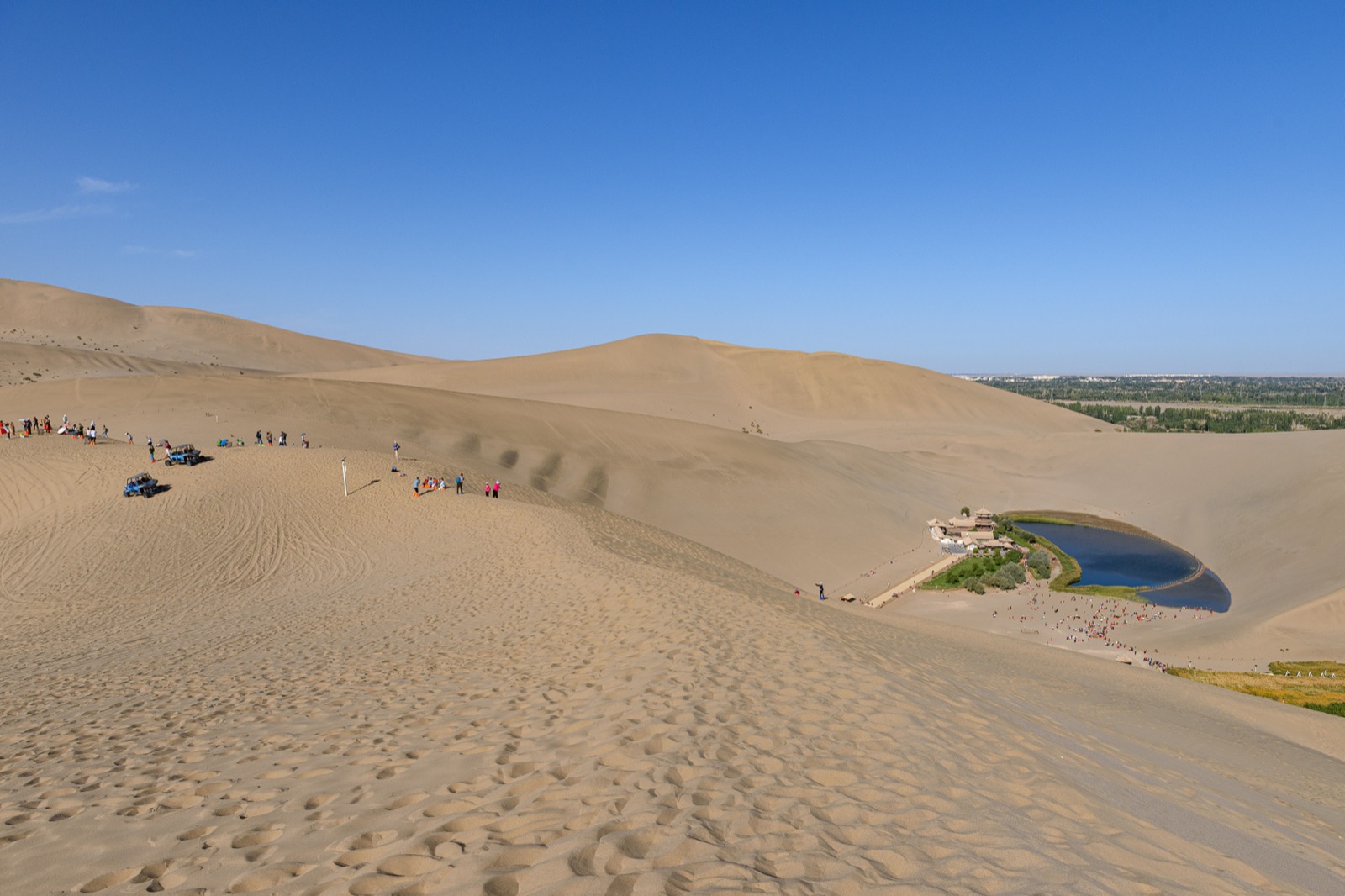
Here's what nobody tells you before you come: Dunhuang is the single most spectacular thing on the old Silk Road, and almost no foreigner has heard of it. This is the desert oasis where Buddhist monks spent a thousand years painting the insides of 735 caves — the Mogao Caves, a UNESCO wonder that makes the Sistine Chapel look like a weekend project — and where, twenty minutes later, you're riding a camel over singing sand dunes down to a crescent-shaped spring that has somehow refused to dry up for two millennia. Add wind-carved badlands, the ruined frontier gates that once marked the literal edge of the Chinese empire, and a night market grilling lamb skewers under the stars. Give it 3–4 days.
Two things before you read on. One: Dunhuang's sights are scattered — some are 180 km out in the Gobi — so you'll want a car and driver, not a metro map. Two: the Mogao Caves are the one thing you cannot just turn up for; foreigners book them a specific way, and we'll walk you through it step by step. Sort those and the rest is pure desert magic.
No time to read all of this? Tell us your dates and we'll build your Dunhuang plan for you — how to get Mogao tickets, a driver for the Gobi, the lot. On WhatsApp, real humans. (One message, no obligation.)
Message us →📌 This guide is long because it's complete — use the menu to jump. Everything below is named, priced, and verified June 2026; we flag anything that drifts so you can double-check the load-bearing details. (*Visa: see Part 1 — the 240-hour visa-free transit does not cover Dunhuang.)
Before You Go
🛂 Do You Need a Visa for Dunhuang? — and the 240-hour catch nobody warns you about
Here's the headline most travel sites bury: China spent the last two years quietly becoming one of the easiest big countries in Asia to walk into. Two routes cover almost everyone reading this — but Dunhuang has a wrinkle the generic guides miss, so read the second route carefully — it comes down to one thing: what color your passport is.
| Route | Who it's for | Max stay | The catch |
|---|---|---|---|
| 30-day visa-free | 50 countries — most of Europe, Australia, NZ, Japan, Korea, and UK + Canada (added 17 Feb 2026); Singapore, Thailand & Malaysia get 30 days via mutual exemption | 30 days | Ordinary passport valid for your whole stay (airlines often ask for 6 months). Tourism/business/family — no onward-ticket rule, and you can enter at any open port of entry and fly on to Dunhuang. |
| 240-hour (10-day) transit | 57 countries incl. the USA, Brazil, Mexico, Indonesia | 10 days | You must hold an onward ticket to a third country/region AND enter via an approved port — but here's the Dunhuang trap: Gansu (Dunhuang's province) is outside the 240-hour area entirely, so this route doesn't work for Dunhuang. |
✓ verified Oct 2026 Lists and ports shift often — reconfirm your nationality and entry port on the official site before booking.
🇺🇸 Americans (and other 240h travelers), this is the part that trips people up
You are not on the 30-day visa-free list. The US is on the 240-hour visa-free transit list, which lets you spend up to 10 days in much of China as long as you're passing through to a third country (you need an onward flight out of mainland China to somewhere that isn't where you came from — easy stops are Seoul, Bangkok, Singapore, Tokyo). The official notices say only "a third country or region", and none of the official pages we read names Hong Kong or Macao either way; reading them as qualifying is an inference, not an official rule. If your plan depends on it, confirm with your airline or the National Immigration Administration's 24-hour hotline, +86 12367 (English available), before you book.
The Dunhuang-specific catch: Dunhuang is in Gansu, and Gansu is not one of the 24 provinces covered by the 240-hour transit — so the transit can't get you here, whichever port you enter through (Beijing, Shanghai, Xi'an or anywhere else). Lanzhou (LHW), Gansu's capital airport, is not a 240-hour port either. If you're on a US passport (or any nationality without 30-day visa-free entry), the plan is simple:
No 240h workaround for Dunhuang — get an L visa
Apply for a Chinese tourist (L) visa before you fly. There's no legal way to fit Dunhuang into a 240-hour transit. With the visa in your passport, enter China wherever suits you and take the domestic hop: about 2 hours from Lanzhou, or 2.5–3 hours from Xi'an.
Two quiet rules that sink 240h travelers
① The 240 hours don't start when you land — they start at 00:00 the next day (GMT+8), so your arrival day is essentially free. ② "Third country" means different from where you came from — a US→China→back-to-US ticket does not qualify. ③ For Dunhuang specifically, the 240-hour transit doesn't apply at all — Gansu is outside the 24 covered provinces, so you need 30-day visa-free entry or an L visa. Policy lists move — always reconfirm your nationality on the official en.nia.gov.cn before you book.
More on this: China Essentials — visa-free & 240-hour transit →If all of that sounds fiddly for a place this remote, it's exactly the kind of thing we sort daily — message us and we'll tell you in one reply whether your passport + route works.
Ask us →🗓️ Best Time to Visit Dunhuang — and the sandstorm months to dodge
Aim for May–June or September–October. Late September to mid-October is the single best window of the year. Dunhuang sits in true desert: bone-dry, big skies, and a brutal day-to-night temperature swing you must pack for.
| Season | Months | Temp (day) | The real story |
|---|---|---|---|
| 🌬️ Spring (mixed) | Mar–Apr | 8–22°C | The sandstorm season — wind and dust peak now. Skip if you can; dunes and caves are no fun in a duststorm. |
| 🌸 Late spring (great) | May–Jun | 15–28°C | Sandstorms drop to their lowest of the year, skies clear, dunes glow. One of the two sweet spots. |
| ☀️ Summer (hot, busy) | Jul–Aug | 28–38°C | Scorching midday, but clear skies and peak crowds. The only window Mogao opens its overflow "B" tickets. Do the dunes at sunrise/sunset, not noon. |
| 🍁 Autumn (best) | Sep–Oct | 10–25°C | The golden window. Comfortable, clear, poplar leaves turning gold. Late Sep–mid Oct is as good as Dunhuang gets. |
| ❄️ Winter (quiet, cheap) | Nov–Mar | -10–5°C | Empty, atmospheric, cheap — Mogao and the dunes drop to half price. Brutally cold and short daylight; only for the hardy. |
Two things that genuinely matter here: the temperature swing (a 28°C afternoon can crash to single digits by night — always pack a real jacket, even in summer), and the desert sun, which is ferocious at this latitude and dryness. Hat, sunglasses, SPF 50, lip balm — non-negotiable. More in Part 5.
Avoid the big Chinese public holidays — Labour Day (early May) and National Day / Golden Week (1–7 Oct) — when domestic tourists swarm Dunhuang and Mogao tickets vanish weeks out. The shoulder days on either side are bliss; the holiday weeks themselves are a scrum.
✈️ How to Get to Dunhuang: Fly, Don't Train
Let's be honest about geography: Dunhuang is gloriously remote, tucked in China's far northwest where Gansu meets the Gobi. The Lanzhou–Xinjiang high-speed rail line technically reaches the region, but the trains here are slow — this is one of the few places in China where flying is unequivocally the right call.
The airport — DNH
Dunhuang Mogao International Airport (DNH) sits just 13 km east of the city center — a 15–20 min taxi/Didi into town. It runs year-round domestic flights, with the two key feeders being Lanzhou and Xi'an.
Getting there — by air (do this)
The classic Silk Road move: pair Dunhuang with Xi'an, the eastern start of the Silk Road. Up to 15 flights a day link the two, and culturally they're bookends of the same 2,000-year-old caravan story — the Terracotta Army and the city wall in Xi'an, the caves and the desert out here. Most well-planned northwest trips run Xi'an → Dunhuang (or onward to Xinjiang).
Getting there — by train (only if you must)
The trains exist but they're a commitment: Lanzhou → Dunhuang runs 7–14+ hours, Xi'an → Dunhuang 9–11+ hours (often overnight sleepers). The high-speed network out here doesn't deliver the 2-hour magic you get in eastern China. Unless you specifically want the slow Silk Road sleeper experience, fly.
✓ verified Jun 2026 — flight frequencies are seasonal; confirm live on Trip.com or the airline.
💴 Dunhuang Travel Budget: What It Costs (per day, excluding flights)
Dunhuang runs a touch pricier than eastern China for one reason: the sights are spread across the desert, so transport (a car + driver) is your biggest line item, not your hotel. Rough daily budgets:
| Style | Per day (ex-flights) | What that buys you |
|---|---|---|
| 🎒 Backpacker | ¥300–500 (~$42–70) | Hostel/guesthouse, night-market food, shared shuttle buses to the dunes & gates, Mogao B ticket if available |
| 💺 Mid-range (most people) | ¥500–900 (~$70–127) | Comfortable 3–4★ hotel, sit-down restaurants, a shared/private charter car for the Gobi day, Mogao A ticket, a show |
| ✨ Comfort | ¥1,200+ (~$170+) | 4–5★ or desert resort, a private car + English guide, premium show seats, camel + extras without flinching |
The single biggest budget lever is how you cover the distances: a shared shuttle to the western gates is ~¥76, a private charter car for the same loop is ¥350–450 split between your group. Mogao (¥238) and the dunes (¥120) are the other fixed hits. (~¥7.1 = $1 as of Jun 2026; rates drift.)
Sources — Part 1 (verified June 2026)
Visa & 240h transit: en.nia.gov.cn (National Immigration Administration — 30-day unilateral visa-exemption list, valid through 31 Dec 2026 for most countries; 240-hour transit policy (NIA, 20 Aug 2026), 57 nationalities, 24 provinces — Gansu not included, so neither Lanzhou (LHW) nor Dunhuang (DNH) is a 240-hour port); cross-checked chinasurvivalkit.com, chinadiscovery.com & windhorsetour.com 2026 guides.
Getting there: asiaodysseytravel.com, chinadiscovery.com, travelchinaguide.com, topchinatravel.com (DNH 13 km from center; Lanzhou flight ~2h, Xi'an flight ~2.5–3h; trains 7–14h+).
Climate / season & sandstorms: chinahighlights.com, chinadiscovery.com, asiaodysseytravel.com (best May–Jun & Sep–Oct; sandstorms Mar–Apr; large day-night swing). Budget: aggregated charter-car & ticket ranges, Jun 2026.
Arrival & Essentials
The three things that turn a remote desert town from "intimidating" into "effortless." Do the first two before you fly — fifteen minutes at home saves you a stressful first hour. The third — sorting transport — is the one thing unique to Dunhuang, because here, distance is the whole game.
📱 Internet & VPN in China: Get an eSIM before you fly
Let's be blunt about the thing everyone whispers about: mainland China blocks Google, Instagram, WhatsApp, Gmail, and most Western apps — and out here in the desert, your normal SIM will roam onto a Chinese network and hit that same wall, with patchier coverage to boot.
The clean, legal, no-drama fix: an international travel eSIM that routes your data through a server outside the mainland — so Google Maps, WhatsApp, Instagram, all of it just works, with no separate VPN to fiddle with. You install it as a second line; your home number stays for calls/texts.
| eSIM | Best for | VPN? | The honest take |
|---|---|---|---|
| Nomad | Multi-city Silk Road trips | No | The most stable when you're moving across regions — best if Dunhuang is one stop on a bigger Xi'an/Xinjiang route. Top pick here. |
| Airalo | One or two stops, budget | No | The most popular, cheapest, dead-simple. Plenty for a short Dunhuang visit. |
| Holafly | Heavy data users | No | Unlimited data + 24/7 support. Good if you stream/hotspot — check the fair-use cap. |
| Saily | Privacy-minded | No | By the NordVPN team, strong privacy. Solid for fixed-data plans. |
How it actually goes: buy online → you get a QR code by email → scan it to install (2 min) → leave it off until you land → flip it on as the plane taxis in, and you're online before baggage claim. Only needs an email — no Chinese ID, no registration. Buy it at home on your own Wi-Fi; do not count on installing it after you land, because activation pages can themselves be behind the wall — and Dunhuang's airport Wi-Fi is not where you want to discover this.
One phone really does replace everything — even in the desert
Wallet, keys, tickets, translator, ride-hailing, dinner orders — all collapse into one phone the moment you're set up. Most people pay by phone these days, though cash is still legal tender. Out here you'll especially lean on the phone for Didi to the dunes and translating a night-market menu. Get your eSIM + Alipay sorted and you operate like a local by day two.
More on this: China Essentials — paying with Alipay & WeChat →💳 How to Pay in China: Alipay & WeChat for Foreigners
Most people pay by phone, but cash is still legal tender: since 1 February 2026, staffed businesses must accept it. Keep some small notes as a backup (is cash accepted in China?). Don't count on foreign cards at small shops; bigger hotels, malls and major sights are more likely to take them. The great news for 2026: Alipay and WeChat Pay both take a foreign Visa/Mastercard directly, no Chinese bank account needed. Do this at home before you fly — identity verification is smoother on your home connection, and you want it working the second you land.
The short version:
- Download Alipay, register with your home mobile number (SMS code).
- "Cards" → "Add Bank Card", enter a real physical Visa or Mastercard. ⚠️ Prepaid and virtual/online-only cards are frequently rejected — this is the #1 reason setup fails.
- Complete passport verification (passport photo + selfie); approval is usually minutes.
- Add WeChat Pay with a second physical card as backup.
The limits & fees you need to know ✓ verified Jun 2026
| Figure | |
|---|---|
| Payments under ¥200 | Fee-free (0%) |
| Payments over ¥200 | ~3% service fee |
Alipay and WeChat Pay set spending limits for foreign cards — see Essentials. Check your current limit in the app.
The under-¥200 rule covers the vast majority of what you'll buy out here — skewers, camel rides, taxis, tickets. Still, carry some cash — useful for a remote stall or a charter driver who prefers it.
🚕 Getting Around Dunhuang: Why You Need a Car (the one thing different here)
This is the section that matters most in Dunhuang, and it's the opposite of every other Chinese city we cover: there is no metro, and the sights are flung across the desert — some a 15-minute drive, one a 180 km, 2.5-hour haul into the Gobi. Public transport will not stitch a good trip together here. Here's the honest hierarchy.
In town & the close sights (East cluster)
| For | Option | Cost | Notes |
|---|---|---|---|
| Around town (night market, hotels) | City bus | ¥1 flat | Only 3 routes, 07:00–21:00, every ~10 min. Covers the basics. |
| Short hops / airport | Didi or taxi | taxi starts ¥5–10 | Didi works in Dunhuang (English app, foreign card) — your default for the dunes and the airport. |
| Mingsha dunes / Mogao center | Didi | ~¥15–30 each way | Both are short hops east/south of town; easiest by Didi. |
| Pottering downtown | Share bike | ¥1–2 / 30 min | Dockless bikes; fun for the flat city center. |
Riding Didi works exactly as it does nationwide: full English app, takes foreign Visa/Mastercard, register with your home number — no Chinese SIM or bank needed. At the airport, walk to the signed 网约车 (wǎngyuē chē) ride-hailing pickup zone rather than booking from inside; the chat has a built-in English↔Chinese translator, and the driver confirms you by the last 4 digits of your phone.
The far sights (West cluster) — you need a charter car
The famous frontier gates and the wind-carved badlands are deep in the Gobi, with only a handful of public buses a day. Almost everyone charters a car (with driver) for a full day, split across your group — it's the single best money you'll spend in Dunhuang.
| Route | What it covers | Distance | Typical charter car (per car/day) |
|---|---|---|---|
| West Line | Yangguan Pass, Yumenguan Pass, Han Great Wall ruins, Yardang Geopark | up to 180 km (2.5 hrs each way to Yardang) | ¥350–450 |
| East Line | Mingsha Mountain & Crescent Lake, Mogao Caves, Sanwei Mountain | short hops | ~¥150 |
A shared shuttle bus to the western sights is the budget alternative at ~¥76/person (about 3 departures a day, ~3 hrs to Yardang) — fine if you're solo and flexible, but a chartered car wins on timing, flexibility, and getting you to Yardang for sunset. (Full West-Line playbook in Part 4.) ✓ verified Jun 2026
A private car + driver across the Gobi for a full day costs about what a single airport taxi does back home
A whole day with a car and driver looping the Silk Road frontier gates — Yangguan, Yumenguan, the 2,000-year-old Great Wall ruins, and the Yardang badlands at sunset — runs ¥350–450 per car (split it 3–4 ways and it's pocket change each). Compare that to one metered cab to the airport in London or New York. China's the rare place where "private driver for the day" is the budget option, not the splurge.
Want a great English-speaking driver for your Gobi day — Yardang timed for sunset, the gates in the right order, no haggling at the airport? We line up trusted drivers in Dunhuang. Tell us your dates on WhatsApp.
Ask us →Sources — Part 2 (verified June 2026)
eSIM: unusualnomad.com, traveltomtom.net, cybernews.com (China eSIM tests 2026 — route offshore / no separate VPN).
Alipay limits & fees: realchinatrip.com, trip.com, ltl-school.com (<¥200 fee-free · ~3% above; prepaid/virtual cards often rejected).
Getting around Dunhuang: travelchinaguide.com, chinadiscovery.com, topchinatravel.com (3 bus routes ¥1; Didi available; share bikes ¥1–2; charter car West Line ¥350–450 / East Line ~¥150; shared shuttle ~¥76; Yardang 180 km / 2.5 hrs).
Things to Do in Dunhuang
A thousand years of cave paintings, a camel ride over singing dunes to a spring that won't die, lamb skewers under the stars, and an immersive show next to the caves themselves. Everything below is named, priced, and verified June 2026 — but one of them, the Mogao Caves, has a booking process foreigners must get right, so we start there.
🛕 Mogao Caves: Tickets, Booking & How to Visit as a Foreigner — the one you can't wing
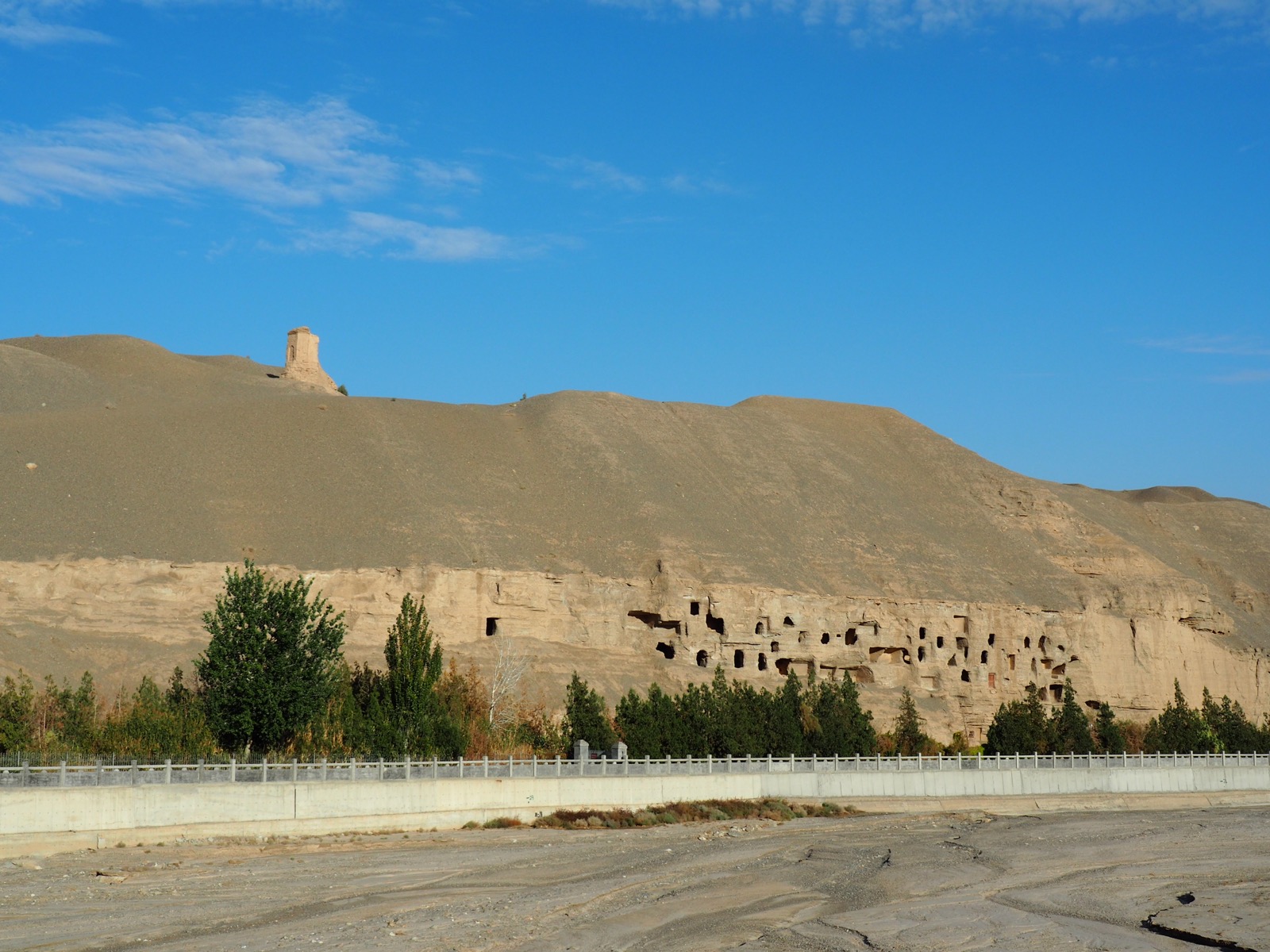
This is the reason Dunhuang exists on the world map. Carved into a cliff over a desert river, the Mogao Caves (莫高窟) are 735 grottoes dug and painted by Buddhist monks and pilgrims over a thousand years, from the 4th to the 14th century — 45,000 m² of murals and 2,400+ painted statues, the greatest treasure-house of Buddhist art on earth. Standing inside a 1,500-year-old cave while a guide's torch sweeps across a ceiling of flying apsaras is one of those moments that recalibrates what "old" means.
It is also the single most regulated sight in Dunhuang — to protect the fragile pigments, entry is by timed, pre-booked, guided tour only, and the booking rules are different for foreigners. Get this part right and the rest is easy.
Step 1 — Understand the two ticket types
| Ticket | Price (foreigner) | What you get | When it's available |
|---|---|---|---|
| A ticket (full) | ¥238 peak (May–Oct) · ~¥140 winter | 2 digital films + shuttle bus + a guided tour of ~8 real caves + foreign-language interpreter. The proper experience. | Year-round. Capped at 6,000/day — sells out in peak season. |
| B ticket (emergency) | ¥100 | Shuttle bus + 4 caves, no films, no dedicated guide. A consolation when A is sold out. | Overflow days only — mainly July & August. Don't count on it. |
The A ticket isn't one price stuck together — it's the ¥48 two-film experience + ¥10 shuttle + ¥180 cave entry, bundled. Aim for the A ticket. The B ticket exists purely so peak-season overflow crowds see something; it's a backup, not a plan.
Step 2 — Book it the foreigner way (this is the crucial bit)
Here's what catches people out: the official online reservation system only accepts Chinese ID cards — a foreign passport number won't go through. So as a foreign traveler you have two real routes in, and you should pick one before you arrive:
- Book through a licensed travel agency / tour operator (the reliable route). Agencies hold an allocation and can secure your A ticket against your passport in advance — by far the safest option in peak season, and exactly the kind of thing a planner (like us) handles in one message. (The official group-booking channel requires 10+ people, but an agency pools you into that — you don't need to bring nine friends.)
- Buy a foreigner-reserved ticket at the on-site ticket office on arrival. A daily quota is held back for foreign passport holders, sold only at the Mogao Ticket Office at the Digital Exhibition Center. Turn up early (the moment it opens), passport in hand. This works in shoulder/low season — but in May–Oct it's a real gamble, and on holidays it's hopeless.
The Mogao online booking system rejects your passport — don't find that out the night before
Every "just book it on the app" guide assumes you have a Chinese ID. You don't, and the system will bounce your passport number. Your two routes are: (1) a travel agency books it for you in advance against your passport — the safe play in peak season; or (2) you queue at the on-site foreigner ticket window on the day and hope the daily foreign quota hasn't gone. Tickets release ~30 days out and peak-season A tickets sell out weeks ahead. If Mogao is the reason you're flying to Dunhuang — and it should be — lock it before you go.
Ask us how to get your Mogao ticket →Step 3 — Know the flow (so the day makes sense)
The Mogao experience is a two-part journey, and the caves are not where you start:
- Digital Exhibition Center (数字展示中心) — ~10–15 km from downtown Dunhuang (Didi, or city Bus 2/3). This is where your ticket begins. You watch two short films: a wide-screen cultural film on the Silk Road, then a dome/fulldome film that flies you inside caves you won't physically enter — stunning, and it primes your eye.
- Free shuttle bus (~20 min) ferries you from the Center out to the actual cliff and caves.
- Guided tour of ~8 caves — your guide unlocks a rotating set of grottoes (which ones vary by day, to spread wear), torch in hand, ~75–90 min. Then a free shuttle back.
Budget 3–5 hours door to door. Opening hours: roughly 08:00–18:00 (May–Oct) / 09:00–17:30 (Nov–Apr); last entry well before close.
Step 4 — The on-the-day rules (they're strict, and enforced)
- No photography inside the caves. None. The flash damages pigment and they will stop you. Buy the photo book; soak in the real thing with your eyes.
- No bags, no liquids beyond a sealed water bottle inside the caves — there's a cloakroom.
- You move with your guide group — you can't wander solo cave-to-cave.
- Bring your passport (it's tied to your ticket) and arrive 30+ min early for the films.
- Want more caves? The famous "special caves" (like the library cave 17 area) carry a separate premium ticket with a tiny ~200/day quota — niche, pricey, and for serious art pilgrims only.
Mogao tickets stress people out more than anything else in Dunhuang — the passport-rejection thing is real. Tell us your dates and we'll tell you exactly how and when to book your A ticket (films + 8 caves + English interpreter), and plan the rest of Dunhuang around it.
Message us →🐫 Mingsha Mountain & Crescent Lake: Singing Sand Dunes at Sunset — the postcard, in real life
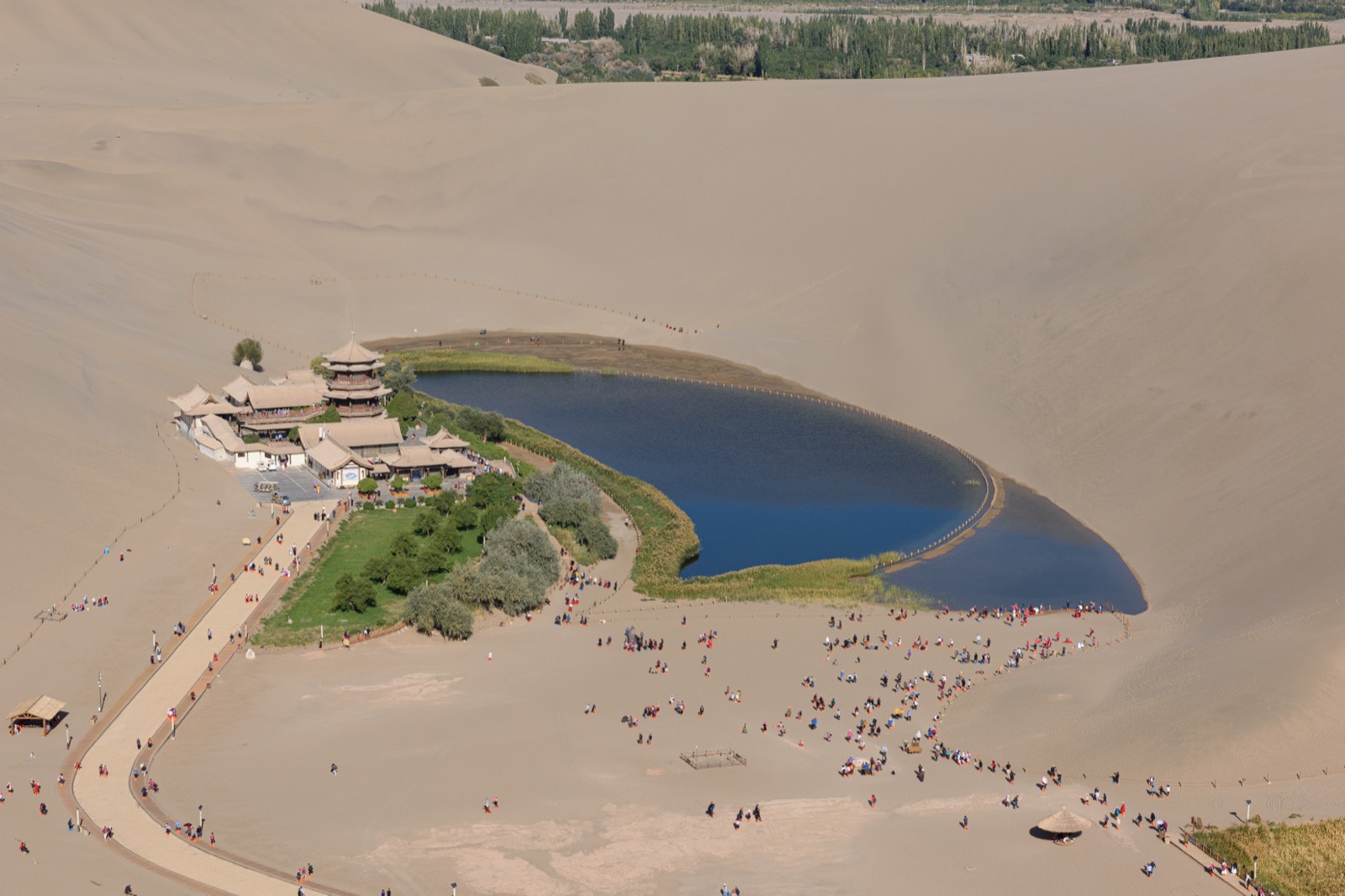
If Mogao is why you come, the dunes are why you'll never forget it. A 15-minute hop south of town, the sand of Mingsha Mountain (鸣沙山, "Singing Sand Mountain") rises in clean golden ridges hundreds of metres high — and tucked impossibly at its foot is Crescent Lake (月牙泉, Yueya Quan), a crescent-shaped spring with a wooden temple pavilion that has refused to be swallowed by the desert for 2,000 years. The "singing" is real: on a dry, breezy day the sand hums as it slides.
The essentials
- Ticket: ¥120 peak season (roughly Apr–Nov) / ¥60 low season (winter). The ticket is often valid for multiple entries over a few days — handy if you want both a sunset and a sunrise. (Confirm the re-entry window at the gate.)
- Hours: roughly 07:30–18:00 (seasonal; longer in summer). The gate stays open late enough for sunset — the whole point.
- Getting there: Didi ~¥15–30 from downtown, or city bus. It's the closest marquee sight to town.
What to actually do up there
| Experience | Cost | The honest take |
|---|---|---|
| Camel ride (骑骆驼) | ~¥100/person (~30 min) | The iconic Silk Road photo — a caravan cresting the dune line. Touristy, yes; unmissable, also yes. Best in the golden hour. |
| Sandboarding | ~¥40 | Sit on a board, slide down the dune face. Silly, fun, cheap. |
| Climb the dunes (wooden ladders) | free with entry | Rope-and-plank ladders climb the steepest faces — loose sand is exhausting, the ladders save your legs. The ridge-top sunset is the money shot. |
| Buggy / 4x4 / microlight | ¥100–300+ | Add-ons for the adrenaline crowd; skip unless you're keen. |
The insider play — go for sunset, stay for the stars. Arrive ~2 hours before sundown: do the camel ride in the soft light, climb to the ridge as the dunes turn from gold to rose to deep amber, watch the sun drop behind the sand, then linger as the desert sky lights up. Bring socks or rent the bright shoe-covers at the gate — the sand pours into everything — and a layer, because the temperature falls off a cliff the second the sun's down.
A 2,000-year-old spring sits at the bottom of a giant sand dune — and it still hasn't dried up
Physics says a freshwater crescent lake surrounded by towering desert dunes should have vanished centuries ago. Crescent Lake hasn't. It's been recorded for two millennia, fed by a quietly persistent groundwater table, and it's still there — a sliver of impossible blue-green at the foot of the singing sands. Walk down to the pavilion at dusk and you'll see why Silk Road caravans treated this oasis as a small miracle. It nearly did dry out in the 1990s; conservation work brought it back. Catch it while it's thriving.
🌃 Shazhou Night Market & What to Eat in Dunhuang — donkey-meat noodles & desert skewers
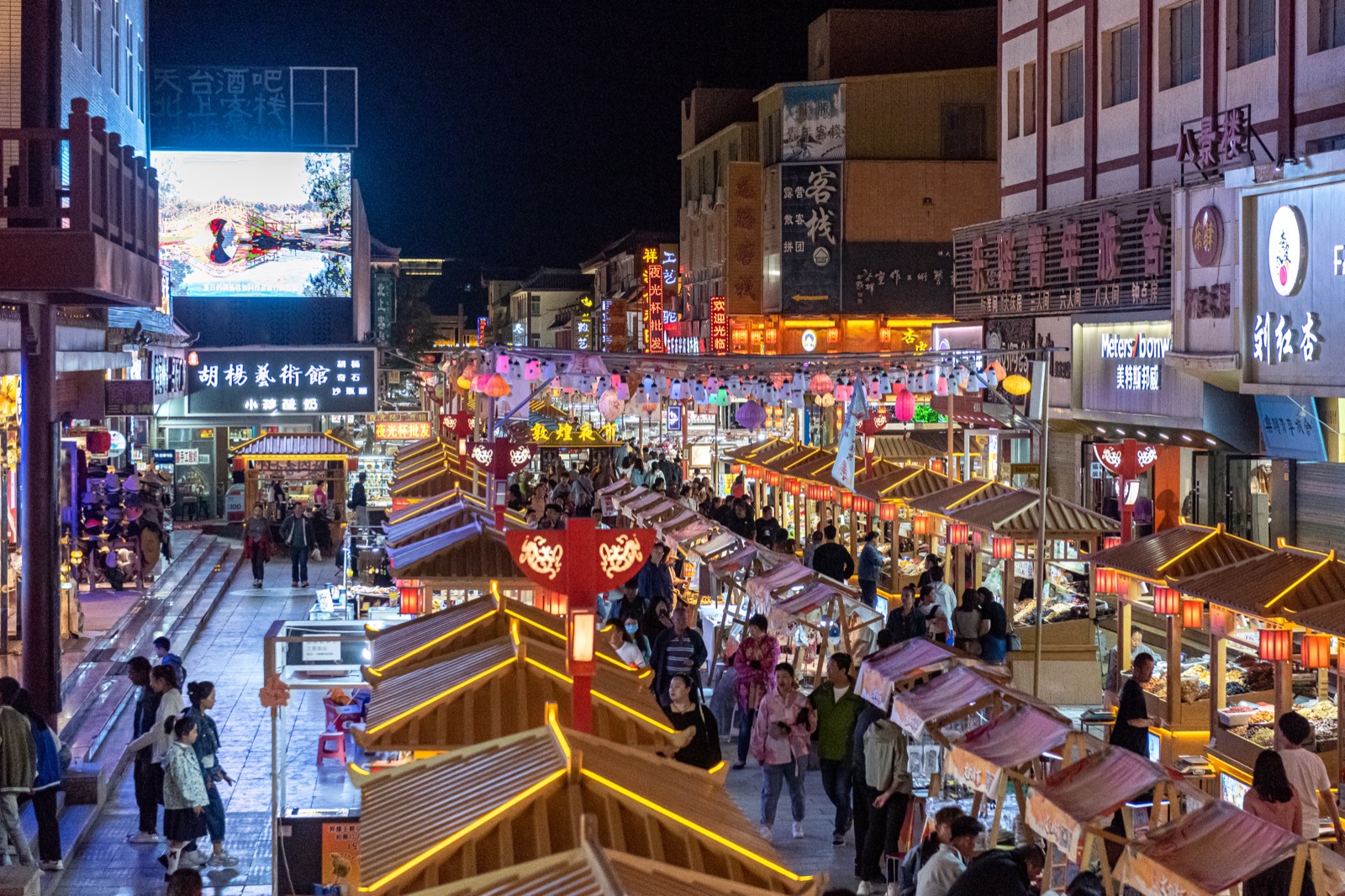
After a day in the desert, the whole town converges on the Shazhou Night Market (沙州夜市) on East Yangguan Road — Gansu's biggest night market and Dunhuang's living room after dark. It's best after 8pm, when the heat breaks and the grills fire up. Here's the field guide so you order like you've done it before.
The must-eats (and what they cost)
| Dish | What it is | Price |
|---|---|---|
| Donkey-meat yellow noodles (lǘròu huángmiàn / 驴肉黄面) | Dunhuang's signature dish — thick, chewy, hand-pulled yellowish noodles under a sauce of braised donkey meat and mushroom. | ~¥15–25 |
| Apricot-pit juice (xìngpí shuǐ / 杏皮水) | The local drink — amber, sweet-sour, made from boiled local apricot, wonderful iced after the desert. | ¥3–5/cup |
| Lamb skewers (yángròu chuàn / 羊肉串) | Cumin-and-chili mutton over coals — the northwest at its best. Order a fistful. | ~¥3–5/skewer |
| Roast lamb / ribs (kǎo yángpái) | Whole grilled ribs and legs, sliced to share. The big-table centerpiece. | by weight |
| Local breads & dough snacks | Various northwest flour snacks — hearty, cheap, filling. | ¥5–15 |
How to eat it: wander, point, scan the stall's QR to pay (Alipay/WeChat — cash works too at smaller stalls). For a sit-down version of the noodles, locals point first-timers to spots like Tiānshī Càigēnxiāng (天师菜根香) and the cluster around the market's "Shazhou Food Station" core, where the stalls are fixed, tidy, and reputation-checked. Per person you'll spend ~¥30–60 for a proper blowout — and the food, like everywhere in China, is cheapest where the locals queue.
Want a local to walk you through the night market — the best donkey-noodle stall, the right skewers, none of the tourist markups? Ask us on WhatsApp.
Ask us →🎭 Dunhuang Silk Road Shows: Encore Dunhuang & Silk Road Flower Rain
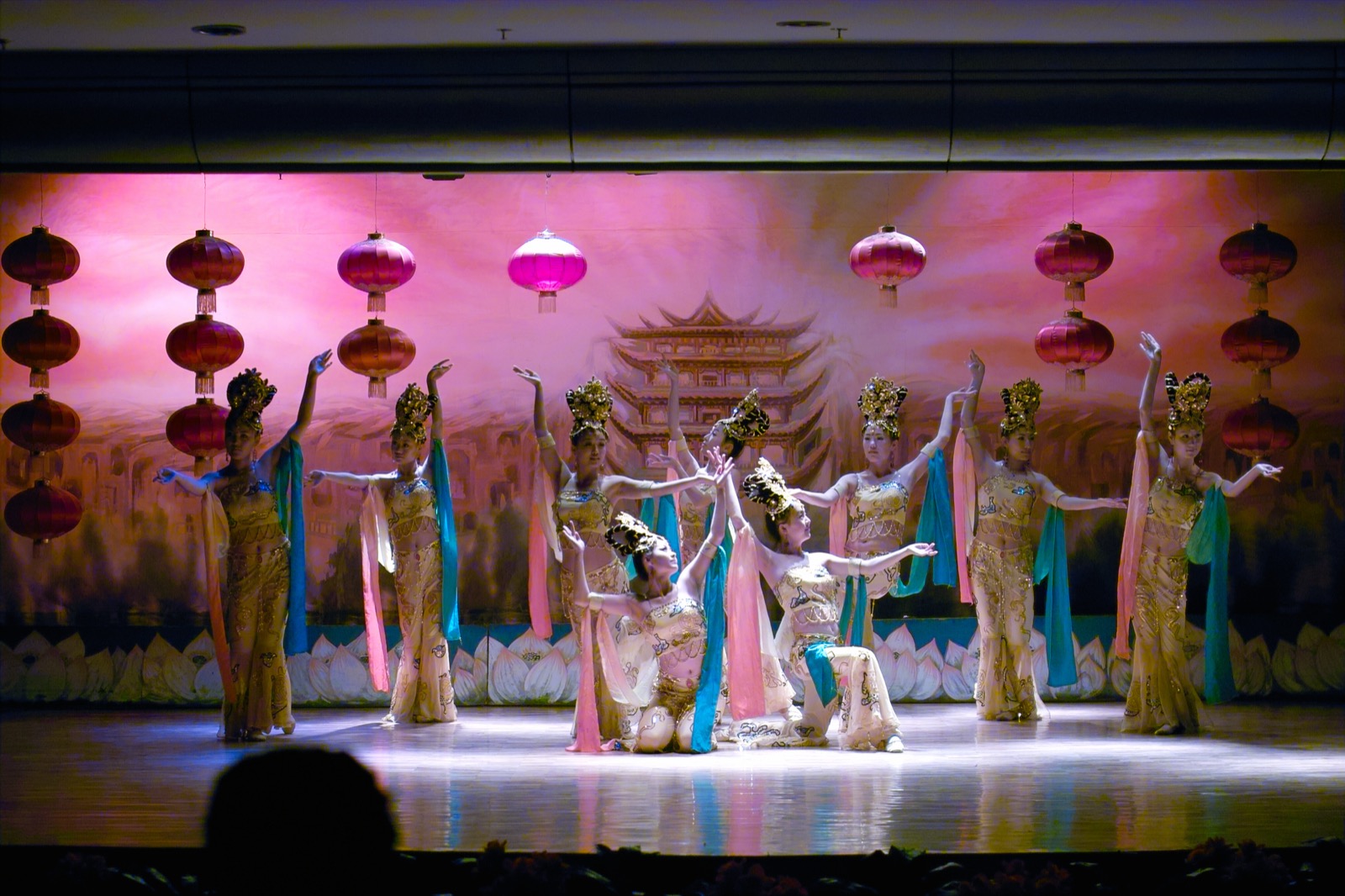
The other unmissable Dunhuang night: a Silk Road spectacle, where the cave murals you saw by day come alive in dance, light and music. Two stand out.
| Show | What it is | Time / season | Tickets |
|---|---|---|---|
| Encore Dunhuang (又见敦煌) | An immersive, walking production by Wang Chaoge (the Beijing Olympics opening-ceremony director). You move through the halls as the story of Mogao unfolds around you. Theater sits next to the Mogao Digital Center. | nightly ~20:00–21:30 (~90 min) | tiers roughly ¥298–368 (confirm live) |
| Silk Road Flower Rain (丝路花雨) | The classic seated dance drama — China's most famous Silk Road ballet, telling a Dunhuang painter's tale, all swirling sleeves and mural-come-to-life choreography. | evenings, Apr–Oct only | ¥238 / ¥288 / ¥318 / ¥588 by tier |
Which to pick? Encore Dunhuang is the modern, move-with-it crowd-pleaser and ties directly to the caves — first-timers love it. Silk Road Flower Rain is the traditional, sit-back ballet for those who want the classic. Either way, book a day or two ahead in peak season and pay up a tier for the better sightlines — the spectacle is the whole point. ✓ verified Jun 2026 — show prices and schedules shift seasonally; reconfirm on Trip.com or the box office.
The murals don't just sit on cave walls here — they get up and dance
By day you stand silent in a torch-lit grotto staring at 1,400-year-old apsaras frozen mid-flight. By night, in Encore Dunhuang, those same flying figures peel off the walls — dancers in mural-painted silks swirling an arm's length away as you walk through the story of the caves. Seeing the art still, then seeing it move, is the one-two punch that makes Dunhuang click. Few places let you experience their masterpiece twice in a day, in two completely different ways.
Sources — Part 3 (verified June 2026)
Mogao Caves: chinadiscovery.com, travelchinaguide.com, chinadragontravel.com, chinaeducationaltours.com (A ticket ¥238 peak / ~¥140 low = ¥180 caves + ¥48 films + ¥10 shuttle, 8 caves + interpreter; B emergency ¥100, 4 caves, summer overflow; foreigners cannot use the Chinese-ID online system — book via licensed agency (10+ group channel) or buy the foreigner-reserved quota at the on-site Digital Exhibition Center ticket office; release ~30 days ahead; A cap 6,000/day; special-cave quota ~200/day; Digital Center ~10–15 km from town; flow = 2 films → ~20-min shuttle → ~8 caves; hours 08:00–18:00 May–Oct / 09:00–17:30 Nov–Apr; no photography inside).
Mingsha & Crescent Lake: trip.com, chinadiscovery.com, china-silkroad-travel.com (¥120 peak / ¥60 low, often multi-entry; camel ~¥100/30 min; sandboarding ~¥40; ~07:30–18:00 seasonal; sunset best).
Shazhou Night Market & food: chinadiscovery.com, travelchinaguide.com, chinadragontravel.com (East Yangguan Rd; donkey-meat yellow noodles ¥15–25; apricot-pit juice ¥3–5; best after 8pm; QR pay).
Shows: chinadiscovery.com, trip.com, klook.com (Encore Dunhuang immersive/walking, dir. Wang Chaoge, by Mogao Digital Center, ~20:00–21:30, ~¥298–368 tiers; Silk Road Flower Rain seated dance drama, ¥238–588, Apr–Oct). Prices and hours shift on Chinese public holidays — confirm the load-bearing ones before you commit.
Day Trips from Dunhuang
The desert outside Dunhuang is where the Silk Road gets epic. Two ruined gates that once marked the western edge of the Chinese empire, a stretch of the Han-dynasty Great Wall older than anything you've seen at Badaling, and the Yardang badlands — a haunted wind-carved "Ghost City" in the middle of nowhere. All of it is a full-day West Line drive, and all of it rewards going with a car and a plan.
🚗 First, the day-trip logic (read this once — distance is everything)
Everything below is far — Yardang Geopark alone is 180 km from town, ~2.5 hours each way. There's no train, and public buses are sparse. Three ways to do it:
| Option | Cost | Best for |
|---|---|---|
| Charter car + driver (West Line) | ¥350–450 per car/day (split 3–4 ways) | Almost everyone. Flexible timing, gets you to Yardang for sunset, stops where you want. The right call. |
| Shared shuttle bus | ~¥76/person | Solo budget travelers. ~3 departures/day, ~3 hrs to Yardang, fixed schedule. |
| Organized day tour | ¥260+/person (3 sites) | Want a guide + English narration + zero logistics. |
The order that works: leave town mid-morning, run out along the West Line hitting Yangguan → Yumenguan → Han Great Wall → Yardang, and time Yardang for late afternoon/sunset when the low light sets the badlands on fire — then the long drive back in the dark. It's a big day (10–12 hours); bring water, snacks, sun cover, and a layer. ✓ verified Jun 2026
👻 Yardang National Geopark: the "Ghost City" of the Gobi — Dunhuang's wildest day trip
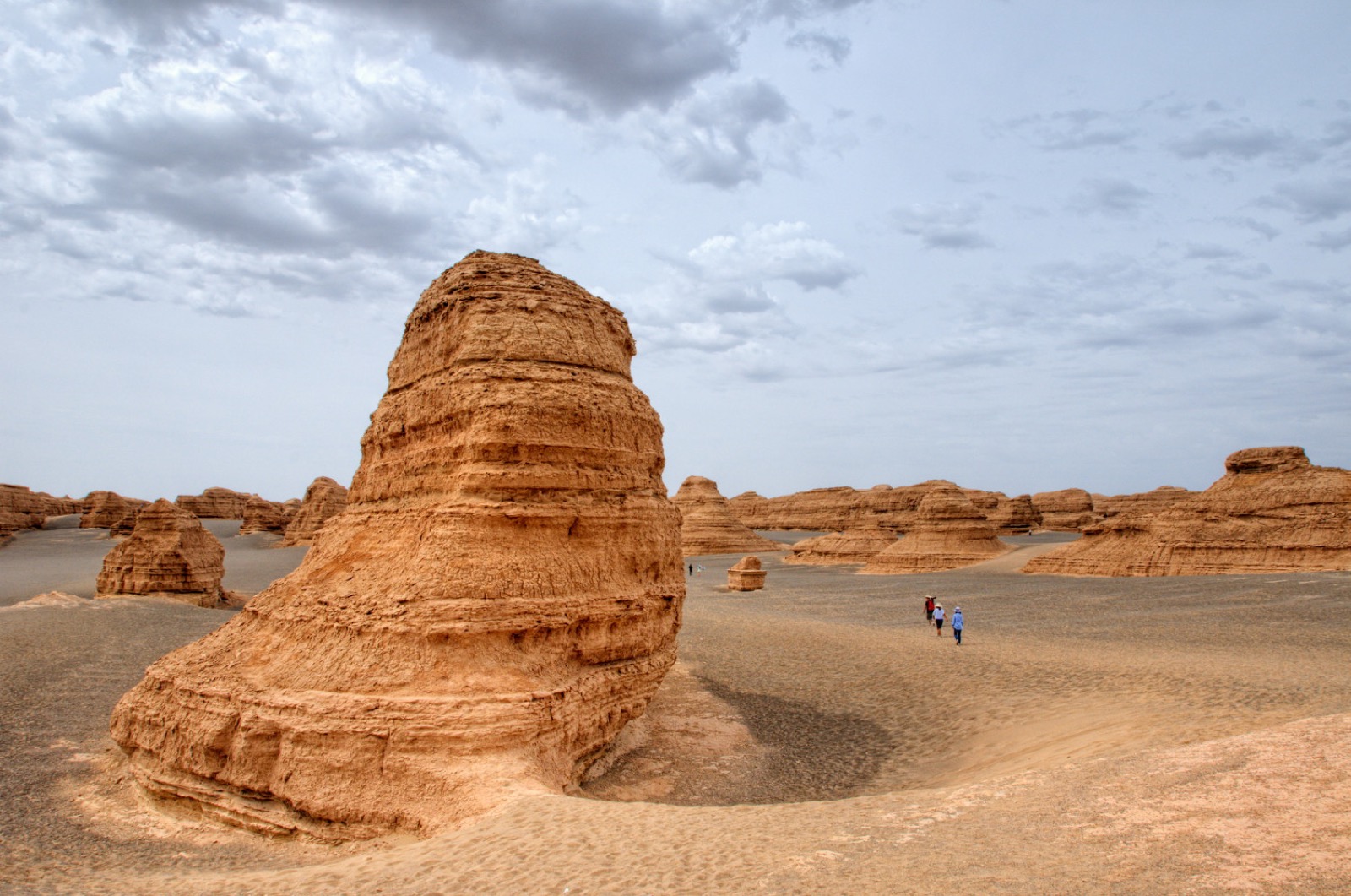
Bottom line: the most otherworldly thing you'll see in the northwest. Out where the Gobi flattens to gravel, the wind has spent millennia carving the soft earth into a field of towering, ship-like rock formations — locals call it the 雅丹魔鬼城, the "Yardang Devil City," because on a windy night the gaps between the mounds howl. You ride a park shuttle on a loop between the most dramatic clusters (shaped, with imagination, like fleets, sphinxes, peacocks).
- Distance: ~180 km / 2.5 hrs from Dunhuang — the far end of the West Line, and the reason you charter a car.
- The play: arrive late afternoon; the formations are flat and lifeless at noon but turn molten gold with knife-edge shadows near sunset — the only time to photograph them. Then the long drive home.
- Inside the park: a mandatory sightseeing shuttle loops the viewpoints (built into the ticket/area fee); deeper "off-road" zones cost extra.
🏯 Yangguan & Yumenguan: the Silk Road's last gates — where the empire ended
These two ruined passes are the emotional heart of a West Line day — the literal edge of ancient China, the checkpoints every Silk Road caravan crossed before vanishing into the western deserts. Tang poets wrote farewell verses here that every Chinese schoolkid still knows.
| Pass | What's there | Distance from town | Note |
|---|---|---|---|
| Yangguan Pass (阳关) | A reconstructed gate-tower + museum on the site of the "South Gate" of the frontier; the famous beacon-tower ruin behind it. The "going out the western pass, you'll have no old friends" line is this gate. | ~70 km SW | More museum/reconstruction; good context. |
| Yumenguan Pass (玉门关, "Jade Gate") | A lone, weathered rammed-earth cube standing in empty desert — the real, ruined Han gate, raw and atmospheric. Nearby: the Han Great Wall ruins. | ~90 km NW | The more authentic, haunting ruin of the two. |
Han-dynasty Great Wall ruins sit out by Yumenguan — 2,000+ years old, built of rammed earth and reed layers, eroded to low ochre ridges running across the Gobi. It's nothing like the stone Ming wall tourists picture, and that's exactly the point: this is the wall as the frontier garrisons actually knew it, crumbling in the emptiest landscape imaginable.
You're standing where the map of ancient China literally ran out
At Yumenguan — the Jade Gate — there's a lone mud-brick cube in a sea of gravel and sky, and that was the western limit of the Chinese world. Past it: the unknown, the deserts of the Silk Road, "no old friends," as the Tang poem goes. The Han Great Wall ruins nearby are older than the Roman Colosseum and made of packed earth and reeds, not stone. You can drive out, stand on the exact edge the caravans crossed, and have the entire frontier almost to yourself. There is no velvet rope, no crowd — just 2,000 years of wind.
A West Line day done right — Yangguan, Yumenguan, the Han wall, and Yardang timed for sunset, with a driver who knows the road — is the highlight of most Dunhuang trips. Let us set it up. Message us your dates on WhatsApp.
Send dates →🗓️ Dunhuang Itinerary: 2, 3 & 4 Days — the sights actually strung together
These plug straight into Part 3 (Mogao, dunes, night market, show) and Part 4 above. Times assume a downtown base. Tap a day to open the plan.
2 Days The essential Dunhuang
- Day 1Caves & dunes. Morning: Mogao Caves (A ticket, pre-booked — films → shuttle → 8 caves, ~4 hrs). Late afternoon: Mingsha & Crescent Lake — camel ride in golden light, climb the dune for sunset. Evening: Shazhou Night Market — donkey-meat noodles, skewers, apricot juice.
- Day 2The Gobi (West Line). Full-day charter car: Yangguan → Yumenguan → Han Great Wall ruins → Yardang Geopark for sunset. Long drive back; late dinner. (Tight but doable — the classic 2-day Dunhuang.)
3 Days The sweet spot (add a show + breathing room)
- Day 1Mogao + a Silk Road show. Mogao in the morning. Afternoon to rest / Dunhuang Museum. Evening: Encore Dunhuang (immersive) or Silk Road Flower Rain (classic dance drama).
- Day 2Dunes, unrushed. A slow morning, then Mingsha & Crescent Lake with time for both the camel ride and a long sunset on the ridge. Night market.
- Day 3The Gobi (West Line). Full-day charter to the gates, the Han wall, and Yardang at sunset.
4 Days The full Silk Road oasis
- Days 1–3As above, with air in the schedule: add sunrise at the dunes (your Mingsha ticket is often multi-entry), the Western Thousand-Buddha Caves (a quieter cousin of Mogao on the West Line), or a half-day drifting the town and museum.
- Day 4Slow Dunhuang or onward. A pure oasis day — late breakfast, the museum, one more bowl of donkey noodles — or use it to fly onward to Xi'an and continue the Silk Road east.
Want this turned into a real plan — Mogao planned (we'll show you how to book it), a driver for the Gobi, the right show, hotels in the right spot? Send us your dates on WhatsApp and we'll build it.
Send dates →🛏️ Where to Stay in Dunhuang: Best Areas — with real price bands
No booking links, no commission — just where each type of traveler should sleep. Dunhuang is small, so it really comes down to two zones. Rates spike hard in peak season (May–Jun, Sep–Oct) and on holidays, so confirm live.
| Area | Best for | Why here | Rough nightly band |
|---|---|---|---|
| 🏙️ Downtown (by Shazhou Night Market) | First-timers, most people | Dead-center: walk to the night market, restaurants and the museum; ~15 min to the dunes, ~20 to Mogao Center and the airport. The obvious base. | Budget ¥200–400; mid ¥450–800; 4★ above |
| 🏜️ Near Mingsha Mountain | Dune-sunrise chasers, romantics | Steps from the dune gate — roll out for sunrise with no taxi. Quieter, more guesthouses/hostels; a little far from food/nightlife. | Hostels from ~¥120; comfortable guesthouses mid |
| ✨ Desert resorts / SLH | Splurge & honeymooners | A handful of high-end properties between town and the dunes (e.g. an SLH member) with desert views and full facilities. | ¥1,200+ / from ~$115–300+ |
My honest pick: stay downtown by the night market and just Didi to the dunes — you get walk-everywhere convenience, the best food on your doorstep, and you're still 15 minutes from every sunset. Only base at Mingsha if a sunrise on the dunes is the dream and you want to roll straight out of bed onto the sand. ✓ verified Jun 2026 — rate bands are indicative; book early for peak season.
Sources — Part 4 (verified June 2026)
Day trips & distances: chinadiscovery.com, travelchinaguide.com, chinaxiantour.com, chinatours.com (Yardang 180 km / 2.5 hrs; Yangguan ~70 km SW; Yumenguan ~90 km NW; Han Great Wall ruins by Yumenguan; West Line charter ¥350–450/car, shared shuttle ~¥76, combined 3-site tour ~¥260; Yardang shuttle built in).
Where to stay: chinadiscovery.com, trip.com, expedia.com, booking.com (downtown by Shazhou Night Market vs Mingsha-village area; hotels from ~$115 peak; SLH desert option; public nightly-rate ranges, Jun 2026).
Know Before You Go
🧠 Desert survival, culture, money & health — the fine print
🏜️ Desert essentials — the 6 things Dunhuang will punish you for forgetting
- Sun protection is not optional. High latitude + high altitude + zero cloud = ferocious UV. Hat, sunglasses, SPF 50, lip balm, and ideally a light long-sleeve. People get burnt in an afternoon here.
- Pack for a 20°C+ temperature swing. A 30°C afternoon can fall to single digits after dark — always carry a jacket, even in summer, especially for sunset on the dunes and the Gobi.
- Hydrate hard. It's bone-dry and you won't notice yourself sweating. Carry water everywhere; the desert dehydrates you fast.
- Sand gets into everything. At the dunes, rent the bright shoe-covers at the gate or wear high socks; protect your camera/phone from blowing sand.
- Dodge sandstorm season (Mar–Apr) if you can — and if a dust day hits, flip your indoor plans (museum, films) forward.
- Cash backup matters more out here. QR pay rules in town, but a remote stall or a charter driver may prefer cash — keep some yuan on you.
🤝 Culture shocks & etiquette (the ones that trip up first-timers)
- No tipping. Anywhere. Restaurants, taxis, your charter driver, the camel handler — none of it. Trying to tip causes confusion, not gratitude.
- Carry your own tissues + hand sanitizer. Public restrooms (and many squat toilets, especially out in the Gobi) often have neither paper nor soap.
- You order by scanning a QR code at most restaurants — point your camera at the table sticker. (Menus are usually Chinese — Google Translate's camera, on your eSIM, reads them instantly.)
- Tap water is NOT drinkable — locals boil it or drink bottled. Every hotel room has a kettle and free bottles.
- Strangers may ask for a photo with you — especially out here where foreign faces are rarer than in Beijing. It's genuine friendly curiosity, not a scam. Smile, say yes or wave it off politely.
- No photography inside the Mogao caves — this one's enforced; don't be that traveler.
💰 What's cheap vs. what isn't in Dunhuang
Cheap (spend freely): night-market food (a feast for ¥30–60), apricot juice (¥3–5), city buses (¥1), share bikes, lamb skewers. A charter car split across your group is the great-value surprise of the trip.
Adds up (budget for it): the distances — fuel/charter for the far Gobi sights is your biggest cost; Mogao A ticket (¥238) + dunes (¥120) + a show (¥298+) stack up over a few days; peak-season hotels (May–Jun, Sep–Oct) jump sharply; imported/Western food and specialty coffee carry the usual premium.
🚑 Emergencies & health (save these before you fly)
- Don't drink the tap water — bottled or boiled only; your hotel kettle is your friend.
- Altitude & dryness can give you headaches and nosebleeds — hydrate, and a little saline nasal spray helps.
- Pharmacies (药店) are in town, well-stocked and cheap for basics (sunburn, upset stomach, rehydration salts) — point or show a translated note.
- Dunhuang is a small city — serious medical issues may mean a transfer to Lanzhou, so travel insurance is strongly worth having out here.
❓ FAQ — straight answers to what everyone actually asks about Dunhuang
Do I need a visa to visit Dunhuang in 2026?
It depends on your passport. 50 countries get 30 days visa-free (most of Europe, Australia, NZ, Japan, Korea; UK & Canada since 17 Feb 2026) and can fly on to Dunhuang like anywhere else in mainland China. The 240-hour (10-day) visa-free transit is a different story: Dunhuang is in Gansu, which is not one of the 24 provinces covered by the 240-hour transit — so you cannot visit Dunhuang on a 240-hour transit at all, whichever port you enter through. US citizens and others without 30-day visa-free entry need a Chinese tourist (L) visa for Dunhuang. Always confirm your nationality on the official en.nia.gov.cn before booking. (Full breakdown: Part 1.)
How do I book Mogao Caves tickets as a foreigner — the online system won't take my passport?
Correct — the official online reservation system only accepts Chinese IDs, so your passport will be rejected. Foreigners have two routes: (1) book through a licensed travel agency in advance (the reliable peak-season option — they hold an allocation and book against your passport), or (2) buy a foreigner-reserved quota ticket at the on-site ticket office at the Mogao Digital Exhibition Center on the day (turn up early; risky in peak season). Tickets release ~30 days out and peak-season A tickets sell out weeks ahead — lock it before you fly. (Full step-by-step: Part 3.)
What's the difference between the Mogao A ticket and B ticket?
The A ticket (¥238 peak / ~¥140 winter) is the full experience: 2 digital films + shuttle bus + a guided tour of ~8 real caves + a foreign-language interpreter. The B "emergency" ticket (¥100) gets you the shuttle and only 4 caves, no films and no dedicated guide — and it's only offered on overflow days, mainly July–August. Always aim for the A ticket; the B is a sold-out-day consolation, not a plan.
How many days do I need in Dunhuang?
3–4 days is ideal. Two days covers the essentials (Mogao + the dunes on day 1, the Gobi West Line on day 2). A third day lets you add a Silk Road show and slow down; a fourth adds a dune sunrise, the Western Thousand-Buddha Caves, or simply breathing room. Two full days is the honest minimum.
When is the best time to visit Dunhuang?
May–June and September–October — roughly 15–28°C, dry, clear, with late September to mid-October the single best window. Avoid March–April (sandstorm season) and the brutal cold of winter (though winter is cheap and empty, with Mogao and the dunes at half price). Whenever you come, pack for a big day-to-night temperature swing and fierce desert sun. (Full season guide: Part 1.)
How do I actually get to Dunhuang?
Fly — don't train. Dunhuang Mogao Airport (DNH) is 13 km from town with year-round domestic flights: ~2 hrs from Lanzhou, ~2.5–3 hrs from Xi'an (up to 15 flights a day). The trains exist but crawl (7–14+ hrs from Lanzhou, 9–11+ from Xi'an), so unless you specifically want the slow Silk Road sleeper, fly. The classic route pairs Dunhuang with Xi'an, the Silk Road's eastern start. (Full options: Part 1.)
Do I need a car or tour, or can I use public transport?
For the close sights, no; for the far ones, effectively yes. In town there are 3 bus routes (¥1) and Didi works fine, and the dunes and Mogao are short Didi hops. But the famous frontier gates and Yardang badlands are 70–180 km out in the Gobi with sparse buses, so almost everyone charters a car + driver for a full West Line day (¥350–450 per car, split across your group). It's the best-value thing you'll book here. (Full transport guide: Parts 2 & 4.)
Can I see the Mingsha dunes and Crescent Lake at sunset — and ride a camel?
Yes, and you should. Entry is ¥120 peak / ¥60 low, often valid for multiple entries over a few days. A camel ride is ~¥100 (~30 min) and the iconic Silk Road photo; sandboarding ~¥40. Go ~2 hours before sundown: camel in the golden light, climb the dune for sunset, linger for the stars. Rent the bright shoe-covers at the gate and bring a layer — it gets cold fast.
What should I eat in Dunhuang, and where?
Head to the Shazhou Night Market on East Yangguan Road after 8pm. The must-eat is donkey-meat yellow noodles (驴肉黄面, ~¥15–25) — Dunhuang's signature dish — washed down with iced apricot-pit juice (杏皮水, ¥3–5). Add cumin lamb skewers and grilled lamb ribs. A full blowout runs ~¥30–60 a head; scan the stall's QR to pay.
Can I really pay everywhere with just my foreign card?
Yes — via QR, not the card itself. Bind your Visa/Mastercard inside Alipay or WeChat Pay before you arrive and you scan-to-pay almost everywhere — night-market stalls, taxis, ticket counters. Alipay and WeChat Pay set spending limits for foreign cards — see Essentials. Expect a ~3% fee above ¥200, fee-free under ¥200. Out in the remote Gobi, keep some cash — a far-flung stall or a charter driver may prefer it. (Setup steps: Part 2.)
Is Dunhuang safe?
Very. Like the rest of China, Dunhuang is well-lit, low-crime, and blanketed in CCTV, and the night market buzzes safely well past dark — solo travelers, including women, walk back late without trouble. The bigger risks here aren't people, they're the desert: sunburn, dehydration, and the temperature crash after sunset. Respect the sun and the cold, carry water, and you're golden.
📣 Plan it with us
Want the whole thing handled?
Dunhuang is the most rewarding place on the Silk Road and the most logistically fiddly — scattered sights across the Gobi, a Mogao booking system that rejects your passport, the right airport to enter China on. That's exactly what we do: a clear plan for getting Mogao tickets on your passport, a trusted English-speaking driver for the desert day, the right show, hotels in the right zone, and a route that threads Dunhuang into Xi'an and beyond. Real humans, real local knowledge. Tell us your dates and what you're into, and we'll take it from there.
Plan your Dunhuang trip on WhatsApp
All sources (verified June 2026)
Visa & entry: en.nia.gov.cn (National Immigration Administration — Gansu not in the 24-province 240h area; neither Lanzhou LHW nor Dunhuang DNH is a 240h port). Transport: asiaodysseytravel.com, chinadiscovery.com, travelchinaguide.com, topchinatravel.com. Mogao Caves: chinadiscovery.com, travelchinaguide.com, chinadragontravel.com, chinaeducationaltours.com (foreigner booking, A/B tickets, flow, caps). Dunes / food / shows: trip.com, chinadiscovery.com, china-silkroad-travel.com, chinadragontravel.com, klook.com. Climate: chinahighlights.com, asiaodysseytravel.com. Hotels: chinadiscovery.com, expedia.com, booking.com (public nightly-rate ranges).
⚠️ Live-confirm before travel: Mogao foreigner-ticket availability and seasonal hours; visa eligibility and entry port (en.nia.gov.cn); show schedules and prices; nightly hotel rates — these shift, especially around Chinese holidays.