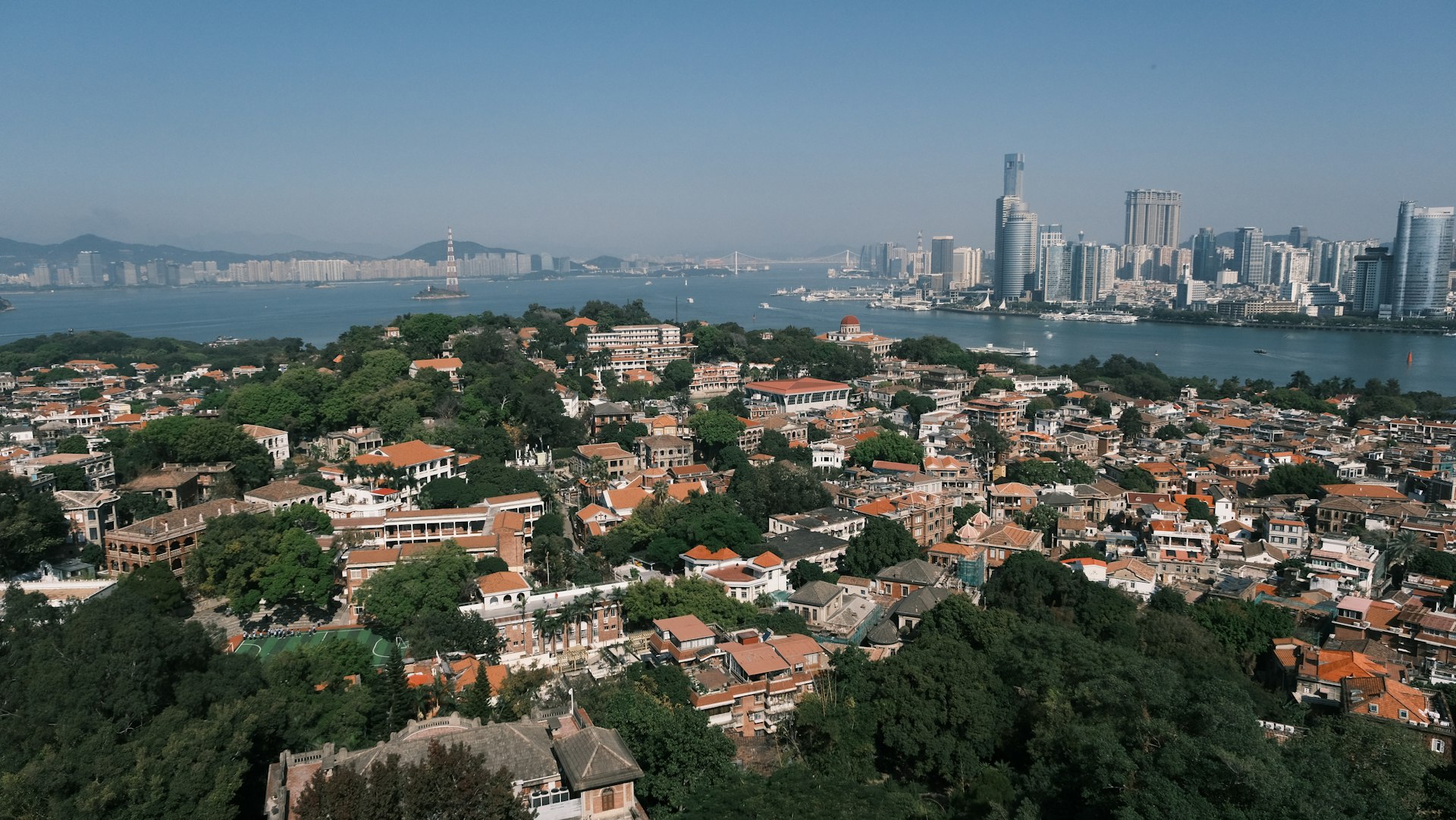
🧭 TL;DR — the honest bottom line
Here's what nobody tells you before you come: Xiamen is the easiest, most relaxed slice of China to just be in. It's a breezy southern beach city built around a car-free UNESCO island of colonial villas and piano music, where the prettiest campus in the country sits next to a thousand-year-old temple, where a legendary bowl of noodles costs less than your airport coffee, and where many passports now get in visa-free. Give it 3–4 days (5 with the Hakka earth-fortresses) and you'll leave plotting your return.
Two things to do before you fly: set up an eSIM (so Google and WhatsApp work) and bind a card to Alipay (so you can pay for anything — and book the Gulangyu ferry). Sort those two and the rest of this guide is just the fun part.
No time to read all of this? Tell us your dates and we'll build your Xiamen plan for you — on WhatsApp, real humans. (One message, no obligation.)
Message us →📌 This guide is long because it's complete — use the menu to jump. Everything below is named, priced, and verified June 2026; we flag anything that drifts so you can double-check the load-bearing details.
Before You Go
🛂 Do You Need a Visa for Xiamen? — Visa-Free Entry Explained
Here's the part most travel sites bury: getting into China in 2026 is the easiest it's been in a decade, and Xiamen is one of the named gateway ports for it. Two routes cover almost everyone reading this, and which one you use comes down to one thing — what passport you hold.
| Route | Who it's for | Max stay | The catch |
|---|---|---|---|
| 30-day visa-free | 50 countries — most of Europe, Australia, NZ, Japan, Korea, and UK + Canada (added 17 Feb 2026); Singapore, Thailand & Malaysia get 30 days via mutual exemption | 30 days | Ordinary passport valid for your whole stay (airlines often ask for 6 months). Tourism/business/visiting friends — no onward-ticket rule. |
| 240-hour (10-day) transit | 57 countries incl. the USA, Brazil, Mexico, Indonesia | 10 days | You must hold an onward ticket to a third country/region and enter via an approved port — Xiamen Gaoqi (XMN) is one. |
✓ verified Oct 2026 Lists shift often — reconfirm your nationality on the official site before booking.
🇺🇸 Americans, read this carefully — it trips people up
US citizens are not on the 30-day visa-free list, but they are on the 240-hour visa-free transit list. To use it, you must meet the policy's conditions, including entry through an approved port and a confirmed onward ticket to a third country or region different from your departure country or region. Xiamen's Gaoqi International Airport (XMN) is an approved entry port for it. The magic word is transit. China has to believe you're passing through to somewhere else — so you need an onward flight booked out of mainland China to a third country or region before you land. Easy third stops from Xiamen: Manila, Singapore, Bangkok, Seoul. The official notices say only "a third country or region", and none of the official pages we read names Hong Kong or Macao either way; reading them as qualifying is an inference, not an official rule. If your plan depends on it, confirm with your airline or the National Immigration Administration's 24-hour hotline, +86 12367 (English available), before you book. Land in Xiamen → spend up to 10 days → fly onward.
The 240-hour window now lets you move between the permitted areas of all 24 participating provinces (some provinces only allow certain cities — check the area table on nia.gov.cn; all of Fujian and Guangdong are covered), so you can fly into Xiamen and run a real southern-China loop — Xiamen, then high-speed rail down to Shenzhen (2.5 hrs) or Guangzhou (under 4 hrs) — all inside the 10 days, all on the one transit permit.
Two things that quietly sink people
① The 240 hours don't start when you land — they start at 00:00 the next day (GMT+8), so your arrival day is a freebie. ② "Third country" means different from where you came from — a US→Xiamen→back-to-US ticket does not qualify; you must exit to somewhere else first.
Policy and country lists shift — always reconfirm your nationality on the official en.nia.gov.cn before you book the flight.
🗓️ Best Time to Visit Xiamen
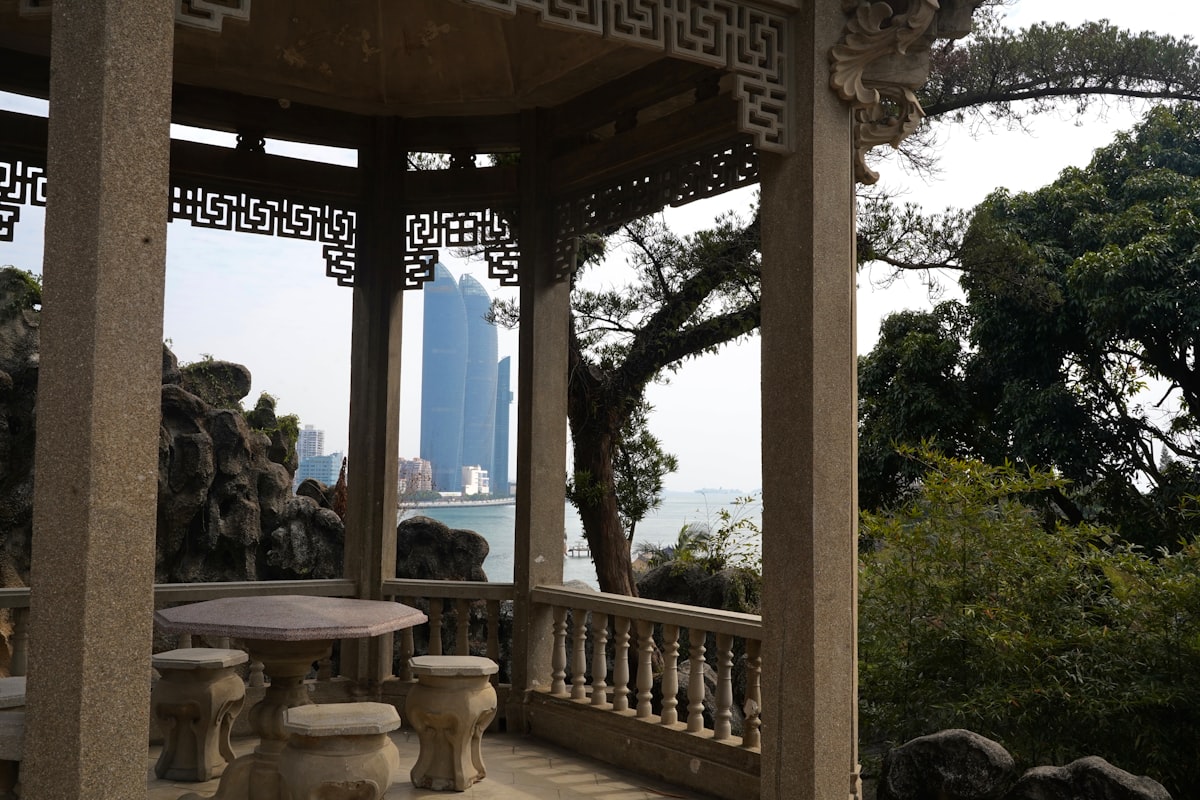
Aim for October–November or March–April — that's the sweet spot, full stop. Warm, dry-ish, sea breeze, and you dodge both the soupy summer humidity and typhoon season. Xiamen sits on a subtropical, sea-wrapped latitude, so it never really gets cold — but it has two windows you genuinely want to avoid.
| Season | Months | Temp (day) | The real story |
|---|---|---|---|
| 🌸 Spring (good) | Mar–Apr | 15–23°C | Mild, flowers out, comfortable. Then late May–Jun = "plum rain" — days of steady drizzle, pack a shell. |
| ☀️ Summer | May–Sep | 28–34°C | Hot, sticky, and typhoon season (worst in Aug, also Jul/Sep) — 4–5 a year. A direct hit shuts the ferries and beaches for a day or two. |
| 🍁 Autumn (best) | Oct–Nov | 22–28°C | The golden window. Warm sea, clear skies, the island at its photogenic best. Come now if you can. |
| 🌤️ Winter | Dec–Feb | 14–19°C | Cool, breezy, rarely cold — a light jacket handles it. Quietest crowds, lowest prices, still very walkable. |
Two timing notes that matter more in Xiamen than most cities: (1) If you're coming in August, keep a flexible day in your plan and watch the typhoon track — ferries to Gulangyu pause when one rolls in. (2) Avoid Chinese public holidays — National Day / Golden Week (1–7 Oct) and Spring Festival (late Jan/Feb) turn tiny car-free Gulangyu into a shoulder-to-shoulder crush and the ferry sells out days ahead. The shoulder weeks on either side are bliss.
✈️ How to Get to Xiamen: Airport & High-Speed Rail
Xiamen is southern Fujian's hub — one international airport right next to the city, plus a high-speed rail network that makes Quanzhou, the tulou, and the whole southern coast easy.
The airport — unusually close to town
Xiamen Gaoqi International Airport (XMN) is the one — the only commercial airport, and unusually close in: just 12 km northeast of downtown. That proximity is a gift (cheap, fast transfers — full breakdown in Part 2). A bigger new airport (Xiang'an) is under construction further out, but as of 2026 everything still flies into Gaoqi.
Onward by high-speed rail — Xiamen connects south and inland
| To | Time (high-speed) | Why bother |
|---|---|---|
| Quanzhou | ~30 min | The Maritime Silk Road's medieval "Emporium of the World" — a UNESCO old town (covered in Part 4). |
| Shenzhen | ~2.5h | China's neon tech megacity — easy add-on down the coast, same trip, no visa reset. |
| Guangzhou | ~3h53m | 2,200-year-old Cantonese capital and arguably China's greatest eating city. |
Xiamen has two main rail hubs — Xiamen Station (厦门站), central and on Metro Line 1, and Xiamen North (厦门北站), bigger and faster but further out on Lines 1 & 4. Book on the official 12306 website (English version) or Trip.com — more in Part 4.
💴 Xiamen Travel Budget: What It Costs (per day, excluding flights)
Xiamen feels cheaper than its looks — it's a polished, resort-y city, but you eat and move for southern-China prices. Rough daily budgets:
| Style | Per day (ex-flights) | What that buys you |
|---|---|---|
| 🎒 Backpacker | ¥220–380 (~$31–53) | Hostel/guesthouse bed, shacha noodles + market food, metro + ferry + BRT everywhere |
| 💺 Mid-range (most people) | ¥400–750 (~$56–106) | Comfortable 3–4★ hotel or a characterful Gulangyu/Zengcuoan guesthouse, sit-down seafood, Didi when you're lazy, the paid sights |
| ✨ Comfort | ¥900+ (~$127+) | Seaview 5★, private guide, a tulou day tour with a car, the good seafood restaurants |
The single biggest budget lever isn't your hotel — it's how you eat and move. Market seafood and metro/ferry instead of taxis keeps you firmly mid-range while living very well; the ferry to Gulangyu is genuinely the cheapest "wow" on the trip at ¥35 round-trip. (~¥7.1 = $1 as of Jun 2026; rates drift.)
Sources — Part 1 (verified June 2026)
Visa & 240h transit: en.nia.gov.cn (National Immigration Administration — unilateral visa-exemption list updated 17 Feb 2026; 240-hour transit policy (NIA, 20 Aug 2026), 57 nationalities, 65 ports incl. Xiamen Gaoqi, 24 provinces); cross-checked chinadiscovery.com & windhorsetour.com 2026 guides; en.fao.xm.gov.cn (Xiamen FAO — first 240-hour transit traveler hosted at Gaoqi).
Airport & rail: chinadiscovery.com, eastchinatrip.com, trip.com (XMN 12 km from downtown; Xiang'an new airport not yet operational); travelchinaguide.com, chinahighlights.com (Xiamen↔Quanzhou ~30 min; Xiamen↔Shenzhen ~2.5h; Xiamen↔Guangzhou ~3h53m).
Budget / climate: numbeo & travelchinaguide.com / chinadiscovery.com Xiamen, 2026 (subtropical maritime monsoon; typhoons Jul–Sep, plum rain late May–Jun).
Arrival & Essentials
The three things that turn China from "intimidating" into "effortless." Do the first two before you fly — fifteen minutes at home saves you a stressful first hour at the airport. Here's exactly how, Xiamen-specific.
📱 Internet & VPN in China: Get an eSIM before you fly
Let's be blunt about the thing everyone whispers about: mainland China blocks Google, Instagram, WhatsApp, Gmail, and most Western apps. Your normal SIM will roam onto a Chinese network and hit that same wall.
The clean, legal, no-drama fix: an international travel eSIM that routes your data through a server outside the mainland — so Google Maps, WhatsApp, Instagram, all of it just works, with no separate VPN to fiddle with. You install it as a second line; your home number stays for calls/texts.
| eSIM | Best for | VPN? | The honest take |
|---|---|---|---|
| Nomad | Multi-city + high-speed rail | No | The most stable when you're moving — survives tunnels, train Wi-Fi gaps, city-hopping. Top pick if Xiamen is one stop on a bigger southern-China trip. |
| Airalo | One or two cities, budget | No | The most popular, cheapest, dead-simple. Plenty for an island-and-city Xiamen trip. |
| Holafly | Heavy data users | No | Unlimited data plans + 24/7 support. Great if you stream/hotspot — check the fair-use cap. |
| Saily | Privacy-minded | No | By the NordVPN team, strong privacy. Solid for fixed-data plans. |
How it actually goes: buy online → you get a QR code by email → scan it to install (takes 2 min) → leave it off until you land → flip it on as the plane taxis in, and you're online before you reach baggage claim. Only needs an email — no Chinese ID, no registration. Buy it at home on your own Wi-Fi; do not count on installing it after you land, because activation pages can themselves be behind the wall.
One phone really does replace everything
Wallet, keys, ferry tickets, translator, metro card, bike unlock, dinner orders, museum reservations — all collapse into one phone the moment you're set up. Most people pay by phone these days, though cash is still legal tender. And in Xiamen the phone matters double: your Gulangyu ferry, your Xiamen University reservation, and your bike rental on the island road all run through Alipay/WeChat. Get your eSIM + Alipay sorted and you operate like a local by day two.
More on this: China Essentials — paying with Alipay & WeChat →💳 How to Pay in China: Alipay & WeChat for Foreigners
Most people pay by phone, but cash is still legal tender: since 1 February 2026, staffed businesses must accept it. Keep some small notes as a backup (is cash accepted in China?). Don't count on foreign cards at small shops; bigger hotels, malls and major sights are more likely to take them. The great news for 2026: Alipay and WeChat Pay both take a foreign Visa/Mastercard directly, no Chinese bank account needed. Do this at home before you fly — identity verification is smoother on your home connection, and you want it working the second you land.
Set up Alipay (your main wallet)
- Download Alipay from your app store and register with your home mobile number (you'll get an SMS code).
- Open "Cards" → "Add Bank Card" and enter a real Visa or Mastercard. ⚠️ Use a normal physical credit/debit card — prepaid and virtual/online-only cards are frequently rejected. This is the #1 reason setup fails.
- Complete passport verification (photo of passport + a quick selfie). Approval is usually minutes.
- Add a backup: download WeChat Pay and bind a second physical card the same way — handy if one card ever gets declined, and some Xiamen mini-programs prefer one over the other.
The limits & fees you need to know ✓ verified Jun 2026
| Figure | |
|---|---|
| Payments under ¥200 | Fee-free (0%) |
| Payments over ¥200 | ~3% service fee |
Alipay and WeChat Pay set spending limits for foreign cards — see Essentials. Check your current limit in the app.
The practical read: the under-¥200 fee-free rule covers the vast majority of what you'll buy — noodles, metro, ferry, coffee, taxis, snacks. The ~3% only bites on bigger hits like a hotel or a seafood blowout. Still, carry some cash and a second physical card as a fallback — rare, but cards do occasionally get declined and you don't want to be the person who can't pay for the ferry home.
🚕 Getting Around Xiamen: Metro, Ferry, BRT & Didi
Xiamen is a string of districts on and around an island, so you'll use a fun mix: metro for distance, the ferry for Gulangyu, the BRT from the airport, and Didi to fill the gaps. Here's how it all fits.
From the airport into town
| Option | Time | Cost | When to pick it |
|---|---|---|---|
| Airport BRT / Kuaixian express bus → Zhongshan Rd / Xiamen Station | ~40–60 min | ¥1–5 | Default budget move. Runs 06:10–22:30, every 3–12 min. Transfer to Metro Line 1 at Zhongshan Rd. |
| Didi / taxi to your hotel | 20–35 min | ~¥30–60 | Honestly the smart pick here — XMN is so close in that a Didi is cheap and door-to-door. Best with bags or a late landing. |
| Regular city bus → downtown | ~40–50 min | ¥1–3 | If a line runs straight to your area; slower, frequent. |
Heads-up: no airport metro yet
Gaoqi airport does not have its own metro station (yet). Don't go hunting for a subway in the terminal — take the BRT/Kuaixian bus or a Didi, and pick up the metro downtown if you need it.
The metro: Xiamen runs five lines (1, 2, 3, 4, 6), clean, English-signed, and cheap (¥2–10 by distance). Line 1 is a sight in itself — part of it runs on a sea-crossing viaduct with open water on both sides, so locals treat the ride south as a mini attraction; grab a seaward seat in daylight. For Gulangyu, the metro doesn't go to the island, but Line 1 → Zhongshan Road / First Wharf area drops you a short walk from the ferry.
Riding the metro: open Alipay → search the "Metro" / 乘车码 mini-program → scan the QR at the gate to enter and exit (auto-charges by distance). No physical card needed. Trains run roughly 06:30–23:00.
Using Didi (set it up before you fly — it takes ~10 min): Didi has a full English app, takes foreign Visa/Mastercard (or link Alipay), and you register with your home phone number — no Chinese SIM or bank needed. At the airport and big stations, don't book from inside the terminal — walk to the signed 网约车 (wǎngyuē chē) ride-hailing pickup zone first. Expect a small platform/pickup fee of ¥5–15 on top of the fare, and use the chat's built-in English↔Chinese translator if the driver messages you.
"Wait — China is THIS safe?"
You are 2×+ more likely to be robbed in San Francisco or Chicago than in a major Chinese city. Women routinely walk home alone past midnight; with dense CCTV, opportunistic street crime barely exists. Xiamen in particular reads as one of the mellowest, most easygoing cities in the country — a breezy beach town where a solo midnight stroll on the island ring road or a 1am Didi back from Shapowei is completely normal.
Sources — Part 2 (verified June 2026)
Airport & transfer: chinadiscovery.com, eastchinatrip.com, trip.com, chinaairlinetravel.com (XMN 12 km from downtown; BRT/airport express ¥1–5, 06:10–22:30; no airport metro; transfer at Zhongshan Rd).
Metro & getting around: trip.com, chinadiscovery.com, Wikipedia (Xiamen Metro — Lines 1/2/3/4/6; Line 1 sea-crossing section; nearest Gulangyu ferry access via central Line 1).
eSIM: unusualnomad.com, traveltomtom.net, cybernews.com (China eSIM tests 2026 — Nomad most stable, Airalo cheapest, all route offshore / no separate VPN).
Alipay limits & fees: realchinatrip.com, trip.com, ltl-school.com (<¥200 fee-free · ~3% above; prepaid/virtual cards often rejected; confirm limits in-app).
Didi: trip.com, wise.com (English app, foreign cards, 网约车 pickup zone, ¥5–15 platform fee).
Things to Do in Xiamen
Gulangyu's car-free lanes at dawn, the prettiest campus in China, a fishing-village snack crawl, shacha noodles that'll ruin you for other soup, a seaside bike road, and an old harbour turned craft-beer hangout. Everything below is named, priced, and verified June 2026 — walk in and do it, no second tab needed.
⛴️ Gulangyu Island (Kulangsu): Ferry, Tickets & How to Visit — the car-free island that built Xiamen's fame
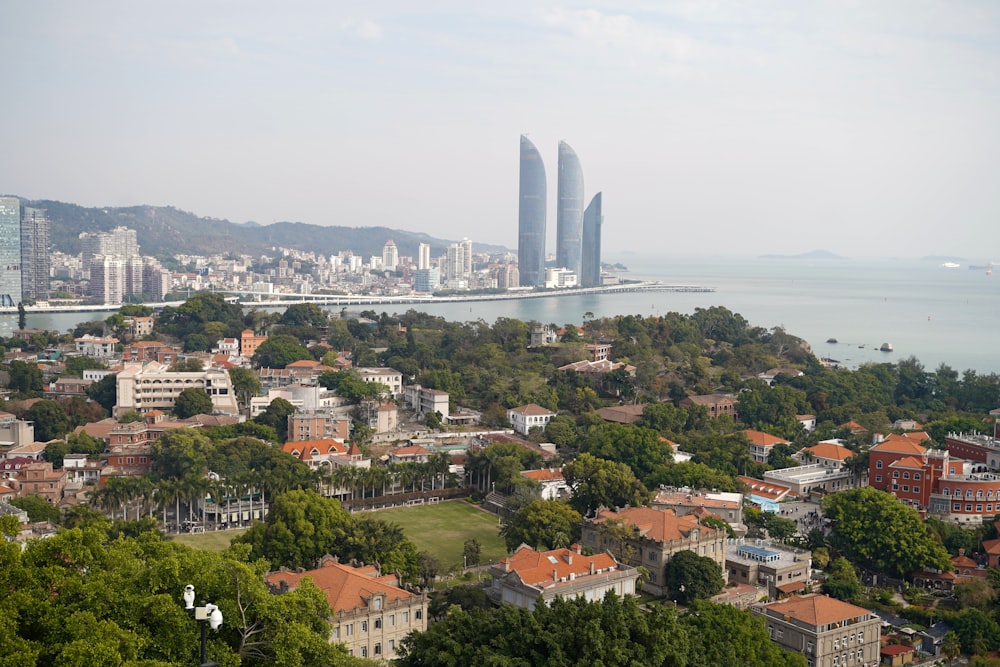
This is the reason most people come to Xiamen, and it's worth every bit of the hype — if you handle the ferry right, which is where everyone trips. Gulangyu (鼓浪屿, "Kulangsu" on the UNESCO listing) is a tiny car-free island a short hop offshore: a maze of 1900s colonial villas, consulates and churches, bougainvillea over stone walls, and — because a Chinese piano-collecting tycoon was born here — actual piano music drifting out of windows. It earned UNESCO World Heritage status in 2017. No cars, no bikes, no scooters: you just wander, get lost, and that's the whole point.
But the ferry has a tourist-only system with a daily cap, and the pier you think you want is the wrong one. Read this before you go.
The ferry — the part that confuses everyone
Here's the rule that catches first-timers: in the daytime, tourists do not leave from the obvious downtown ferry pier. That central pier (Lundu Ferry Terminal / 轮渡码头) is reserved for residents during the day. The main daytime tourist departure is the Cruise Center Terminal (邮轮中心厦鼓码头 / "Dongdu"), a 10-ish-minute Didi or bus west of the old town. The official route list also shows a First Pier (第一码头) to Neicuoao Pier (内厝澳码头) tourist route, so check the departure pier on your ticket.
- Daytime route — Cruise Center (邮轮中心厦鼓码头) → Gulangyu. Runs roughly 07:10–17:30 (Oct–May) / 07:10–18:30 (Jun–Sep). Crossing ~20 min. Two landing piers on the island: Sanqiutian (三丘田) — the handier one for the main sights — or Neicuo'ao (内厝澳) for the quieter north end.
- Night route — Xiamen Lundu Ferry Terminal, Hall 2 (厦门轮渡码头2号厅) → Gulangyu. In the evening the central downtown pier opens to everyone: the first night sailing is 17:50 from October to May and 18:50 from June to September (the ticketing system has the final say). Crossing is a quick ~7 min. Handy if you stay for sunset.
- Ticket: ¥35 ordinary deck / ¥50 air-con "deluxe" cabin — round-trip, valid 20 days. You scan back on any return sailing within that window.
How to book the ferry as a foreigner — do it ahead
- Book online with your passport. Use the official "屿见厦门" mini program in WeChat or Alipay or the official ticket site. The official pages don't explain how a foreign visitor registers a passport in the mini program. Pick your date, departure time slot, and pier.
- Book early — it sells out. Gulangyu has a daily visitor cap (widely cited around 50,000, and the most popular sailings sell out days ahead on weekends and holidays). Aim for 2–7 days out; in Golden Week, the moment slots open. Confirm the current cap and open-booking window in-app — it tightens on holidays.
- Bring the physical passport you booked under — it's checked at the gate, real-name system, name must match.
- Take an early slot (07:10–08:30). You get the lanes near-empty, the light is gorgeous, and you're ahead of the day-tripper wave.
On the island — what to actually do
The island itself is free to wander — the joy is just getting lost in the lanes. The named sights are individually ticketed (most people pick one or two, not all):
- Sunlight Rock (日光岩) — ¥50. The island's highest point; climb it for the panorama back over Xiamen's skyline across the water. The signature view.
- Shuzhuang Garden (菽庄花园) — ¥30, a seaside garden built into the rocks — and the Piano Museum sits inside it (Tide-View Tower), so the ticket covers both. Open ~8:30–17:30 (to 18:00 Jun–Sep).
- Gulangyu Organ Museum (Bagua Tower) — ¥15; Haoyue Garden (皓月园) — ¥10 (the Koxinga statue on the shore).
- A combined "through ticket" (~¥100) bundles the core sights if you want to do several — buy it on arrival or in-app.
The pier you'd instinctively walk to is the wrong one — and it's the #1 Gulangyu mistake
In the daytime, the central downtown ferry pier (Lundu Ferry Terminal, 轮渡码头) is residents only — the main daytime tourist departure is the Cruise Center Terminal (邮轮中心厦鼓码头), a short Didi west (the official route list also shows a First Pier to Neicuoao Pier tourist route, so check the departure pier on your ticket). Show up at the wrong pier without a booking on a busy day and you'll lose hours, or the slots will be gone entirely. Book your timed ticket online (passport, via Alipay) before you go, head to the Cruise Center, and the whole thing is a breeze. In the evening the central pier opens to everyone for the quick 7-minute hop (first night sailing 17:50 from October to May, 18:50 from June to September).
Want to know exactly how and when to book the Gulangyu ferry, and a route that skips the crush — plus the best villas and the piano museum? Tell us your dates on WhatsApp.
Ask us →🎓 Xiamen University & Nanputuo Temple — China's prettiest campus, next to its mellowest temple

These two sit side by side on the south of the island, so you do them together — and both are free, with a booking wrinkle worth knowing.
Xiamen University (厦门大学 / "Xiada") is routinely called the most beautiful campus in China — a lakeside spread of South-Fujian-meets-colonial halls, palm avenues, a beach right behind it, and a famous graffiti tunnel, all founded in 1921 by overseas-Chinese magnate Tan Kah Kee. Wandering it feels like a film set.
- Free, but reservation-gated. You must book a visit slot via the "厦门大学访客预约系统" (XMU Visitor Reservation) WeChat official account (公众号), 1–3 days ahead: follow the account, open its "参观预约" menu and complete real-name verification. The official quota is 1,000 people on weekdays, 5,000 on weekends and winter/summer vacations, and 10,000 on public holidays. With a booking you may only enter through the dedicated visitor channel at the XMU Visitor Center (the account's "入校位置" menu shows where; other campus gates do not admit visitors), with the ID you booked under.
- The foreigner catch (be ready for it): the booking needs a real-name verification, and the university's guide does not say how a foreign visitor completes it or whether a Chinese phone number is required. The same guide says this WeChat official account is the only official channel and on-site booking is not accepted, so there is no turning up at a gate and asking. A passport is listed as valid ID at the visitor entrance. Sort out the booking before you travel.
Nanputuo Temple (南普陀寺) is right next door — a thousand-year-old, still-working Buddhist temple climbing the hillside, with incense smoke, a hillside of carved characters, and a renowned vegetarian restaurant on site. Free entry, but you reserve via its WeChat account; open ~9:00–18:00. Do the temple, then the climb behind it for a view over the campus and sea.
🏖️ Zengcuoan & the Around-the-Island Road — fishing-village snacks + a seaside bike run
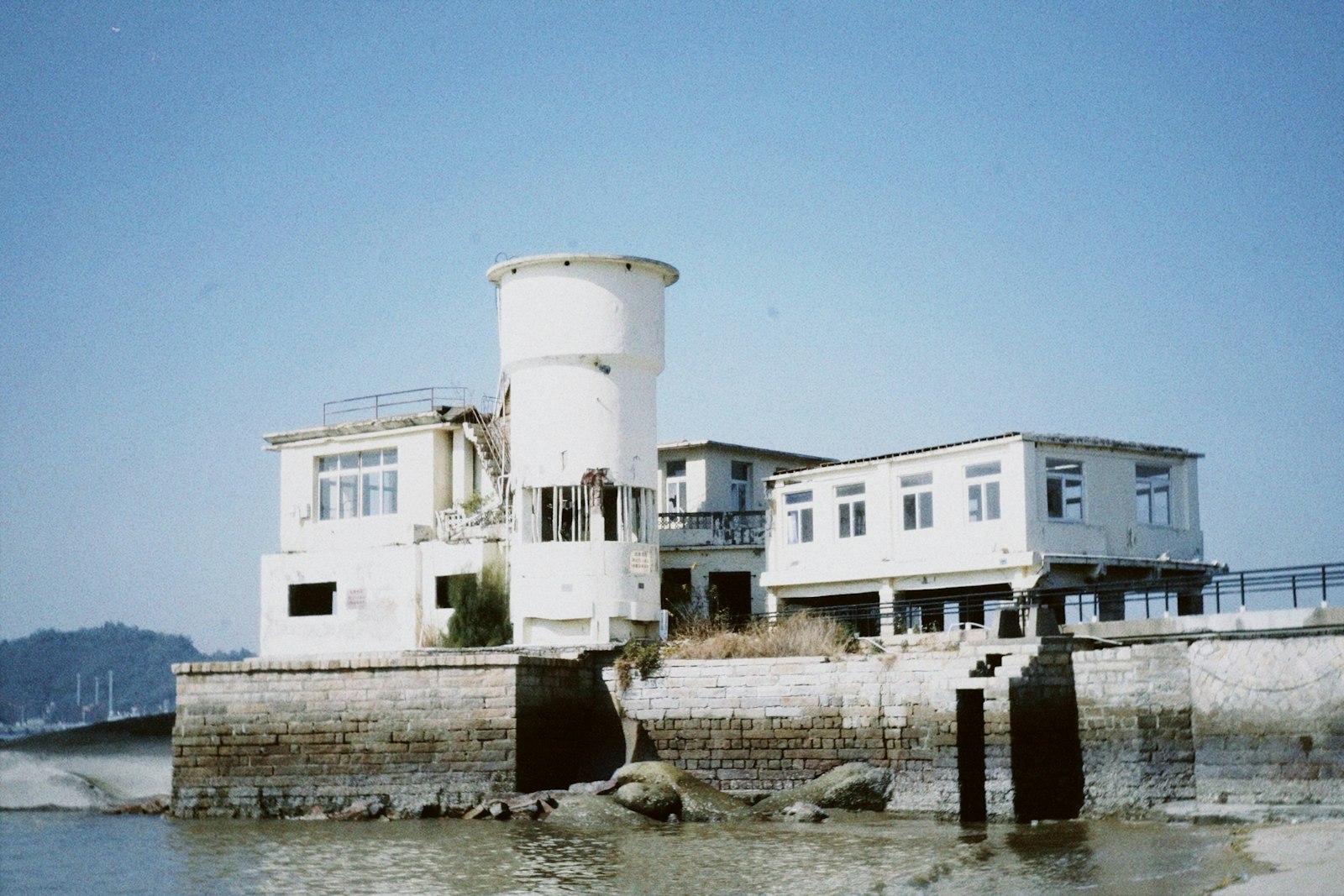
This is Xiamen's easy-going seaside half-day, and it's where the city stops being a checklist and starts being a holiday.
Zengcuoan (曾厝垵) is a former fishing village swallowed by the city and reborn as a dense, lantern-strung snack-and-guesthouse warren right by the beach — think the food-stall energy of a night market crossed with seaside boho. It's touristy, yes, and it's still a genuinely fun graze: oyster omelette, squid skewers, fresh-fruit everything, tu sun dong (more on that in the food section), milk tea. Wander in hungry around dusk. Free to enter, stalls roughly ¥10–40 a hit.
Right across the road is the Around-the-Island Road (环岛路 / Huandao Lu) — a flat, palm-lined coastal path with cycle lanes, beaches (Baicheng, near the university), and that holiday-postcard stretch of sea and sand. Rent a bike and roll: ~¥15–30/hour (singles, tandems, the lot), deposit ¥200–300; shops near Baicheng Beach / Zengcuoan / "Coconut Village" open roughly 08:00–21:00. There's also a dedicated over-water cycling skyway for a small ticket if you want the elevated sea-level ride.
Hulishan Fortress (胡里山炮台) sits along this same southern shore if you want a dose of history with your sea air: an 1891 Qing coastal fort that still mounts the world's largest surviving 19th-century coastal cannon (a 280 mm Krupp gun). Tickets ¥25 peak / ¥20 off-season, open ~8:00–17:30.
🦪 What to Eat in Xiamen: Shacha Noodles, Oyster Omelette & Minnan Seafood — a foreigner's field guide

Xiamen food is Minnan (South Fujian) coastal cooking — lighter and sweeter than Sichuan, big on seafood, and built around a few signature dishes you should hunt down by name. This isn't spicy-by-default territory; it's umami, satay, and the sea. Here's the must-eat list with where to find it and what it costs.
The dishes to order by name
- Shacha noodles (沙茶面) — the Xiamen dish. Noodles in a rich, nutty, faintly spicy satay-style broth (peanuts, dried shrimp, coconut, five-spice — a Southeast-Asian crossover from Fujian's seafaring past), loaded with prawns, squid, fish balls, pig offal — you point at the toppings. A bowl runs ~¥10–25. Locals eat it for breakfast and dinner. Try Dazhong Shacha Noodles (大中沙茶面), No. 49 Zhongshan Road, or any packed hole-in-the-wall.
- Oyster omelette (海蛎煎 / o-a-tsian) — plump local oysters bound in a sweet-potato-starch egg batter, fried crispy-gooey, hit with a sweet-savoury sauce. ~¥20–35. Lianhuan Oyster Omelette (莲欢海蛎煎) off Zhongshan Road is a known name.
- Tu sun dong (土笋冻) — the brave one: cold sea-worm jelly. A translucent savoury jelly set from a coastal worm, eaten with mustard/vinegar. It tastes far better (clean, briny, springy) than the description suggests. ~¥10–15. A Xiamen rite of passage — order one, take the photo, decide for yourself.
- Minnan seafood, generally — steamed clams, razor clams, blood cockles, sandworm, prawns; point-and-pick at a market restaurant and pay by weight. The Eighth Market (八市) near Zhongshan Road is the raw, real wet-market scene; pick a stall, have them cook your haul.
Where to graze: the Zhongshan Road (中山路) pedestrian street and its lanes — a strip of restored qilou arcade buildings (those colonnaded colonial shop-houses) — is snack central, and the Eighth Market behind it is the local-food heart. Zengcuoan (above) is the other snack hub. Budget ~¥60–100 a head for a proper sit-down seafood meal; far less if you graze stalls.
A legendary bowl of noodles costs less than your airport coffee
Xiamen's signature shacha noodles — the dish people fly in craving — runs ¥10–25 at the old shops. An oyster omelette is ¥20–35. A whole grazing crawl through Zengcuoan's stalls rarely cracks ¥80 a head. The best food here is its cheapest food, sold from arcade shop-fronts and a 1920s wet market — and you pay for all of it by waving your phone at a QR code.
🌃 Xiamen Nightlife: Shapowei, Craft Beer & a Seaside Night Out — After Dark
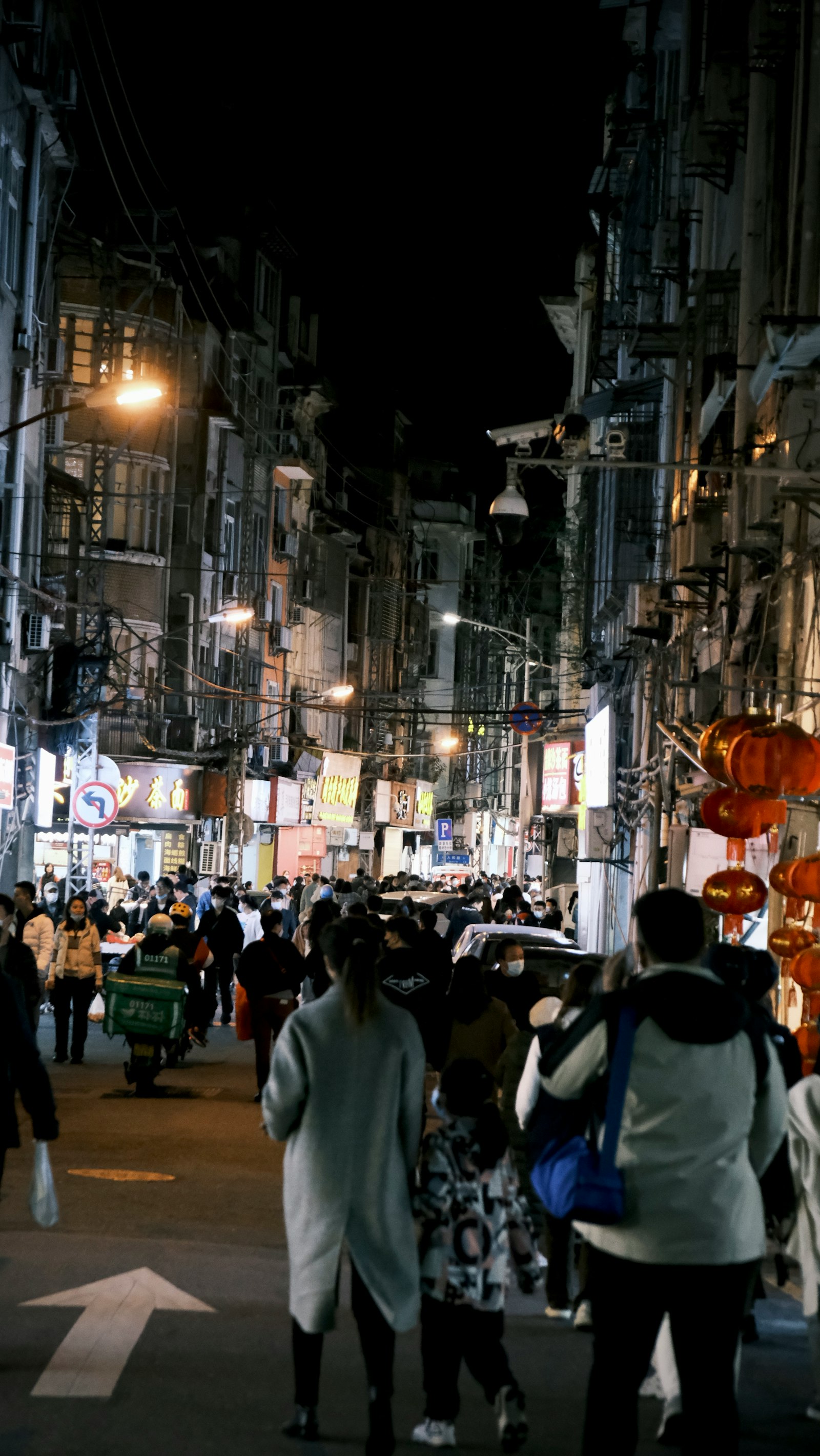
Xiamen nights are low-key, walkable and cheap — this is a breezy beach city, not a megaclub town, and that's the charm. The scene clusters in two spots:
- Shapowei (沙坡尾) — the soul of the night out. An old fishing harbour (the last on the island) turned arts district: moored boats, warehouse galleries, and the city's densest, most genuinely fun cluster of craft-beer bars, cocktail spots and live music. Most bars have some English-speaking staff. Named spots locals and expats point to: Fat Fat Beer Horse (craft beer) and Real Live (music). This is where you start.
- Zengcuoan doubles as an evening hang too — lantern-lit lanes, snacks, milk tea, low-key bars by the sea — gentler and more all-ages than Shapowei.
The practical bits
Drink prices: craft beers around ¥40–60, cocktails ¥50–80 — a fraction of a Western night out. Getting home: the metro stops around 23:00, so use Didi for the late ride (cheap, runs all night, ¥15–40 across the island).
A craft-beer night by an old fishing harbour, and a worry-free Didi home at 2am
Good beer at a converted-warehouse bar in Shapowei runs ¥40–60, a cocktail ¥50–80, and a ¥20–30 Didi home at 2am with zero concern. Women routinely head home alone past midnight here. Xiamen's "China is sketchy after dark" assumption is just flat wrong — it's one of the safest, most laid-back beach cities anywhere in the country.
Want a local to take you bar-hopping in Shapowei — the real craft-beer spots, not the tourist traps? Ask us on WhatsApp.
Ask us →Sources — Part 3 (verified June 2026)
Gulangyu ferry & sites: topchinatravel.com & chinadiscovery.com (daytime tourist departures from Cruise Center 邮轮中心厦鼓码头, ~20 min; night from Lundu Ferry Terminal (轮渡码头), ~7 min; ¥35 ordinary / ¥50 deluxe round-trip, valid 20 days); thechinajourney.com (Sunlight Rock ¥50, Shuzhuang Garden ¥30 incl. Piano Museum, Organ Museum ¥15, Haoyue Garden ¥10, combo ~¥100; book via official Xiamen Ferry Alipay mini-program with passport; daily visitor cap ~50,000 — confirm locally).
Xiamen University & Nanputuo: trip.com, hichinatravel.com, tripadvisor (XMU free, WeChat reservation 1–3 days ahead; the university's own guide at baowei.xmu.edu.cn says the WeChat official account is the only official channel, on-site booking is not accepted, the quota is 1,000 people on weekdays / 5,000 on weekends and winter/summer vacations / 10,000 on public holidays, and visitors enter only through the XMU Visitor Center dedicated channel); chinaexplorertour.com / trip.com (Nanputuo free, WeChat reservation, ~9:00–18:00).
Zengcuoan / Huandao Road / Hulishan: topchinatravel.com, whatsonxiamen.com, chinaexplorertour.com (bike rental ¥15–30/hr, deposit ¥200–300, ~08:00–21:00; over-water bike skyway ticketed); trip.com / intotravelchina (Hulishan ¥25 peak / ¥20 off, ~8:00–17:30, 1891 Krupp cannon).
Food: topchinatravel.com, trip.com, chinaculturetour.com (shacha noodles ~¥10–25, oyster omelette ~¥20–35, tu sun dong ~¥10–15; Dazhong Shacha 49 Zhongshan Rd, Lianhuan Oyster Omelette; Zhongshan Rd qilou + Eighth Market).
Nightlife: dropt.beer, trip.com, chinahighlights.com (Shapowei art zone main bar scene — Fat Fat Beer Horse, Real Live; Zengcuoan secondary; metro closes ~23:00).
Prices and hours shift on Chinese public holidays and with the season — confirm the load-bearing ones in-app (Alipay/Dianping) or on the official page before you commit.
Day Trips from Xiamen
Two of southern China's heaviest hitters are an easy day out from Xiamen: a valley of giant earthen roundhouses the Hakka built like fortresses, and a medieval port city that was the start of the Maritime Silk Road. One leans on a tour or a long drive; the other is a 30-minute bullet train. Here's how each works.
🏯 Fujian Tulou Day Trip — the Hakka roundhouses (the bucket-list one)

Bottom line: this is the trip people put Xiamen on the map for — and it's a real commitment, so plan it. The Fujian Tulou (福建土楼) are colossal earthen roundhouses the Hakka people built from the 12th century on: rammed-earth fortress-homes, some four storeys and big enough for an entire clan, ringed around a communal courtyard. They're a UNESCO World Heritage site, and standing inside one — looking up at four wooden galleries circling the sky — is genuinely jaw-dropping. (Yes, these are the buildings a US intelligence agency reportedly once mistook for missile silos on satellite photos.)
The catch: they're ~3 hours each way from Xiamen, scattered across two counties — Nanjing County (closer, the usual day-trip pick) and Yongding County (further, even richer). The clusters worth your day: Tianluokeng (田螺坑, "four dishes and a soup" — the iconic photo), Hekeng (河坑), and the Yunshuiyao (云水谣) ancient village with its riverside banyans.
Getting there — pick your style
| Option | How it works | Time / cost | Best for |
|---|---|---|---|
| Organised day tour (recommended) | Door-to-door car/coach from Xiamen with a guide, tickets & commentary included | Full day; ~¥350+ pp | Almost everyone — the logistics (3h drive + sprawling site + clusters far apart) are a headache to DIY |
| Coach from Xiamen | Direct coaches from Wucun Bus Station (梧村汽车站) to Yunshuiyao / Shuyang near the tulou, ~07:00–18:00 | ~2.5–3 hrs each way | Independent travelers happy to navigate local transfers on arrival |
| Train + local bus | High-speed train Xiamen → Nanjing Station (南靖站), then a tourist bus/taxi to the clusters | Train ~50 min + transfer | Those who'd rather rail most of the way, then sort a local ride |
The honest read: because of the distance and the spread, a guided day tour is the move for most travelers — you'll see far more, learn the Hakka story, and skip the transfer roulette. If you have the time and want it unrushed, stay a night in a tulou guesthouse (you can sleep inside one) and do it over two days. Either way, don't try to wing it as a casual half-day; it's a full, early-start day minimum.
Clan fortresses so massive they were reportedly mistaken for missile silos from space
The Fujian Tulou aren't quaint cottages — some are four storeys of rammed earth, 70+ metres across, built to house and defend an entire clan behind walls a metre thick, with a single gate and arrow slits. Cold-War lore says satellite analysts once flagged the circular shapes as suspected nuclear silos. Up close they're warm, wooden, lived-in worlds — laundry strung across the galleries, grandmothers selling tea — and unlike anything else you'll see in China.
Want the tulou done right — a car at your hotel, the best clusters (not just the bus-tour stop), and a guide who knows the Hakka story? Tell us your dates on WhatsApp.
Send dates →⛵ Quanzhou Day Trip — the Maritime Silk Road's lost capital (30 minutes by train)
Bottom line: the effortless day trip — half an hour on the bullet train to a city Marco Polo–era traders called one of the greatest ports on earth. Where the tulou is a haul, Quanzhou (泉州) is a breeze: ~30 minutes by high-speed train, ¥25–35 second class. A thousand years ago this was Zayton, the starting point of the Maritime Silk Road — the "Emporium of the World" in Song–Yuan China, where Arab, Persian, Indian and Chinese merchants traded — and it now holds the largest concentration of UNESCO World Heritage sites of any Chinese city (inscribed 2021). It's the deep-history counterweight to Xiamen's pretty-beach-town vibe.
What to see in a day
- Kaiyuan Temple (开元寺) — Quanzhou's landmark, 1,300+ years old, Fujian's largest Buddhist temple, famous for its twin East and West stone pagodas (China's tallest pair of stone towers).
- West Street (西街) — the old town's spine: a living medieval street of temples, shophouses, snack stalls and craftspeople, right by Kaiyuan.
- Add as time allows: the Maritime Museum, Qingjing Mosque (one of China's oldest), Tianhou Temple, the Luoyang Bridge.
Getting there & around: trains run frequently ~06:40–21:30 from Xiamen Station or Xiamen North to Quanzhou Station. From Quanzhou Station, the old town (Kaiyuan/West Street) is ~30 min by Didi or city bus (lines 2, 3, 9, 601 stop near Kaiyuan).
Reality check (locals will tell you this)
Quanzhou genuinely deserves two days — its UNESCO sites are spread across the city. But if you've only got one, Kaiyuan Temple + West Street + one museum makes a rich, very doable day on the 30-minute train. Go early, come back after dark.
Quanzhou in a day done well — train booked, the right old-town loop, a guide who knows the Silk Road story? Message us on WhatsApp.
Message us →Sources — Part 4 (verified June 2026)
Fujian Tulou: topchinatravel.com, chinadiscovery.com (Nanjing Hakka Tulou ~160 km / ~2h45m drive from Xiamen; coaches from Wucun Bus Station 07:00–18:00; train to Nanjing Station + tourist bus; Tianluokeng, Hekeng, Yunshuiyao clusters; guided day tours from ~¥350).
Quanzhou: chinadiscovery.com, travelchinaguide.com (Xiamen↔Quanzhou high-speed ~30 min / ¥25–35 2nd class, trains 06:40–21:30; Kaiyuan Temple 1,300+ yrs, West Street; UNESCO Maritime Silk Road inscription 2021; Quanzhou Station ~30 min from old town, buses 2/3/9/601).
Cross-city rail: travelchinaguide.com, chinahighlights.com (Xiamen↔Shenzhen ~2.5h; Xiamen↔Guangzhou ~3h53m).
Know Before You Go
🧠 Culture, money & health — the fine print
🤝 Culture shocks & etiquette (the 6 that trip up first-timers)
- No tipping. Anywhere. Restaurants, taxis, hotels, the bike-rental guy — none of it. Trying to tip causes confusion, not gratitude.
- Carry your own tissues + hand sanitizer. Public restrooms (and many squat toilets) often have neither paper nor soap.
- You order by scanning a QR code at most restaurants — point your camera at the table sticker, a menu opens, you tap, you pay. (Menu's usually Chinese — Google Translate's camera, on your eSIM, reads it instantly.)
- Tap water is NOT drinkable — locals boil it or drink bottled. Every hotel room has a kettle and free bottles.
- Strangers may ask to take a photo with you — especially with kids. It's genuine friendly curiosity, not a scam. Smile, say yes or politely wave it off.
- Gulangyu and Xiamen University need booking ahead — don't rock up expecting walk-in entry. Sort the ferry slot and the campus reservation a few days out (see Parts 2–3).
💰 What's dirt-cheap vs. surprisingly pricey
Absurdly cheap (spend freely):
- The Gulangyu ferry — ¥35 round-trip for a UNESCO island.
- Local food — shacha noodles ¥10–25, oyster omelette ¥20–35, a market seafood meal ¥60–100.
- Metro, BRT & ferry — almost everything ¥1–10.
- Bike rental on the island road — ¥15–30/hour.
- High-speed rail — Quanzhou is ¥25–35 each way.
Surprisingly pricey (budget for it):
- Seaview hotels in peak season — Xiamen is a domestic-tourism darling; rates spike in Oct, summer holidays, and Golden Week.
- Gulangyu guesthouses — charming, but you pay a premium for sleeping on the car-free island.
- Western food & specialty coffee — a "normal" Western brunch can cost more than three local meals.
- Imported goods & cocktails — beer's cheap; an imported-spirits cocktail is not.
🚑 Emergencies, typhoons & health (save these before you fly)
- Don't drink the tap water — bottled or boiled only. Your hotel kettle is your friend; ice in proper restaurants/cafés is fine.
- Typhoon awareness (Jul–Sep): if a typhoon is forecast, ferries to Gulangyu and beach activities pause — check the day's advisory and keep your plan flexible. Your hotel will know.
- Seafood + your stomach: Xiamen is a shellfish town. Eat at busy, high-turnover places, make sure it's properly cooked, and ease in if you've got a sensitive gut.
- Pharmacies (药店) are everywhere, well-stocked, cheap, no prescription for basics — point to the problem or show a translated note. Major hospitals have international/VIP desks. Travel insurance is strongly worth having.
❓ FAQ — straight answers to what everyone actually asks
Do I need a visa to visit Xiamen in 2026?
Probably not. 50 countries get 30 days visa-free (most of Europe, Australia, NZ, Japan, Korea; UK & Canada since 17 Feb 2026; Singapore, Thailand & Malaysia via mutual-exemption deals). Citizens of the 57 countries on the 240-hour list — including the US — can instead use the 240-hour (10-day) visa-free transit if they meet the policy's conditions, including entry through an approved port and an onward ticket with a confirmed date and itinerary, leaving within 240 hours for a third country or region different from their departure country or region (e.g. Singapore or Seoul; whether Hong Kong or Macao counts is our inference, not an official rule, so confirm with your airline or the immigration hotline, +86 12367, before you book). Xiamen Gaoqi Airport (XMN) is an approved port for it. Always confirm your nationality on the official en.nia.gov.cn before booking. (Full breakdown: Part 1.)
How do I get from Xiamen Gaoqi Airport (XMN) to the city?
It's easy — the airport is only 12 km from downtown. Take the airport BRT / Kuaixian express bus (¥1–5, ~40–60 min, runs 06:10–22:30) and transfer to Metro Line 1 at Zhongshan Road, or just grab a Didi/taxi (~¥30–60, 20–35 min) — because XMN is so close in, the cab is cheap and door-to-door. Note there's no metro station at the airport itself yet. (Full options: Part 2.)
How do I get to Gulangyu Island, and do I need to book the ferry?
Yes, book ahead — and use the right pier. In the daytime, the main tourist departure is the Cruise Center Terminal (邮轮中心厦鼓码头), not the central downtown pier (which is residents-only by day). The official route list also shows a First Pier (第一码头) to Neicuoao Pier (内厝澳码头) tourist route, so check the departure pier on your ticket. Book a timed ticket online with your passport via the official "屿见厦门" mini program in WeChat or Alipay (tickets go on sale up to 15 days ahead; it has a daily visitor cap and sells out on weekends/holidays). Ferry is ¥35 round-trip (¥50 deluxe), crossing ~20 min. In the evening the central Lundu Ferry Terminal (轮渡码头) opens to everyone for a quick 7-min hop (first night sailing 17:50 from October to May, 18:50 from June to September; the ticketing system has the final say). (Full playbook: Part 3.)
Can I visit Xiamen University as a foreigner?
Yes, but it's reservation-gated and the booking can be fiddly for foreigners. Entry is free; you're meant to book a slot via the "厦门大学访客预约系统" WeChat official account (公众号) 1–3 days ahead, through its "参观预约" menu. The official quota is 1,000 people on weekdays, 5,000 on weekends and winter/summer vacations, and 10,000 on public holidays. You may only enter through the dedicated visitor channel at the XMU Visitor Center. The booking needs real-name verification, and the university's guide doesn't say how a foreign visitor completes it. The guide says this WeChat official account is the only official channel and on-site booking is not accepted, so there's no turning up and asking — sort out the reservation before you go. A passport is listed as valid ID at the visitor entrance. (Details: Part 3.)
When is the best time to visit Xiamen?
October–November and March–April. Warm, drier, sea breeze, the island at its best. Avoid the plum-rain weeks (late May–June) and especially typhoon season (July–September, worst in August), when a storm can shut the ferries for a day or two. Winter (Dec–Feb) is cool but mild (14–19°C by day), cheapest, and still walkable. (Full season guide: Part 1.)
Will Google, WhatsApp, and Instagram work in Xiamen?
Not on local WiFi/SIM — but there's a clean fix. China blocks Google, WhatsApp, Instagram, etc. Install an international travel eSIM (Airalo, Nomad, Holafly, Saily) before you fly — it routes your data offshore, so all your apps just work, no separate VPN needed. Set it up at home; it activates the moment you land. You'll need it for the ferry, campus and bike bookings too. (eSIM comparison: Part 2.)
Can I really pay everywhere with just my foreign card?
Yes — via QR, not the card itself. Bind your Visa/Mastercard inside Alipay or WeChat Pay (do it before you arrive) and you scan-to-pay almost everywhere, from noodle shops to the ferry to taxis. Don't count on foreign cards at small shops; bigger hotels, malls and major sights are more likely to take them. Keep some cash as backup. Alipay and WeChat Pay set spending limits for foreign cards — see Essentials. Expect a ~3% fee above ¥200. (Setup steps: Part 2.)
What food is Xiamen famous for, and is it spicy?
Not spicy by default — it's Minnan (South Fujian) seafood cooking, lighter and sweeter than Sichuan. The must-eats: shacha noodles (沙茶面) in a nutty satay broth, oyster omelette (海蛎煎), fresh market seafood, and the adventurous tu sun dong (土笋冻, sea-worm jelly). Graze the Zhongshan Road arcade lanes, the Eighth Market, and Zengcuoan. A bowl of shacha noodles is ¥10–25; a sit-down seafood meal ¥60–100. (Full food guide: Part 3.)
How many days do I need in Xiamen?
3 days covers the city beautifully: a day for Gulangyu, a day for Xiamen University + Nanputuo + the island ring road + Zengcuoan, and a day for Zhongshan Road, the Eighth Market, Shapowei and Hulishan. Add a 4th day for a Quanzhou train trip, and a 5th (ideally with an overnight) if you want the Fujian Tulou done properly.
Is the Fujian Tulou doable as a day trip from Xiamen?
Yes, but it's a long, full day — most people take a guided tour. The roundhouses are ~3 hours each way and spread across Nanjing and Yongding counties, so a door-to-door day tour (~¥350+) with transport, tickets and a guide saves a lot of pain. You can DIY via coach from Wucun Bus Station or train to Nanjing Station + local bus, but expect transfers. For the unrushed version, stay overnight in a tulou guesthouse. (Full breakdown: Part 4.)
Is Xiamen safe, including at night and for solo women?
Extremely. Xiamen is among the most relaxed, easygoing cities in China — well-lit, busy late, blanketed in CCTV, with virtually no street crime. Women routinely walk home alone past midnight. A solo evening on the island ring road or a 1am Didi back from Shapowei is completely normal. (Full context: the safety box in Part 2.)
Can I day-trip to other cities from Xiamen?
Yes — Xiamen is well connected by high-speed rail. Quanzhou is the easy one (~30 min). For a bigger southern-China loop, Shenzhen is ~2.5 hrs and Guangzhou is under 4 hrs by bullet train down the coast — and if you entered China on the 240-hour visa-free transit, you can string those together inside your 10-day window. (Rail times: Part 1.)
📣 Plan it with us
Want the whole thing handled?
Flights, a trusted hotel in the right area, the Gulangyu ferry planned (we'll show you how to book it), the tulou done with a car and a guide, and a local who knows which shacha-noodle shop. That's exactly what we do — real humans, real local knowledge. Tell us your dates and what you're into, and we'll take it from there.
Plan your Xiamen trip on WhatsApp
All sources (verified June 2026)
Visa & entry: en.nia.gov.cn (National Immigration Administration); en.fao.xm.gov.cn (Xiamen FAO, first 240h transit traveler at Gaoqi). Transport: chinadiscovery.com, eastchinatrip.com, chinaairlinetravel.com, trip.com, travelchinaguide.com, chinahighlights.com, Wikipedia (Xiamen Metro). Gulangyu & attractions: topchinatravel.com, chinadiscovery.com, thechinajourney.com, hichinatravel.com, tripadvisor.com, intotravelchina.com, chinaexplorertour.com. Food & nightlife: topchinatravel.com, chinaculturetour.com, dropt.beer, chinahighlights.com. Day trips: chinadiscovery.com, travelchinaguide.com (Fujian Tulou, Quanzhou). eSIM & payment: unusualnomad.com, traveltomtom.net, cybernews.com, realchinatrip.com, trip.com, wise.com, Alipay/WeChat help centers. Budget & climate: numbeo, travelchinaguide.com.
⚠️ Live-confirm before travel: seasonal opening hours, exact fares, tour prices, the Gulangyu ferry cap/booking window, and nightly hotel rates shift. Tickets/hours → the attraction's official channel or Trip.com; visa → en.nia.gov.cn; typhoon status → local advisory.