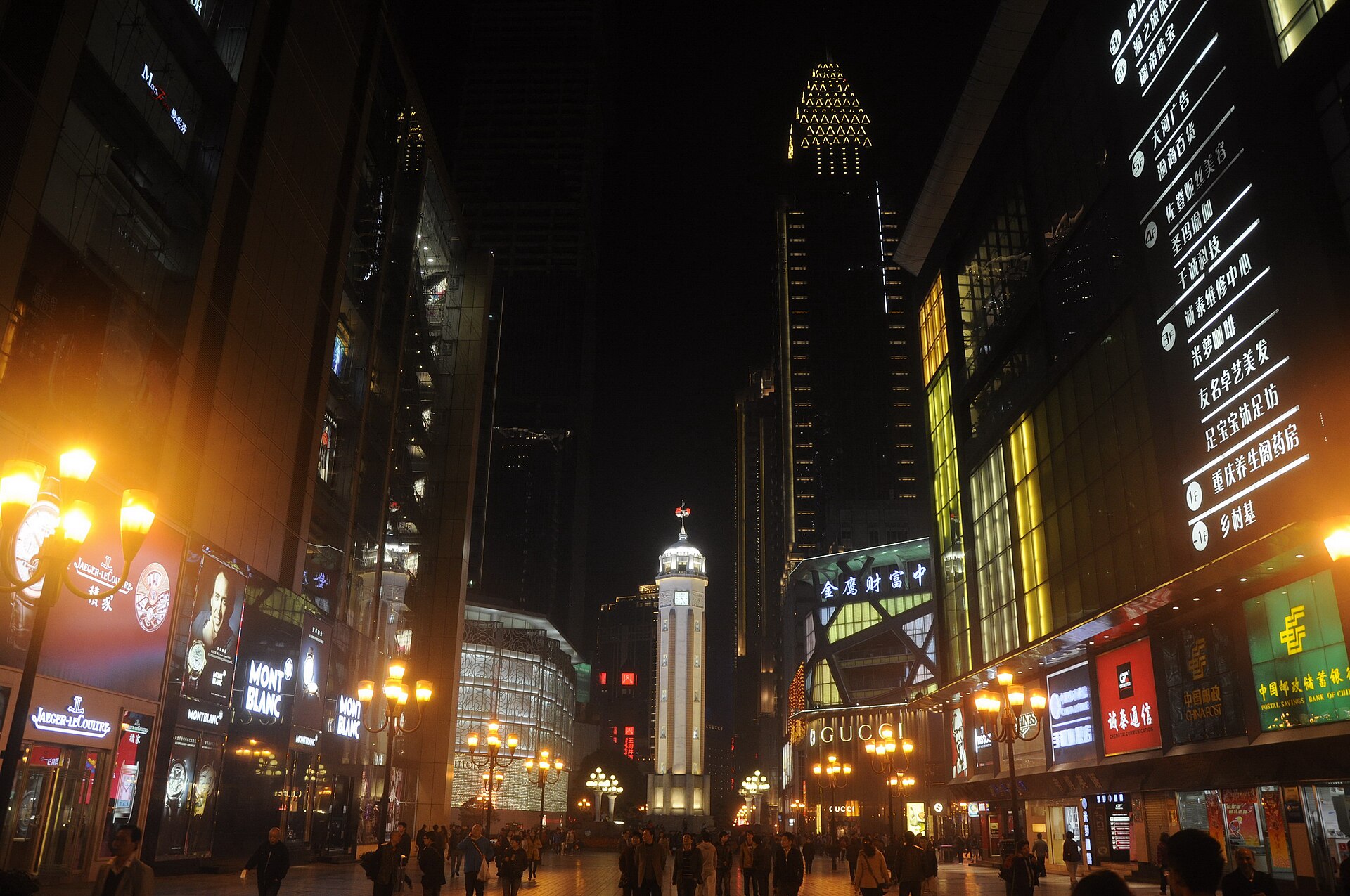
🧭 TL;DR — the honest bottom line
Here's what nobody tells you before you come: Chongqing isn't a secret anymore — and you're right on time. Inbound visitors jumped ~170% year-on-year in early 2026, and the "8D city" is the viral hook: a monorail that punches through a 19-storey apartment block, a skyline stacked vertically up the cliffs, two rivers lit gold at night. It's the city where you'll ride a ¥2 metro that's more cinematic than rides people pay ¥200 for, eat hotpot at the exact docks where it was invented, and photograph a free cliff-side complex that lights up like a spirited-away bathhouse — and many passports now get in visa-free. Give it 2–3 days (4–5 with day trips) and you'll leave plotting your return.
Two things to do before you fly: set up an eSIM (so Google Maps works — you'll need it to survive a city built on five vertical levels) and bind a card to Alipay (so you can tap into the metro and buy a cableway ticket on day one). Sort those two and the rest of this guide is just the fun part.
No time to read all of this? Tell us your dates and we'll build your Chongqing plan for you — on WhatsApp, real humans. (One message, no obligation.)
Message us →📌 This guide is long because it's complete — use the menu to jump. Everything below is named, priced, and verified June 2026; we flag anything that drifts (and in viral-surge Chongqing, a few sights now sell out hours ahead) so you can double-check the load-bearing details.
Before You Go
Why everyone's suddenly going. Over the 2026 Spring Festival Chongqing cracked the Top 10 destinations nationally (next to Beijing and Shanghai); overnight international visitors rose +52.1% to 28,500, and Hongyadong alone drew 1.38 million people. The 8D city — a monorail through a tower, a skyline stacked up the cliffs, two rivers lit gold — is the viral hook. This guide gets you in, online, paying, and moving like a local.
🛂 Do You Need a Visa for Chongqing? — Visa-Free Entry Explained
Whether you need a visa for Chongqing depends on your passport and itinerary. The 30-day visa-free entry and 240-hour visa-free transit have different conditions. Check which policy, if either, applies before booking.
| Route | Who it's for | Max stay | The catch |
|---|---|---|---|
| 30-day visa-free | 50 countries — most of Europe, Australia, NZ, Japan, Korea, UK + Canada (added 17 Feb 2026), plus Singapore, Thailand, Malaysia via mutual exemption | 30 days | Ordinary passport valid for your whole stay (airlines often ask for 6 months). Tourism/business/visiting friends — no onward-ticket rule. |
| 240-hour (10-day) transit | 57 countries incl. the USA, Canada, Brazil, Mexico, Argentina, Chile, Indonesia, UAE, Qatar | 10 days | You must hold an onward ticket to a third country/region and enter via an approved port. Chongqing (CKG) is one. |
✓ verified Oct 2026 57 eligible nationalities, 24 provincial-level regions incl. Chongqing — but lists shift; reconfirm before booking.
🇺🇸 Americans, read this carefully — it trips people up
US citizens are not on the 30-day visa-free list, but they are on the 240-hour visa-free transit list. To use it, you must meet the policy's conditions, including entry through an approved port and a confirmed onward ticket to a third country or region different from your departure country or region. Chongqing Jiangbei (CKG) is a designated transit port. The magic word is transit — China has to believe you're passing through to somewhere else, so you need an onward flight booked out of mainland China to a third country or region before you land. Easy third stops from Chongqing: Seoul, Bangkok, Singapore, Tokyo. The official notices say only "a third country or region", and none of the official pages we read names Hong Kong or Macao either way; reading them as qualifying is an inference, not an official rule. If your plan depends on it, confirm with your airline or the National Immigration Administration's 24-hour hotline, +86 12367 (English available), before you book. Land in Chongqing → spend up to 10 days → fly onward.
Better still, the 240-hour window now lets you move between the permitted areas of all 24 participating provinces (some provinces only allow certain cities — check the area table on nia.gov.cn) — so a Chongqing → Chengdu → Xi'an loop is completely fine inside the 10 days (the bullet trains make it easy — see below). Tibet always needs a separate permit, and Xinjiang and Inner Mongolia aren't covered by this policy.
Two things that quietly sink people
① The 240 hours don't start when you land — they start at 00:00 the next day (GMT+8), so your arrival day is a freebie. ② "Third country" means different from where you came from — a US→Chongqing→back-to-US ticket does not qualify; you must exit to somewhere else first.
Policy and country lists shift fast — always reconfirm your nationality on the official en.nia.gov.cn before you book the flight.
🗓️ Best Time to Visit Chongqing
Aim for October — it's the magic month, full stop. The summer heat has broken, the skies finally clear, and the city looks the way the photos promised. Spring (Mar–May) is the other safe bet. The two seasons to think hard about are summer and deep winter — and Chongqing earns both its nicknames.
| Season | Months | The real story |
|---|---|---|
| 🌸 Spring (best) | Mar–May | Mild, green, comfortable. The easy, reliable window before the heat lands. |
| 🔥 Summer ("the Fire Furnace") | Jun–Aug | The literal nickname. Average >27°C, extreme highs that can top 40°C, sticky and relentless. Eating numbing-spicy hotpot in this is a commitment. |
| 🍁 Autumn (best) | Sep–Oct | October is the sweet spot — heat gone, clear skies, the city at its most photogenic. |
| 🌫️ Winter ("the Fog City") | Dec–Feb | 100+ foggy days a year; January is coldest at ~5–8°C with thick fog that can mean smog. Atmospheric, but you'll lose some of those skyline views. |
Dodge Chinese public holidays if you possibly can — Labour Day (early May), National Day / Golden Week (1–7 Oct), and Spring Festival (late Jan/Feb) turn Hongyadong and Ciqikou into shoulder-to-shoulder scrums that literally hit capacity. (Over 2026 Spring Festival, Hongyadong took 1.38M visitors and Ciqikou 1.58M — both maxed out.) The shoulder weeks on either side are bliss; the second half of October is the local sweet spot.
✈️ How to Get to Chongqing: Airport & High-Speed Rail
Chongqing is one of southwest China's great hubs — a giant international airport and a high-speed rail network that turns the whole region into day trips.
✈️ Chongqing Jiangbei International (CKG)
It's the only commercial airport, about 22 km from Jiefangbei (the downtown core), with three terminals — T3 is the newest and where the airport-dedicated Metro Line 10 runs. Don't stress about which terminal: the metro and taxis serve all of them. Full airport-into-town breakdown is in Part 2 (it's one of the three things to sort the second you land).
🚄 Onward by high-speed rail — Chongqing is a hub
| To | Time (high-speed) | Why bother |
|---|---|---|
| Chengdu | ~1–1.5h | The sister megacity and great hotpot rival — pandas, teahouses, a totally different mood. Easy overnight or pair the two. |
| Wulong Karst | as fast as ~40 min | The "wow" landscape day trip — Three Natural Bridges, Fairy Mountain. HSR opened 27 June 2025 (covered in Part 4). |
| Dazu Rock Carvings | ~30–40 min | UNESCO cliff carvings, the easiest day trip out of the city (covered in Part 4). |
Book trains on the official 12306 website (English version) or at the station with your passport — more in Part 4.
Heading east along the Yangtze? Wuhan is ~5h away by bullet train.
💴 Chongqing Travel Budget: What It Costs (per day, excluding flights)
China is going to feel cheaper than you expect — and Chongqing especially so, because the two signature things to do (riding the monorail, photographing the night skyline) are nearly free. Rough daily budgets:
| Style | Per day (ex-flights) | What that buys you |
|---|---|---|
| 🎒 Backpacker | ¥200–350 (~$28–49) | Hostel dorm/budget room, xiaomian + street food, metro and the odd cableway everywhere |
| 💺 Mid-range (most people) | ¥350–700 (~$49–98) | Comfortable 3–4★ hotel, sit-down hotpot, Didi when you're lazy, a few paid sights and a day trip |
| ✨ Comfort | ¥800+ (~$112+) | 5★ hotel with a two-river view, private guide, rooftop bars, the good seats everywhere |
The biggest budget lever isn't your hotel — it's how you eat and move. A ¥5–8 bowl of xiaomian for breakfast, hotpot with locals, and metro/cableway instead of taxis keeps you firmly mid-range while living very well. (Real reference points from later in this guide: xiaomian ¥5–8 a bowl, the Yangtze River Cableway ¥30, a 1-day unlimited metro pass ¥18.) (~¥7.1 = $1 as of Jun 2026; rates drift.)
Sources — Part 1 (verified June 2026)
The surge / why now: en.people.cn (People's Daily, 12 Jan 2026 — inbound +170% YoY early 2026, hotel bookings 8× in some districts); ichongqing.info (official, 25 Feb 2026 — Top 10 nationally over Spring Festival, overnight international +52.1% to 28,500, Hongyadong 1.38M / Ciqikou 1.58M). Note: +170% is the People's Daily early-2026 headline; the official +52.1% is the Spring-Festival-specific metric — both attributed, not merged.
Visa & 240h transit: en.nia.gov.cn (National Immigration Administration); chinasurvivalkit.com & chinadiscovery.com 2026 guides (240-hour transit (NIA, 20 Aug 2026), 57 nationalities, 24 provincial-level regions, Chongqing CKG a designated Southwest China port; Tibet needs a separate permit).
Best season / climate: chinahighlights.com Chongqing weather, trip.com best-time-to-visit (summer "Fire Furnace" avg >27°C / highs to 40°C; winter "Fog City" 100+ foggy days, Jan ~5–8°C; best Mar–May & Sep–Oct, October optimal).
Airport & high-speed rail: eastchinatrip.com, travelchinaguide.com, trip.com metro map (CKG ~22 km to Jiefangbei); chinadiscovery.com / chinahighlights.com / asiaodysseytravel.com (HSR: Chongqing↔Wulong as fast as 40 min, ↔Dazu about 30–40 min, ↔Chengdu ~1–1.5h).
Budget: numbeo Chongqing 2026 (~¥7.1 = $1); on-the-ground reference points: xiaomian ¥5–8 (babagoeschina.com), cableway ¥30, metro day pass ¥18.
Arrival & Essentials
The three things that turn China from "intimidating" into "effortless." Do the first two before you fly — fifteen minutes at home saves you a stressful first hour at the airport.
📱 Internet & VPN in China: Get an eSIM before you fly
Let's be blunt about the thing everyone whispers about: mainland China blocks Google, Instagram, WhatsApp, Gmail, and most Western apps. Your normal SIM will roam onto a Chinese network and hit that exact same wall — which matters even more in Chongqing, because you'll lean hard on a map to survive a city built on five vertical levels (more on that below).
The clean, legal, no-drama fix: an international travel eSIM that routes your data through a server outside the mainland — so Google Maps, WhatsApp, Instagram, all of it just works, with no separate VPN to fiddle with. You install it as a second line; your home number stays for calls/texts.
| eSIM | Best for | VPN? | The honest take |
|---|---|---|---|
| Nomad | Multi-city + high-speed rail | No | The most stable one when you're moving — survives tunnels, train Wi-Fi gaps, city-hopping. Top pick if Chongqing is one stop on a Chengdu/Xi'an run. |
| Airalo | One or two big cities, budget | No | The most popular, cheapest, dead-simple. Plenty for a city-based Chongqing trip. |
| Holafly | Heavy data users | No | Unlimited data plans + 24/7 support. Great if you stream/hotspot — check the fair-use cap. |
| Saily | Privacy-minded | No | By the NordVPN team, strong privacy. Solid for fixed-data plans. |
How it actually goes: buy online → you get a QR code by email → scan it to install (takes 2 min) → leave it off until you land → flip it on as the plane taxis in at CKG, and you're online before you reach baggage claim. Only needs an email — no Chinese ID, no registration. Buy it at home on your own Wi-Fi; do not count on installing it after you land, because activation pages can themselves be behind the wall.
One phone really does replace everything
Wallet, keys, train tickets, translator, metro card, cableway entry, bike unlock, dinner orders, museum tickets — all collapse into one phone the moment you're set up. Most people pay by phone these days, though cash is still legal tender. In Chongqing the map on that phone does double duty: it's the only thing that reliably tells you whether your hotel's "1st floor" is at street level or eight storeys up a cliff. Get your eSIM + Alipay sorted and you operate exactly like a Chongqing native by day two.
More on this: China Essentials — paying with Alipay & WeChat →💳 How to Pay in China: Alipay & WeChat for Foreigners
Most people pay by phone, but cash is still legal tender: since 1 February 2026, staffed businesses must accept it. Keep some small notes as a backup (is cash accepted in China?). Don't count on foreign cards at small shops; bigger hotels, malls and major sights are more likely to take them. The great news for 2026: Alipay and WeChat Pay both take a foreign Visa/Mastercard directly, no Chinese bank account needed. Do this at home before you fly — identity verification is smoother on your home connection, and you want it working the second you land (you'll need it to tap into the metro and buy a cableway ticket on day one).
Set up Alipay (your main wallet)
- Download Alipay from your app store and register with your home mobile number (you'll get an SMS code).
- Open "Cards" → "Add Bank Card" and enter a real Visa or Mastercard. ⚠️ Use a normal physical credit/debit card — prepaid and virtual/online-only cards are frequently rejected. This is the #1 reason setup fails.
- Complete passport verification (photo of passport + a quick selfie). Approval is usually minutes.
- Add a small backup: download WeChat Pay and bind a second physical card the same way — handy if one card ever gets declined, and you'll want WeChat anyway because some Chongqing club and KTV bookings run through Dianping (China's Yelp), which pays via WeChat.
The limits & fees you need to know ✓ verified Jun 2026
| Figure | |
|---|---|
| Payments under ¥200 | Fee-free (0%) |
| Payments over ¥200 | ~3% service fee |
Alipay and WeChat Pay set spending limits for foreign cards — see Essentials. Check your current limit in the app.
The practical read: the under-¥200 fee-free rule covers the vast majority of what you'll buy here — xiaomian, metro, cableway, coffee, taxis, snacks, most hotpot rounds. The ~3% only bites on bigger hits like a hotel or a fancy dinner. Still, carry some cash and a second physical card as a fallback — rare, but cards do occasionally get declined and you don't want to be the person who can't pay.
🚕 Getting Around Chongqing: Metro, Cableway & Airport Transfer
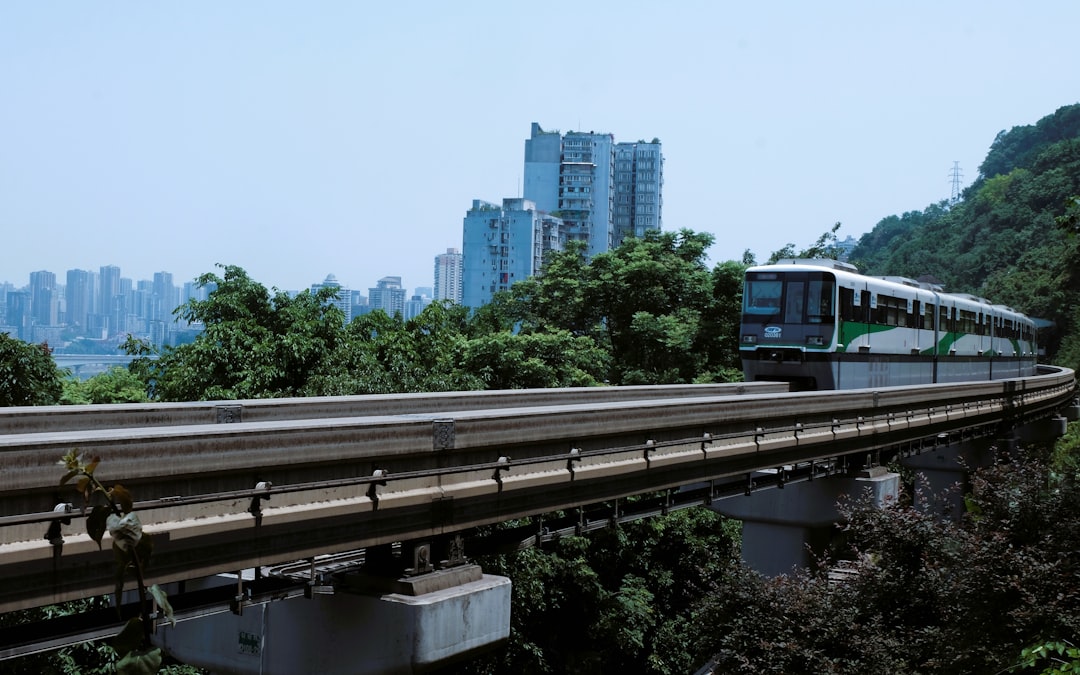
Here's the thing that makes Chongqing different: the metro itself is a sightseeing attraction. The network is huge and cheap — 12 lines, 574 km as of Feb 2026 — and Lines 2 and 3 are heavy monorails (the famous straddle-beam trains that cross the Yangtze and Jialing on elevated tracks). Riding them is the activity. Add the world-famous cliff-side cableway and you've got a transport system that doubles as half your itinerary.
From the airport (CKG) into town — pick your trade-off
| Option | Route / detail | Time | Cost | When to pick it |
|---|---|---|---|---|
| Metro Line 10 (newest, from T3) | T3A → Hongtudi, transfer Line 6 → Xiaoshizi (5-min walk to Jiefangbei/Hongyadong) | ~50 min–1 h | ¥2–7 | Default if you land at T3. Cheap, beats traffic. |
| Metro Line 3 (from T2) | Direct to Guanyinqiao ~30 min; to Jiefangbei via one transfer | ~30–50 min | ¥2–9 | You land at T2, or you're staying in Guanyinqiao. |
| Airport shuttle bus K01 | To downtown | ~50 min | ¥15 | One bag, you'd rather sit than transfer. |
| Taxi | ~22 km to Jiefangbei | ~40 min (traffic) | ¥48 day / ¥55 night | Late arrival, heavy bags, or going somewhere off the metro. |
| Didi (ride-hailing) | Door to door | ~40–60 min | app estimate, ~taxi-level | Same as taxi but in-app English + cashless. |
Riding the metro & monorail: open Alipay → search the "Metro" / 乘车码 mini-program → scan the QR at the gate to enter and exit (it auto-charges by distance). Single trips are ¥2–10; if you plan a monorail-heavy day, the 1-day unlimited pass is ¥18 (24h from first use) and pays for itself fast.
The Yangtze River Cableway (长江索道) — the cinematic river crossing: a ¥30 one-way, 4-minute glide across the Yangtze between Yuzhong (downtown) and Nan'an.
A ¥30 cable car ride now sells out faster than a concert — buy it before lunch
This is the trap that wrecks afternoons. In 2026 the Yangtze Cableway sells same-day tickets from 7:45 AM only, and they sell out 2–3 hours ahead. Show up at 3 PM and you might be handed an 8 PM slot — or nothing. Two fixes: buy early in the morning, or pre-book a timed slot on Trip.com the day before. A ¥30 ride should not blow up your day, but in viral-surge Chongqing it absolutely can.
Using Didi (China's Uber — set it up before you fly, ~10 min): Didi has a full English app, takes foreign Visa/Mastercard (or link Alipay), and you register with your home phone number — no Chinese SIM or bank needed.
- At the airport and big stations, don't book from inside the terminal — walk to the signed 网约车 (wǎngyuē chē) ride-hailing pickup zone first; the app shows step-by-step photos of the walk. Expect a small platform/pickup fee of ¥5–15 on top of the fare.
- One Chongqing-specific reality: this is a vertical, ravine-folded city, so your GPS pin and your driver's pin can sit on roads stacked above each other. The chat has a built-in English↔Chinese translator — use it, and when in doubt, drop a pin at a named landmark (a metro exit, a mall) rather than a vague street. The driver confirms you by the last 4 digits of your registered phone number.
"Wait — China is THIS safe?"
You are 2×+ more likely to be robbed in San Francisco or Chicago than in a major Chinese city. Women routinely walk home alone past midnight; with dense CCTV, opportunistic street crime barely exists. In Chongqing this means you can ride the monorail at 11 PM, wander Hongyadong's levels late, and take a solo Didi back across the river without a second thought. The thing to actually watch here isn't crime — it's the terrain and the heat: steep wet stairways, easy-to-mix-up vertical levels, and a summer that genuinely hits 40°C. Mind your footing and hydrate, not your wallet.
Quick-reference (tap to open)
🛂 Visa — the 30-second version
- Most Europeans, Aussies, Japanese, Koreans, Malaysians, Singaporeans: 30-day visa-free, ordinary passport, no onward ticket needed.
- Americans, Mexicans, Indonesians, etc.: no 30-day deal, but 240-hour transit works — book an onward flight to a third country/region and enter via CKG. The 10-day window covers the permitted areas of 24 provinces, so Chongqing→Chengdu→Xi'an is fine.
- Everyone: a valid passport (3+ months for 240-hour transit; airlines often ask for 6); the 240h clock starts 00:00 the day after you land.
- ⚠️ Re-verify your nationality on en.nia.gov.cn before booking — this policy moves fast.
✅ Before-you-fly checklist
- Install an eSIM (Nomad/Airalo) — but leave it off until you land. So Google Maps + WhatsApp work.
- Bind a physical Visa/Mastercard to Alipay (and a second card to WeChat Pay). Do passport verification at home.
- Install Didi, register with your home number, link your card.
- Book your onward flight if you're on the 240h transit route.
- If your trip hangs on it, pre-book a Yangtze Cableway timed slot on Trip.com — same-day tickets sell out by mid-morning.
Landing in Chongqing and want it all planned — eSIM tips, airport pickup, when to ride the cableway and how to book it, a hotpot spot that won't melt your face off? Tell us your dates on WhatsApp, real humans reply.
Message us →Sources — Part 2 (verified June 2026)
eSIM: unusualnomad.com, traveltomtom.net, cybernews.com (China eSIM tests 2026 — Nomad most stable, Airalo cheapest, all route offshore / no separate VPN).
Alipay limits & fees: realchinatrip.com, trip.com, ltl-school.com (<¥200 fee-free · ~3% above; prepaid/virtual cards often rejected).
City transport: en.wikipedia.org Chongqing Rail Transit & chinaxiantour.com (12 lines, 574.12 km, Feb 2026; Lines 2 & 3 heavy monorails); travelchinaguide.com Chongqing subway (single ¥2–10, 1-day unlimited ¥18); trip.com & nihaochongqing.com (Yangtze River Cableway ¥30 one-way, same-day tickets from 7:45 AM sell out 2–3h ahead); eastchinatrip.com (CKG airport → city, Line 10 ¥2–7, Line 3 ¥2–9, shuttle K01 ¥15, taxi ~¥48 day/¥55 night); chinasurvivalkit.com (Didi airport pickup).
Things to Do in Chongqing
A metro train that punches through the 8th floor of an apartment block, a free cliff-side complex that lights up like a Miyazaki film, a cable car gliding over the Yangtze, and the city that invented hotpot serving it the way the dock porters first cooked it. Everything below is named, priced, and verified June 2026 — and a few sights now sell out hours ahead, so we flag those.
🌃 Hongya Cave (洪崖洞): Tickets, Best Time & Where to Photograph It — the night-view money shot
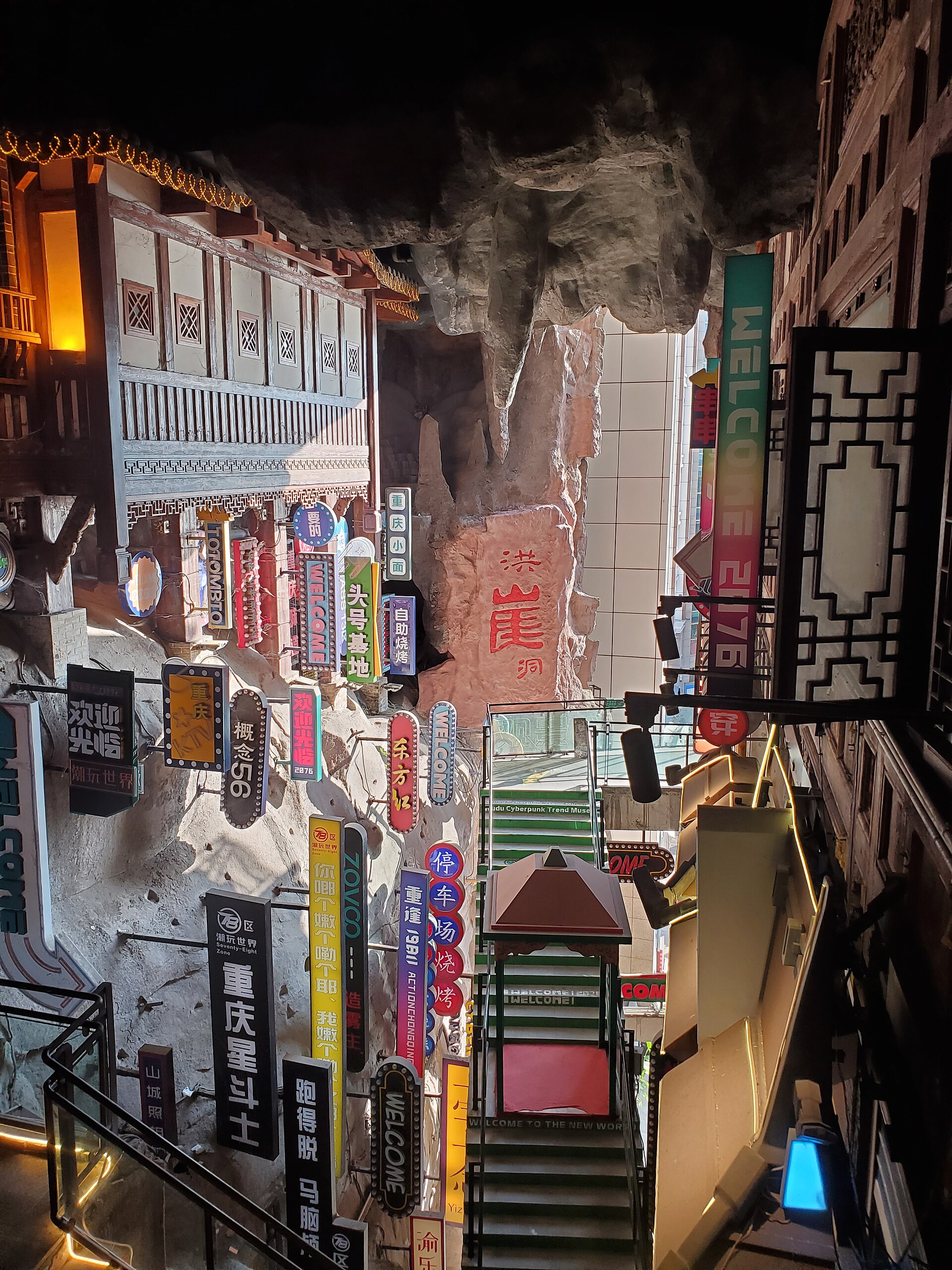
This is the photo that put Chongqing on TikTok — and it's free. Hongya Cave is an 11-story warren of diàojiǎolóu (吊脚楼 — traditional stilted houses) stacked up a riverside cliff in Yuzhong, lit up gold every night until it looks like a spirited-away bathhouse. Entry is free, 24 hours; the shops inside run roughly 10:00–23:00. The trick is that almost nobody plays it right, so let's fix that.
Time it for the light-up — and it shifts by season. The whole complex blazes on at dusk and the lights cut at 11:00 PM. A broadcast announcement plays right before they fire — have the camera ready. Rough on-times:
- Spring & autumn: ~6:30 PM
- Summer: 7:30–8:00 PM (the sky stays light late)
- Winter: ~6:00 PM
Where to actually shoot it (this is the whole game): Do not photograph it from inside — you can't see the facade. The two money angles:
- Qiansimen Bridge (千厮门大桥) — the dramatic overhead angle looking down the full stack. This is the shot.
- Jiangtan Park (江滩公园), across the river — the most layered, postcard composition with the towers reflected in the water.
The 8D trick everyone falls for: the complex has 11 floors, and the "1st floor" you walk in on is actually street level halfway up the cliff — so you can enter on the top, ride elevators down, and exit at the river. There's no single "ground floor." Lean into it; getting cheerfully lost is the point.
Insider timing: go on a weekday at ~10 PM. The crowds (and the tour flags) thin, the lights are still on for an hour, and you can actually stand on Qiansimen Bridge without elbowing for the rail.
The most-photographed building in China costs ¥0 to enter — but on a holiday they may cap the crowd
Hongya Cave is completely free, 24/7 — no ticket, ever. The catch isn't money, it's people: over the 2026 Spring Festival, Hongya Cave drew 1.38 million visitors and hit capacity. On the big holidays (Labour Day early May, Dragon Boat, National Day week early Oct) entry can be capped or queued. The fix is dead simple — go on a weekday, ideally late evening, and you'll have the bridge nearly to yourself.
Want the Hongya Cave shot without the scrum — a local who knows the exact bridge spot and the right hour? Tell us your dates on WhatsApp.
Ask us →🚝 Top Things to Do in Chongqing — the 8D city, ridden and seen
Chongqing's "must-do" list is unlike anywhere else in China: the attractions are the infrastructure. A metro through a building, a cable car over a river, an old town clinging to a hill. Here's each one with the ticket, the hours, the exact metro exit, and the one thing worth your time.
Liziba Station (李子坝) — the monorail through a building, free
The single most viral piece of Chongqing: Line 2 monorail runs straight through floors 6–8 of a 19-story residential tower. And here's the myth to kill: it was not retrofitted or "drilled through" later — the station and the building were designed and built together (opened 2005, Yuzhong District). The trains and the apartments coexist by design.
- Ticket: The viewing platform is free — there's a dedicated photo deck below the tracks. You only pay the standard metro fare (¥2–10) if you want to ride through.
- The shot: Stand on the official viewing platform across the street, not on the station. Trains pass every few minutes; line up the train mid-building and fire.
- Insider: Ride it and shoot it — take Line 2 one stop to feel the train slide into the tower, then come back out to the platform for the photo. Both in 20 minutes.
Yangtze River Cableway (长江索道) — the 4-minute river crossing
A holdover from the 1980s when this was a commuter cable car: a glass-and-steel gondola that floats across the Yangtze in 4 minutes, Yuzhong side (Xinhua Rd / Chang'an Temple) to Nan'an side (Shangxin St / Longmenhao).
- Ticket: ¥30 one-way.
- Hours: Mar 1–Nov 30: 08:00–22:00 (holidays 07:30–22:30); Dec 1–end Feb: 08:00–21:00. Last entry 21:00.
- Insider: ride it at dusk for the two-river skyline lighting up beneath you. (Same-day tickets sell out hours ahead — see the box in Part 2 and buy early.)
Ciqikou Old Town (磁器口) — the Ming-Qing port town, free
A restored 1,000-year-old porcelain-trade port on the Jialing: flagstone lanes, snack stalls, teahouses, temples — touristy, yes, and still atmospheric if you go early or late.
- Ticket: Free to enter the town; shops run ~9:00–22:00 (most 11:00–21:00). Individual sites (Baolun Temple, the old mansions) are ¥10.
- Metro: Line 1 → Ciqikou Station, Exit 2 — 3-minute walk. (Or bus 202/209/215/237; taxi from downtown ¥35–60.)
- Insider: like Hongya Cave, this place drew 1.58 million visitors over the 2026 Spring Festival and hit capacity — so do it as a weekday morning (in by 9:30, before the tour buses) or at dusk when the day-trippers clear out and the lanterns come on.
🍲 What to Eat in Chongqing: Hotpot & Local Food — eating at the source
Forget Chengdu for a second: Chongqing is where hotpot was actually born. This is the origin city, and eating málà here is a pilgrimage, not a meal. Read this section and you'll order like you grew up on the docks.
The origin story — why it's so brutally spicy
Chongqing hotpot traces to the late-Ming / early-Qing era, popularized by the "bang-bang" porters (棒棒军) at the Chaotianmen docks on the Jialing and Yangtze, who cooked cheap meat scraps and offal in a cauldron of chili-and-Sichuan-peppercorn oil to make them edible and warming. That's the whole flavor philosophy in one word: málà (麻辣) = má (numbing, from Sichuan peppercorn) + là (spicy, from dried chili). Chongqing leans harder on the beef-tallow and chili than Chengdu does — this is the spicier, oilier, more unapologetic original.
How to actually eat it
The Chongqing pan is often the jiǔgōnggé (九宫格 — "nine grids"): a single fiery broth divided into nine cells, each a slightly different heat/temperature, so you cook different ingredients in their proper square. The ritual, decoded:
- Spice-shy? Order a split pot (鸳鸯锅 / yuān yāng guō) — half málà, half mild bone or tomato broth. Nobody judges; cook on the mild side.
- Build your dip: the local move is sesame oil + minced garlic (麻油蒜泥) — it coats and cools the food. (Beijing's peanut-sesame paste is a different city's habit.)
- Cook by the clock: máodǔ (毛肚, beef tripe) — swish 15 seconds ("七上八下," seven dunks up, eight down), eat crisp; yācháng (鸭肠, duck intestine) — 10 seconds, crunchy; thin meat a few seconds; tofu and veg a couple of minutes.
- Pay by scanning the table QR (Alipay/WeChat) — no flagging a waiter. Say "mǎi dān / 买单" if you want a human.
Where to eat hotpot — real names, honest price bands
Per-person prices below are ranges — Chongqing's hotpot spans tourist-strip premiums to dirt-cheap local chains, so we band it rather than quote a single fake number.
| Restaurant | Vibe | Per person | Where |
|---|---|---|---|
| Peijie Hotpot (珮姐老火锅) | A classic, beloved beef-tallow broth; the name locals send tourists to | ¥80–150 (tourist-area band) | No. 5 Minsheng Rd, Yuzhong |
| Yuwei Xiaoyu (渝味晓宇火锅) | Old-school, no-frills, Lonely-Planet-noted — the "real deal" room | ~¥170/pp (authentic band) | No. 86 Pipashan Main St, Yuzhong |
| Liuyishou (刘一手) | National chain born here; milder broth = good for first-timers | ¥30–60 (budget chain band) | Jiefangbei branch, No. 46 Cangbai Rd |
Budget reality: in the tourist core (around Hongyadong) plan ¥80–150/pp; at a budget chain like Liuyishou, ¥30–60/pp; a famous old-school room runs nearer ~¥170/pp. Two people at a mid chain, plan ~¥160–250 total. Specific per-dish prices vary by venue — confirm on Dianping.
Not hotpot? The everyday Chongqing canon
Hotpot is the headline, but the dish locals actually eat every morning is noodles:
- Chongqing xiǎomiàn (重庆小面) — the city's true staple: chewy wheat noodles in a fierce chili-and-peppercorn broth, eaten for breakfast. A bowl is ¥5–8 (¥9 with an egg). This is the cheapest, most authentic thing you'll eat here. A long-running local name is Huashi Wanza Noodles (花市豌杂面), 85 Minsheng Rd.
- Suānlà fěn (酸辣粉) — hot-and-sour sweet-potato vermicelli, slippery and tongue-tingling. Haoyoulai (好又来酸辣粉) on Chongqing Haochi St is the classic stop.
- Chāoshǒu (抄手) — Sichuan-style wontons in chili oil; try Xinma Chaoshou (鑫麻抄手), 248 Wuyi Rd, Jiefangbei.
- Bayi Good-Eats Street (八一好吃街) in Jiefangbei is the tourist snack hub — skewers, suancai fen, grilled everything — good for a graze, priced for tourists.
Breakfast in the city that invented hotpot costs less than a coffee back home
A bowl of Chongqing xiaomian is ¥5–8 — the real local breakfast, eaten standing up, hotter than anything on a Western menu. A full hotpot blowout at a budget chain is ¥30–60 a head. You can eat the single most famous dish in Sichuan cuisine, at its birthplace, for the price of a fancy latte. The best food here isn't the priciest — it's the ¥6 noodle stall with a queue of locals.
🍻 Chongqing Nightlife: Bars, Clubs & River-View Drinking — After Dark
Here's what nobody tells foreigners: Chongqing nights are loud, cheap, safe, and built around a skyline you'll keep stopping to stare at. The whole city is stacked on hills above two rivers, so "rooftop bar with a view" is basically the default setting. Pick your scene:
Jiefangbei (解放碑)
The downtown core — biggest clubs, hotel rooftop "SKYLINE" bars, cocktail lounges. The neon cluster Deyi World anchors it.
Range: quiet to packedGuanyinqiao (观音桥)
Where Chongqing actually drinks — student/young-office crowd, craft-beer taps, small music dens. Less polished, more fun.
Beer ~¥23Nanbin Road (南滨路)
Riverside bars on the Nan'an bank with full two-river skyline views and a slower pace. Drink facing the lit-up city.
All about the viewThe scenes, in detail
- Jiefangbei (解放碑) — the downtown core: the biggest clubs, hotel rooftop "SKYLINE" bars, and cocktail lounges, all walkable from the Liberation Monument. Start here if you want range — a quiet cocktail and a packed dance floor within two blocks. The neon cluster Deyi World (得意世界) anchors the late-night scene with rooftop two-river views.
- Guanyinqiao (观音桥) — across the Jialing in Jiangbei: the student / young-office crowd, craft-beer taps, and small music dens. This is the "real night out" choice, less polished than Jiefangbei and more fun for it. For craft beer, Mikkeller Beer Bar (Datong Rd, Jiefangbei side) is a reliable international name.
- Nanbin Road (南滨路) — a strip of riverside bars and clubs on the Nan'an bank with full two-river skyline views and a slower pace. Come here to drink facing the lit-up city rather than to rave.
The practical bits
Prices: a local 500ml beer at a neighborhood pub is ~¥23. The big clubs: Space Club (North City Sky Street, 9 PM–5 AM) and Play House are the premier 2026 dance clubs. Bring your passport — seriously: major clubs (Space included) require passport verification to get in, and KTV/clubs are best reserved via Dianping (大众点评) or you'll face walk-up premiums or a flat refusal. Getting home: the metro stops ~22:30–23:00, so for the 2am exit, Didi is your friend.
A big night out here is cheaper than two cocktails back home — and you'll get home safe at 3am
A neighborhood pub beer is ~¥23, the rooftop views are free, and you can walk out of a club at 5am onto streets that are genuinely safe. The "China is expensive / sketchy after dark" assumption is just wrong — violent street crime in big Chinese cities runs a fraction of what it does in major US or European nightlife districts. One real 2026 quirk to plan for: bring your passport for club entry, and book KTV/clubs on Dianping ahead.
Want a local to take you out in Guanyinqiao or along Nanbin Road — no tourist traps, and we'll tell you how to book anywhere that needs a reservation? Ask us on WhatsApp.
Ask us →📱 Riding the Metro Is the Attraction — Chongqing's 8D City, Decoded
In most cities the metro is how you get to the sights. In Chongqing, the metro is a sight — and understanding why unlocks the whole "8D magic city" thing everyone keeps posting about.
The Chongqing Rail Transit (CRT) is a 12-line, 574-km network (as of Feb 2026), and crucially, Lines 2 & 3 are heavy monorails — the famous straddle-beam trains that thread between skyscrapers and across the Jialing and Yangtze. Riding them, especially the elevated stretches, is sightseeing. Add a SkyRail/Yunba (云巴) aerial tram on the network and you've got a transit system that doubles as a theme-park ride.
Why it feels "8D": Chongqing is built vertically up mountains between two rivers, so there is no flat "ground level." A road can be a rooftop; a building's 1st floor and its 22nd floor can both touch a street; the monorail naturally runs at the height of an apartment's living room (hello, Liziba). It's not a gimmick — it's just what a megacity looks like when it's stacked on hillsides instead of spread on a plain.
How to ride it like a local
- Fares ¥2–10 single trip (distance-based); a 1-day unlimited pass is ¥18 (24h from first use). If you're doing a monorail-hopping day, the day pass pays for itself.
- Pay via Alipay/WeChat QR at the gate, or buy a single-trip token.
- The sightseeing ride: take Line 2 along the Jialing — the stretch through Liziba and along the cliff is the postcard. Sit on the river side.
The cheapest theme-park ride in China is the ¥2 metro — a train that flies between skyscrapers and through an apartment block
For ¥2–10 (or an ¥18 all-day pass), you ride a monorail that threads between high-rises, crosses two rivers, and passes straight through floors 6–8 of a residential tower at Liziba. No queue, no "attraction" ticket — it's just the public transit, and it's more cinematic than rides people pay ¥200 for elsewhere. This is the single best-value thing to do in Chongqing, and most tourists ride right past it.
Want a half-day "8D Chongqing" route mapped — the right monorail seats, the Liziba photo spot, the cable-car timing — all sorted? Message us on WhatsApp.
Message us →Sources — Part 3 (verified June 2026)
Sights: chinahighlights.com (Hongya Cave light-up & photo spots, hotpot price bands) · chinadiscovery.com (Hongya Cave free entry, Liziba viewing platform) · ichongqing.info (official — Spring Festival visitor numbers, hotpot origin, monorail) · Wikipedia (Liziba station, Chongqing hotpot origin, Chongqing Rail Transit) · trip.com (Yangtze Cableway price/hours & sell-out, Ciqikou) · nihaochongqing.com (Yangtze Cableway hours) · travelchinawith.me & eastchinatrip.com (Ciqikou access).
Food & nightlife: travelchinaguide.com (hotpot price bands, metro fares & day pass) · letstraveltochina.com (hotpot & noodle venue names/addresses) · topchinatravel.com (Liuyishou) · babagoeschina.com (xiaomian price) · shinyvisa.com & thingstodoinchongqing.com (nightlife districts, prices, passport/Dianping rules) · chinawondersguide.com (Deyi World) · chinaxiantour.com (CRT network).
Prices and hours shift on Chinese public holidays, and several Chongqing sights now sell out hours ahead — confirm the load-bearing ones on Dianping or the official page before you commit.
Day Trips from Chongqing
You came for the 8D cyberpunk city — the monorail that punches through a tower block, the night skyline stacked twelve storeys up a cliff. But here's the thing locals know and most visitors miss: Chongqing is also the gateway to two of southwest China's most jaw-dropping landscapes. One is a UNESCO karst wonderland of collapsed sinkholes and natural stone bridges so vast they filmed Transformers there. The other is a 1,200-year-old hillside of Buddhist rock carvings so detailed and under-touristed you'll wonder why nobody told you. Both are doable in a day. Both cost less to reach than a single cocktail back home.
🚄 First, the train logic (read this once, it unlocks everything)
Chongqing is a high-speed-rail hub with multiple stations, and which one you leave from depends on where you're going — so this trips people up. The two day trips below leave from different stations:
- Chongqing East (重庆东 / Chongqing Dong) — for Wulong (the karst): the fast trains to Wulong South leave from here. On the metro.
- Chongqing West (重庆西 / Chongqing Xi) or Chongqing North (重庆北 / Chongqing Bei) — for Dazu (the rock carvings). Both on the metro.
The booking app tells you which station your specific train uses — always check the station name on your ticket, because showing up at the wrong one is a genuinely common, genuinely painful mistake in a city this size.
How to actually get a ticket (the foreigner-proof version)
- Book on Trip.com or the official 12306 website (English version). Trip.com is smoother for non-Chinese IDs; 12306 is the source of truth and slightly cheaper.
- Book 1–2 days ahead for Wulong in peak season (weekends, holidays) — the fast direct trains are limited and sell out. Dazu runs more frequently and is easier to walk up for.
- Bring your physical passport — it's your ticket. Tap it at the gate (foreigner gates are marked; if the auto-gate rejects it, the staffed window on the side waves you through in 10 seconds).
- Arrive 30 min early. Chinese high-speed stations are airport-sized; security + finding your platform eats time.
A new bullet train cut a 4-hour slog to 40 minutes
The Chongqing–Wulong high-speed line opened on 27 June 2025, and the fastest trains now do the run in as little as 40 minutes. A landscape that used to be a committing half-day expedition is now a casual morning out. China's rail network keeps quietly rewriting what counts as a "day trip."
More on this: China Essentials — getting around (rail, metro, Didi) →🏞️ Wulong Karst Day Trip — the Transformers landscape (the big "wow")
Bottom line: this is the day trip you brag about. Wulong is a UNESCO World Heritage karst region — a surreal world of giant collapsed sinkholes (tiankeng, "sky pits") and three natural stone bridges so enormous they dwarf the people standing under them. The valley floor between the bridges holds a perfectly preserved ancient courtyard relay station, and yes — this is where Michael Bay shot scenes for Transformers: Age of Extinction. Standing at the bottom looking up through the arches genuinely doesn't feel real.
There are two headline sites here, and you should know the difference before you go:
- Three Natural Bridges (天生三桥) — the main event. The collapsed-canyon walk past the three colossal arches and the relay station. This is the one to do if you only do one.
- Fairy Mountain / Xiannüshan (仙女山) — a high alpine meadow-and-forest plateau, lovely in summer for the cool air and grasslands, snowy in winter. A different vibe (open highland vs. dramatic canyon), and a separate ticket.
Getting there
- Train: Chongqing East → Wulong South on the high-speed line (opened 27 June 2025). Fastest as little as 40 min (the Chongqing East trains on 12306's English site for 15 Oct 2026 were listed at 38–57 min); trains from Chongqing North or West on the same line take about 1h40–2h30. For that date, 12306 listed second class from Chongqing East at ¥62–80, every fare with a discount label (10%–30% off), so full fares are higher.
- Wulong station → the scenic area: the Three Natural Bridges visitor center isn't at the rail station — you transfer by bus, ~45 min, ~¥10 from the Wulong bus station to the scenic-area entrance/visitor center. Factor this in both ways.
Tickets
- Three Natural Bridges: ¥155 (includes the mandatory shuttle that drops you into the canyon).
- Fairy Mountain: ¥50 entry + ¥25 for the land-train (the buggy that runs you around the highland — distances up top are big). Confirm both on Trip.com / the official scenic-area channel, seasonal.
The honest trade-off — one site or both? Realistically, with train + transfer time, do the Three Natural Bridges and do them properly — that's the unmissable, Transformers landscape and it fills a satisfying day. Only try to add Fairy Mountain if you're staying overnight in Wulong, or if it's high summer and you specifically want the cool grassland escape. Cramming both into a single day-trip from Chongqing leaves you rushing the part you actually came for.
Insider play (do this)
Take an early direct train so you're walking into the canyon by late morning, before the domestic tour groups roll through mid-afternoon. The canyon is a one-way descending walk — comfortable shoes, and pace yourself on the stairs back up. Bring a layer: it's noticeably cooler and often misty at the bottom, which is exactly what makes the photos look otherworldly.
Worth it? Wholeheartedly — it's the single most spectacular thing within day-trip range of Chongqing. Budget a full day door-to-door (roughly 10+ hours with travel), and book the fast train rather than the slow one, or the transfers eat your daylight.
🪨 Dazu Rock Carvings Day Trip — the easy, underrated UNESCO gem
Bottom line: the low-effort, high-reward pick — and the one foreigners skip. The Dazu Rock Carvings are a UNESCO World Heritage site: tens of thousands of Buddhist, Taoist and Confucian statues carved into hillside cliffs from the 9th to 13th centuries, astonishingly well preserved, still vivid with traces of original paint. The crown jewel is Baodingshan (宝顶山) — a horseshoe-shaped cliff gallery anchored by a giant 31-meter Reclining Buddha, told like a stone storybook. It's calmer, greener and far less crowded than China's headline grottoes, and the bullet train makes it the easiest day trip on this list.
There are two main carving sites; for a day trip the choice is simple:
- Baodingshan (宝顶山) — the masterpiece, the Reclining Buddha, the must-do. Do this one.
- Beishan (北山) — a separate, smaller cliff of finely detailed niches (more for the completist). A different ticket.
Getting there
- Train: Chongqing West / Chongqing North → Dazu South (大足南), about 30–40 min by high-speed rail (a 12306 search for travel on 15 October 2026 listed 31 min from Chongqing West and 36–37 min from Chongqing North) — one of the quickest hops out of any Chinese megacity. For that date, 12306 listed second class at ¥37 from Chongqing West and ¥48 from Chongqing North, both with a discount label (14% and 9% off), so full fares are higher.
- Dazu South station → the carvings: Baodingshan is ~30 min from the rail station by taxi ~¥50–60 (the site sits outside town). Confirm the return-taxi situation with the driver, or have your hotel/ride app ready for the trip back.
Tickets
- Baodingshan: ¥115 (Mar–Nov) / ¥110 (Dec–Feb).
- Beishan: ¥70 (Mar–Nov) / ¥50 (Dec–Feb), if you add it. Confirm seasonal pricing on Trip.com.
The trade-off: Dazu is the shorter, easier, lower-stress day trip — the site is a gentle walking circuit rather than a stair-climb, and the crowds are thin. Wulong is the bigger landscape spectacle; Dazu is the cultural slow-burn that rewards you for showing up. If you've got two day-trip days, do both. If you've got one and you've already seen a lot of temples, Wulong's the louder choice; if you love history and want a relaxed day, Dazu wins.
Insider play
Pick up the audio guide or join a brief on-site explainer if you can — the carvings are narrative (cycles of life, parables, vivid hells and heavens), and they go from "nice statues" to genuinely gripping once you know what each tableau is saying. Budget a full day door-to-door (roughly 8–9 hrs with travel), the shortest of the two.
A 31-meter Buddha and an entire UNESCO cliff — almost to yourself
While the famous northern grottoes pack in thousands, Dazu's Baodingshan stays remarkably uncrowded, and you reach it on a bullet-train ride of roughly 30–40 minutes. Some of China's finest medieval art, a half-hour train, no scrum. The best things here are quietly the easy ones.
More on this: China Essentials — getting around (rail, metro, Didi) →🗓️ Chongqing Itinerary: 2, 3 & 5 Days — the points actually strung together
These plug straight into Part 3 (Hongya Cave, Liziba monorail, the cableway, Ciqikou, hotpot, nightlife) and Part 4 above. Times assume a central Jiefangbei (Yuzhong) base — walk to Hongya Cave, the cableway and the monorail. Tap a day to open the hour-by-hour plan.
One orientation note that saves your sanity: in Chongqing, "addresses" lie. The city is built vertically up and across cliffs, so the same building can have ground-floor exits on three different streets at three different altitudes. Trust your metro exit number and landmark photos, not the floor number — and don't panic when the map says you've "arrived" but you're standing two storeys above your destination. That's not a glitch. That's Chongqing.
⏱️ 2 Days — the essential Chongqing
Day 1 Monorail, cliffs & the night-view money shot
- 09:30Ride the famous Line 2 monorail and get off at Liziba (李子坝) — the station built through floors 6–8 of a 19-storey apartment tower. Head to the free viewing deck below the tracks for the iconic shot.
- 11:00Hop back on the metro to the Yangtze River Cableway (长江索道). Buy the ¥30 crossing and ride 4 minutes over the river to the south bank — old-school, slightly creaky, brilliant views. Buy your slot early — same-day tickets sell out hours ahead.
- 12:30Lunch on the south bank, then back across.
- 14:00–16:30Wander Jiefangbei and the Liberation Monument plaza, the dense walkable heart — shopping, snack streets (Bayi Good-Eats Street / 八一好吃街), people-watching.
- 18:00Early hotpot dinner (this is the birthplace — do a half-and-half pot if you're spice-shy). The main event.
- 20:00–22:00Hongya Cave (洪崖洞) lit up after dark — the stacked-cliff "Spirited Away" building. Walk out onto Qiansimen Bridge (千厮门大桥) for the dramatic overhead angle, or cross to Jiangtan Park for the full layered skyline. Lights go off at 11pm; come ~10pm on a weekday to dodge the crush.
Day 2 Old town, river & a slow afternoon
- 09:30Metro Line 1 → Ciqikou (磁器口), Exit 2, a 3-min walk to the old town: cobbled lanes, teahouses, traditional snacks, riverside views. Go early before the crowds peak.
- 12:30Snack-lunch your way through Ciqikou (the street food is the meal), then a teahouse pause.
- 14:30Back downtown. Slow afternoon: a riverside walk along Nanbin Road (南滨路) for the two-river panorama, or a foot massage to reset the legs.
- 18:00Dinner: if you didn't get your fill yesterday, a xiaomian (小面) bowl — the city's true everyday staple — or a second, better hotpot.
- 20:00Nightcap with a view: rooftop bars and the neon nightlife cluster at Deyi World (得意世界) for the two-river skyline, or a craft-beer den in Guanyinqiao.
⏱️ 3 Days — the sweet spot (add Wulong)
Days 1–2 As above
Run the 2-day plan exactly, but you can breathe — linger longer on the south bank, add a riverside evening on Nanbin Road, and don't rush Ciqikou.
Day 3 Wulong Karst
- EarlyFast train Chongqing East → Wulong South (book the night before and check the first departure on 12306). About 40–60 min.
- ~10:00Transfer bus (~45 min, ¥10) to the Three Natural Bridges visitor center.
- 10:30–14:00Walk the collapsed-canyon trail past the three colossal arches and the ancient relay station (the Transformers spot). Pace the stairs; bring a layer for the cool, misty bottom.
- 14:30Late lunch near the visitor center, then bus back to Wulong station.
- ~16:30Train back; Chongqing by evening. Easy hotpot dinner — you earned it.
⏱️ 5 Days — the full southwest
Days 1–3 The 3-day plan above
City essentials + Wulong, unrushed.
Day 4 Dazu Rock Carvings
- EarlyTrain Chongqing West / Chongqing North → Dazu South (about 30–40 min). The easy one.
- ~09:30Taxi (~¥50–60, ~30 min) out to Baodingshan (宝顶山).
- 10:00–12:30Walk the Reclining Buddha cliff gallery — grab the audio guide so the carvings tell their story. Calm, green, uncrowded.
- 13:00Lunch near the site; taxi back to Dazu South.
- ~15:00Train back; relaxed evening downtown — maybe the cableway at dusk if you skipped it, or a Guanyinqiao craft-beer crawl.
Day 5 Slow Chongqing (eat & drift)
A pure eat-and-wander day — a late xiaomian breakfast, a neighborhood you haven't seen, one more hotpot, and a final sunset on Nanbin Road or a rooftop over the two rivers. The 8D city rewards aimless drifting; this is the day people remember.
Want this turned into a real plan — bullet trains pre-booked to the right station, the cableway timed (we'll show you how to book it), a guide who knows which hotpot? Send us your dates on WhatsApp.
Send dates →🛏️ Where to Stay in Chongqing: Best Areas — by who you are
No booking links, no commission — just where each type of traveler should sleep, and the honest trade-offs. Because Chongqing is built on cliffs and split by two rivers, metro access matters more here than in most cities — a "10-minute walk" can be a 10-minute walk uphill via three escalators, so we've flagged which zones are metro-easy and which mean leaning on Didi.
On nightly prices
Rates swing hard by season, holiday and how far ahead you book, and our sources didn't pin reliable RMB bands per zone — so rather than invent numbers, we've kept this to who each area suits. Confirm live nightly rates on your booking app for your exact dates.
| Area | Best for | Why here | Metro? |
|---|---|---|---|
| 🏙️ Jiefangbei (Yuzhong) | First-timers | The central tourist core — walk to Hongya Cave, the cableway and the Liberation Monument, dense metro, everything-on-your-doorstep. Where I'd put a first-timer, full stop. (Hotels here include The Westin and Glenview ITC Plaza.) | ✅ Excellent |
| 🛍️ Jiangbei / Guanyinqiao | Modern & trendy travelers | Malls, the best nightlife and craft-beer scene, sleek new hotels, and arguably the best metro access in the city. Less old-Chongqing character, more comfortable city base. | ✅ Excellent |
| 🌃 Nanbin Road (Nan'an) | Scenic / relaxed stays | The riverside south bank with the best two-river night views (looking back at the Chaotianmen skyline) and a slower, more romantic pace. The catch: it's not metro-friendly — you'll rely on Didi for nearly everything. | ⚠️ Didi-dependent |
My honest pick: Stay in Jiefangbei for a first trip — you're walking distance from the three signature sights and a short metro ride from everything else, which in a vertical city like this is worth a lot. Pick Guanyinqiao if nightlife and modern comfort are your priority. Only choose Nanbin Road if that river-view balcony is the whole point and you're happy to Didi everywhere — gorgeous, but you'll commute for the rest.
The world's most cinematic skyline view costs the price of a metro ride
You don't need a rooftop bar tab to see Chongqing's two-river night skyline — the Yangtze River Cableway is ¥30, Hongya Cave is free to look at all night, and the best vantage points (Qiansimen Bridge, Jiangtan Park, Nanbin Road) cost nothing at all. The "8D cyberpunk city" everyone's posting from TikTok is, mostly, free.
Going on to neighbouring Guizhou? Our Guizhou guide covers Guiyang, Huangguoshu Waterfall and Xijiang Miao Village.
Sources — Part 4 (verified June 2026)
Trains/fares: chinadiscovery.com (Chongqing→Wulong), asiaodysseytravel.com (Chongqing→Dazu), Trip.com / 12306, travelchinaguide.com.
Attraction tickets/hours: Trip.com travel-guide pages (Wulong Karst, Dazu Rock Carvings), chinahighlights.com (Wulong Karst region).
Hotels/areas: shinyvisa.com, chinadiscovery.com (zone suitability; reliable per-zone RMB bands not pinned — confirm live).
Know Before You Go
🧠 Culture, money & health — the fine print
🤝 Culture shocks & etiquette (the 6 that trip up first-timers)
- No tipping. Anywhere. Restaurants, taxis, hotels — none of it. Trying to tip causes confusion, not gratitude. Keep your change.
- Carry your own tissues + hand sanitizer. Public restrooms (and many squat toilets) often have neither paper nor soap. A pack of tissues is the single most useful thing in your bag.
- You order by scanning a QR code at most restaurants — point your camera at the table sticker, a menu opens, you tap, you pay, food arrives. (Menu's usually Chinese — Google Translate's camera, on your eSIM, reads it instantly.)
- Tap water is NOT drinkable — locals boil it or drink bottled. Every hotel room has a kettle and free bottles; restaurants serve hot water or tea by default.
- Strangers may ask to take a photo with you — especially with kids, or away from the big tourist spots. It's genuine friendly curiosity, not a scam or a setup. Smile, say yes or politely wave it off.
- The city is genuinely 3D — read your metro exits, not the floor numbers. Buildings have entrances on multiple streets at multiple altitudes; "I'm on the right address but the wrong level" is a daily Chongqing experience, not you getting it wrong. Follow exit numbers and landmark photos.
💰 What's dirt-cheap vs. surprisingly pricey
Absurdly cheap (spend freely):
- The metro & monorail — single trips ¥2–10; a ¥18 all-day pass (24h) covers unlimited rides, and riding Lines 2 & 3 is sightseeing.
- Xiaomian (小面) — the city's everyday spicy noodle breakfast, roughly ¥5–8 a bowl (about ¥9 with egg).
- Hotpot, the budget tier — local chains run ¥30–60 a person; you don't need the tourist-strip prices to eat brilliantly.
- The Yangtze cableway — a ¥30 ride for one of the best views in the city.
- A neighborhood beer — a 500ml local brew at a regular pub is ~¥23 (≈US$3.20).
Surprisingly pricey (budget for it):
- Tourist-strip hotpot — around Hongya Cave it climbs to ¥80–150 a person; fine for the view, but it's the premium.
- Imported goods & Western groceries — familiar shampoo, cheese or snacks carry a real markup.
- Western food & brunch — a "normal" Western breakfast can cost more than three local meals.
- Big-club bottle service & imported spirits — beer's cheap, but a table at a marquee club is not.
🚑 Emergencies & health (save these before you fly)
- Don't drink the tap water — bottled or boiled only. Your hotel kettle is your friend; ice in proper restaurants/cafés is fine, street stalls use your judgment.
- "My mouth is numb!" — that's the Sichuan pepper (huājiāo), the má in málà: a tingling-numbing buzz, not an allergy, totally normal and harmless. Sip warm water or tea; milk or yogurt cuts the chili heat faster than water.
- Pharmacies (药店) are everywhere, well-stocked, cheap, and no prescription needed for basics — point to the problem, or show a translated note.
- The hills are a real workout — Chongqing is stairs, slopes and humidity. Good shoes, and pace yourself; in summer the heat is no joke (see the season note in Part 1).
❓ FAQ — straight answers to what everyone actually asks
Do I need a visa to visit Chongqing in 2026?
Probably not. 50 countries now get 30 days visa-free, and citizens of the 57 countries on the 240-hour list — including the US — can use the 240-hour (10-day) visa-free transit if they meet the policy's conditions, including entry through an approved port and an onward ticket with a confirmed date and itinerary, leaving within 240 hours for a third country or region different from their departure country or region (e.g. Seoul or Bangkok; whether Hong Kong or Macao counts is our inference, not an official rule, so confirm with your airline or the immigration hotline, +86 12367, before you book). Chongqing Jiangbei (CKG) is a designated 240-hour transit port, and the policy lets you move between the permitted areas of 24 provincial regions, Chongqing included. Passport needs at least 3 months' validity for the 240-hour transit (airlines often ask for 6). Always confirm against the official en.nia.gov.cn before booking — this is the highest-stakes fact to get right. (Full breakdown: Part 1.)
Will Google, WhatsApp, and Instagram work in Chongqing?
Not on local WiFi/SIM — but there's a clean fix. China blocks Google, WhatsApp, Instagram, etc. The simple workaround: install an international travel eSIM (Airalo, Nomad, Holafly, Saily) before you fly — it routes your data offshore, so all your apps just work, no separate VPN needed. Set it up at home; it activates the moment you land. (eSIM comparison: Part 2.)
How do I get from Chongqing airport (CKG) into the city center?
Chongqing Jiangbei (CKG) is ~22 km from Jiefangbei, with several options. Cheapest: Metro Line 10 from T3 (or Line 3 from T2) — ¥2–9, ~30–60 min, running roughly 6:30am to ~11pm. Flat-fare bus: airport shuttle K01, ¥15, ~50 min. Door-to-door: taxi ~¥48 day / ¥55 night, ~40 min (or Didi). For Jiefangbei/Hongya Cave, Line 10 → transfer to Line 6 → Xiaoshizi is the standard run. (Full options: Part 2.)
Is the Chongqing metro really a tourist attraction?
Genuinely, yes. Lines 2 and 3 are heavy monorails — the famous straddle-beam trains that cross the Yangtze and Jialing rivers and, at Liziba, slide through an apartment block. Riding them is sightseeing in itself. The network is 12 lines / 574 km (as of early 2026), single fares are ¥2–10, and a ¥18 day pass gives 24h of unlimited rides. Pay via Alipay/WeChat QR or buy a single-trip token. (Full decode: Part 3.)
Can I really pay everywhere with just my foreign card?
Yes — via QR, not the card itself. Bind your Visa/Mastercard inside Alipay or WeChat Pay (do it before you arrive) and you scan-to-pay almost everywhere, from hotpot joints to street stalls to taxis. Don't count on foreign cards at small shops; bigger hotels, malls and major sights are more likely to take them. Keep some cash as backup for tiny vendors. Alipay and WeChat Pay set spending limits for foreign cards — see Essentials. Expect a ~3% fee above ¥200. (Setup steps + limits: Part 2.)
When's the best time of year to visit Chongqing?
Spring (Mar–May) and autumn (Sep–Oct) — October is the sweet spot: heat gone, skies clearer. Avoid high summer (Jun–Aug): Chongqing is one of China's "Three Furnaces," routinely above 27°C and capable of topping 40°C — brutal on a city made of stairs. Winter is the "Fog City" — mild but grey, with 100+ foggy days a year and a cold, damp January. (Full season guide: Part 1.)
Is Chongqing hotpot too spicy? Can spice-wimps survive it?
You control the heat — order a half-and-half pot. Chongqing is the birthplace of málà hotpot (born among the river dock porters), and the classic broth is seriously numbing-spicy. But every place offers the yuanyang (鸳鸯) divided pot — one fiery side, one mild (tomato, mushroom or bone broth) — so you dip on your own terms. Budget chains run ¥30–60 a person and skew milder; tourist-strip spots near Hongya Cave run ¥80–150. (Where to eat + how to order: Part 3.)
How many days do I need in Chongqing?
2–3 days for the city itself (the monorail, Hongya Cave, the cableway, Ciqikou, hotpot, nightlife). 3 days if you want to add Wulong as a day trip; 5 days to fit both Wulong and Dazu without rushing. The core 8D-city sights are dense and walkable, so even a short stay delivers.
Which day trip should I pick — Wulong or Dazu?
Wulong for the bigger wow: a UNESCO karst canyon with giant natural stone bridges (the Transformers location), reachable in as little as 40 min on the new bullet line, a full satisfying day. Dazu for the easy, cultural, crowd-free pick: a 1,200-year-old UNESCO cliff of Buddhist carvings, just about 30–40 min by train and a gentle walking circuit. Got both days? Do both. Only one, and you want raw landscape → Wulong; one, and you want relaxed history → Dazu.
Why is Chongqing suddenly so popular with international travelers?
It went viral — and the numbers back it up. International social-media creators (especially on TikTok) latched onto the "8D cyberpunk city": the monorail through a building, the cliff-stacked skyline, the two-river neon. Inbound visitors jumped ~170% year-on-year in early 2026 (People's Daily), and over the 2026 Spring Festival Chongqing broke into China's top 10 destinations, with overnight international arrivals up 52.1% and hotel bookings in some districts rising eightfold. You're not late to a fad — you're catching a city in its breakout moment.
Anything I should know about Chongqing nightlife and clubs?
A few local rules worth knowing. The scenes split by district: Jiefangbei (big clubs, rooftop skyline bars), Guanyinqiao (younger crowd, craft beer, small music dens), and Nanbin Road (riverside bars with two-river views, slower pace). A neighborhood beer is ~¥23. Two practical heads-ups for 2026: major clubs require passport verification at the door, and it's smart to reserve KTV/clubs via Dianping (大众点评) rather than walking up cold. (Full nightlife rundown: Part 3.)
Is Chongqing safe at night — especially for solo women?
Extremely. Chongqing is among the safest big cities in China — well-lit, busy late, blanketed in CCTV, and with virtually no street crime. Women routinely walk home alone past midnight. The bigger nighttime "hazard" is the terrain — dark stairs and steep slopes — so watch your footing, not your back. (Full safety context: Part 2.)
Can I drink the tap water?
No. Drink bottled or boiled water only — every hotel provides a kettle and free bottles, and restaurants serve hot water/tea by default. Brushing teeth with tap is fine; ice in reputable cafés/restaurants is fine; just don't drink straight from the tap.
📣 Plan it with us
Want the whole thing handled?
Flights, trusted hotels in the right neighborhood (and on the right cliff), pre-booked bullet trains to the correct station, cableway and Hongya Cave timed right, and a local guide who knows which hotpot joint and which monorail seat. That's exactly what we do — real humans, real local knowledge. Tell us your dates and what you're into, and we'll take it from there.
Plan your Chongqing trip on WhatsApp
All sources (verified June 2026)
Trains/fares: chinadiscovery.com (Chongqing→Wulong), asiaodysseytravel.com (Chongqing→Dazu), Trip.com / 12306, travelchinaguide.com. Attraction tickets/hours: Trip.com travel-guide pages (Wulong Karst, Dazu Rock Carvings), chinahighlights.com, nihaochongqing.com, trip.com (Yangtze Cableway). Metro/fares: travelchinaguide.com (Chongqing subway + day pass), en.wikipedia.org (Chongqing Rail Transit), eastchinatrip.com (CKG airport → city). Food & nightlife: chinahighlights.com + travelchinaguide.com (hotpot bands), babagoeschina.com (xiaomian), letstraveltochina.com (venues), shinyvisa.com, thingstodoinchongqing.com, chinawondersguide.com. Hotels/areas: shinyvisa.com, chinadiscovery.com. Surge story: en.people.cn (People's Daily, +170% inbound early 2026), ichongqing.info (official, 2026 Spring Festival +52.1% overnight intl / top-10 ranking). Visa/payment: en.nia.gov.cn, chinasurvivalkit.com, Alipay/WeChat help centers.
⚠️ Live-confirm before travel: seasonal opening hours, exact fares, and nightly hotel rates shift. Tickets/hours → the attraction's official channel or Trip.com; train station + times → 12306 / Trip.com (check which Chongqing station your ticket uses); visa → en.nia.gov.cn.