🧭 TL;DR — the honest bottom line
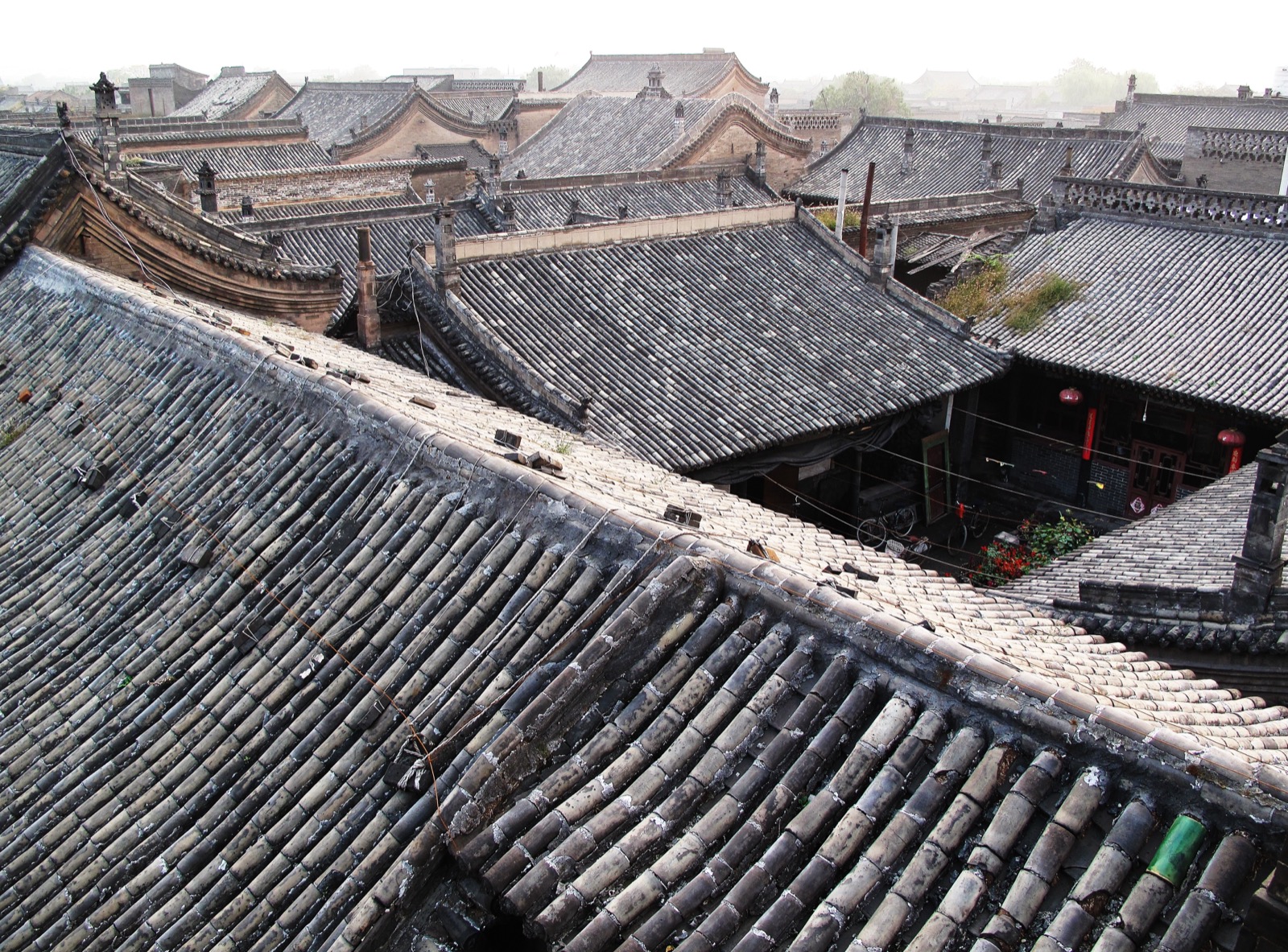
Here's what nobody tells you before you come: Pingyao is the one walled town in China that never got knocked down. No demolition, no high-rises, no "improving" — just a complete Ming-Qing street grid inside intact 6 km walls, where you walk past the courtyard that invented modern Chinese banking, a magistrate's court that still stages trials, and the armed-escort firms that guarded the silver. It's a UNESCO World Heritage city you can cross on foot in an afternoon, sleep in a lantern-lit courtyard for the price of a motel, and watch a show you literally walk through. Give it 2 days (3 with a day trip) and slot it between Xi'an and Beijing — it sits right on the bullet-train line between them.
Two things to do before you fly: set up an eSIM (so Google and WhatsApp work) and bind a card to Alipay (so you can pay for anything). Sort those two and the rest of this guide is just the fun part.
No time to read all of this? Tell us your dates and we'll build your Pingyao plan for you — on WhatsApp, real humans. (One message, no obligation.)
Message us →📌 This guide is long because it's complete — use the menu to jump. Everything below is named, priced, and verified June 2026; we flag anything that drifts so you can double-check the load-bearing details (especially the visa fine print for Americans).
Before You Go
🛂 Do You Need a Visa for Pingyao? — Visa-Free Entry Explained
Here's the headline most travel sites bury: China spent the last two years quietly becoming one of the easiest big countries in Asia to walk into. For Pingyao specifically there's one wrinkle worth getting right before you book anything — and it comes down to what color your passport is.
| Route | Who it's for | Max stay | The catch for Pingyao |
|---|---|---|---|
| 30-day visa-free | 50 countries — most of Europe, Australia, NZ, Japan, Korea, plus UK + Canada (added 17 Feb 2026) | 30 days | Ordinary passport valid for your whole stay (airlines often ask for 6 months). No onward-ticket rule, go anywhere including Pingyao. The clean route. |
| 240-hour (10-day) transit | 57 countries incl. the USA, Brazil, Mexico, Indonesia | 10 days | Onward ticket to a third country required — and Shanxi's permitted area is only Taiyuan + Datong, so Pingyao is not covered. Read the box. |
✓ verified Oct 2026 Lists shift often — reconfirm your nationality on the official site before booking.
🇬🇧🇪🇺🇦🇺 If you're on the 30-day list, ignore the fine print
If you hold a passport from most of Europe, the UK, Canada, Australia, New Zealand, Japan or South Korea, you get a flat 30 days visa-free, no onward ticket, no zone restrictions — fly into Beijing, Shanghai or Xi'an, take the bullet train to Pingyao, stay as long as you like inside 30 days. For you, Pingyao is a non-issue. Skip ahead.
🇺🇸 Americans — the 240-hour transit doesn't reach Pingyao
You are not on the 30-day list, so your route is the 240-hour visa-free transit — and for most of China that's a brilliant, easy option (book an onward flight to a third country/region like Seoul or Bangkok, enter via an approved port, stay up to 10 days). Taiyuan (TYN) — the Shanxi capital, an hour by train from Pingyao — is an approved 240-hour entry port.
But here's the honest catch: cross-province travel on the 240-hour transit is only allowed within each province's permitted area, and in Shanxi that is Taiyuan and Datong only. Pingyao, in Jinzhong, is outside it — so a Taiyuan entry doesn't get you here.
The single most important thing to know before you book
If you're American (or otherwise on the 240-hour route) and wondering whether 240-hour transit through Taiyuan covers onward travel to Pingyao (Jinzhong, Shanxi): it doesn't — get an L visa. A normal L tourist visa, sorted before you buy flights, removes all doubt and lets you roam the whole country. Don't gamble a non-refundable flight on a forum post.
Check the official source: en.nia.gov.cn →Two things that quietly sink even straightforward 240h travelers
① The 240 hours don't start when you land — they start at 00:00 the next day (GMT+8), so your arrival day is a freebie. ② "Third country" means different from where you came from — a US→China→back-to-US ticket does not qualify.
Policy and country lists shift — always reconfirm your nationality on the official en.nia.gov.cn before you book the flight.
🗓️ Best Time to Visit Pingyao
Aim for September–November or April–May — clear, dry, mild, and the old city isn't a sweatbox or a fridge. Pingyao sits on the Shanxi loess plateau: a temperate, semi-arid climate with proper four seasons, big swings, and very little of the humidity the south drowns in.
| Season | Months | Temp | The real story |
|---|---|---|---|
| 🍁 Autumn (best) | Sep–Nov | ~10–25°C | The sweet spot — crisp, dry, golden light on grey brick, clearest skies. The Pingyao International Photography Festival lands here for a reason. |
| 🌸 Spring (best) | Apr–May | ~10–24°C | Warm, pleasant, courtyard blossoms, the odd dusty wind. A touch quieter than autumn. |
| ☀️ Summer | Jun–Aug | up to ~30°C+ | Hot and the closest Pingyao gets to humid; Jul–Aug brings school-holiday crowds. Thunderstorms possible. |
| ❄️ Winter | Dec–Feb | ~-5°C avg, dips below -10°C | Genuinely cold and stark — but atmospheric, near-empty, cheap. Snow on the wall is magic. A heated kang bed earns its keep. |
Avoid the two big domestic-holiday weeks — National Day / Golden Week (1–7 Oct) and Spring Festival (late Jan/Feb) — when Pingyao's narrow stone streets pack shoulder-to-shoulder and room rates spike. The shoulder weeks on either side of October are the dream: same autumn light, a fraction of the crush.
✈️ How to Get to Pingyao: High-Speed Rail
Pingyao is far easier to reach than its frozen-in-time feel suggests — it sits right on the Datong–Xi'an high-speed line, so the great northern hubs are all a comfortable train ride away. Forget flying; there's no need. Almost everyone arrives at Pingyao Ancient City Station (平遥古城站 / Pingyao Gucheng), about 8.5 km / ~18–20 min by taxi from the old city.
| From | Time (high-speed) | 2nd-class fare | The real story |
|---|---|---|---|
| Xi'an | ~2h21m–3h | ¥150–160 | The classic pairing — two of China's greatest historic cities back to back. ~12 D-trains/day, 06:32–18:50. |
| Beijing | ~4h | ¥226–312 | The common combo for first-timers doing the imperial north. ~3–4 G-trains/day. |
| Taiyuan (Shanxi capital) | 31–56 min | ¥28.5–34.5 | The local hop — 22 pairs/day. If you fly into Taiyuan (TYN), this is your last leg. |
| Datong (Yungang Grottoes) | ~2.5–3.5h | varies | Pairs Pingyao with the Hanging Temple + grottoes for a full Shanxi loop. |
Two stations, don't mix them up
The high-speed Pingyao Ancient City Station (平遥古城站) is the modern one you'll almost certainly use, ~8.5 km out. There's also an older, slower Pingyao Station (平遥站) served by a few normal trains, within a ~15-min walk of the old city — handy on the Taiyuan run if your train uses it, but the bullet trains go to the new station. Check which station your ticket names.
Book on Trip.com or the official 12306 website (English version). Bring your physical passport — it is your ticket; tap it at the foreigner gate (if the auto-gate balks, the staffed window waves you through in seconds). Arrive 30 min early; Chinese high-speed stations are airport-sized. (More train mechanics in Part 4.)
💴 Pingyao Travel Budget: What It Costs (per day, excluding transport)
Pingyao is cheap even by China's standards — a small town where a beautiful courtyard room, a belly full of beef and noodles, and every museum in the walls add up to very little.
| Style | Per day (ex-transport) | What that buys you |
|---|---|---|
| 🎒 Backpacker | ¥150–280 (~$21–39) | Guesthouse dorm/simple kang room, noodle shops + street snacks, walk everywhere |
| 💺 Mid-range (most people) | ¥300–550 (~$42–77) | Lovely converted-courtyard room, sit-down Shanxi meals, the ¥125 through-ticket, the show |
| ✨ Comfort | ¥700+ (~$98+) | Boutique heritage courtyard, private guide, day-trip car to the family compounds, the good show seats |
The big budget lever here isn't your room — courtyard guesthouses are a steal — it's the through-ticket and shows. The ¥125 city pass (22 sites, 3 days) plus the ¥238 Youjianpingyao performance are the two real line items; everything else (wandering, eating, the nightly wall light show) is cheap or free. (~¥7.1 = $1 as of Jun 2026; rates drift.)
Sources — Part 1 (verified June 2026)
Visa & 240h transit: en.nia.gov.cn (National Immigration Administration — 30-day unilateral exemption list extended through 31 Dec 2026 for most countries, UK & Canada added 17 Feb 2026; 240-hour transit policy, Taiyuan an approved port, Shanxi permitted area Taiyuan + Datong; Pingyao (Jinzhong) outside); cross-checked chinadiscovery.com, travelofchina.com & chinasurvivalkit.com 2026 guides.
High-speed rail: chinaairlinetravel.com, travelchinaguide.com, chinadiscovery.com, Trip.com / 12306 (Xi'an–Pingyao D-trains fastest 2h21m / ¥150–160; Beijing–Pingyao G ~4h / ¥226–312; Taiyuan–Pingyao 31–56 min / ¥28.5–34.5; Pingyao Ancient City Station ~8.5 km out).
Budget / climate: chinadiscovery.com & travelchinaguide.com Pingyao weather (best Sep–Nov & Apr–May; Jul ~24.5°C, Jan ~-5°C); aggregated nightly-rate ranges across major booking platforms, 2026.
Arrival & Essentials
The three things that turn China from "intimidating" into "effortless." Do the first two before you fly — fifteen minutes at home saves you a stressful first hour.
📱 Internet & VPN in China: Get an eSIM before you fly
Let's be blunt about the thing everyone whispers about: mainland China blocks Google, Instagram, WhatsApp, Gmail, and most Western apps. Your normal SIM will roam onto a Chinese network and hit the same wall.
The clean, legal, no-drama fix: an international travel eSIM that routes your data through a server outside the mainland — so Google Maps, WhatsApp, Instagram, all of it just works, with no separate VPN to fiddle with. You install it as a second line; your home number stays for calls/texts.
| eSIM | Best for | VPN? | The honest take |
|---|---|---|---|
| Nomad | Multi-city + high-speed rail | No | Most stable when you're moving — survives tunnels and city-hopping. Top pick, since you're almost certainly pairing Pingyao with Xi'an or Beijing. |
| Airalo | One or two stops, budget | No | Most popular, cheapest, dead-simple. Plenty for a short Pingyao leg. |
| Holafly | Heavy data users | No | Unlimited-data plans + 24/7 support. Great if you stream/hotspot — check the fair-use cap. |
| Saily | Privacy-minded | No | By the NordVPN team, strong privacy. Solid for fixed-data plans. |
How it actually goes: buy online → you get a QR code by email → scan it to install (2 min) → leave it off until you land → flip it on as the plane taxis in. Only needs an email — no Chinese ID, no registration. Buy it at home on your own Wi-Fi; do not count on installing it after you land, because activation pages can themselves sit behind the wall.
One phone really does replace everything — even in a 19th-century town
Wallet, keys, train tickets, translator, the museum pass, dinner orders — all collapse into one phone the moment you're set up. It feels almost absurd in Pingyao, where you pay for hand-pulled noodles in a 200-year-old courtyard by waving a QR code. Most people pay by phone these days, though cash is still legal tender. Sort your eSIM + Alipay and you operate like a native by hour two.
More on this: China Essentials — paying with Alipay & WeChat →💳 How to Pay in China: Alipay & WeChat for Foreigners
Most people pay by phone, but cash is still legal tender: since 1 February 2026, staffed businesses must accept it. Keep some small notes as a backup (is cash accepted in China?). Don't count on foreign cards at small shops; bigger hotels, malls and major sights are more likely to take them. The great news for 2026: Alipay and WeChat Pay both take a foreign Visa/Mastercard directly, no Chinese bank account needed. Do this at home before you fly — verification is smoother on your home connection, and you want it live the second you land.
Set up Alipay (your main wallet)
- Download Alipay and register with your home mobile number (you'll get an SMS code).
- Open "Cards" → "Add Bank Card" and enter a real Visa or Mastercard. ⚠️ Use a normal physical credit/debit card — prepaid and virtual/online-only cards are frequently rejected. This is the #1 reason setup fails.
- Complete passport verification (photo of passport + a quick selfie). Approval is usually minutes.
- Add a backup: install WeChat Pay and bind a second physical card the same way.
The limits & fees you need to know ✓ verified Jun 2026
| Figure | |
|---|---|
| Payments under ¥200 | Fee-free (0%) |
| Payments over ¥200 | ~3% service fee |
Alipay and WeChat Pay set spending limits for foreign cards — see Essentials. Check your current limit in the app.
The practical read: the under-¥200 fee-free rule covers basically everything you'll buy in Pingyao — noodles, museum snacks, cart rides, a kang-room night. The ~3% only nips at bigger hits like the show tickets or a private day-trip car. Still, carry a little cash — a few tiny family stalls and the odd rural bus on a day trip are old-school.
🚶 Getting Around Pingyao: On Foot (and the Electric Carts)
Here's the lovely part: inside the walls, Pingyao is strictly pedestrian — no private cars, ever — and small enough to walk end to end. The whole old city is barely 2.25 km², a grid of stone lanes you can cover comfortably on foot; most people see the headline sights in 3–4 hours of wandering. This is a town built for the slow drift, not a transit puzzle.
| Option | Cost | When to pick it |
|---|---|---|
| Walk | Free | The default, and the whole point. Lanes are flat stone; nothing's far. |
| Hail an electric sightseeing cart | ¥10–20 per hop | Tired legs, hot day, or hauling bags to your guesthouse. They cruise the main streets and stop when you wave. |
| Full-day cart pass | ~¥120 / 8 hrs | Only if you want ferrying between every sight all day — overkill for most, but kind to seniors/kids. |
| Taxi/Didi to the gate | from station ~¥30–40 | Getting from Pingyao Ancient City Station into town, or out to a day-trip start. Cars stop at the gates; you walk in. |
Getting in from the station: from Pingyao Ancient City Station it's a ¥30–40 taxi / ~18–20 min to a city gate. Many guesthouses will arrange a pickup if you message ahead — worth it with bags, since the cab can only drop you at the wall and someone meeting you knows which lane is which.
"Wait — a town this old, and I can wander it alone at midnight?"
You are far more likely to be robbed in San Francisco or Chicago than in a small Chinese city like Pingyao. The lanes are lantern-lit and gently busy into the evening, and blanketed in CCTV. Solo travelers — women included — drift back to their courtyards late without a second thought. You'll feel safer at midnight on Ming-Qing Street than in most Western city centers.
Pingyao's a small town with a big history — want a local to map your two days and show you how to buy the through-ticket and book show seats? Tell us your dates on WhatsApp.
Message us →Sources — Part 2 (verified June 2026)
eSIM: unusualnomad.com, traveltomtom.net, cybernews.com (China eSIM tests 2026 — Nomad most stable, Airalo cheapest, all route offshore / no separate VPN).
Alipay limits & fees: realchinatrip.com, trip.com, ltl-school.com (<¥200 fee-free · ~3% above; prepaid/virtual cards often rejected; confirm limits in-app).
Getting around: chinadiscovery.com Pingyao transportation; chinaxiantour.com (pedestrian-only old city, electric carts ¥10–20/hop or ¥120 full-day).
Things to Do in Pingyao
Pingyao isn't a city you tick off — it's a complete Ming-Qing street grid where China's first bankers, magistrates and armed-escort firms actually worked. Everything below is named, priced, and verified June 2026 — covered by one ¥125 pass unless noted.
🎟️ The One Ticket That Unlocks Pingyao — the ¥125 Through-Ticket
Before anything else, get this straight, because it saves money and confusion: almost every museum and monument inside the walls is sold as a single combo pass, not individually.
Here's exactly what the pass covers and how each headline site works — the structured version, so you can plan a route instead of wandering in circles:
| On the ¥125 pass | What it is | The one thing to catch |
|---|---|---|
| City Wall (古城墙) | 6 km Ming rampart, 72 watchtowers | Golden-hour light from the South Gate |
| Rishengchang (日昇昌) | China's first draft bank, 1823 | The secret poem-cipher strongroom |
| County Yamen (县衙) | Best-preserved magistrate's office | "Magistrate Holds Court" reenactment |
| Escort agencies (镖局) | China's first armed-security firms | The weapons hall + recognition signs |
| City God + Confucian Temples | Working Ming-Qing temples | Quiet courtyards off the main drag |
| + ~17 more | Merchant museums, watchtower, mansions | One entry each, 3-day window |
- How long: valid 3 days, counting 72 hours from first use — plenty to do Pingyao at a civilized pace. One entry per site.
- Discount: ¥65 for ages 6–18, full-time students, and seniors 60+ with ID.
- Hours: ticketed sites open 08:00–18:30 (Apr–Oct) / 08:00–17:30 (Nov–Mar). The streets and six city gates stay open 24/7 — only the museums close.
- Buy it: at the visitor center / main gates, or on Trip.com. Bring your passport.
The honest catch ✓ verified Jun 2026
Because it's one entry per site across three days, don't blow through the wall and the big museums in a distracted first hour — pick a route (Part 4 has one), and save the show and the wall light-show for evening. For anyone doing 4+ stops the ¥125 pass is a no-brainer.
🧱 Pingyao City Wall: Tickets, Walking It & the Best Light
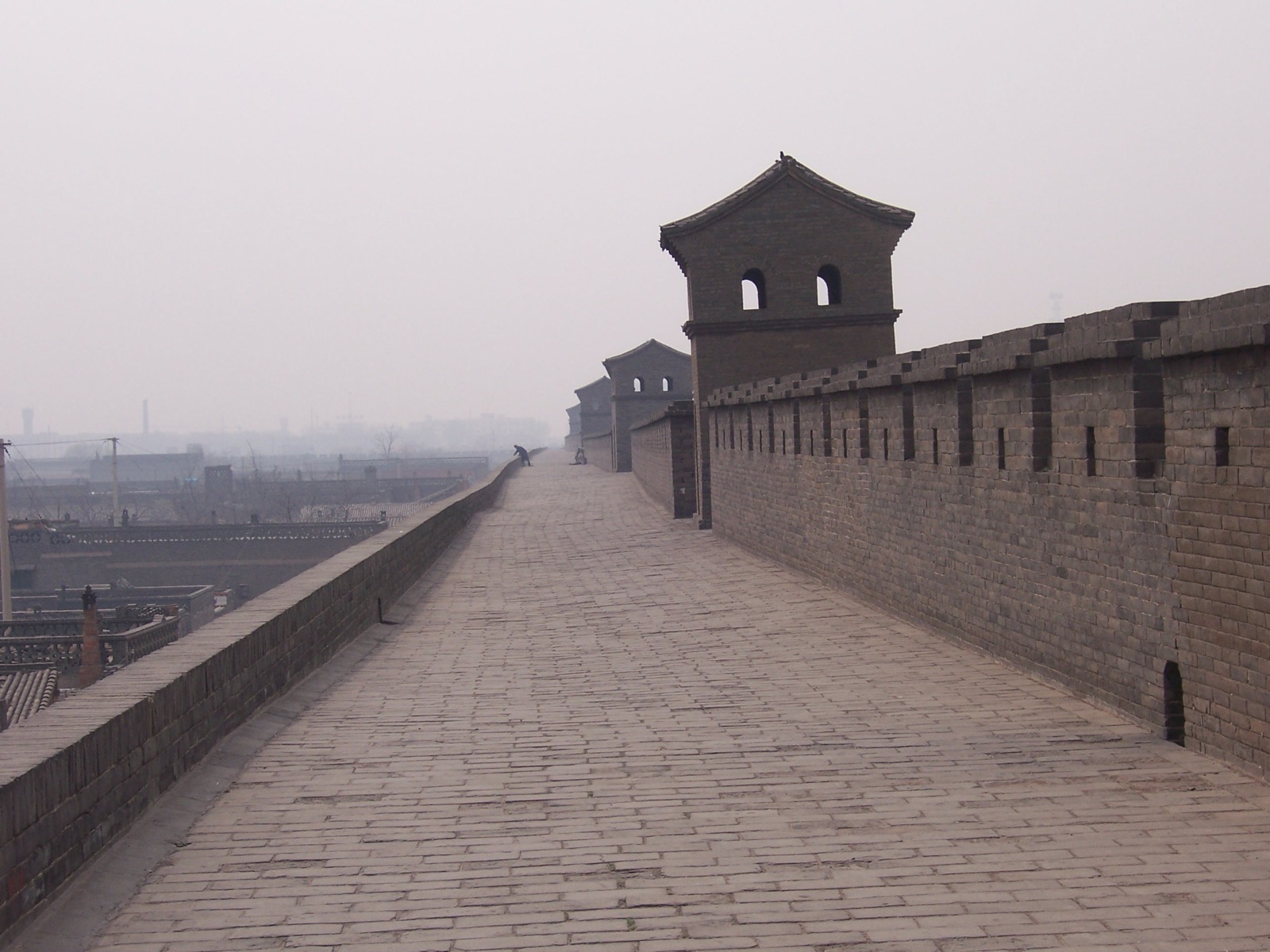
This is the headline, and it's on the ¥125 pass. Pingyao's wall is why UNESCO calls this the best-preserved ancient walled city in Han China: a 6 km rectangle of rammed earth faced in brick, built up in 1370 (early Ming), still essentially intact — 72 watchtowers and 3,000 battlements ringing the town. Locals say the 72 towers honor the 72 sages and the 3,000 merlons the 3,000 disciples of Confucius. Climb up and you see the whole grid at once: a turtle-shaped plan of courtyards and grey-tiled roofs that looks exactly as it did 600 years ago.
- Ticket: included in the ¥125 through-ticket.
- Hours: ~08:00–18:30 (summer) / 08:00–17:30 (winter).
- Best access: the South Gate (Yingxun Gate / 迎薰门) — the main, most scenic entry and the hub for the evening light show.
- How long: the full loop is ~6 km / 1.5–2 hours strolling. You don't have to walk it all — up at the South Gate, along to the next gate, back down is enough.
Insider: go up in the last hour before close or right at opening. Midday on the wall is hot and exposed (zero shade), and the light is the whole point — low golden sun across grey brick and tiled roofs is the photo you came for. Bring water and a hat.
🏦 Rishengchang Draft Bank: Where Chinese Banking Was Born
If you visit one museum in Pingyao, make it this one — and not because it's pretty (it is), but because of what happened here. This unassuming courtyard on West Avenue (西大街) is, quite literally, the birthplace of modern banking in China.
Here's the story, because it's a genuinely great one. In the early 1800s, moving silver across China meant physically hauling it in carts — slow, and an open invitation to bandits. A Pingyao merchant named Lei Lütai had a better idea: instead of shipping silver, issue a paper draft at one branch that could be cashed at another. Around 1823, the owner shut the dye business and reopened it as Rishengchang (日昇昌, "Sunrise Prosperity") — China's first piaohao (票号), or draft bank. It worked spectacularly. Within decades, Pingyao's draft banks had branches across China and into Russia, Mongolia and Japan, and at their peak the Shanxi piaohao are reckoned to have controlled close to half of the Qing economy. For most of the 19th century, this tiny walled county was the de facto Wall Street of imperial China — the reason those merchant family compounds out in the countryside (Part 4) are so jaw-droppingly opulent.
- Ticket: included in the ¥125 through-ticket.
- What you see: the original counting rooms, strongrooms, the manager's quarters, and the secret cipher system clerks used to authenticate drafts (a code based on a poem — so a stolen draft was worthless).
- Where: West Avenue (西大街), the old financial street — several other restored piaohao and the escort-agency (镖局) museums are on the same stretch, so do them as a cluster.
This sleepy county town invented the Chinese check — and once ran half the economy
Stand in the Rishengchang courtyard and reset your mental map: before London or New York mattered to China, Pingyao did. The draft banks born on this street moved money for the entire Qing empire with paper notes and a poem-based secret code, opening branches as far as Moscow. At the peak, ~32 piaohao with 475 branches ran out of central Shanxi. The wealth those bankers pulled home is why the nearby Qiao and Wang family compounds look like palaces. You're not in a backwater — you're in China's first financial capital.
⚖️ Pingyao County Yamen: the Living Magistrate's Court
The best-preserved ancient government office in China, and a genuinely fun stop — this is the yamen, the seat of imperial county government, where the magistrate lived, ruled, judged and jailed. It's a sprawling complex of halls, an actual courtroom, a prison, and the magistrate's residence, all restored.
The draw is the "Magistrate Holds Court" reenactment (县太爷升堂) — costumed actors stage a Ming-Qing-style trial in the main court hall, complete with the kneeling defendant, the brandished bamboo, and a verdict. It's hammy and great.
- Ticket: included in the ¥125 through-ticket.
- Show times: the trial reenactment runs daily at ~09:30, 11:00, and 15:30 (extra shows on weekends/holidays). Arrive 10–15 min early for a spot up front — the courtyard fills.
- Where: central old city, off Yamen Street (衙门街).
🗡️ The Escort Agencies (Biaoju): China's First Armed Security Firms
Here's a Pingyao layer most visitors miss, and it's a brilliant pairing with the banks. If the piaohao invented paper money transfer, the biaoju (镖局) — armed-escort agencies — were the security industry that grew up to protect it. These were companies of martial-arts-trained guards who escorted silver, drafts and valuables across bandit country for a fee: think Brink's trucks, but with broadswords and a code of honor.
Pingyao has two restored escort-agency museums on the old financial street (both on the ¥125 pass): the China Escort Agency Museum (中国镖局博物馆) and the Tongxinggong Escort Agency (同兴公镖局). Inside: weapons walls, the "dark-mark" recognition signals guards used, sedans, and the story of legendary escorts. It's a 20-minute stop that completely reframes the banking story — money this valuable needed an entire armed profession to move it.
🏮 Ming-Qing Street: the Old Commercial Spine
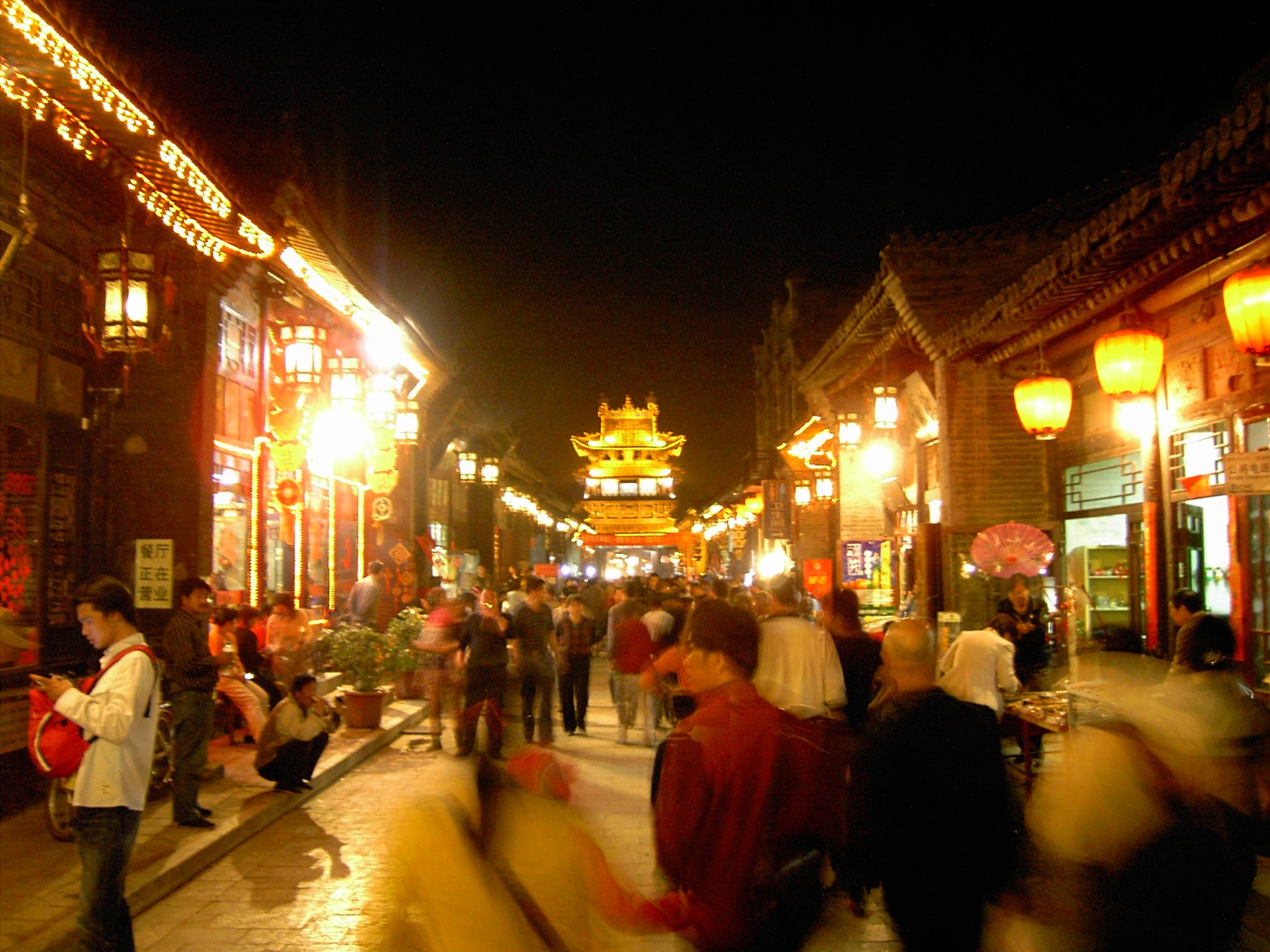
This is Pingyao's main artery and its beating heart — a ~750 m stone street (South Avenue / 南大街) lined with Ming and Qing shopfronts, now a run of merchant museums, vinegar and beef shops, lacquerware stalls, teahouses and snack vendors. It's where the old city's commerce concentrated for centuries, and where it still does.
- Cost: free to walk (the street itself isn't ticketed; the museums lining it are on the ¥125 pass).
- When: stroll it twice — once by day to shop and duck into museums, once after dark when ~800 red lanterns light up and the crowds thin. The contrast is the whole experience.
- Insider: this is the best place to buy Pingyao's three specialties to take home — vacuum-packed Pingyao beef, bottles of Shanxi aged vinegar (老陈醋), and tuiguang lacquerware (推光漆器). Haggle gently; smile.
🍜 What to Eat in Pingyao: Beef, Knife-Cut Noodles & Vinegar
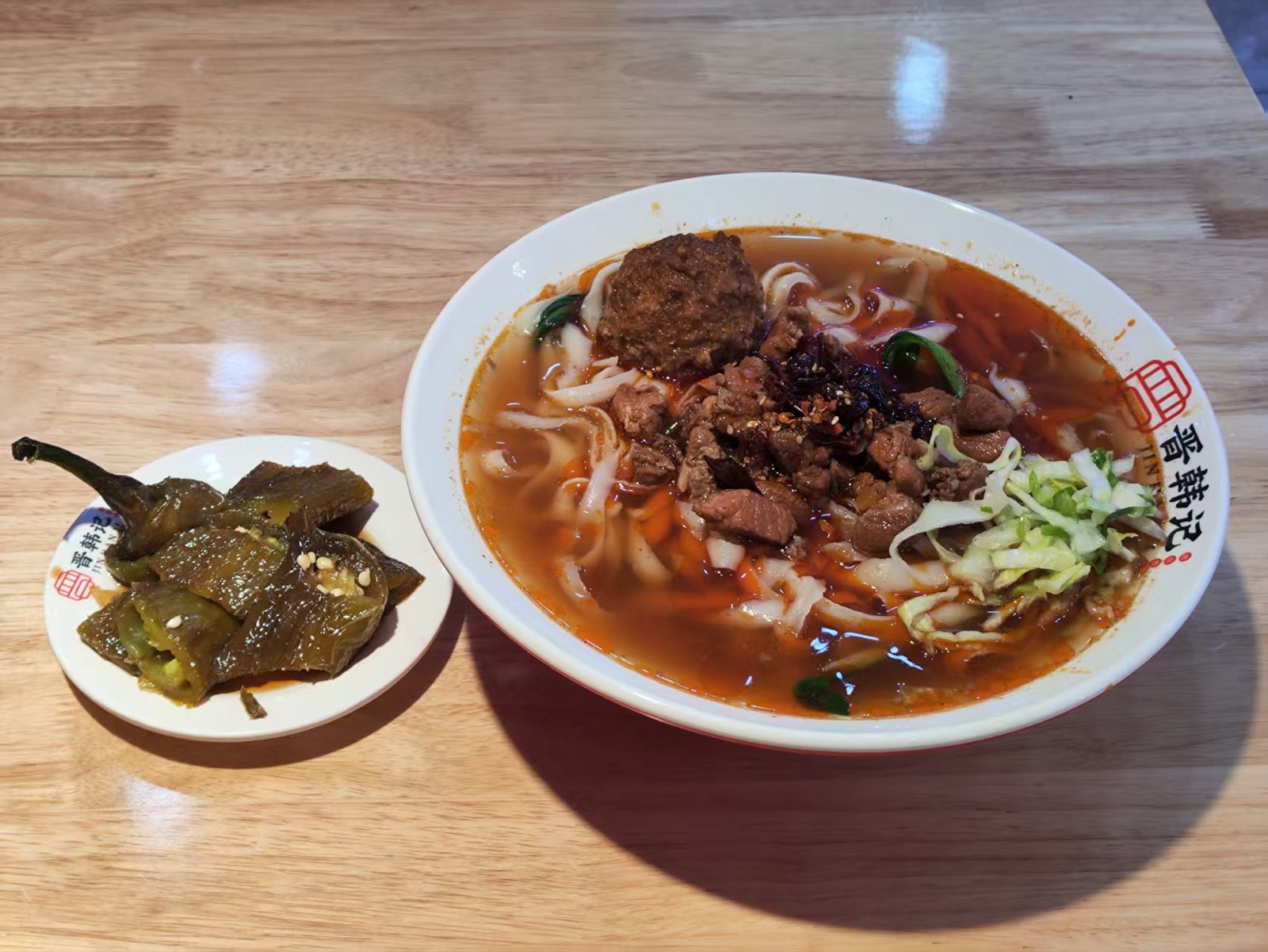
Shanxi food is one of China's great underrated regional cuisines — noodle-obsessed, vinegar-forward, and hearty — and Pingyao has three hometown specialties you should hunt down. None of it is spicy; this is a different China from Sichuan.
The three you must try
- Pingyao Beef (平遥牛肉) — the town's signature: beef cured and braised by a centuries-old local method, sliced thin, served cold as a starter. Tender, savory, faintly sweet. You'll see it vacuum-packed in every shop on Ming-Qing Street — but eat a freshly sliced plate in a restaurant first.
- Shanxi Knife-Cut Noodles (刀削面 / dāoxiāo miàn) — the regional icon: a cook shaves ribbons of dough off a block straight into boiling water with a curved blade, so each noodle is thick-edged and thin-middled, chewy and irregular. Served in beef-and-vegetable soup. Watch them being cut — it's a show.
- Shanxi Aged Vinegar (老陈醋) — Shanxi is China's vinegar capital, and the dark, mature, almost smoky aged vinegar is on every table. Dip dumplings in it, drizzle it on noodles. Bottles make a great gift.
Beyond the big three: oat-flour noodles (莜面栲栳栳), "cat's ear" pasta (猫耳朵), and youcha (油茶), a warm savory breakfast paste.
Where to eat (most meals land ¥30–50 per person)
| Spot | What it's known for | Per person | Where |
|---|---|---|---|
| De Ju Yuan (德居源) | Long-running courtyard restaurant, full Shanxi spread — Pingyao beef, knife-cut noodles, local snacks | ~¥40–60 | Off Ming-Qing Street, old city |
| Tian Yuan Kui (天元奎) | Decades-old local institution; breakfast classics + hearty lunch/dinner | ~¥30–50 | Central old city |
| Any packed Ming-Qing Street eatery | Eat lunch on the main street; pick the one full of locals | ~¥30–50 | South Avenue |
🎭 Youjianpingyao: the Immersive Show You Walk Through
The single best evening you'll spend here, and unlike any "show" you've seen. Youjianpingyao ("Seeing Pingyao Again," 又见平遥), directed by Wang Chaoge (of the Impression series), isn't a stage performance you sit and watch — for the first hour you walk through it. The audience moves on foot through a purpose-built labyrinth of streets, an escort-agency, a marketplace, a courtyard — scenes erupting around you, actors brushing past — telling the story of a Pingyao piaohao family who spend everything to bring one bloodline home. The final ~30 minutes you take traditional seats. It's emotional, immersive, and a perfect companion to the banking history you've just walked all day.
- Ticket: ¥238 per person (not on the city pass — separate).
- Runtime: ~90 minutes. Wear comfortable shoes — you're walking and standing for the first hour.
- Schedule: typically evening performances (~20:00 / 21:00), adjusted by season, and closed Mondays. Some periods add daytime slots; confirm the exact times for your dates when you book (and note it can be cancelled in bad weather, as parts are semi-open).
- Where: the purpose-built theater just outside the old city on the ancient-city-station side; a ¥10–20 cart or short taxi from the gates.
The 'nightlife' here is 800 lanterns and a wall that tells its own story
Don't come to Pingyao expecting clubs — come for one of China's most atmospheric night walks. After dark the whole old city glows under ~800 red lanterns, Ming-Qing Street empties of day-trippers, and the South Gate stages a free nightly 3D light show projected straight onto the 600-year-old wall — animations and history mapped across the brick. Add a wine or craft beer at a courtyard bar like Sakura, a slow lap of the lantern-lit lanes, and the Youjianpingyao show, and that's the perfect Pingyao night: quiet, golden, and a thousand miles from a megacity.
Want your Pingyao evening planned — which show and how to book seats, the wall light-show timing, and a courtyard dinner with the local specialties? Message us on WhatsApp.
Ask us →Sources — Part 3 (verified June 2026)
Through-ticket & attractions: Trip.com Pingyao Ancient City 2026, intotravelchina.com ticket guide, thechinaguide.com (¥125 / 22 sites / 3-day (72h) / one entry per site / hours 08:00–18:30 Apr–Oct).
City wall & banking: travelchinaguide.com & Wikipedia (wall 6 km, 72 watchtowers, 3,000 battlements, built 1370 Ming); en.wikipedia.org Rishengchang & Piaohao, chinadaily.com.cn ("Wall Street of the empire," 2022), advantour.com (first draft bank ~1823, branches Russia/Mongolia/Japan).
Yamen, escorts, food, show: travelchinaguide.com & chinatripedia.com (Yamen "Magistrate Holds Court" daily ~09:30/11:00/15:30); intotravelchina.com (escort-agency museums); tripadvisor.com & chinaculturetour.com Pingyao dining (De Ju Yuan, Tian Yuan Kui; beef/knife-cut noodles/vinegar, ~¥30–50pp); tripadvisor.com & trip.com Youjian Pingyao (¥238, ~90 min, closed Mon).
Prices, hours and show times shift on Chinese public holidays and by season — confirm the load-bearing ones on Trip.com or the official channel before you commit.
Day Trips from Pingyao
Pingyao itself is a 1.5–2 day town — but the countryside around it holds two UNESCO temples a bus ride away and the grandest merchant mansions in China, all built on the very banking fortunes you just learned about in the walls. Here's what's worth the trip, and exactly how to reach each.
🧭 First, the day-trip logic (read this once)
Almost everything here is north or south along the valley, reachable by a cheap local bus from near the North Gate or Pingyao Bus Station (~600 m from the North Gate), by train to a nearby town, or — for the far compounds — by a chartered car that makes far more sense if there are 3–4 of you.
Book any train legs on Trip.com / 12306 with your passport; for compounds, your guesthouse can usually arrange a car or point you to the right bus.
🛕 Shuanglin & Zhenguo Temples: the UNESCO Sculpture Day
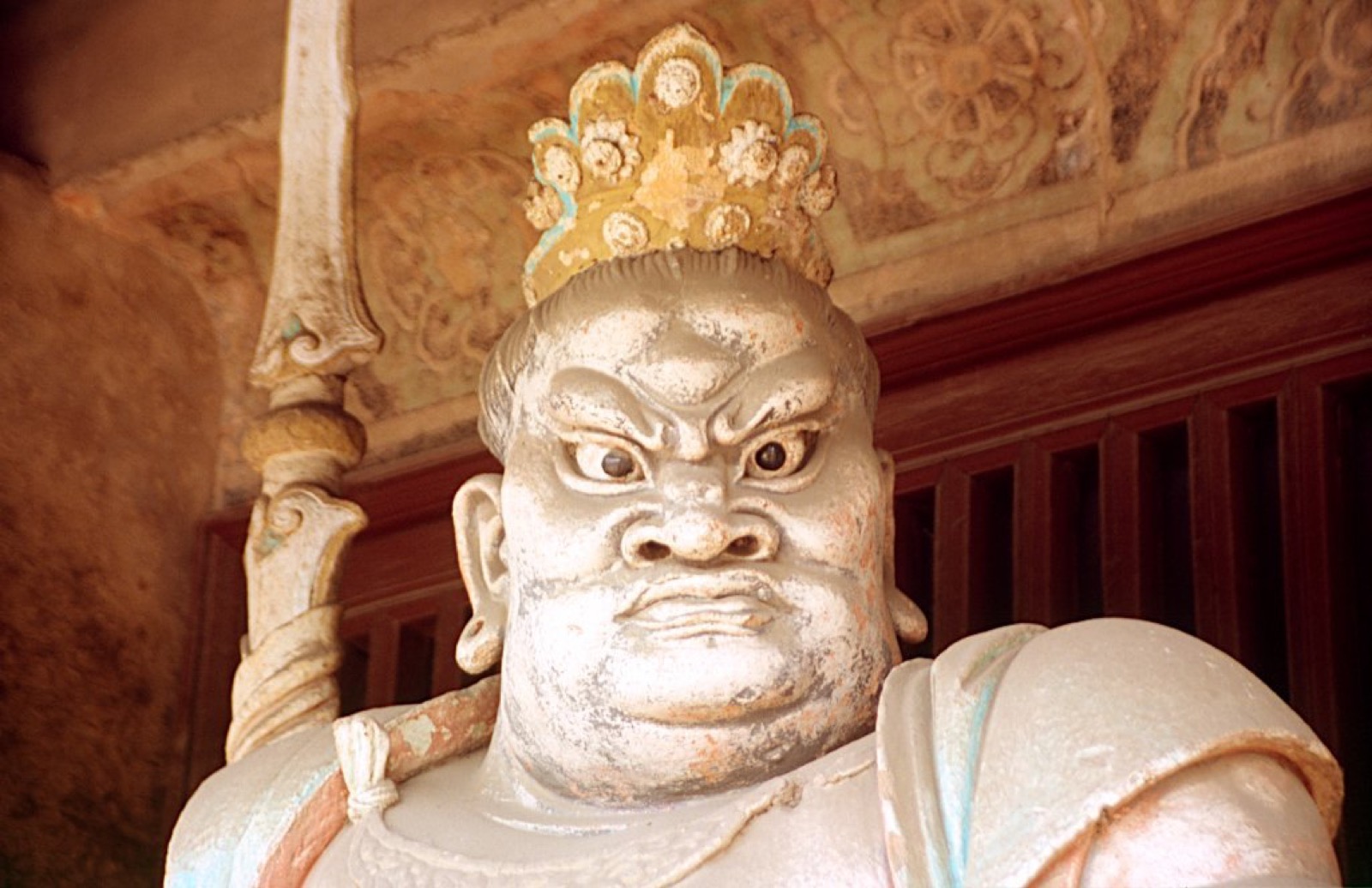
The easy, high-reward half-day that most foreigners skip. Both temples are part of the Pingyao UNESCO World Heritage listing, both are a short hop from the walls, and both are genuinely world-class.
- Shuanglin Temple (双林寺) — the showstopper: a complex crammed with over 2,000 painted clay sculptures from the Song to Ming dynasties, so fine it's called the "treasury of Oriental painted sculpture." The expressive Bodhisattvas and fierce guardian figures are the real thing — centuries old, vivid, alive.
- Zhenguo Temple (镇国寺) — quieter, older, and a structural marvel: its Wanfo Hall is one of only three surviving wooden buildings in China from the Five Dynasties period (~960 AD), with original colored sculptures inside.
| Temple | How to get there | Ticket | Hours |
|---|---|---|---|
| Shuanglin (~6 km SW) | Bus 108 (north route) from the North Gate, ~40 min, ¥1; or taxi ¥30–40, ~30 min | ~¥35 | 08:00–17:30 (last entry ~17:15) |
| Zhenguo (~12 km NE) | Bus 209 links the Youjianpingyao theater area to Zhenguo directly, hourly, ¥3, ~1 hr | ~¥25 | 08:00–17:30 |
Insider: do Shuanglin if you only have time for one — the sculpture halls are the more astonishing visit, and the ¥1 bus makes it almost free. Go in the morning when light fills the halls; bring a small torch, interiors are dim.
🏯 Qiao & Wang Family Compounds: the Merchant Palaces
The grandest courtyard mansions in China — and a direct, opulent sequel to Pingyao's banking story. The families who ran the Shanxi draft banks plowed their fortunes into vast walled compounds in the countryside. There are two famous ones, in opposite directions, so pick one. Here's the head-to-head:
| 🏮 Qiao Family Compound (乔家大院) | 🏰 Wang Family Compound (王家大院) | |
|---|---|---|
| The pitch | The famous one — where Zhang Yimou shot Raise the Red Lantern | The enormous one — a "folk Forbidden City" |
| Size | 6 courtyards, ~313 rooms | Far larger, hillside fortress of layered courtyards |
| Distance | ~50 km north (Qixian) | ~60 km south (Lingshi) |
| Ticket | ¥115 (¥60 student/senior) | Cheaper than Qiao; confirm on arrival |
| Getting there | Bus from Pingyao Bus Station ~¥18, ~40 min (≈08:00 & 14:00); or taxi/charter | Chartered car really needed (~half-day return); buses slow |
| Pick it if… | You want the icon + the easy bus | You want sheer scale + have a car |
The honest call: Qiao for the icon, the easy ¥18 bus, and the Raise the Red Lantern connection — most day-trippers without their own wheels default here, rightly. Wang for jaw-dropping scale if you've got a car and a half-day. They're in opposite directions, so don't try to do both in one day.
⛰️ Mount Mian (Mianshan): Cliffside Temples & Gorges
The day trip for when you want nature and near-empty trails. Mianshan is a dramatic Taoist-Buddhist mountain of vertiginous cliffs, deep gorges, and temples bolted improbably onto sheer rock faces — and it's the legendary origin of the Cold Food / Qingming Festival. It's rarely crowded even on holidays, which makes it a peaceful counterpoint to the old city.
- Where: ~60 km from Pingyao (Jiexiu).
- Ticket: ¥160 — includes the hop-on/hop-off shuttle bus that links the scattered scenic stops (essential, the sites are far apart).
- Getting there: train to Jiexiu from Pingyao (~30 min, ¥9–11) + local bus to Mianshan (~¥11) from in front of Jiexiu station; or a chartered car (~¥350 return), far simpler given the early start and the spread-out site.
- How long: a full day — leave early.
The mansions you'll gawk at were built on Pingyao's banking money
Walk Qiao or Wang and the penny drops: these aren't random rich-merchant houses — they're the physical fortune of the Shanxi piaohao, the draft-bank network born on Pingyao's West Avenue. The families who ran China's first banks plowed their silver into these 300-room courtyard palaces. Seeing the bank (Rishengchang, Part 3) and then the mansion in the same trip is the whole Shanxi story in two stops — finance, then the wealth it built, perfectly preserved.
🗓️ Pingyao Itinerary: 1, 2 & 3 Days
Times assume a courtyard base inside the walls. Pingyao rewards a slow pace — don't over-schedule the old city; its magic is the drift. Tap a day to open the hour-by-hour plan.
⏱️ The 1-day rush (if that's all you've got)
Day 1 The walled city, end to end
- 08:30Buy the ¥125 through-ticket. Up onto the South Gate city wall first, while the morning light is soft and the brick isn't baking.
- 09:30Catch the "Magistrate Holds Court" reenactment at the County Yamen (09:30 show).
- 10:30Rishengchang draft bank + the escort-agency museums on West Avenue — the banking-and-bodyguards cluster.
- 12:30Lunch on Ming-Qing Street: a plate of Pingyao beef + knife-cut noodles.
- 14:00The temples and merchant museums inside the walls — City God Temple, Confucian Temple — at an unhurried drift.
- 19:30Ming-Qing Street under the lanterns + the free South Gate 3D wall light show. Quiet, glowing, the best of Pingyao.
⏱️ 2 Days — the sweet spot
Day 1 As above — the walled city
Run the 1-day plan, but breathe — linger longer on the wall, add a tea stop, save energy for the evening lanterns and light show.
Day 2 Temples + the show
- 09:00Bus 108 (¥1) from the North Gate to Shuanglin Temple — the 2,000 painted sculptures, in morning light.
- 11:30Back to the old city; lunch and a slow wander of any lanes you missed.
- 14:00Optional: Zhenguo Temple (bus 209), or just keep drifting / shopping for vinegar and lacquerware.
- 19:00Youjianpingyao immersive show (¥238, ~90 min) — the perfect finale to two days of merchant history. Comfortable shoes.
⏱️ 3 Days — add a compound or a mountain
Days 1–2 As above
The walled city + temples + show, unrushed.
Day 3 A grand compound (or a mountain)
- 08:00Bus (~¥18) to Qiao Family Compound — the Raise the Red Lantern courtyards, ~2–3 hrs.
- 12:30Back to Pingyao for lunch.
- Alt.Swap in Mianshan (full day, leave 08:00, car or train+bus) if you'd rather have cliffside temples and empty trails.
- OnwardAfternoon bullet train to Xi'an (~2.5h) or Beijing (~4h) — Pingyao slots perfectly between them.
Want this turned into a real plan — how to buy the through-ticket and show seats, the right compound, trains to Xi'an or Beijing pre-booked? Send us your dates on WhatsApp.
Send dates →🛏️ Where to Stay in Pingyao: Courtyard Guesthouses
Stay inside the walls — this is non-negotiable, and gloriously cheap. Pingyao has 100+ converted-courtyard guesthouses (客栈) within the old city: traditional grey-brick siheyuan with carved wooden windows, red lanterns over the gate, and the option of a heated kang (炕) brick bed — the whole point of being here. Waking up in a 200-year-old courtyard and stepping straight onto a Ming street beats any chain hotel outside the wall.
| Type | Rough nightly band | Best for |
|---|---|---|
| Simple kang room / dorm | ~¥80–180 (~$11–25) | Backpackers, atmosphere on a budget |
| Mid-range courtyard double | ~¥180–400 (~$25–56) | Most people — character + private bathroom + heating/AC |
| Boutique heritage courtyard | ¥500+ (~$70+) | A splurge in a beautifully restored mansion |
- Where exactly: anywhere inside the walls near Ming-Qing / South Avenue puts you walking-distance to everything. Pick a courtyard with reviews mentioning good heating if you come Nov–Mar.
- Book the pickup: message your guesthouse your train and they'll meet you at the gate (cars can't enter) — a small kindness that saves a luggage-laden fumble through the lanes.
My honest pick: a mid-range restored courtyard with a private bathroom and real heating, inside the walls, near the South Gate. You get the lantern-lit, kang-bed romance without freezing or trekking — and at ~¥200–350 a night, it's the cheapest "live inside a UNESCO site" you'll ever do.
Sources — Part 4 (verified June 2026)
Temples: trip.com Shuanglin Temple 2026; travelchinaguide.com (Shuanglin 2,000+ painted sculptures; Zhenguo Wanfo Hall one of 3 surviving Five Dynasties wooden structures; bus 108 ¥1 / bus 209 ¥3; hours 08:00–17:30).
Compounds & Mianshan: chinadiscovery.com Qiao-vs-Wang & travelchinaguide.com (Qiao ~50 km N / ¥115 / ~313 rooms / Raise the Red Lantern / Pingyao bus ~¥18; Wang ~60 km S / larger / best by car); chinahighlights.com & travelchinaguide.com Mianshan (¥160 incl. shuttle; train Pingyao→Jiexiu ¥9–11 + bus ¥11, or car ~¥350 return).
Hotels: chinadiscovery.com Where to Stay in Pingyao; booking.com / trip.com Pingyao guesthouses (100+ courtyard properties inside the walls, kang beds, from ~$20/night).
Know Before You Go
🧠 Culture, money & health — the fine print
🤝 Culture shocks & etiquette (the ones that trip up first-timers)
- No tipping. Anywhere. Restaurants, taxis, guesthouses, cart drivers — none of it. Trying to tip causes confusion, not gratitude.
- Carry your own tissues + hand sanitizer. Public restrooms (and many squat toilets) often have neither paper nor soap — doubly true in an old town and out on day trips.
- You order & pay by scanning a QR code at most places — point your camera at the table sticker, a menu opens, you tap, you pay. Menus are usually Chinese; Google Translate's camera (on your eSIM) reads them live.
- Tap water is NOT drinkable — locals boil it or drink bottled. Your courtyard room has a kettle and free bottles.
- Strangers may ask for a photo with you — Pingyao gets fewer Western faces than Beijing, so genuine friendly curiosity is common, especially with kids. It's not a scam; smile, say yes or wave it off politely.
- Bring layers and a power bank. Shanxi's day-night temperature swing is big, the old lanes are dim at night, and you'll be out for hours between charging spots.
💰 What's dirt-cheap vs. surprisingly pricey
Absurdly cheap (spend freely):
- Courtyard rooms — a gorgeous kang-bed double for ~¥200.
- Local food — beef + knife-cut noodles, a full meal ¥30–50.
- Local buses & carts — the ¥1 temple bus, ¥10–20 cart hops.
- High-speed rail — Taiyuan–Pingyao is ¥28.5.
The real line items (budget for these):
- The ¥125 through-ticket — unavoidable for the museums, but covers 22 of them.
- The Youjianpingyao show — ¥238, the priciest single thing, and worth it.
- A chartered day-trip car — ~¥350 for Mianshan/Wang return; cheap split 3–4 ways, pricey solo.
- Western food & specialty coffee — the few cafés in the walls charge a premium for a small-town novelty.
🚑 Emergencies & health (save these before you fly)
- Don't drink the tap water — bottled or boiled only. Your kettle is your friend.
- Pingyao is a small town — for anything serious, the bigger hospitals are in Taiyuan (~1 hr by train). Carry any prescription meds you need; don't count on finding them locally.
- Pharmacies (药店) handle minor stuff cheaply, no prescription for basics — point or show a translated note.
- Winter cold is real — Dec–Feb dips below -10°C. Hand-warmers, a proper coat, and a room with heating matter.
- Travel insurance is strongly worth having.
❓ FAQ — straight answers to what everyone actually asks
Do I need a visa to visit Pingyao in 2026?
It depends on your passport — and Pingyao has one catch. If you're from one of the 50 countries with 30-day visa-free access (most of Europe, UK & Canada since 17 Feb 2026, Australia, NZ, Japan, Korea), you can go straight to Pingyao, no onward ticket, no zone limits. US citizens usually rely on the 240-hour visa-free transit — but while Taiyuan (an hour away) is an approved entry port, Shanxi's permitted 240-hour area is Taiyuan and Datong only, and Pingyao (Jinzhong) is outside it — so the 240-hour transit does not cover Pingyao. US citizens and others without 30-day visa-free entry need a tourist (L) visa. (Full breakdown: Part 1.)
How do I get to Pingyao from Xi'an or Beijing?
By high-speed train, easily. Xi'an North → Pingyao Ancient City takes ~2h21m–3h (~12 D-trains/day, 2nd class ¥150–160). Beijing → Pingyao is ~4 hours (G-trains, 2nd class ¥226–312). Taiyuan → Pingyao is just 31–56 min (¥28.5–34.5). Most trains use Pingyao Ancient City Station, ~8.5 km / 18–20 min by taxi from the old city. Book on Trip.com or 12306 with your passport. (Full options: Part 1.)
How many days do I need in Pingyao?
Two days is the sweet spot — one for the walled city (wall, draft bank, yamen, escort museums, Ming-Qing Street), one for the nearby temples and the Youjianpingyao show. Add a third day for a grand merchant compound (Qiao or Wang) or Mount Mian. You can see the core in a rushed day, but Pingyao is built for a slow drift — give it the overnight so you catch the lantern-lit streets after the day-trippers leave.
What is the Pingyao Ancient City ticket and what does it include?
It's a single ¥125 "through-ticket" (通票) covering 22 sites inside the walls — the city wall, Rishengchang draft bank, the County Yamen, the escort-agency museums, the City God and Confucian temples, and more. It's valid 3 days (72 hours from first use), with one entry per site. Concession ¥65. Ticketed sites open 08:00–18:30 (Apr–Oct) / 08:00–17:30 (Nov–Mar); streets and gates stay open 24/7. Buy at the gates/visitor center or on Trip.com. (Full detail: Part 3.)
Is Pingyao worth visiting — what makes it special?
Yes — it's the best-preserved ancient walled city in China, a complete Ming-Qing town inside intact 6 km walls, and a UNESCO World Heritage Site. Beyond the looks, it's where modern Chinese banking was born: the Rishengchang draft bank on West Avenue invented paper money-transfer in the 1820s and Pingyao became imperial China's financial capital. You walk a real old street grid of banks, a magistrate's court, armed-escort firms and merchant temples — not a rebuilt replica.
What should I eat in Pingyao?
Three hometown specialties: Pingyao beef (平遥牛肉), thin-sliced and braised, served cold; Shanxi knife-cut noodles (刀削面), shaved off a dough block into beef soup; and Shanxi aged vinegar (老陈醋), on every table. Also try oat-flour noodles and "cat's ear" pasta. None of it is spicy. Eat at a courtyard restaurant like De Ju Yuan or Tian Yuan Kui, or any packed eatery on Ming-Qing Street — meals run ~¥30–50 per person.
Should I visit the Qiao Family Compound or the Wang Family Compound?
Pick one — they're in opposite directions. The Qiao Family Compound (乔家大院, ~50 km north, ¥115) is the famous one — the Raise the Red Lantern courtyards — and the easiest to reach (a ~¥18 bus from Pingyao Bus Station, ~40 min). The Wang Family Compound (王家大院, ~60 km south) is far larger and quieter, a "folk Forbidden City," but really needs a chartered car. Choose Qiao for the icon and easy access, Wang for sheer scale if you have a car. (Comparison table: Part 4.)
How do I get to Shuanglin Temple and the other day trips?
Shuanglin Temple (2,000+ painted sculptures, UNESCO): bus 108 from the North Gate, ~40 min, ¥1, or a ¥30–40 taxi. Zhenguo Temple: bus 209, hourly, ¥3. Qiao Family Compound: bus from Pingyao Bus Station, ~¥18. Mount Mian (Mianshan): train to Jiexiu (¥9–11) + bus (¥11), or a ~¥350 chartered car return; entry ¥160 including the on-site shuttle. Your guesthouse can arrange a car for the farther ones.
What's the Youjianpingyao show and is it worth it?
Yes — it's the best evening here. Youjianpingyao ("Seeing Pingyao Again," 又见平遥) is an immersive performance where you walk through the set for the first hour — through an escort-agency, a market, a courtyard, with scenes erupting around you — then sit for the final ~30 minutes. It tells a Shanxi draft-bank family's story and runs ~90 minutes. Tickets ¥238 (not on the city pass). Usually evening shows, closed Mondays; confirm exact times when you book and wear comfortable shoes.
When is the best time to visit Pingyao?
September–November (crisp, dry, golden light, clearest skies — and the Photography Festival) and April–May (warm, blossoms) are the two best windows. Summer (Jun–Aug) is hot and brings school-holiday crowds; winter (Dec–Feb) is cold (down past -10°C) but atmospheric, near-empty and cheap. Avoid National Day week (1–7 Oct) and Spring Festival, when the narrow lanes pack tight and rates spike.
Is Pingyao safe, and can I get around without Chinese?
Very safe — like the rest of China, it's well-lit, low-crime, and fine to wander solo late, women included. Inside the walls it's pedestrian-only and small enough to walk; ¥10–20 electric carts cover tired legs. Almost no one speaks much English, but you don't need it: an eSIM + Google Translate camera reads menus and signs, Alipay/WeChat QR handles all payment, and pointing-and-smiling does the rest. Set up your eSIM and Alipay before you fly (Part 2) and you're sorted.
Do I need cash in Pingyao?
Mostly no, but carry a little. Guesthouses, restaurants, shops and the bigger sites all take Alipay/WeChat QR with your bound foreign card. But a few tiny family stalls, the odd rural day-trip bus, and small cart drivers can be cash-only, so keep ¥100–200 in small notes as backup.
📣 Plan it with us
Want the whole thing handled?
Trains from Xi'an or Beijing, a beautiful courtyard inside the walls, the through-ticket and show seats explained (we'll show you how to book them), a car to the family compounds, and a local who knows which courtyard restaurant does the best beef. That's exactly what we do — real humans, real local knowledge. Tell us your dates and what you're into, and we'll take it from there.
Plan your Pingyao trip on WhatsApp
All sources (verified June 2026)
Visa & entry: en.nia.gov.cn (National Immigration Administration — 30-day exemption extended through 31 Dec 2026 for most countries, UK & Canada added 17 Feb 2026; 240-hour transit, Taiyuan an approved port, Shanxi permitted area Taiyuan + Datong; Pingyao (Jinzhong) outside). Transport: chinaairlinetravel.com, travelchinaguide.com, chinadiscovery.com, Trip.com / 12306, chinaxiantour.com. Attractions/tickets: Trip.com Pingyao Ancient City, intotravelchina.com, thechinaguide.com, en.wikipedia.org (Rishengchang, Piaohao, Pingyao), chinadaily.com.cn, advantour.com, chinatripedia.com. Day trips: chinadiscovery.com (Qiao-vs-Wang), travelchinaguide.com, chinahighlights.com (Mianshan). Food / stay / weather: tripadvisor.com, chinaculturetour.com, chinawondersguide.com, booking.com, chinadiscovery.com.
⚠️ Live-confirm before travel: seasonal opening hours, exact fares, show times and nightly hotel rates all shift. Tickets/hours → Trip.com or the site's official channel; visa → en.nia.gov.cn.