🧭 TL;DR — the honest bottom line
Here's what nobody tells you before you come: Beijing is far cheaper, safer and easier to walk into than its reputation. The Forbidden City tops out at ¥60, the Great Wall is a 25-minute bullet train away, the best view in the city costs ¥2, and many passports now get in visa-free. A 9,000-room palace you can only walk through one way, roast duck carved at your table, hutong alleys with hidden bars, a sacred temple full of dawn tai-chi. Give it 3–4 days (5 with the full Wall + Summer Palace) and you'll leave plotting the rest of China.
Two things to do before you fly: set up an eSIM (so Google and WhatsApp work) and bind a card to Alipay (so you can pay for anything). And one Beijing-specific homework item — book the Forbidden City + Tiananmen online (they're real-name, advance-only). The booking windows are short: Forbidden City tickets go on sale 7 days ahead and Tiananmen takes reservations 1–7 days ahead, so if you fly out more than a week before your palace day, you'll be booking from the road — put the dates in your calendar now. Sort those and the rest of this guide is just the fun part.
No time to read all of this? Tell us your dates and we'll build your Beijing plan for you — the right Wall section sorted. On WhatsApp, real humans. (One message, no obligation.)
Message us →📌 This guide is long because it's complete — use the menu to jump. Everything below is named, priced, and verified June 2026; we flag anything that drifts so you can double-check the load-bearing details.
Before You Go
🛂 Do You Need a Visa for Beijing? — China Visa-Free Entry Explained
Whether you need a visa for Beijing depends on your passport and itinerary. The 30-day visa-free entry and 240-hour visa-free transit have different conditions. Check which policy, if either, applies before booking.
| Route | Who it's for | Max stay | The catch |
|---|---|---|---|
| 30-day visa-free | 50 countries — most of Europe, Australia, NZ, Japan, Korea, plus UK + Canada (added 17 Feb 2026) | 30 days | Ordinary passport. Tourism / business / family / transit — no onward-ticket rule, a round trip is fine. |
| 240-hour (10-day) transit | 57 nationalities incl. the USA (not everyone — check the list) | 10 days | You must hold an onward ticket to a third country/region and enter via an approved port. |
✓ verified Oct 2026 Lists shift often — reconfirm your nationality on the official site before booking.
The 30-day list now covers most Western readers' home countries. If you carry an Austrian, British, Canadian, French, German, Irish, Italian, Spanish, Australian, New Zealand, Japanese or Korean passport — among 50 in total — you fly into Beijing, hand over your passport, and walk out with up to 30 days: no paperwork, no onward-ticket requirement, a plain Beijing round trip is fine. One quirk worth pocketing now: your clock doesn't start the moment you land — it starts at 00:00 the day after you enter (GMT+8). So your arrival day is, in effect, a freebie.
🇺🇸 Americans, read this carefully — it trips people up
US citizens are not on the 30-day visa-free list, but they are on the 240-hour visa-free transit list. To use it, you must meet the policy's conditions, including entry through an approved port and a confirmed onward ticket to a third country or region different from your departure country or region. The magic word is transit. China has to believe you're passing through to somewhere else, so before you land you need an onward flight booked out of mainland China to a third country or region, departing within 240 hours. Your passport needs 3+ months of validity. Easy third stops from Beijing: Seoul, Tokyo, Bangkok, Singapore. What about Hong Kong and Macao? The official notices say only "a third country or region", and none of the official pages we read names Hong Kong or Macao either way; reading them as qualifying is an inference, not an official rule. If your plan depends on it, confirm with your airline or the National Immigration Administration's 24-hour hotline, +86 12367 (English available), before you book. Our 240-hour transit guide has the full province-by-province rules. Land in Beijing → up to 10 days → fly onward.
Both Beijing airports — Capital (PEK) and Daxing (PKX) — are officially approved 240-hour transit ports, and the modern policy now lets you roam across provinces: it covers designated areas in 24 provinces/regions and 65 ports of entry. The old 144-hour rule locked you to one city cluster; the new 240h one doesn't — so a Beijing → Xi'an → Chengdu → depart Shanghai loop is completely fine inside the 10 days.
Three things that quietly sink people
① The 240 hours don't start when you land — they start at 00:00 the next day (GMT+8), so a late-night arrival buys you an extra freebie. ② "Third country" means different from where you came from — a US → Beijing → back-to-US ticket does not qualify; you must exit to somewhere else. ③ Tell the airline at check-in you're using 240-hour transit so they board you without a visa; fill the China Digital Arrival Card (QR from s.nia.gov.cn) before you land, then collect your 240-hour Temporary Entry Permit at immigration.
Policy and country lists shift — always reconfirm your nationality on the official en.nia.gov.cn before you book the onward flight.
🗓️ Best Time to Visit Beijing
Aim for autumn — mid-September through late October — and you've nailed it. It's the consensus number-one window: crisp, dry, that famous cobalt-blue "Beijing autumn sky," gold-and-red foliage, comfortable temperatures, and the best air quality of the entire year. Spring (late April to mid-May) is the pretty runner-up, with one real catch you should know before you book. Beijing has four genuinely sharp seasons, so timing matters more here than in milder southern cities.
| Season | Months | Temp | The real story |
|---|---|---|---|
| 🍁 Autumn (best) | mid-Sep – late Oct | 13–23°C | Blue skies, dry, gold foliage, best air quality of the year. The window China-lovers plan around. |
| 🌸 Spring (also great) | late Apr – mid-May | warm | Cherry blossoms, warm — sandstorm season is usually over by May. |
| 🌪️ Early spring | Mar–Apr | cool | Occasional sandstorms — Gobi dust blows in; usually passes by May. |
| ☀️ Summer | Jun–Aug | hot, humid | Peak heat, humidity and rain; school-holiday crowds. |
| ❄️ Winter | Dec–Feb | cold, dry | Cold and dry, the fewest tourists — your shot at the Forbidden City under snow. Pack a serious coat. |
Two scheduling rules that matter more than the weather. First, avoid Golden Week (Oct 1–7) — China's single biggest holiday, when every site is a shoulder-to-shoulder scrum and prices spike. Second — and this is the insider move — the week right after Golden Week is one of the best windows of the whole year: the crowds evaporate overnight but the gorgeous autumn weather holds. Also dodge Spring Festival (late Jan/Feb) and Labour Day (early May) for the same crowd reasons. And the spring traveler's habit worth keeping: on a dust-heavy March/April day, check a live AQI reading the morning of and swap an outdoor plan (Great Wall, hutong crawl) for an indoor one until the sky clears.
✈️ How to Get to Beijing: Capital (PEK) vs Daxing (PKX) Airports
Beijing has two enormous international airports, and they could not sit more differently — do not mix them up, because the run into town is completely different for each. Check which one you land at before you plan the transfer or book a hotel.
- ✈️ Beijing Capital (PEK) — the older, closer, busier one in the northeast. The classic hub; most legacy international carriers land here.
- ✈️ Beijing Daxing (PKX) — the vast, newer "starfish" airport far to the south. Many newer routes and budget carriers use it, and it's a noticeably longer haul into the city.
Capital Airport (PEK) → city center
| Option | Time | Cost | When to pick it |
|---|---|---|---|
| Capital Airport Express (subway) | ~20–30 min to Dongzhimen | flat ¥25 | Default. Trains every 8–10 min, ~06:35–23:00, from T2 & T3. At Dongzhimen transfer to Metro Lines 2 & 13; also Sanyuanqiao→Line 10, Beixinqiao→Line 5. |
| Didi (ride-hailing) | ~40–60 min (traffic) | ¥60–90 to central Beijing | Late arrival, heavy bags, or a hotel far from a metro stop. Cheaper than a metered taxi; fare shown before you confirm. |
| Metered taxi / Didi Express | similar | ¥150–200 | Pricier than standard Didi — only if you can't get a regular ride. |
Daxing Airport (PKX) → city center — it's far south, so this matters more
| Option | Time | Cost | When to pick it |
|---|---|---|---|
| Jingxiong intercity high-speed rail | ~29 min to Beijing West | ¥25 second class (¥40 first / ¥75 business) | The fast pick. ~23 trains/day, ~06:41–20:56. At Beijing West transfer to Metro Lines 7 & 9. Drops you ~7 km from Tiananmen, so add one onward hop. |
| Daxing Airport Express (subway) → Caoqiao | to Caoqiao, then transfer | ~¥35 (confirm locally) | Connects to the metro at Caoqiao. Sources blur the exact Express fare — treat ¥35 as approximate. |
| Didi / taxi | longer (Daxing is far out) | ¥150–250+ (confirm locally) | Heavy bags or a late landing only — Daxing is a long, pricey ride from the center. |
Landed at one airport, flying out of the other?
It happens, and it's a real slog — PEK is northeast, Daxing is deep south. Don't treat it as a quick hop: build in a generous buffer and budget a Didi or a multi-line metro chain between them.
🚄 Onward by high-speed rail — Beijing is the hub of hubs. From Beijing's stations the bullet trains reach Xi'an (~4.5h+, Terracotta Army), Shanghai, Chengdu, Qingdao (~3h), Harbin (~4.5–6h) and dozens more — perfect if Beijing is the first stop of a bigger 240-hour loop. Book on the official 12306 website (English version) or at the station with your passport — more in Part 4.
💴 Beijing Travel Budget: What It Costs (per day, excluding flights)
Beijing will feel cheaper than you'd guess for a world capital — the metro is pocket change, street food is a few yuan, and the famous sights are genuinely well-priced (the Forbidden City tops out at ¥60). Rough daily budgets:
| Style | Per day (ex-flights) | What that buys you |
|---|---|---|
| 🎒 Backpacker | ¥150–280 (~$21–40) | Hutong hostel dorm/budget room, street food + noodle shops, metro everywhere, the many free sights (798, parks). |
| 💺 Mid-range (most people) | ¥450–780 (~$63–110) | Comfortable 3–4★ hotel, sit-down meals incl. a proper Peking duck, Didi when you're tired, paid sights (Forbidden City, a Great Wall day). |
| ✨ Comfort | ¥1,400+ (~$200+) | 5★ hotel, private guide + car to the Wall, fine dining (Da Dong duck), the good seats. |
The biggest budget lever isn't your hotel tier — it's how you eat and move. Street food + metro/Didi keeps you firmly mid-range while you eat like a king; the splurge sights (Forbidden City ¥40–60, a Mutianyu cable-car day) are cheap by Western standards anyway. The money actually goes on the optional treats — a Michelin-grade duck dinner, a private car to the Wall. (~¥7.1 = $1 as of Jun 2026; rates drift.)
Sources — Part 1 (verified June 2026)
Visa & 240h transit: en.nia.gov.cn (National Immigration Administration — unilateral 30-day visa-exemption list c183390, 50 countries incl. UK + Canada added 17 Feb 2026, valid through 31 Dec 2026 for most countries, clock starts 00:00 day after entry; 240-hour transit policy c183412 (NIA, 20 Aug 2026), 57 nationalities incl. USA, 65 ports / 24 provincial regions, both PEK + PKX listed); cross-checked chinadiscovery.com 240-hour guide & english.www.gov.cn (gov.cn, Nov 2025). HK/Macau as third regions is our inference (the official notices don't name them); China Digital Arrival Card via s.nia.gov.cn.
Best season / weather: chinahighlights.com, travelchinaguide.com, chinaodysseytours.com (autumn mid-Sep–late Oct 13–23°C = best air + foliage; spring late-Apr–mid-May warm, sandstorms usually clear by May; avoid Golden Week Oct 1–7; AQI real-time, check day-of).
Airports — Capital (PEK): travelchinaguide.com, chinahighlights.com, sinotales.com (Capital Airport Express flat ¥25 / ~20–30 min / every 8–10 min, Dongzhimen→Lines 2 & 13; Didi ¥60–90; metered taxi ¥150–200).
Airports — Daxing (PKX): daxing-pkx-airport.com, chinaairlinetravel.com, en.wikipedia.org (Jingxiong intercity rail ¥25 second class / ~29 min to Beijing West, ~23 trains/day 06:41–20:56, Lines 7 & 9; Daxing Express subway fare ~¥35 confirm locally; taxi/Didi ¥150–250+).
Budget: numbeo & hotel-aggregator Beijing rates, 2026 (~¥7.1 = $1 USD).
Arrival & Essentials
The three things that turn China from "intimidating" into "effortless." Do the first two before you fly — fifteen minutes at home saves you a stressful first hour at the airport. And in Beijing it matters extra: your two big-ticket sights must be booked online, so you want a working connection the instant you land.
📱 Internet & VPN in China: Get an eSIM before you fly
Let's be blunt about the thing everyone whispers about: mainland China blocks Google, Instagram, WhatsApp, Gmail, and most Western apps. Your normal SIM will roam onto a Chinese network and slam straight into that same wall — so Google Maps and WhatsApp die the moment you land.
The clean, legal, no-drama fix: an international travel eSIM that routes your data through a server outside the mainland — so Google Maps, WhatsApp, Instagram, all of it just works, with no separate VPN to fiddle with. You install it as a second line; your home number stays put for calls and texts.
| eSIM | Best for | VPN? | The honest take |
|---|---|---|---|
| Nomad | Multi-city + high-speed rail | No | The most stable when you're moving — survives tunnels, train Wi-Fi gaps, city-hopping. Top pick if Beijing is one stop on a bigger trip. |
| Airalo | One or two cities, budget | No | The most popular, cheapest, dead-simple. Plenty for a city-based Beijing trip. |
| Holafly | Heavy data users | No | Unlimited data plans + 24/7 support. Great if you stream/hotspot — check the fair-use cap. |
| Saily | Privacy-minded | No | By the NordVPN team, strong privacy. Solid for fixed-data plans. |
How it actually goes: buy online → you get a QR code by email → scan it to install (about 2 minutes) → leave it switched off until you land → flip it on as the plane taxis in, and you're online before baggage claim. It only needs an email — no Chinese ID, no registration. The one rule that matters: buy and install it at home on your own Wi-Fi. Do not count on setting it up after you land — the activation pages can themselves sit behind the wall.
One phone runs everything — with one Beijing catch
Wallet, keys, train tickets, translator, metro card, bike unlock, dinner orders, museum entry — in Beijing they all collapse into one phone the moment your eSIM + Alipay are sorted, and you'll operate like a local by day two. But here's the Beijing-specific gotcha: the city's two must-book sights — the Forbidden City and Tiananmen Square — need advance, real-name reservations. The Forbidden City has an official English booking site, bookingticket.dpm.org.cn (sign in with an email verification code), and the museum says it has authorised no third party to sell its tickets; Tiananmen Square is booked 1–7 days ahead on its own official reservation platform. One phone really does run the city — just know when those two booking windows open (7 days out for the palace, 1–7 days out for the square), because if you leave home more than a week before, you'll be booking them on that phone from the road.
More on this: China Essentials — paying with Alipay & WeChat →💳 How to Pay in Beijing: Alipay & WeChat for Foreigners
Most people pay by phone, but cash is still legal tender: since 1 February 2026, staffed businesses must accept it. Keep some small notes as a backup (is cash accepted in China?). Don't count on foreign cards at small shops; bigger hotels, malls and major sights are more likely to take them. The great news for 2026: Alipay and WeChat Pay both take a foreign Visa/Mastercard directly, no Chinese bank account needed. And in Beijing you'll lean on this constantly — the metro gate, every duck dinner, the Great Wall shuttle, the bike you unlock outside a hutong. Set it up at home before you fly: identity verification runs smoother on your home connection, and the same real-name step is what unlocks the metro ride code.
Set up Alipay (your main wallet)
- Download Alipay and register with your home mobile number (you'll get an SMS code).
- Open "Cards" → "Add Bank Card" and enter a real Visa or Mastercard. ⚠️ Use a normal physical credit/debit card — prepaid and virtual/online-only cards are frequently rejected. This is the #1 reason setup fails.
- Complete passport verification (a photo of your passport + a quick selfie). Approval is usually minutes — and this is the step that also unlocks the metro-ride QR, so don't skip it.
- Add a backup: download WeChat Pay and bind a second physical card the same way — handy the day one card gets declined, and useful for the smaller bars and food stalls that lean on WeChat.
The limits & fees you need to know ✓ verified Jun 2026
| Figure | |
|---|---|
| Payments under ¥200 | Fee-free (0%) |
| Payments over ¥200 | ~3% service fee |
Alipay and WeChat Pay set spending limits for foreign cards — see Essentials. Check your current limit in the app.
The practical read: the under-¥200 fee-free rule covers nearly everything you'll buy in Beijing — metro, street food, coffee, taxis, a craft beer. The ~3% only bites on the big hits like a hotel or a Da Dong dinner. Still, carry some cash and a second physical card as a fallback — rare, but cards do occasionally get declined.
🚇 Getting Around Beijing: Subway, Didi & the Pay-by-Phone Trick
Beijing's subway is the real workhorse of any trip here — clean, fast, fully bilingual (Chinese + English signs and machines), and absurdly cheap. Didi (China's Uber) fills every gap, especially after the trains stop. Here's how it actually works.
Riding the subway: fares are distance-based, ¥2–10. You have three ways to pay, and they are not equal:
- Best — Alipay / WeChat QR. Open Alipay → search the "Metro" / 乘车码 mini-program → scan the QR at the gate to enter, and again to exit (it auto-charges by distance). After your passport real-name verification + card binding, this is the fastest and cheapest option — no card to buy, no top-up.
- Foreign Visa/Mastercard tap-in. Beijing was the first mainland city to accept contactless foreign Visa/Mastercard taps straight at the turnstile — genuinely handy if your Alipay isn't set up yet. But tapping a foreign card costs more than the Alipay QR, so it's the backup, not the default.
- Cash at the machine. Ticket machines have an English UI and take cash if you'd rather buy a single-journey token.
The Beijing-specific money trap
Even though tapping your own card at the gate works and feels easier, it's billed at a higher rate than the Alipay/WeChat ride code. Same gate, cheaper ride — so set up Alipay and use the QR. And note the subway does not run all night — most lines stop late evening, so plan a Didi home after a late one.
From the airport into town — see the full PEK and PKX breakdown in Part 1; the short version: PEK → Capital Airport Express flat ¥25 / ~20–30 min, PKX → Jingxiong high-speed rail ¥25 / ~29 min to Beijing West, Didi as the heavy-bags fallback.
Using Didi (set it up before you fly — ~10 min): Didi has a full English app, takes foreign Visa/Mastercard (or link Alipay), and you register with your home phone number — no Chinese SIM or bank needed.
- The chat has a built-in English↔Chinese translator, so you message your driver in plain English. When they pull up, they'll confirm it's you by asking for the last 4 digits of your registered phone number — just show them your screen. The app shows the fare estimate, surge included, before you confirm.
- At airports and big stations, don't book from inside the terminal — walk to the signed 网约车 (wǎngyuē chē) ride-hailing pickup zone first; the app even shows step-by-step photos of the walk.
Buses are even cheaper but use segmented pricing — scan on AND off so the system knows your distance. Signage is patchier than the metro; most travelers stick to the subway + Didi. Bike-share is everywhere and perfect for the flat hutong lanes — Meituan, HelloRide and others, unlocked through an Alipay mini-program: scan the bike's QR and ride. (Per-ride price: confirm locally.)
"Wait — Beijing is THIS safe at night?"
Forget what you've heard. Beijing's crime index is 25.4 vs New York's 50.9 (Numbeo) — i.e. NYC scores roughly twice as dangerous. Violent crime against tourists is very low, with heavy CCTV and visible police; solo female travelers routinely report walking and jogging alone past midnight along the Liangma River, in Sanlitun and the CBD without hassle. The real risks here aren't violent — they're petty: pickpockets in crowds and tourist scams (the classic "tea house" / "art student wants to practice English" hustle). So it's not "dangerous," it's "watch your wallet." A late-night noodle run on Ghost Street and a solo 1am Didi home are completely normal.
Sources — Part 2 (verified June 2026)
eSIM: unusualnomad.com, traveltomtom.net, cybernews.com (China eSIM tests 2026 — all route offshore / no separate VPN; Nomad most stable for multi-city + rail; install on home Wi-Fi; email-only, no Chinese ID).
Alipay limits & fees: trip.com, ltl-school.com, realchinatrip.com (foreign Visa/Mastercard accepted, no Chinese bank; physical card required — prepaid/virtual often rejected; <¥200 fee-free / ~3% above; confirm limits in-app).
Subway / Didi: pandatourslog.com (Beijing metro tickets); english.www.gov.cn (Beijing = first mainland city to accept foreign contactless); chinaguidelines.com (public transport + Didi). Subway single trips ¥2–10 distance-based, bilingual signage, Alipay/WeChat QR cheapest, foreign-card tap-in costs more, subway not 24h; Didi English app, foreign cards, home-number registration, in-app translator, 网约车 pickup zones; bike-share Meituan/HelloRide via Alipay (price confirm locally).
Safety: numbeo.com (Beijing crime index 25.43 / safety 74.57 vs New York 50.88 / 49.12), realchinatrip.com solo-female-at-night, travelsafe-abroad.com Beijing, 2026.
Things to Do in Beijing
A 9,000-room palace you can only enter from the south, a Great Wall you have to pick the right slice of, roast duck carved at your table, hutong alleys with hidden bars, a ¥2 hilltop with the best view in China. Everything below is named, priced, and verified June 2026 — walk in and do it, no second tab needed. Most data points carry a source; almost every big sight now needs a real-name online booking, so give the load-bearing numbers a 30-second confirm before you commit.
🏯 Forbidden City Tickets & How to Book (Palace Museum / 故宫) — the booking is the hard part
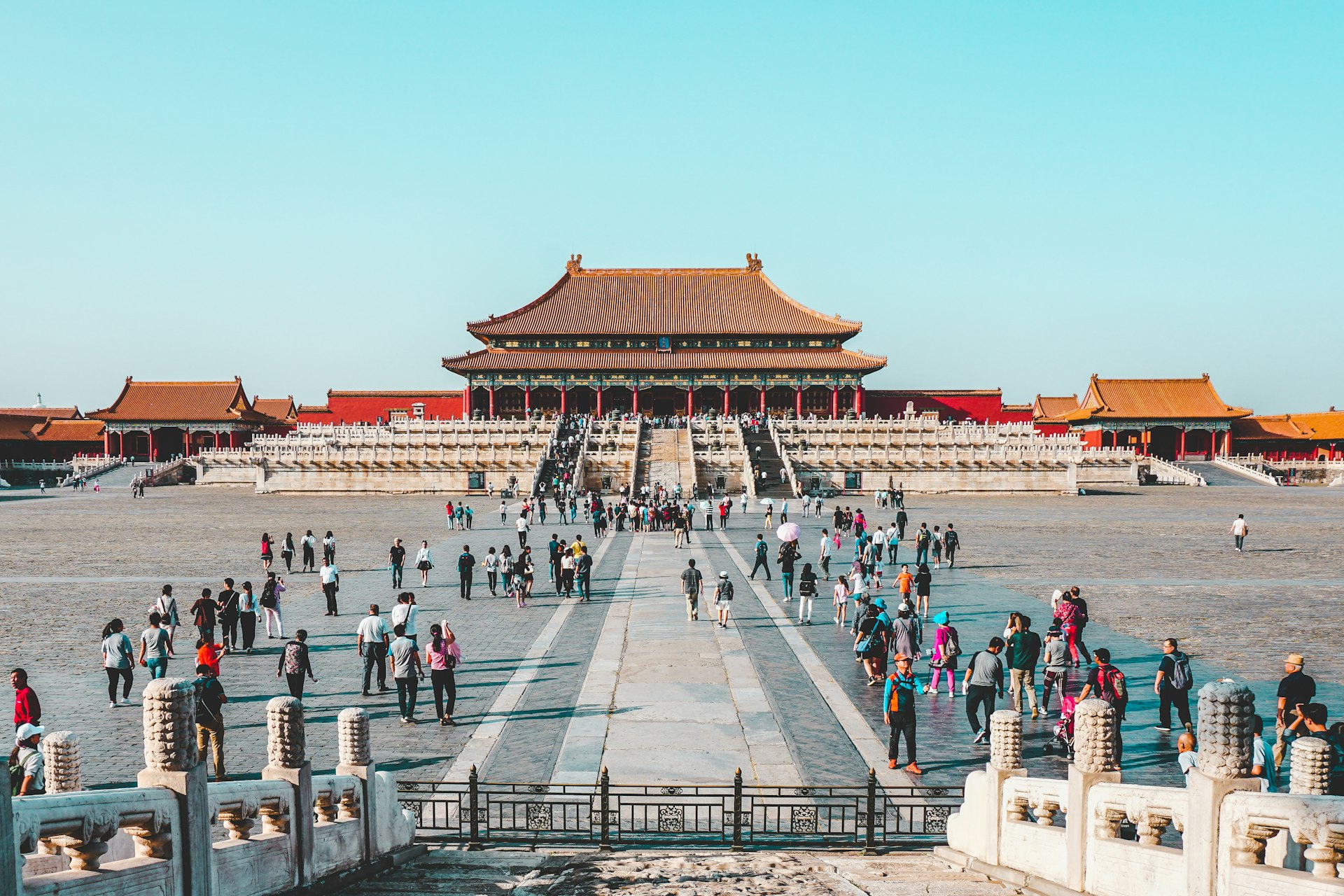
The walking is easy. Getting the ticket is the whole game. The Forbidden City — officially the Palace Museum (故宫) — is 100% advance, timed-entry, real-name booking. There are no same-day windows, no on-site sales, full stop. Show up without a reservation tied to your passport and you simply don't get in. One catch on timing: sales open only 7 days ahead, so unless you fly within a week of your palace day, you can't book it before you leave home — you'll be booking from your phone on the road, at 20:00 Beijing time. Our step-by-step Forbidden City booking guide walks through every step, plus what to do if your date sells out.
Book it, step by step
- Tickets release 7 days ahead at 20:00 Beijing time, daily cap 40,000. In May, around National Day (early Oct) and Spring Festival, they can sell out fast — set a phone alarm for 19:55.
- Pick a slot: morning (doors open 8:30; you must check in by 12:00) or afternoon (check-in opens at 11:00; last entry is 16:00 from April to October and 15:30 from November to March). Take morning if you're pairing it with Jingshan at sunset (you will — see below).
- Foreigners, read this: book on the museum's official English site, bookingticket.dpm.org.cn — you sign in with an email verification code and enter each visitor's passport details; your passport is the ticket and the entry document. The Chinese-language channel is the 故宫博物院 WeChat mini-program. The museum says it has not authorised any third party to sell its tickets, and it sells no same-day tickets — so there's no gate window to fall back on.
- Bring your physical passport — it's scanned at the gate against the booking.
- Tickets: ¥60 peak (Apr 1–Oct 31) / ¥40 off-season (Nov 1–Mar 31). Add the Treasure Gallery (+¥10) and the Clock Gallery (+¥10) if you like jade and 18th-century automaton clocks — both worth it.
- Hours: Peak 8:30–17:00 (last entry 16:00); off-season 8:30–16:30 (last entry 15:30). Closed Mondays except national holidays.
The one thing nobody warns you about — it's one-way, northbound. You enter only at the Meridian Gate (午门 / Wǔmén) on the south side, and you exit north (Gate of Divine Prowess) or east (East Prosperity Gate). You cannot backtrack. So walk it deliberately — once you're past a courtyard, that's it. The payoff: the north exit drops you directly across the street from Jingshan Park, the hill with the postcard view straight back down over the whole palace. Do them as one move.
The Forbidden City has its own English booking site — use it
The single biggest Forbidden City headache for foreigners isn't crowds, it's the booking — and you don't need a Chinese phone number or a reseller to solve it. The museum runs an official English booking site, bookingticket.dpm.org.cn: sign in with an email verification code, enter your passport details, and your passport becomes both the ticket and the entry document. The museum says it has not authorised any third party to sell its tickets. Book when sales open, 7 days ahead at 20:00 Beijing time — the daily cap is 40,000 and there are no same-day tickets to save you.
Step-by-step booking guide →Want a guide who actually knows which halls to skip? Tell us your dates on WhatsApp.
Message us →🇨🇳 Tiananmen Square Reservation & Hours (天安门广场) — free, but you must reserve
It's the world's largest public square and it costs nothing — but entry is by mandatory real-name reservation, no walk-ins. This trips up almost every first-timer.
How to do it
- Reserve 1–7 days ahead on the official Tiananmen Square reservation platform (天安门广场预约参观服务平台), per the Tiananmen Area Management Committee's notice of 24 Sep 2026. The rule covers individuals and tour groups alike — everyone books.
- Foreign visitors: book with your passport. The Committee's May 2025 answer says its web portal doesn't support non-Chinese phone numbers and points foreigners to the WeChat mini-program 天安门广场预约参观: choose Personal Reservation (个人预约) and enter each person's name and passport number. No WeChat? Someone else can book for you. Pick a slot that leaves room before your palace check-in, then enter on your booked date, time slot and security checkpoint (安检口).
- Expect security checkpoints before you're let onto the square. It sits right at the palace's south approach, so chain it straight into your Forbidden City morning.
Using a foreign phone number? Book Tiananmen Square through WeChat
The square costs nothing, but there are no walk-ins: individuals and tour groups both book under their real names, 1–7 days ahead. The Committee's May 2025 answer says the web portal doesn't support non-Chinese phone numbers, so foreign visitors are pointed to the WeChat mini-program 天安门广场预约参观 and its Personal Reservation section, where you enter a name and passport number. If you don't have WeChat, someone else can book for you. Then enter on your booked date, time slot and security checkpoint.
Step-by-step booking guide →🧱 Which Great Wall Section to Visit from Beijing (长城) — Mutianyu vs Badaling vs Jinshanling
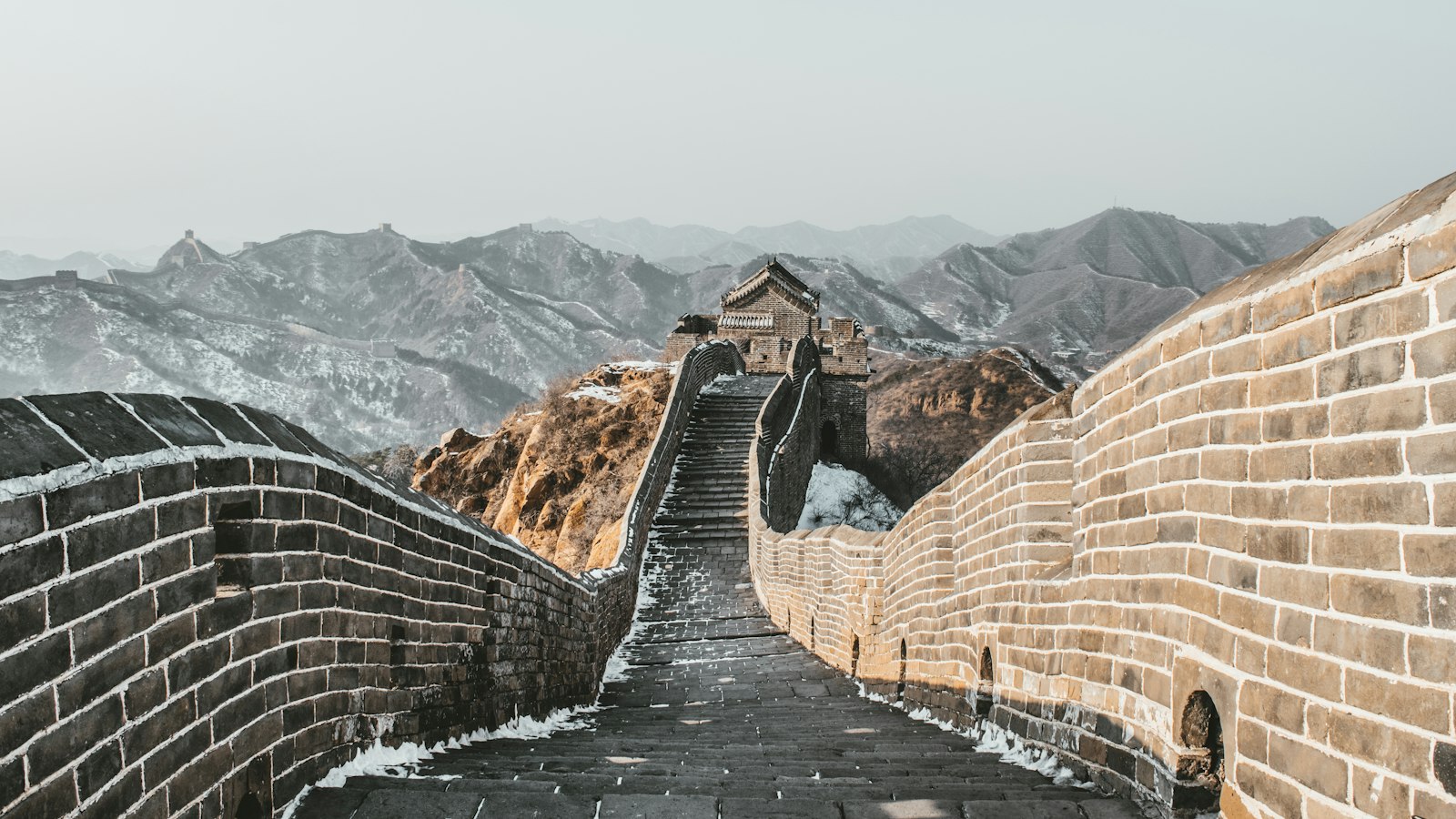
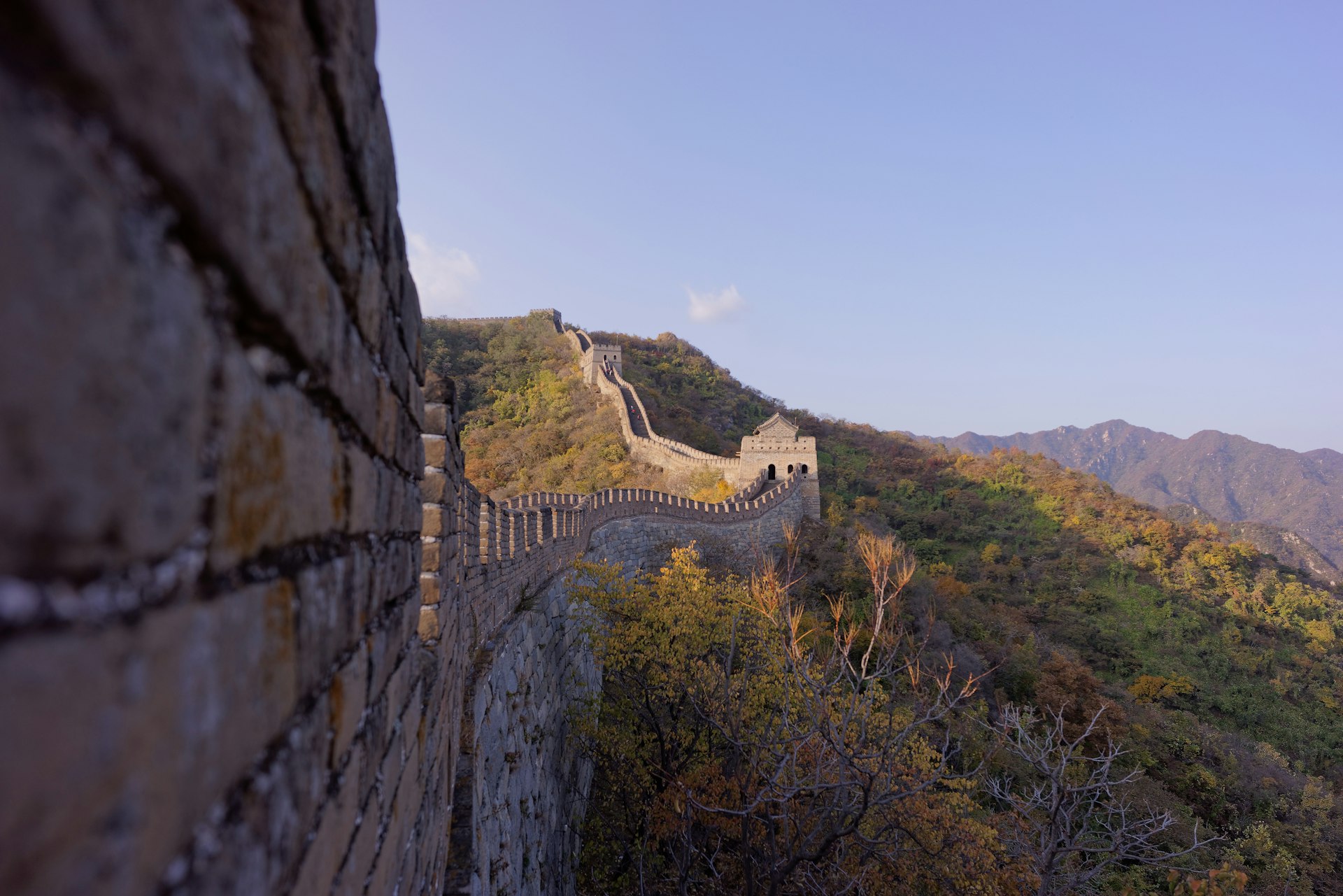
This is the #1 day trip, and the only real decision is which section. "The Great Wall" near Beijing means three very different days out. Advance online booking is now mandatory for all major sections — no on-site sales — so book whichever you pick. Here's the honest trade-off:
| Section | Best for | Crowds | Getting there | Entrance |
|---|---|---|---|---|
| Mutianyu (慕田峪) | Most first-timers — restored, cable car + toboggan, scenic, fun | Moderate | Tourist bus / 867 bus / Didi (~1.5–2.5h) | ¥40 |
| Badaling (八达岭) | The famous one + the easiest — 25-min bullet train | Heaviest | High-speed train 25 min | ¥35–40 (seasonal) |
| Jinshanling (金山岭) | Hikers & photographers — partly wild, fewest crowds | Lightest | Tour / private car easiest (~90–120 min) | ¥65 peak / ¥55 off-season |
The verdict for most readers: Mutianyu. It's the sweet spot — fully restored so it's safe and walkable, far less mobbed than Badaling, and it has the toy that makes it a day to remember: you ride a chairlift up and toboggan down a metal track through the trees.
Mutianyu, the full kit
- Entrance ¥40. The shuttle bus (parking ↔ cable-car base) is ¥15 round trip and effectively required — the walk in is long.
- Cable car / chairlift / toboggan: ¥100 one-way, ¥140 round trip. The move everyone loves: chairlift up + toboggan down = the ¥140 round ticket.
- Hours: Mar 16–Nov 15: Mon–Fri 07:30–18:00, weekends to 18:30; Nov 16–Mar 15: 08:00–17:30.
Badaling is for travelers who are tight on time and don't mind crowds: the high-speed train from Qinghe Station gets you there in ~25 minutes for ~¥20 — genuinely the fastest way to stand on the Wall. But it's the busiest section by far; on a holiday it's shoulder-to-shoulder. Entrance is ¥35–40 (seasonal).
Jinshanling is the connoisseur's pick — partly unrestored, crumbling watchtowers, real hiking, almost nobody there. Entrance ¥65 peak / ¥55 off-season. The catch is logistics: there's no clean single public bus, so a small-group tour or private car (~90–120 min out) is the sane way. Choose it if a quiet, photogenic ridge-walk beats convenience.
🚌 Exactly how to reach Mutianyu & Badaling by public transport (tap to expand)
To Mutianyu (慕田峪):
- Mubus / direct tourist bus from Dongzhimen — departures around 9:00 & 10:00am, ¥80 round trip / ¥40 one way (book ahead at beijingmubus.com or mutianyubus.com). The painless option.
- Public bus 867 from Dongzhimen Wai bus station — seasonal/limited, nonstop ~2.5h, ~¥16 one-way; return buses run roughly 2pm–5pm. Cheapest, but check it's running.
- Taxi / Didi: ~¥200–300 one way — split between 3–4 people it's reasonable and door-to-gate.
To Badaling (八达岭):
- High-speed train from Qinghe Station → Badaling, ~25 min, ~¥20 — the fastest.
- Bus 877 from Deshengmen, ~¥12, hourly, ~1.5h.
- Tourist bus from Qianmen, ~¥80 round trip.
Jinshanling note: self-transit is multi-leg and weakly served — the easiest route is genuinely a tour or private car (~90–120 min). At every section, double-check the live return-bus time before you start your hike — the last bus back can be earlier than you think.
You can stand on the Great Wall by 9am and be back for a roast-duck dinner
No multi-day expedition required. The bullet train to Badaling is ~25 minutes (~¥20); Mutianyu is a ~1.5–2.5h bus and you ride a toboggan back down. Most travelers wildly overestimate this trip — it's a half-to-full day, not a saga. The real planning isn't transport, it's picking the right section (Mutianyu = fun + fewer people; Badaling = fast + packed; Jinshanling = wild + empty) and booking online before you go.
Can't decide on a Wall section, or want a car at your hotel, a guide who knows the quiet towers, and exactly how and when to book your Wall tickets? Message us your dates on WhatsApp.
Ask us →🛕 Temple of Heaven & Summer Palace Tickets (天坛 / 颐和园) — two imperial parks, two rituals
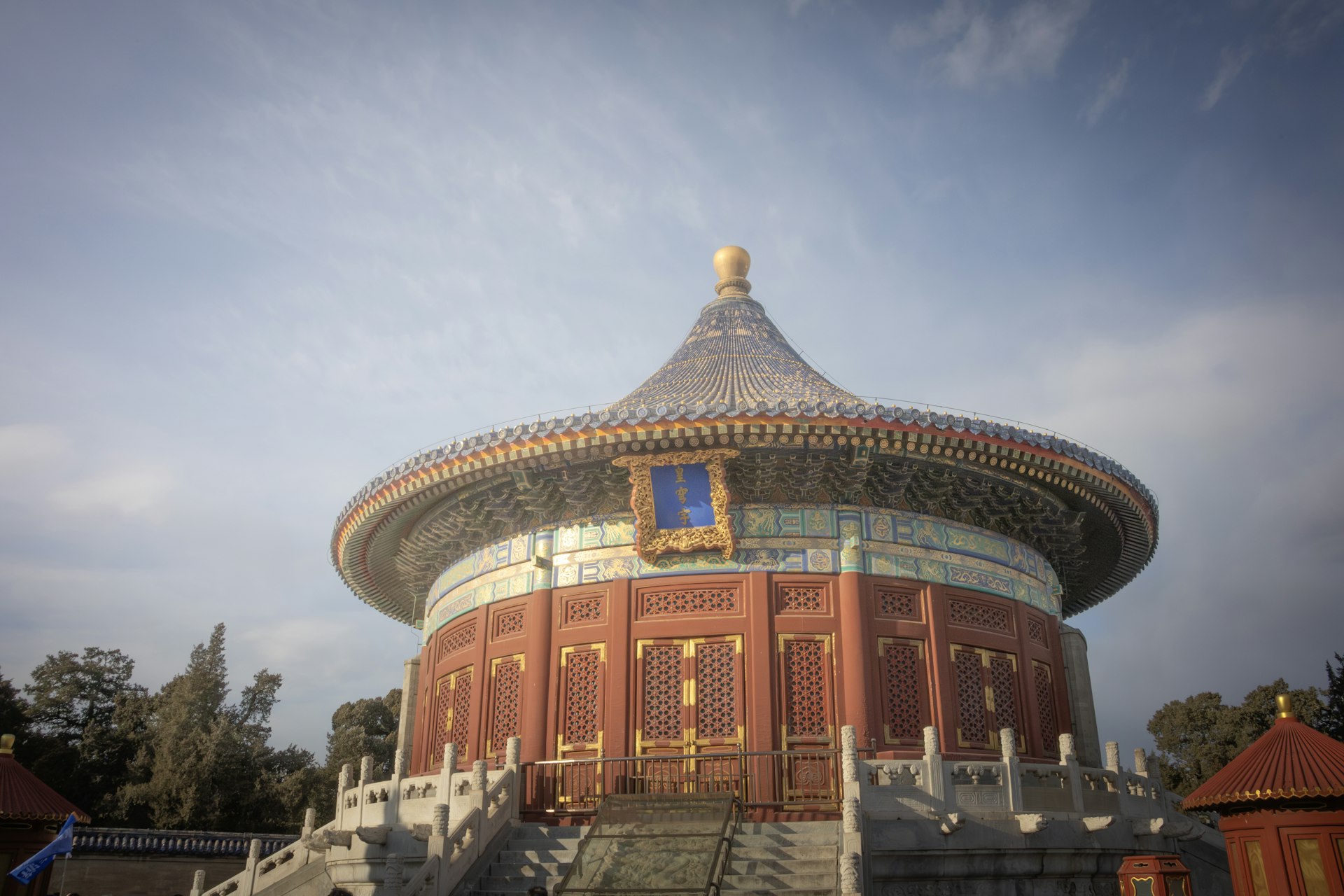
These two are where you see Beijing exhale — locals doing tai chi at dawn, retirees singing in choirs, couples rowing on a lake the emperor built. Both are cheap, both reward going early, and both want an online booking.
Temple of Heaven (天坛) — go at 7am for the real show
The triple-roofed Hall of Prayer for Good Harvests is the icon, but the secret is the park around it before the monuments open.
- Combined ticket (park + 3 main monuments): ¥34 peak / ¥28 off-season. Park-only: ¥15 peak / ¥10 off-season.
- Hours: Park gates 6:00–21:00 (peak); the paid monuments Tue–Sun 8:00–18:00, last entry 17:30 (peak) / close ~17:00 off-season. Closed Mondays except holidays.
- Booking: WeChat "Temple of Heaven Official Ticketing Platform," passport accepted.
- Insider: Get there 6–8am. That's when locals fill the park doing tai chi, ballroom dancing, jianzi (feather hacky-sack) and full choir-singing under the old cypresses — before the tour buses and before the monuments even open. That morning scene is the real Temple of Heaven; the buildings are the postcard.
Summer Palace (颐和园) — the emperor's lakeside escape
A vast royal garden of lake, hills, painted corridors and pavilions — built as the imperial summer getaway. Give it a half-day; it's big.
- Entrance ¥30 peak / ¥20 off-season. The through-ticket (entry + the inner halls/gardens) is ¥60 peak / ¥50 off-season — get the through-ticket, the inner sites are the good stuff.
- Hours: Peak (Apr 1–Oct 31) gates 6:00–19:00, inner sites 8:00–17:30, park closes 20:00; off-season (Nov 1–Mar 31) gates 6:30–18:00, inner sites 8:30–16:30, closes 19:00.
- Booking: reserve online in advance for QR entry — skips the queue.
⛰️ Jingshan Park: Best Forbidden City View in Beijing (景山公园) — the ¥2 sunset hack
The best view in Beijing costs two yuan. Jingshan (景山) is the artificial hill directly across from the Forbidden City's north exit, and the pavilion on top gives you the shot — the entire palace laid out below you down the central axis, roofs glowing gold at sunset, the city stretching behind.
- Ticket: ¥2. (Yes. Two yuan. Half-price ¥1.)
- Hours: Peak (Apr 1–Oct 31) 6:00–21:00 (last entry 20:30); off-season (Nov 1–Mar 31) 6:30–20:00 (last entry 19:30).
- The move: Do the Forbidden City south-to-north in the morning/afternoon, walk straight out the north gate and across the street into Jingshan, then climb to Wanchun Pavilion (万春亭) at the top for golden hour. Best light is sunset — arrive ~45 min before and claim a spot at the railing on the south side. It's the single highest-value thing you'll do in the city, and it's the price of nothing.
The most iconic view of imperial Beijing costs ¥2 — about 30 US cents
While tour groups pay for rooftop bars to glimpse the Forbidden City, the actual best vantage point — straight down the palace's central axis at sunset from Jingshan's Wanchun Pavilion — is a ¥2 park ticket. Beijing is full of this: world-class sights at prices that don't compute for a Western traveler. Climb the hill right after the palace's north exit and watch the gold light hit 9,000 rooms.
🦆 Best Peking Duck in Beijing (北京烤鸭) — where to actually eat it
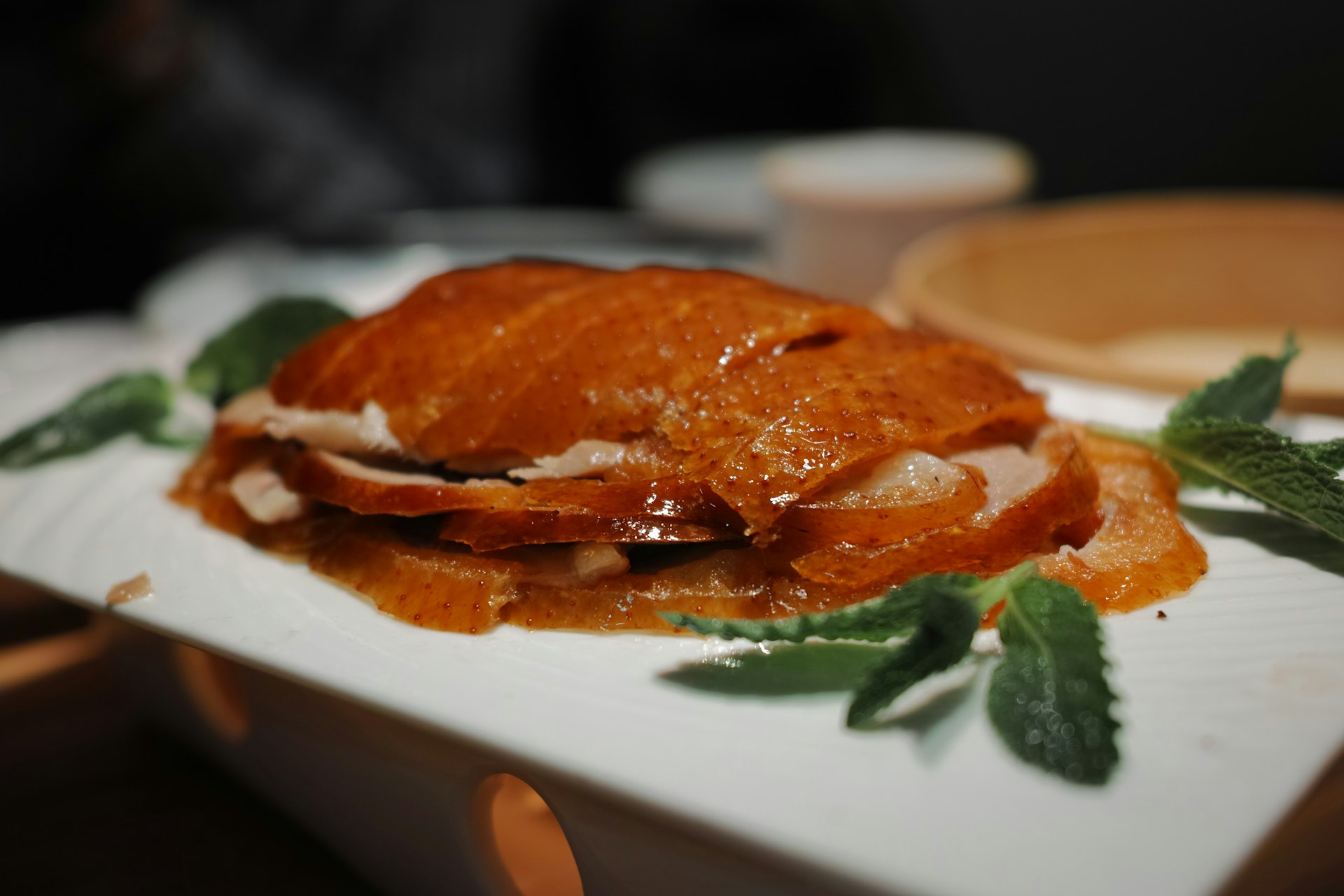
You do not leave Beijing without eating the duck. Roast duck — crackling lacquered skin, carved tableside, rolled into thin pancakes with scallion, cucumber and sweet bean sauce — is the dish this city gave the world. The only question is where, and the answer is not the most famous name. (Per-person prices swing hard depending on what else you order, so treat these as ranges.)
| Restaurant | ~Per person | The verdict |
|---|---|---|
| Siji Minfu (四季民福) | ~¥160–260/pp | The value-consensus pick (Reddit's favorite). Half-duck ~¥159, whole ~¥259. The branch near the Forbidden City has Meridian Gate views. No tourist surcharge. Book ahead — 90-minute waits on weekends. |
| Da Dong (大董) | ~¥398/pp | The upscale "experience" pick — the crispiest skin in the city, modern plating. |
| Quanjude (全聚德) | ~¥300/pp | Founded 1864, world-famous — but the 2026 consensus is blunt: everything else is better than Quanjude. Historic and very touristy. |
| Bianyifang (便宜坊) | ~¥254 | The older "closed-oven" style (vs. Quanjude's open flame) — a different, gentler roast. |
| Li Qun (利群) | confirm locally | The atmosphere pick — a duck oven crammed into an old hutong courtyard. |
Want to know which duck house to pick (the one with Forbidden City views) and how to book a table so you skip the 90-minute wait? Ask us on WhatsApp.
Ask us →🥟 Beijing Street Food & Hutongs (胡同 / 南锣鼓巷 / 簋街) — snacks, alleys & the late-night move
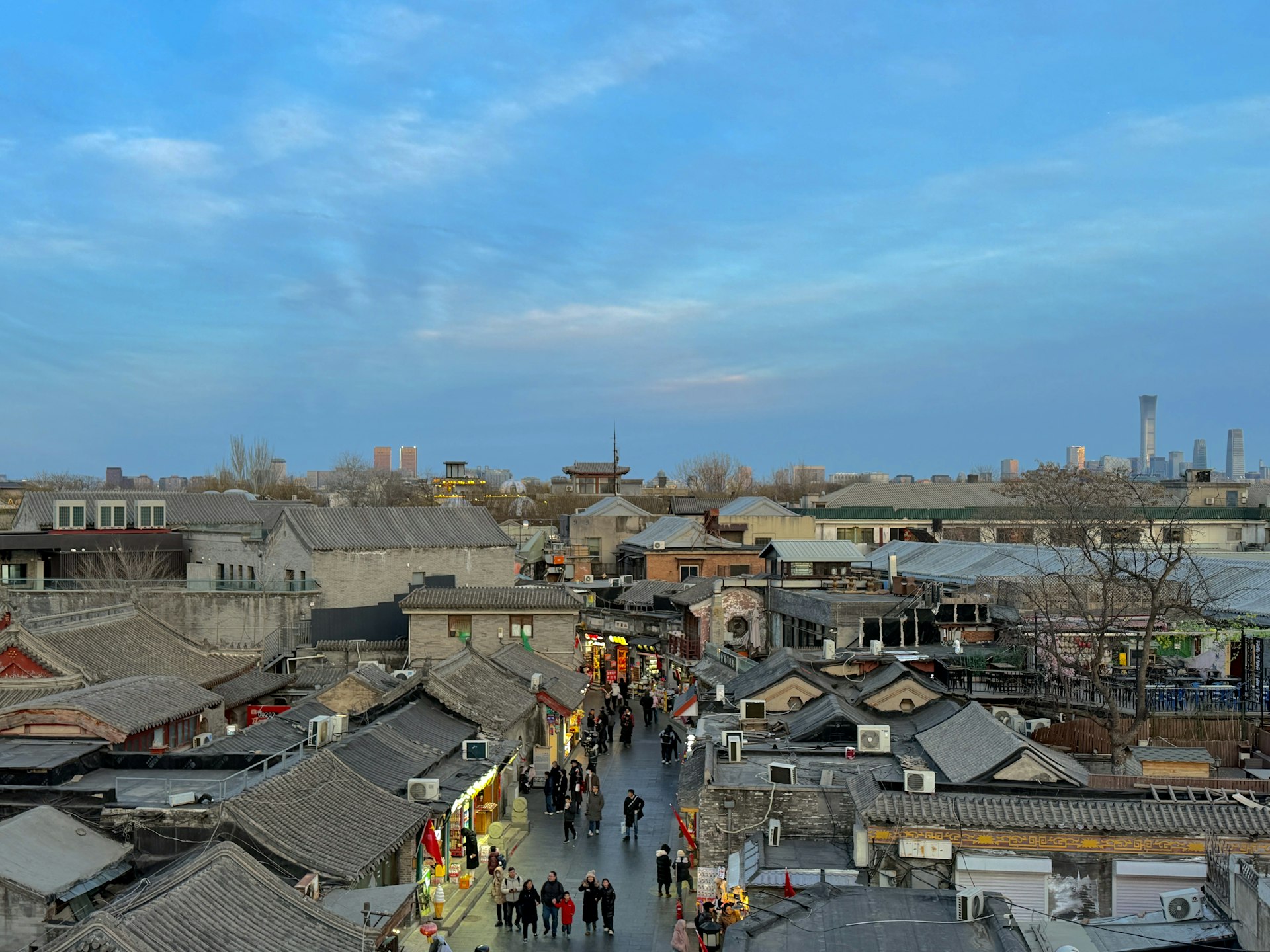
Beyond the duck, Beijing eats best in its hutongs (胡同) — the grey-brick courtyard alleys that are old Beijing — and on its food streets. Two you should know:
Nanluoguxiang (南锣鼓巷) — the snack-strip hutong
An 800-meter Yuan-dynasty hutong turned into a walkable strip of snack stalls and little shops. Touristy, yes; iconic, also yes.
- Best 10:00–20:00, ~¥100–150 average spend, and weekdays are far less mobbed.
- Eat your way down it: jianbing (煎饼 — a savory mung-bean crepe, the classic Beijing breakfast), tanghulu (糖葫芦 — candied-fruit skewers, sweet-tart and crunchy), kaoya juan (烤鸭卷 — a roast-duck wrap, duck in pancake form for walking), and chuanr (串儿 — cumin-and-chili grilled skewers).
- Insider: the side hutongs branching off Nanluoguxiang are quieter and more real than the main drag — duck into them.
Gui Jie / "Ghost Street" (簋街) — the late-night food street
Beijing's famous late-night eating street, open until ~4am. This is the night-owl move: málà crayfish (小龙虾), hotpot, chuanr, and spicy everything, the whole strip lit red and roaring at 1am. When you roll out of a Sanlitun bar hungry, this is where you go.
🌃 Beijing Nightlife: Sanlitun, Houhai & Craft Beer (三里屯 / 后海) — after dark
Here's what nobody tells foreigners: Beijing nights are genuinely fun, very safe, and the craft beer is a steal. You can bar-hop till 2am and Didi home alone without a second thought. Pick your scene:
Houhai & Gulou (后海 / 鼓楼)
A lake ringed with courtyard bars + live-music spots, lanterns on the water, Drum Tower hutongs behind. Charming, less flashy.
Beers ¥40–80Sanlitun (三里屯)
The big modern night out — cocktail bars, rooftops, late venues and megaclubs by Workers' Stadium.
Min spend ¥70–110Craft beer
Excellent and cheap — Jing-A, Great Leap (110-yr courtyard), Slow Boat. The genuine value highlight.
Pints ¥35–100The scenes, in detail
- Houhai + Gulou/Drum Tower hutongs (后海 / 鼓楼) — the intimate, atmospheric choice. A lake ringed with courtyard bars and live-music spots, lanterns on the water. The vibe: lakeside lights, small bars, live music from ~8:30pm, very safe at night — heavy police presence. Beers ¥40–80, cocktails ¥60–120. Start here if it's your first night and you want "old Beijing at night" rather than a megaclub.
- Sanlitun (三里屯) + Workers' Stadium — the obvious modern hub: cocktail bars, rooftops, late venues, and the glitzy megaclubs. International, polished, dance floors. Many venues have a minimum spend of ~¥70–110 ($10–15). Go here when you want big sound and a proper club night.
- Craft beer — the genuine value highlight. Beijing's craft scene is excellent and cheap: pints run ¥35–100 (~$5–14). The names to know: Jing-A Brewing (most innovative in town); Great Leap Brewing (try the Sichuan-peppercorn honey ale, served in a 110-year-old courtyard); Slow Boat Brewery (award-winning beer and good food).
The practical bits
Getting home: the subway stops in the late evening, so plan a Didi/taxi for the ride back — set up the app before you go out. Paying: smaller bars run smoothest on Alipay/WeChat; some glitzy clubs take cards.
A woman can jog the Liangma River at midnight here — and Beijing's crime index is half of New York's
This is the assumption to throw out. Numbeo puts Beijing's crime index at 25.4 vs New York's 50.9 — NYC's is roughly twice Beijing's. Solo female travelers routinely report walking and jogging alone past midnight around Sanlitun, the CBD and the Liangma River without harassment. The real risks are petty, not violent — pickpockets in crowds, the odd overpriced bar tab. Not "dangerous," just "watch your wallet." So yes: have the late night, take the Didi home, relax.
Want a local to take you through the good Houhai courtyard bars or the real Sanlitun spots — no tourist traps? Ask us on WhatsApp.
Ask us →🎨 798 Art District Beijing (798艺术区) — and a free shopping street
When you've had enough emperors, 798 is where Beijing gets contemporary. A sprawling complex of old Bauhaus-style factories in Chaoyang, converted into galleries, design shops, cafés and street art — gritty industrial bones, cutting-edge art inside.
- Free entry (individual galleries may charge). 2 Jiuxianqiao Road, Chaoyang District.
- The move: budget a half-day, wander with no fixed plan, duck into whichever gallery looks interesting, and break for coffee in one of the warehouse cafés. It's the city's best rainy-afternoon option and a total change of pace from the imperial circuit.
Sources — Part 3 (verified June 2026)
Forbidden City / Tiananmen: dpm.org.cn, ticket.dpm.org.cn, intl.dpm.org.cn & bookingticket.dpm.org.cn (Palace Museum: official booking rules and English booking site, no same-day tickets, no authorised third-party sellers, prices, hours, Meridian Gate one-way route, ¥60/¥40, 7-days-ahead 20:00 release, 40,000 cap, closed Mondays) · tamgw.beijing.gov.cn (Tiananmen Area Management Committee notice, 24 Sep 2026: individuals and groups book 1–7 days ahead).
Great Wall: chinadiscovery.com & travelchinaguide.com (Mutianyu ¥40, Badaling ¥35–40, Qinghe high-speed train ~25 min ~¥20, bus 877 ¥12, bus 867 ~¥16) · en.mutianyugreatwall.com (Mutianyu hours, ¥15 shuttle, ¥100/¥140 cable car + toboggan) · beijingmubus.com (Dongzhimen Mubus ¥80 RT) · viator.com (Jinshanling ¥65/¥55 + tour routing).
Parks & Jingshan: travelchinaguide.com (Temple of Heaven ¥34/¥28) · summerpalace-china.com (Summer Palace ¥30/¥60 through-ticket, hours) · english.beijing.gov.cn (Temple of Heaven booking, Jingshan hours) · trip.com (Jingshan ¥2).
Food & nightlife: gastroroam.com, chinadiscovery.com, chinahighlights.com (Siji Minfu / Da Dong / Quanjude / Bianyifang / Li Qun per-person ranges) · airial.travel (Nanluoguxiang) · chinahighlights.com (Ghost Street till ~4am) · routesofchina.com & tabiji.ai (Houhai nightlife, Sanlitun min spend, craft beer ¥35–100) · numbeo.com (crime index).
798 / Wangfujing: us.trip.com, thechinaguide.com. Prices & hours shift on Chinese public holidays — confirm load-bearing ones on the official page.
Day Trips from Beijing
You came for the Forbidden City and the duck. But the single most jaw-dropping thing you'll do isn't in Beijing at all — it's an hour or two north, riding the spine of the mountains: the Great Wall. And here's the part nobody tells you until you've booked the wrong one: "the Great Wall" is not one place. It's a string of different sections, each restored to a different degree, each mobbed (or blissfully empty) to a different degree, and crucially, each reached a completely different way. This section does the deep dive on getting to each one — plus the near-Beijing add-ons most people miss, and how to thread it all into a 2-, 3-, or 5-day plan.
🧱 Great Wall Day Trip from Beijing — pick your section, then your route
One-line refresher from Part 3, because it's the whole decision: Mutianyu is the all-rounder most first-timers should pick (restored, cable car + toboggan, far calmer than Badaling). Badaling is the famous, crowded, easiest-by-rail one. Jinshanling is the wild, half-ruined, near-empty hiker's section, furthest out. Now — the part that actually decides your morning — how you get to each.
Getting to the most famous structure on the planet costs less than your airport coffee
Entrance to Mutianyu or Badaling is ¥40 — about US$5.50 — and Jinshanling ¥65. The catch isn't price, it's logistics: bus 877 to Badaling is ¥12 (~US$1.70), the bullet train from Qinghe gets you to Badaling in ~25 minutes for ~¥20, and you can DIY the whole Mutianyu day on an ¥80 round-trip coach from Dongzhimen. The wall is the cheapest "wow" you'll buy on this trip; the only real cost is reading this section so you board the right thing.
More on this: China Essentials — getting around (rail, metro, Didi) →🥇 Mutianyu Great Wall — how to actually get there (the one to pick first)
If you do one Wall, do this one — restored and safe, set in gorgeous forested mountains, noticeably calmer than Badaling, and the only major section where you ride a cable car up and toboggan down. Tickets and the cable-car/toboggan breakdown are in Part 3; here's getting there and back. Mutianyu is roughly 1.5 hours north of the city. Three sane ways, cheapest to comfiest:
| How | Price | Time | The catch — read this |
|---|---|---|---|
| 🚌 Mubus / direct tourist coach | ¥80 round trip (¥40 one way) | ~1.5 hr each way | The DIY sweet spot. Departs Dongzhimen (东直门) at roughly 09:00 and 10:00; book a seat ahead online (beijingmubus.com / mutianyubus.com) because it's a fixed-departure coach. |
| 🚍 Public bus 867 | ~¥16 one way | ~2.5 hr nonstop | The rock-bottom option, from Dongzhimen Wai bus station — but it's seasonal and limited (mornings out, returns roughly 14:00–17:00). Confirm it's running; only worth it if the Mubus is sold out. |
| 🚗 Taxi / Didi | ~¥200–300 one way | ~1.5 hr | Door-to-door. Worth it split between 2–4 people. Cars are scarce up at Mutianyu for the return, so keep the same driver waiting or pre-book the ride back. |
One more on-site fare to expect
From the Mutianyu parking/ticket area up to the wall base you take a short shuttle (¥15 round trip) — basically required, it's a long steep walk otherwise — then your cable car / chairlift / toboggan. (Full on-wall pricing: Part 3.)
Insider play (do this): Take the earliest coach — the ~09:00 Mubus from Dongzhimen — and be on the wall by around 10:30, ahead of the lunchtime tour-bus surge. From the cable-car drop-off, walk away from the gondola exit toward the higher, steeper towers — the day-trip crowds clot around the entrance and rarely hike far. Twenty minutes of effort buys you whole stretches of empty rampart. Then toboggan down for the grin you'll wear in every photo. Budget a full day, back downtown by mid-to-late afternoon.
🚆 Badaling Great Wall — the bullet-train section (famous, crowded, easiest)
The headline section — most famous, most restored, most crowded, and by far the easiest to reach without a car. This is the Wall from every postcard and every world-leader handshake. The trade-off is real: on weekends and holidays it's a shoulder-to-shoulder shuffle. But the access is unbeatable — a high-speed train and a cheap direct bus both run here, which no other section can say. Entrance ¥35–40, seasonal (sources split — budget ¥40).
| How | Price | Time | Where from / the catch |
|---|---|---|---|
| 🚄 High-speed train | ~¥20 | ~25 min | The fastest way to any Wall section, full stop. Board at Qinghe Station (清河) — itself on the metro — to Badaling in about 25 minutes. From the station a signed walk/shuttle goes up to the wall. |
| 🚌 Bus 877 (direct) | ~¥12 | ~1.5 hr | The classic budget move. Leaves from Deshengmen (德胜门) — a short walk east of Jishuitan metro (Line 2) — roughly hourly in the mornings, nonstop. |
| 🚐 Qianmen tourist bus | ~¥80 round trip | ~1.5 hr | A round-trip coach from the Qianmen tourist distribution center — handy if you're based south near Tiananmen. |
Insider play: Go on a weekday, take the first train or the first bus 877 (be at Deshengmen by ~07:00), and climb toward the steeper, higher towers — the most dramatic stretch, and the bit package crowds skip because it's a workout. If you can only go on a weekend, brace for the crush — or switch to Mutianyu. Budget a half to full day.
A bullet train to the Great Wall takes 25 minutes and costs less than a sandwich
Most people assume the Great Wall is a half-day expedition with a tour booking. Not Badaling: a high-speed train from Qinghe Station puts you at the wall in about 25 minutes for roughly ¥20 (~US$3). It's the same train tech that crosses provinces at 300 km/h — pointed at a 2,000-year-old fortification. Show up, tap your passport at the gate, ride.
More on this: China Essentials — getting around (rail, metro, Didi) →🥾 Jinshanling Great Wall — the wild one (and why it wants a car)
The connoisseur's Wall — wild, quiet, built for hikers and photographers. Jinshanling is the furthest of the three (roughly 2–2.5 hours out), partly restored and partly raw, rolling across remote ridges with watchtower after watchtower and barely another soul in frame. The payoff is the best Great Wall photography near Beijing. The price is distance, effort, and fiddlier transport. Entrance ¥65 peak (Apr 1–Oct 31) / ¥55 off-season (Nov 1–Mar 31).
- There's no single easy public bus the way Badaling has one. The clean way is an organized small-group tour or a private car (~90–120 min each way) — a morning tourist coach typically stages out of the Wangjing (望京) area in the city's northeast.
- DIY is possible but multi-leg — a long-distance bus plus a local transfer near the wall — and the schedules are exactly the kind that strand you if the last connection is missed. Confirm the current routing and the return time locally before you commit.
The honest trade-off: Because of the distance and the awkward connections, Jinshanling is the one section genuinely worth a tour or private car — it deletes the timing anxiety and most tours fold in lunch and hotel pickup. Pick Jinshanling only if the hike and the empty photos are the whole reason you're going. Otherwise Mutianyu gives you most of the drama at a fraction of the hassle. Budget a full day, and then some.
You can hike the Great Wall with almost nobody on it
Everyone pictures the Wall as a human traffic jam — and at Badaling on a holiday, fair enough. But Jinshanling, a couple of hours northeast, is the opposite: partly-wild ramparts rolling across empty ridges, tower after tower, and on a weekday you can walk for long stretches with the Wall essentially to yourself. Same Wall. Completely different day — the one the photographers quietly keep for themselves.
🚄 The train-and-ticket logic that unlocks the Wall (and every day trip)
Whether you're taking the bullet train to Badaling or a regular train out of town, the mechanics are the same and worth knowing once:
- Book on Trip.com or the official 12306 website (both have English versions). Trip.com is smoother for non-Chinese passports; 12306 is the source of truth.
- Your physical passport is your ticket — tap it at the gate (foreigner gates are marked; if the auto-gate balks, the staffed window beside it waves you through in seconds).
- Arrive ~30 minutes early. Chinese high-speed stations are airport-sized; security plus finding the platform eats time.
- For the metro to your departure station, pay with the Alipay/WeChat ride QR (set up in Part 2) — cheaper than tapping a foreign card at Beijing turnstiles.
🏯 Beyond the Wall: other near-Beijing day trips
The Wall is the headline, but two more are worth knowing — both with a heads-up:
- Ming Tombs (十三陵 / 明十三陵) — the grand burial complex of 13 Ming emperors, with the atmospheric tree-lined Sacred Way of stone guardian animals. It sits near Badaling and is very commonly bundled with it on tours, so you can knock out Wall + Tombs in one day. (We didn't price it this pass — confirm tickets and hours locally before you build a day around it.)
- Summer Palace (颐和园) — technically in the city (northwest), not a true day trip, but a sprawling imperial lake-and-garden retreat that eats a half-day on its own. Full ticket details are in Part 3 (¥30 peak / ¥60 through-ticket) — slot it into a slower city day rather than a hard "day trip."
For the port city next door, see our Tianjin guide; it also covers getting from the Tianjin cruise terminal to Beijing.
Quick honesty note
Beyond the Great Wall, the near-Beijing day-trip options (Ming Tombs, and farther afield Chengde) weren't deep-priced in our research pass. We'd rather flag that than invent a fare — confirm any of these on Trip.com or the official channel before you go. The Wall is the one we can send you to with full confidence.
🗓️ Beijing Itinerary: 2, 3 & 5 Days — the points actually strung together
These plug straight into Part 3 (Forbidden City, Tiananmen, Temple of Heaven, duck, hutongs, nightlife) and Part 4 above. Times assume a central base around Wangfujing / Dongcheng. One golden rule baked into every day: book the Forbidden City and Tiananmen days ahead (Forbidden City slots release 7 days out at 20:00; Tiananmen is free but reservation-mandatory) or the whole plan falls apart. Tap a day to open the hour-by-hour plan.
⏱️ 2 Days — the imperial essentials
Day 1 Tiananmen, the Forbidden City & a ¥2 sunset most people miss
- 08:00Tiananmen Square on the reservation you made 1–7 days ahead (check the platform for entry times). The world's most famous square before it fills.
- 08:30–12:00Straight north into the Forbidden City on your 7-days-ahead, 20:00-release ticket. Three-plus hours, one-way south-to-north — you can't backtrack — out the north gate.
- 12:30Lunch in the lanes; add the Treasure / Clock galleries (+¥10 each) if you bought them.
- 15:00–16:30Cross straight to Jingshan Park (¥2), directly across from the Forbidden City's north exit.
- ~SunsetClimb to Wanchun Pavilion about an hour before sundown for the golden-hour panorama down the central axis — the cheapest world-class view in Beijing, for two yuan.
- 19:30Peking duck night. Siji Minfu for taste-and-value; the branch near the Forbidden City has Wumen views if you can snag it.
Day 2 Temple of Heaven at dawn, hutongs & a Houhai nightcap
- 06:30–08:00Temple of Heaven (天坛) as the park opens, when locals do tai chi, dance, choir-singing and chess under the trees. This is the real scene, gone by mid-morning.
- 10:30Metro up to the Gulou / Drum Tower area.
- 11:00–14:00Nanluoguxiang (南锣鼓巷) and the Shichahai / Houhai hutong maze — rent a Meituan bike or take a pedicab, snack as you go (jianbing, tanghulu, a roast-duck wrap).
- 15:00Wangfujing (王府井) snack street + malls, an easy walk back toward base.
- 19:30Houhai (后海) after dark: lakeside bar street, lantern-lit, live music from ~8:30pm, heavy police presence. A perfect, atmospheric last night.
⏱️ 3 Days — the sweet spot (add the Great Wall)
Days 1–2 As above
Run the 2-day plan, just breathe a little more — linger at the Temple of Heaven, add the Summer Palace if you're moving fast.
Day 3 Great Wall (Mutianyu)
- 09:00Catch the ¥80 Mubus coach from Dongzhimen (booked the night before). ~1.5 hr.
- ~10:30On the wall ahead of the lunchtime crowd. Shuttle ¥15 up to the base, then cable car or chairlift up.
- 10:30–13:00Walk away from the cable-car exit toward the higher towers — empty rampart, watchtowers into the haze.
- 13:00Toboggan down (¥100 one-way) for the best two minutes of your trip. Lunch at the base.
- 15:00Coach back; downtown by mid-to-late afternoon. Easy dinner — maybe Ghost Street / Guijie (簋街) for late-night spicy crayfish and hotpot.
⏱️ 5 Days — the full Beijing
Days 1–3 The 3-day plan above
Imperial core + Great Wall, unrushed.
Day 4 Summer Palace, 798 art & Sanlitun
- 09:00Summer Palace (颐和园) — the imperial lake, Longevity Hill, the Long Corridor. A serene half-day.
- 13:30Lunch, then taxi/metro to the 798 Art District — free to wander the old Bauhaus factory zone, cafés and street art everywhere.
- 19:00Sanlitun (三里屯) for the modern night out: rooftop bars, the big clubs by Workers' Stadium. Or hit Jing-A, Great Leap, or Slow Boat for on-site craft beer.
Day 5 Slow Beijing (or a wilder second Wall)
Option A (slow): A drift day — a long morning in a hutong you haven't seen, a courtyard teahouse, the Wangfujing church and snack lane, one last duck or a Ghost Street feast. The day people actually remember.
Option B (ambitious): A second, wilder Wall section — Jinshanling for the hike and the empty photos (full day, tour- or car-friendly), for travelers who fell hard for the Wall.
Want this turned into a real plan — the right Wall section with transport sorted, and a guide who knows which duck house? Send us your dates on WhatsApp.
Send dates →🛏️ Where to Stay in Beijing: Best Areas — with real price bands
No booking links, no commission — just where each type of traveler should sleep and what you'll roughly pay. Nightly bands swing hard with season and holidays (Golden Week, Chinese New Year spike everything), so confirm live at booking — treat USD figures as indicative.
| Area | Best for | Why here | Rough nightly band |
|---|---|---|---|
| 🛍️ Wangfujing / Dongcheng (王府井) | First-timers, sightseers | The most central base — walk to the Forbidden City, Tiananmen, and the hutongs, safest and most tourist-friendly, with the broadest budget-to-luxury range. Where I'd put a first-timer, full stop. | Budget through luxury; widest spread in the city |
| 🏮 Hutong / Gulou–Drum Tower (鼓楼) | Atmosphere-seekers | Courtyard siheyuan houses, hidden bars, lantern-lit lanes — the most authentic Beijing. Trade-off: rooms can be small, more Didi hops to the metro. | Hutong hostels ~$20–40; courtyard boutiques higher |
| 🍸 Sanlitun (三里屯) | Nightlife & Western comfort | International bars, restaurants and Western hotel brands — the "least Chinese," easiest-to-adjust district; ~6–7 km / ~20-min taxi from the Forbidden City. | ~$90–450 depending on the property |
| 💴 Qianmen (前门) | Budget-central | Central and traditional, more affordable than Wangfujing — a solid value base a short metro hop from the imperial core. | Mid-range / budget |
| 🌊 Jingshan / Beihai area | Lakeside + central | Right by Beihai Park and the imperial center, quiet but walkable to the big sights. | ~$60–200 |
My honest pick: Base in Wangfujing / Dongcheng if it's your first time — you walk to the two biggest sights and you're in the safest, most legible part of town. Pick Sanlitun if nightlife and Western comfort matter more than imperial-core proximity. Sleep in a hutong courtyard for at least a night or two if atmosphere is what you came for — just know you'll be hopping a Didi to the metro more often. (For scale, Beijing's citywide hotel spread runs roughly budget ~$21 / mid ~$63 / luxury ~$206 a night, but that moves a lot by season and area.)
A bed in a Beijing courtyard costs what a highway motel costs back home
A hutong hostel bed — inside a genuine grey-brick siheyuan courtyard, ten minutes from the Drum Tower — runs roughly $20–40 a night, and Beijing's budget hotels average around $21. You can sleep in living history for less than a Motel 6 off the interstate. The "central and affordable" trade-off just doesn't exist here.
Sources — Part 4 (verified June 2026)
Great Wall tickets/transport: en.mutianyugreatwall.com (Mutianyu on-site shuttle ¥15 / cable-car / toboggan, hours), travelchinaguide.com & chinadiscovery.com (Mutianyu Mubus ¥80 RT / bus 867 ~¥16 from Dongzhimen, Badaling bus 877 ¥12 from Deshengmen & Qinghe high-speed train ~25 min ~¥20, Badaling ¥35–40 ticket), beijingmubus.com (Mutianyu direct coach), viator.com & machupicchu.org (Jinshanling ¥65/¥55 ticket + tour/private-car routing, Wangjing staging).
Trains: Trip.com / the official 12306 website (both have English versions; passport = ticket; arrive 30 min early).
Beyond the Wall: Ming Tombs & Chengde not deep-priced this pass — confirm tickets/hours locally; Summer Palace ticket details in Part 3.
Hotels / areas: unusualnomad.com (hutong hostels ~$20–40), moving-jack.com (Sanlitun ~$90–450, Jingshan/Beihai ~$60–200, citywide budget ~$21 / mid ~$63 / luxury ~$206), travelchinawith.me (Wangfujing, Qianmen). Nightly bands swing with season/holidays — confirm live.
Know Before You Go
🧠 Culture, money & health — the fine print
🤝 Culture shocks & etiquette (the 6 that trip up first-timers)
- No tipping. Anywhere. Restaurants, taxis, hotels — none of it. Trying to tip causes confusion, not gratitude. Keep your change.
- Carry your own tissues + hand sanitizer. Public restrooms (and many squat toilets) often have neither paper nor soap. A pack of tissues is the single most useful thing in your bag.
- You order by scanning a QR code at most restaurants — point your camera at the table sticker, a menu opens, you tap, you pay, food arrives. No waiter to flag. (Menu's usually Chinese — Google Translate's camera, on your eSIM, reads it instantly.)
- Tap water is NOT drinkable — locals boil it or drink bottled. Every hotel room has a kettle and free bottles; restaurants serve hot water or tea by default.
- Strangers may ask to take a photo with you — genuine friendly curiosity, especially away from the big sights, not a scam. Smile, say yes or politely wave it off. (The one real scam — the "tea house / art student" invite — is in the safety FAQ below.)
- Personal space & volume run differently — expect closer queuing, louder restaurants, some throat-clearing. It's cultural, not rude. Roll with it.
💰 What's dirt-cheap vs. surprisingly pricey
Absurdly cheap (spend freely):
- The Great Wall — entrance ¥40; bus 877 to Badaling is ¥12, the bullet train ~¥20.
- Subway & buses — single metro trips ¥2–10 by distance; buses scan-on/scan-off for a few mao.
- The Airport Express — a flat ¥25 from Capital Airport into the city.
- Street food & old-Beijing snacks — a great cheap meal for a handful of yuan; ~¥100–150 buys a full graze down Nanluoguxiang.
- Didi — cross-town rides often ¥20–40, cheaper than a metered taxi.
- The Jingshan sunset — the best view in the city is ¥2.
Surprisingly pricey (budget for it):
- Craft beer & Western-style bars — pints run ¥35–100 ($5–14), cocktails ¥60–120: full Western prices, not the bargain hotpot is.
- Fine-dining duck — Da Dong runs ~¥398/person, a world away from a value duck house.
- Imported goods & Western groceries / brunch — that familiar shampoo, cheese, or "normal" Western breakfast carries a premium.
- Big-club bottle service & imported spirits — a table at a Workers' Stadium club is not cheap, even where the beer is (many venues carry a ~¥70–110 minimum spend).
🚑 Emergencies & health (save these before you fly)
- Don't drink the tap water — bottled or boiled only. Your hotel kettle is your friend; ice in proper restaurants/cafés is fine.
- Watch the air on spring days. Beijing's air is best in autumn; spring (especially March–April) can bring sandstorms and dust from the Gobi, occasionally spiking the AQI. Check a live air-quality reading before booking an outdoor-heavy day. Autumn rarely needs it.
- Pharmacies (药店) are everywhere, well-stocked, cheap, and no prescription needed for basics — point to the problem or show a translated note.
- Major hospitals have international/VIP desks for foreigners. Travel insurance is still strongly worth having.
❓ FAQ — straight answers to what everyone actually asks
Do I need a visa to visit Beijing in 2026?
Maybe not. 50 countries get 30 days visa-free for tourism — most of Europe, plus the UK & Canada since 17 Feb 2026, Australia, NZ, Japan, Korea, Brazil, and more (no onward ticket required; it can be a round trip). The USA is not on that 30-day list — but Americans (and citizens of 56 other countries — 57 in total) are eligible for the 240-hour (10-day) visa-free transit if they meet the policy's conditions, including entry through an approved port and an onward ticket with a confirmed date and itinerary, leaving within 240 hours for a third country or region different from their departure country or region (e.g. Seoul or Bangkok; whether Hong Kong or Macao counts is our inference, not an official rule, so confirm with your airline or the immigration hotline, +86 12367, before you book). Fill the China Digital Arrival Card and enter via either Beijing airport — Capital (PEK) or Daxing (PKX). Always confirm the current list on en.nia.gov.cn before booking — it changes. (Full breakdown: Part 1.)
How do I book Forbidden City tickets as a foreigner — and when do they go on sale?
Book the moment slots open, with your passport, on the official English site. It's 100% advance, timed-entry, real-name reservation — no same-day or on-site window sales. Tickets release 7 days ahead at 20:00 Beijing time, the daily cap is 40,000, and popular dates can sell out fast. Book on the Palace Museum's official English site, bookingticket.dpm.org.cn (sign in with an email verification code, passport used for booking and entry), or its WeChat mini-program. The museum says it has not authorised any third party to sell its tickets. Price ¥60 peak / ¥40 off-season; Treasure and Clock galleries +¥10 each. Closed Mondays. Enter only at the Meridian Gate (south side); it's a one-way northward route. (Full guide: Part 3, or our step-by-step booking guide.)
Is Tiananmen Square really free — and do I need to book it?
Free, but advance booking is mandatory — no walk-ins. The Tiananmen Area Management Committee's notice of 24 Sep 2026 says individuals and tour groups alike must reserve 1–7 days ahead on the official Tiananmen Square reservation platform. Foreign visitors book with a name and passport number in the Personal Reservation section of the WeChat mini-program 天安门广场预约参观 — the Committee's May 2025 answer says the web portal doesn't support non-Chinese phone numbers, and that if you don't have WeChat, someone else can book for you. It sits at the Forbidden City's south approach, so chain the two together. (Full guide: Part 3.)
Which Great Wall section should I visit from Beijing?
Mutianyu for most people. Fully restored, far less crowded than Badaling, beautiful mountains, and a cable car up + toboggan down. Take Badaling if you're on public transit or tight on time (the most-crowded section, but easiest — a ~25-min bullet train from Qinghe ~¥20, or bus 877 from Deshengmen ¥12). Choose Jinshanling only if you want a real hike and near-empty photos — furthest (~2–2.5 hr) and no easy single public bus, so most worth a tour or private car. Entrance ¥40 at Mutianyu and Badaling, ¥65 peak at Jinshanling. (Full transport breakdown: Part 4.)
How do I get to the Great Wall from Beijing without a tour?
Easily — for Mutianyu and Badaling. Mutianyu: the ¥80 round-trip Mubus coach from Dongzhimen (~09:00 & 10:00, book online ahead), or the seasonal public bus 867 (~¥16) from Dongzhimen Wai, then the ¥15 on-site shuttle up to the wall. Badaling: the ~25-min high-speed train from Qinghe Station (~¥20), or bus 877 from Deshengmen (¥12, ~1.5 hr) near Jishuitan metro. Only Jinshanling (far, no easy single bus) is really worth a tour or private car. (Step-by-step: Part 4.)
Will Google, WhatsApp, Instagram and Google Maps work in Beijing?
Not on local WiFi/SIM — but there's a clean fix. China blocks Google, WhatsApp, Instagram and the rest. Install an international travel eSIM (Airalo, Nomad, Holafly, Saily) before you fly — it routes your data offshore, so all your apps just work, no separate VPN needed. Set it up at home; it activates the moment you land. One catch: even on an eSIM, Google Maps data in China is patchy — use Apple Maps, Didi's in-app navigation, or Amap (高德) like locals. The good news underground: the subway has full bilingual signage and English ticket machines. (eSIM comparison: Part 2.)
Can I really pay everywhere with just my foreign card?
Yes — via QR, not the card itself. Bind your Visa/Mastercard inside Alipay or WeChat Pay (do it before you arrive, after the passport real-name step) and you scan-to-pay almost everywhere, from duck houses to street stalls to the metro gate. Beijing was the first mainland city to accept a contactless foreign-card tap-in (since 2026), but it costs more than the Alipay/WeChat ride QR, so use the QR. Keep some cash as backup. Alipay and WeChat Pay set spending limits for foreign cards — see Essentials. Expect a ~3% fee above ¥200. (Setup steps: Part 2.)
How do I get from the airport into Beijing?
Beijing has two airports. Capital (PEK): the Capital Airport Express metro, ~20–30 min to Dongzhimen, ¥25 flat (trains every 8–10 min, ~6:35am–11pm); or Didi ~¥60–90, with metered taxi pricier at ~¥150–200. Daxing (PKX), far south: the Jingxiong intercity high-speed train, ~29 min to Beijing West Station, ¥25 second class (then metro Lines 7 & 9), or the Daxing Airport Express subway to Caoqiao (fare ~¥35, confirm locally); a taxi/Didi runs higher since Daxing is far out. (Full options: Part 1.)
When's the best time of year to visit Beijing?
Autumn — mid-September through late October — is the consensus #1: crisp blue skies, dry, comfortable (~13–23°C), golden foliage, and the best air quality of the year. Late April to mid-May is the other great window (warm, cherry blossoms, sandstorm season usually over). Spring (Mar–Apr) can bring sandstorms from the Gobi; summer is hot, humid and rainy; winter is cold and dry (but the Forbidden City in snow, with the fewest tourists, is special). Avoid Golden Week (Oct 1–7) — but the week after is one of the best windows of the year. (Full season guide: Part 1.)
Where should I eat Peking duck in Beijing?
Siji Minfu (四季民福) for most people — the locals'-favorite value all-rounder (~¥160–260/person; half-duck ~¥159, whole ~¥259), with a branch near the Forbidden City that has Wumen views. Book ahead — weekend waits hit 90 minutes. Splurge at Da Dong (大董) for the crispiest skin in the city (~¥398/person). The famous Quanjude (est. 1864) is iconic but the 2026 consensus is "everything else is better" — historic and touristy at ~¥300/person. Also worth knowing: Bianyifang (older closed-oven style, ~¥254) and Li Qun (atmospheric old hutong courtyard). (Full food section: Part 3.)
Is Beijing safe at night — especially for solo travelers?
Very. Beijing's crime index is 25.4 versus New York's 50.9 (Numbeo) — i.e. NYC's is about double — with heavy CCTV and a strong police presence. Solo women routinely report walking and jogging alone past midnight (Sanlitun, the CBD, the Liangma River) without harassment, and Houhai's bar street has heavy police presence. The real risks are not violent crime — they're petty and scam-based: pickpocketing in crowds and on the subway, overpriced bar tabs, and the classic "tea house / art student" invite (a friendly English-speaker walks you to a teahouse, then hits you with an outrageous bill). Decline unsolicited "let's go for tea" invitations and you've removed most of the risk. (Full context: the safety box in Part 2.)
How many days do I need in Beijing?
3–4 days covers the city core plus the Great Wall (Forbidden City + Tiananmen, Temple of Heaven, hutongs, duck, nightlife, and a Mutianyu Wall day). 5 days lets you add the Summer Palace, 798, and Sanlitun, and either a second, wilder Wall section (Jinshanling) or a slower drift day in the hutongs. (Hour-by-hour plans: Part 4.)
Is the Great Wall worth it as a day trip, or do I need to stay overnight?
A day trip is plenty — for Mutianyu and Badaling especially, you're door-to-door in a day with hours of actual wall time. Take the earliest coach/train, walk away from the entrance crowds toward the higher towers, and you'll get the grandeur without the crush. Only Jinshanling rewards a slower pace (and a tour or private car). You do not need to overnight on the Wall to do it justice. (Section-by-section transport: Part 4.)
📣 Plan it with us
Want the whole thing handled?
Flights, trusted hotels in the right neighborhood, the right Great Wall section with transport sorted, and a local guide who knows which duck house and which hutong. That's exactly what we do — real humans, real local knowledge. Tell us your dates and what you're into, and we'll take it from there.
Plan your Beijing trip on WhatsApp
All sources (verified June 2026)
Visa & entry: en.nia.gov.cn (National Immigration Administration — 30-day unilateral visa-free 50 countries; 240-hour transit 57 nationalities, third-country rule, PEK/PKX ports), english.www.gov.cn (240h expansion). Transport: travelchinaguide.com, chinadiscovery.com, chinaairlinetravel.com, sinotales.com, daxing-pkx-airport.com, pandatourslog.com, chinaguidelines.com, Trip.com / 12306, en.wikipedia.org. Forbidden City / Tiananmen: dpm.org.cn, ticket.dpm.org.cn, bookingticket.dpm.org.cn, tamgw.beijing.gov.cn. Great Wall: en.mutianyugreatwall.com, travelchinaguide.com, chinadiscovery.com, beijingmubus.com, viator.com, machupicchu.org. Parks & sights: summerpalace-china.com, english.beijing.gov.cn, trip.com, us.trip.com, thechinaguide.com. Food & nightlife: gastroroam.com, chinahighlights.com, airial.travel, routesofchina.com, tabiji.ai. Safety: numbeo.com (Beijing 25.4 vs NYC 50.9), realchinatrip.com, travelsafe-abroad.com. eSIM & payment: unusualnomad.com, traveltomtom.net, cybernews.com, trip.com, ltl-school.com. Hotels: unusualnomad.com, moving-jack.com, travelchinawith.me.
⚠️ Live-confirm before travel: the exact 30-day & 240-hour eligible-country lists (changed Feb 2026 — check en.nia.gov.cn; the US is transit-only, not on the 30-day list); the Daxing Airport Express subway fare (the ¥25/29-min Jingxiong rail figure is solid, the Express subway fare is "confirm locally"); Badaling's exact entrance fee (¥35–40, seasonal); Jinshanling self-transit (no easy single bus — tour or private car is the reliable call); Mutianyu Mubus/bus 867 departure times (confirm the day before); and tour-package and Didi/taxi fares (ranges given, they swing with demand). Forbidden City & Tiananmen → official channels (bookingticket.dpm.org.cn / the official Tiananmen Square reservation platform); visa → en.nia.gov.cn.