🧭 TL;DR — the honest bottom line
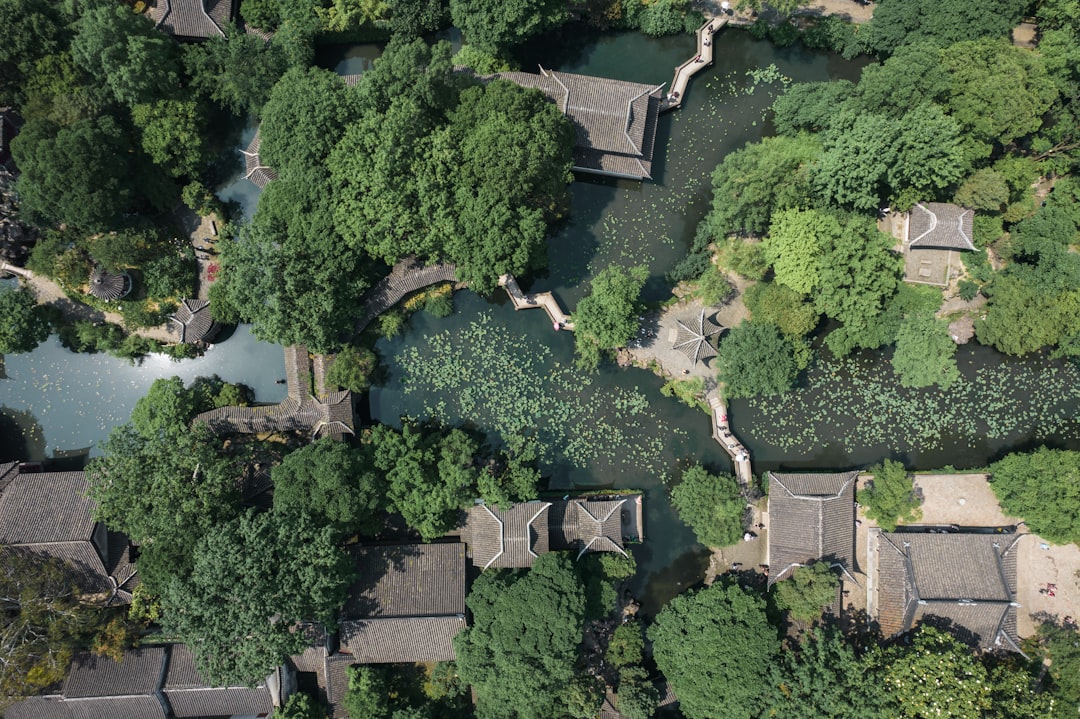
Here's what nobody tells you before you come: Suzhou is the most beautiful city in China that most Western tourists skip. Nine UNESCO classical gardens that make you understand why Chinese poets spent lifetimes writing about rocks and water. Canal streets that haven't changed their layout since the Song dynasty. A leaning pagoda older than Pisa's. A museum by I.M. Pei that makes architecture pilgrims cry. And a bowl of noodles — clear broth, springy noodles, melt-in-your-mouth pork — that will ruin you for every noodle you eat after. All of it 25 minutes from Shanghai by bullet train, and many passports now get in visa-free. Give it 2–3 days (4 with a water-town day trip) and you'll leave plotting how to come back in autumn for the hairy crabs.
Two things to do before you fly: set up an eSIM (so Google and WhatsApp work) and bind a card to Alipay (so you can pay for anything). Sort those two and the rest of this guide is just the fun part.
No time to read all of this? Tell us your dates and we'll build your Suzhou plan for you — on WhatsApp, real humans. (One message, no obligation.)
Message us →📌 This guide is long because it's complete — use the menu to jump. Everything below is named, priced, and verified June 2026; we flag anything that drifts so you can double-check the load-bearing details.
Before You Go
🛂 Do You Need a Visa for Suzhou? — Visa-Free Entry Explained
Here's the thing that trips people up about Suzhou: it doesn't have an airport. But that doesn't matter for visa purposes — you enter China through Shanghai, Nanjing, or another approved port, and the visa-free rules apply at the port of entry, not your final destination. Suzhou sits inside the approved transit zone for all major entry points around it, so both visa-free routes work perfectly.
| Route | Who it's for | Max stay | The catch |
|---|---|---|---|
| 30-day visa-free | 50 countries — most of Europe, Australia, NZ, Japan, Korea, and UK + Canada (added 17 Feb 2026) | 30 days | Ordinary passport valid for your whole stay (airlines often ask for 6 months). Tourism/business/visiting friends — no onward-ticket rule. |
| 240-hour (10-day) transit | 57 countries incl. the USA, Brazil, Mexico, Indonesia | 10 days | You must hold an onward ticket to a third country/region and enter via an approved port. |
✓ verified Oct 2026 Lists shift often — reconfirm your nationality on the official site before booking.
🇺🇸 Americans — here's how it works
US citizens are not on the 30-day visa-free list, but they are on the 240-hour visa-free transit list. To use it, you must meet the policy's conditions, including entry through an approved port and a confirmed onward ticket to a third country or region different from your departure country or region. You need an onward flight booked out of mainland China to a third country or region before you land. Easy third stops: Seoul, Bangkok, Singapore, Tokyo. The official notices say only "a third country or region", and none of the official pages we read names Hong Kong or Macao either way; reading them as qualifying is an inference, not an official rule. If your plan depends on it, confirm with your airline or the National Immigration Administration's 24-hour hotline, +86 12367 (English available), before you book. You can enter through Shanghai and visit Suzhou within the permitted area during your 240-hour stay. Check your onward departure airport before booking.
Shanghai Hongqiao (SHA) and Shanghai Pudong (PVG) are both approved 240-hour transit ports. The 240h window lets you move across provinces (within each province's permitted area — all of Shanghai, Jiangsu and Zhejiang are covered), so a Shanghai → Suzhou → Hangzhou → Nanjing loop is fine inside the 10 days.
Two things that quietly sink people
① The 240 hours don't start when you land — they start at 00:00 the next day (GMT+8), so your arrival day is a freebie. ② "Third country" means different from where you came from — a US→Shanghai→back-to-US ticket does not qualify; you must exit to somewhere else first.
Policy and country lists shift — always reconfirm your nationality on the official en.nia.gov.cn before you book.
🗓️ Best Time to Visit Suzhou — Gardens Through the Seasons
Aim for late March–April or September–October — that's the golden window, full stop. Comfortable, dry(ish), gardens at their most photogenic, and the water towns aren't drowning in domestic tour groups.
| Season | Months | Temp | The real story |
|---|---|---|---|
| 🌸 Spring (best) | Mar–May | 10–26°C | Cherry blossoms and magnolias in the gardens, Biluochun tea harvest. April is the city's prettiest month. |
| ☀️ Summer | Jun–Aug | 28–38°C | Hot, sticky, and Jun–Jul is plum rain season (梅雨) — persistent drizzle, soupy humidity. Lotus blooms in the garden ponds are gorgeous if you can handle the sweat. |
| 🍂 Autumn (best) | Sep–Nov | 15–27°C | Sweet osmanthus fills the air around Lingering Garden. Red maples blanket Tianping Hill. Driest, sunniest stretch. Hairy crab season starts October. |
| 🌫️ Winter | Dec–Feb | 3–8°C | Cold, damp, grey. Snow on the gardens is hauntingly beautiful but rare. Pack warm layers — Suzhou cold is the damp kind that gets into your bones. |
Avoid Chinese public holidays — Labour Day (early May), National Day / Golden Week (1–7 Oct), and Spring Festival (late Jan/Feb) pack the gardens shoulder-to-shoulder and kill the meditative vibe that makes them special.
🚄 How to Get to Suzhou — No Airport, No Problem
Here's the part that sounds like a problem but is actually a feature: Suzhou has no airport. Instead, you get one of China's most connected high-speed rail nodes — Shanghai Hongqiao is 25 minutes away by bullet train, which is faster than most airport transfers in the world.
From Shanghai (the default)
| From | Train | Time | Cost (2nd class) | Notes |
|---|---|---|---|---|
| Shanghai Hongqiao (SHA) | G-train, 450+ daily | 23–30 min | ¥21–39 | Hongqiao Railway Station is inside the airport — walk off your plane, through the terminal, onto a platform. |
| Shanghai Pudong (PVG) | Metro to Hongqiao (~90 min), then G-train | ~2–2.5 hrs total | ¥21–39 + metro ¥7 | Longer but straightforward. Or Didi direct (~¥350–400, 1.5–2 hrs). |
From Nanjing
| Route | Time | Cost (2nd class) |
|---|---|---|
| Nanjing → Suzhou (G-train, 182 daily) | 45 min–1.5 hrs | ¥30–100 |
Which Suzhou station?
- Suzhou Railway Station (苏州站) — the main one, right in the old city, on Metro Lines 2 and 4. Where you want to arrive. Walking distance to Humble Administrator's Garden, Suzhou Museum, Pingjiang Road.
- Suzhou North Station (苏州北站) — faster trains but 15 km northwest of center. Metro Line 2 connects it downtown in ~25 min.
Book trains on the official 12306 website (English version) or Trip.com with your passport. Trip.com is smoother for foreign IDs.
💴 Suzhou Travel Budget: What It Costs (per day, excluding transport to Suzhou)
Suzhou is cheaper than Shanghai across the board — especially food and accommodation — while delivering experiences that arguably hit harder.
| Style | Per day | What that buys you |
|---|---|---|
| 🎒 Backpacker | ¥200–350 (~$28–49) | Hostel/budget hotel, noodle shops + street food, metro everywhere, 1–2 gardens |
| 💺 Mid-range (most people) | ¥400–700 (~$56–98) | Clean 3–4★ hotel in the old city, sit-down Suzhou cuisine, Didi when needed, 2–3 gardens + museum |
| ✨ Comfort | ¥800+ (~$112+) | Boutique canal-side hotel, private garden guide, Kunqu opera seats, fine Suzhou dining |
The biggest budget lever: garden tickets add up fast (¥30–70 each, and there are nine UNESCO ones). Pick 2–3 that match your taste instead of trying to tick them all — you'll save money and actually absorb what makes each one different. (~¥7.1 = $1 as of Jun 2026; rates drift.)
Sources — Part 1 (verified June 2026)
Visa & 240h transit: en.nia.gov.cn (National Immigration Administration — unilateral visa-exemption list, updated 17 Feb 2026; 30-day policy valid through 31 Dec 2026 for most countries; 240-hour transit policy (NIA, 20 Aug 2026), 57 nationalities, 65 ports); cross-checked chinadiscovery.com & chinafortravelers.com 2026 guides.
Transport: travelchinaguide.com, chinadiscovery.com, chinaairlinetravel.com (Shanghai–Suzhou HSR 450+ daily, fastest 21 min, ¥21–39; Nanjing–Suzhou 182 daily, fastest 45 min, ¥30–100).
Budget / climate: numbeo, chinadiscovery.com Suzhou weather, chinahighlights.com Suzhou climate, wanderinchina.com Suzhou weather 2026.
Arrival & Essentials
The three things that turn China from "intimidating" into "effortless." Do the first two before you fly — fifteen minutes at home saves a stressful first hour at the station.
📱 Internet & VPN in China: Get an eSIM before you fly
Mainland China blocks Google, Instagram, WhatsApp, Gmail, and most Western apps. Your normal SIM will roam onto a Chinese network and hit that same wall.
The clean, legal fix: an international travel eSIM that routes your data through a server outside the mainland — so Google Maps, WhatsApp, Instagram, all of it just works, with no separate VPN. Install it as a second line; your home number stays for calls/texts.
| eSIM | Best for | VPN? | The honest take |
|---|---|---|---|
| Nomad | Multi-city + high-speed rail | No | The most stable when you're moving — survives tunnels and city-hopping. Top pick if Suzhou is one stop on a bigger trip. |
| Airalo | One or two cities, budget | No | Most popular, cheapest, dead-simple. Plenty for a Shanghai–Suzhou trip. |
| Holafly | Heavy data users | No | Unlimited data plans + 24/7 support. Great if you stream/hotspot. |
| Saily | Privacy-minded | No | By the NordVPN team, strong privacy. Solid for fixed-data plans. |
How it actually goes: buy online → QR code by email → scan to install (2 min) → leave it off until you land → flip it on as the plane taxis in, and you're online before baggage claim. No Chinese ID needed. Buy at home on your own Wi-Fi; do not count on installing it after you land — activation pages can themselves be behind the wall.
One phone really does replace everything
Wallet, train tickets, translator, museum reservations, metro card, bike unlock, restaurant orders, garden tickets — all collapse into one phone the moment you're set up. Most people pay by phone these days, though cash is still legal tender. Get your eSIM + Alipay sorted and you operate exactly like a Suzhou native by day two.
More on this: China Essentials — paying with Alipay & WeChat →💳 How to Pay in China: Alipay & WeChat for Foreigners
Most people pay by phone, but cash is still legal tender: since 1 February 2026, staffed businesses must accept it. Keep some small notes as a backup (is cash accepted in China?). Don't count on foreign cards at small shops; bigger hotels, malls and major sights are more likely to take them. The great news for 2026: Alipay and WeChat Pay both take a foreign Visa/Mastercard directly, no Chinese bank account needed. Do this at home before you fly.
Set up Alipay (your main wallet)
- Download Alipay and register with your home mobile number (SMS code).
- Open "Cards" → "Add Bank Card" and enter a real Visa or Mastercard. ⚠️ Use a normal physical card — prepaid and virtual/online-only cards are frequently rejected. This is the #1 reason setup fails.
- Complete passport verification (photo + selfie). Approval usually takes minutes.
- Backup: download WeChat Pay and bind a second physical card the same way.
The limits & fees you need to know ✓ verified Jun 2026
| Figure | |
|---|---|
| Payments under ¥200 | Fee-free (0%) |
| Payments over ¥200 | ~3% service fee |
Alipay and WeChat Pay set spending limits for foreign cards — see Essentials. Check your current limit in the app.
Practical read: the fee-free-under-¥200 rule covers the vast majority of what you'll buy — noodles, metro, tea, garden tickets, Didi. The ~3% only bites on bigger purchases. Carry some cash as backup.
🚕 Getting Around Suzhou: Metro, Didi & Rickshaws
Suzhou's metro is clean, English-signed, and dirt cheap; Didi fills every gap. And for the canal neighborhoods, there's a mode of transport you won't find in most Chinese cities.
Suzhou Metro — your default
Suzhou runs 9 metro lines, ~275 stations, 350 km of track as of 2026. The lines that matter for tourists:
- Line 1 — east–west through the old city, connects Suzhou Railway Station area.
- Line 2 — north–south, connects Suzhou Railway Station and Suzhou North Station.
- Line 4 — runs south to Tongli water town (terminal station — your day-trip line).
- Line 11 — connects directly to Shanghai Metro at Huaqiao station for intercity travel.
How to ride: open Alipay → search "Metro" / 乘车码 → scan QR at the gate. Auto-charges ¥2–7 by distance. No physical card needed. Trains run roughly 06:00–22:30.
Using Didi
Didi's English app works perfectly in Suzhou, takes foreign cards (or link Alipay). Cross-town rides run ¥15–40. At the railway station, walk to the signed 网约车 pickup zone first.
The canal rickshaw — the Suzhou-only move
In the Pingjiang Road and Shantang Street neighborhoods, human-powered rickshaws (人力三轮车) thread through lanes too narrow for cars. A ride through the canal alleys costs roughly ¥20–50 depending on distance and your bargaining. Agree on the price before you sit down — point to the destination on your phone map. Touristy? Yes. Genuinely charming? Also yes. It's the only way to see some of the narrowest waterways up close.
"Wait — China is THIS safe?"
You are 2×+ more likely to be robbed in San Francisco or Chicago than in a major Chinese city. Women routinely walk home alone past midnight; with dense CCTV, opportunistic street crime barely exists. Suzhou in particular is one of the calmest, most orderly cities in the country — late-night canal strolls and solo Didi rides are completely normal.
Sources — Part 2 (verified June 2026)
eSIM: unusualnomad.com, traveltomtom.net, cybernews.com (China eSIM tests 2026 — Nomad most stable, Airalo cheapest, all route offshore / no separate VPN).
Alipay limits & fees: realchinatrip.com, trip.com, Alipay help center (<¥200 fee-free · ~3% above).
Metro & transport: trip.com Suzhou Metro Map 2026, chinadiscovery.com Suzhou Metro, explorewithshanghai.com (9 lines, ~275 stations, 350 km; Line 11 Shanghai connection; fares ¥2–7).
Things to Do in Suzhou
Nine UNESCO gardens, a leaning pagoda, an I.M. Pei masterpiece, 800-year-old canal streets, the mother of all Chinese opera, 2,000 years of silk, and a noodle culture that will ruin you. Everything below is named, priced, and verified June 2026.
🏯 Suzhou Classical Gardens — the real reason you're here
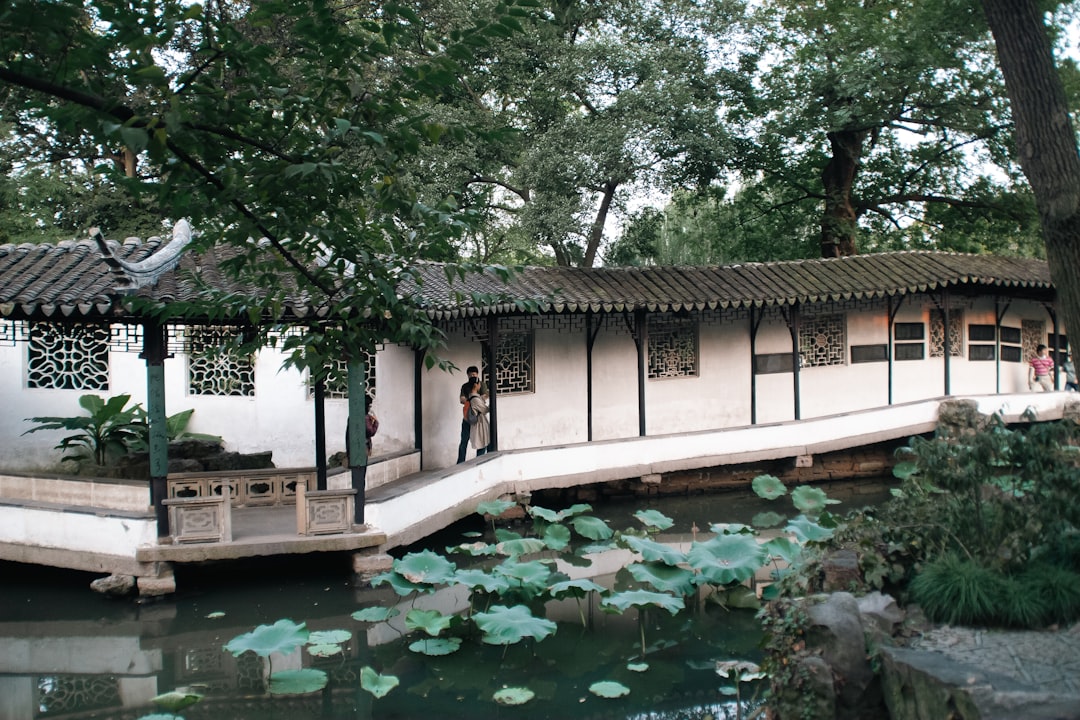
Let's be honest: you can skip everything else in Suzhou and just do gardens, and the trip would still be worth it. Nine of them are UNESCO World Heritage sites — the largest collection of classical Chinese gardens anywhere. But here's the insider take: don't try to see them all. They're each a meditation on space, light, water and stone, and cramming five into one day turns art into a checklist. Pick 2–3 that match your mood, go slowly, and you'll understand why Chinese poets spent lifetimes writing about these places.
Humble Administrator's Garden (拙政园) — China's largest classical garden
The headliner. Built in the 1500s by a retired Ming-dynasty official who named it after a phrase meaning "the humble politics of cultivating one's garden" — the most elegant way anyone has ever said "I quit my job." At 5.2 hectares, it's the largest classical garden in Suzhou and arguably the most beautiful garden in China.
- Ticket: ¥70 (Apr–Oct) / ¥50 (Nov–Mar).
- Hours: 07:30–17:30. Last entry 30 min before close.
- Booking: Must book a time slot in advance via the official WeChat mini-program "苏州园林" (Suzhou Gardens). Opens 7 days ahead at 08:00 CST. Weekend slots fill within minutes — set an alarm. Foreign passports accepted.
- Metro: Line 4 → Beisita (北寺塔), Exit 4 → 10-min walk east.
- Insider: Go at opening (07:30) or in the last hour before close — midday tour groups kill the tranquility. The central water section is the soul: find a bench by the Lotus Fragrance Pavilion and just sit. In summer (Jul–Aug), lotus blooms turn the main pond pink.
Tiger Hill (虎丘) — the leaning pagoda that predates Pisa
A 1,000-year-old pagoda tilting 2.34 meters off-center on a hilltop wrapped in 2,500 years of legend — including the tomb of the King of Wu, a sword-testing stone, and a spring said to produce the finest tea water in the world.
- Ticket: ¥70 (Apr–Oct) / ¥60 (Nov–Mar).
- Hours: 07:30–18:00 (May–Oct); 07:30–17:30 (Nov–Apr). Last entry 30 min before close.
- Metro: Line 2 → Shantang Street (山塘街), then bus or Didi (~10 min, ¥15–20). Or walk the scenic 3.5 km from Shantang Street along the canal — the best approach.
- Insider: The pagoda (Yunyan Temple Pagoda, 云岩寺塔) was built in 959–961 AD — nearly 200 years before Pisa's tower started leaning. You can't go inside, but the hilltop view over the city is worth the climb. Budget 1.5–2 hours.
Suzhou Museum (苏州博物馆) — I.M. Pei's love letter to his hometown
The museum architecture pilgrims fly across the world for. Designed by I.M. Pei (born in Suzhou, architect of the Louvre pyramid) as his final major work — a modernist building that somehow feels like a classical garden, with geometric white walls, water courts, and a rock garden that reimagines Suzhou's tradition in pure geometry.
- Ticket: Free. But you must book online via the official WeChat mini-program "苏州博物馆" — no reservation, no entry.
- Booking: Opens 7 days ahead at 08:00 CST. Weekend slots go fast.
- Hours: 09:00–17:00, last entry 16:00. Closed Mondays.
- Metro: Line 4 → Beisita (北寺塔), Exit 4 → 5-min walk. Right next to the Humble Administrator's Garden — pair them.
- Insider: The rock garden courtyard is the masterpiece — gravel, water, and sculptural rocks framed by white walls that look like a Song-dynasty painting. Permanent collection includes Ming furniture and Wu-school paintings. Budget 1.5–2 hours.
Lion Grove Garden (狮子林) — the rockery labyrinth
- Ticket: ¥40 (peak) / ¥30 (off-season).
- Hours: 07:30–17:30.
- Metro: Line 4 → Beisita, Exit 4 → 8-min walk (same cluster as Humble Admin + Museum).
- Insider: A Yuan-dynasty (1342) garden famous for its fantastically shaped rockery maze — jagged limestone formations with 500 "stone lions." The rockery is a genuine 20-min maze: climb through tunnels, cross stone bridges, get lost. Kids love it.
Master of the Nets Garden (网师园) — the smallest, most intimate masterpiece
- Ticket: ¥40 (Apr–Oct) / ¥30 (Nov–Mar). Night tour: ¥100 (Apr–Oct, 19:30–22:00 — includes Kunqu opera in the garden).
- Hours: 07:30–17:30; night tour 19:30–22:00 (Apr–Oct).
- Insider: At only 0.54 hectares it's one of the smallest UNESCO gardens, but its proportions are so perfect it feels spacious. The night tour is one of the most magical things you can do in Suzhou — lantern-lit courtyards, guqin drifting across water, Kunqu opera in a garden pavilion. Book it.
Want a private garden morning — the right gardens for you, exactly how and when to book, a guide who knows every hidden courtyard? Tell us your dates on WhatsApp.
Ask us →🏮 Pingjiang Road & Shantang Street — Suzhou's Living Canals
These aren't "attractions" — they're neighborhoods, both free and open 24 hours, and they're where you actually feel what Suzhou is. Whitewashed walls, dark-tiled roofs, stone bridges over canals barely wide enough for two boats, and a soundscape of flowing water and bicycle bells.
Pingjiang Road (平江路) — the 800-year-old canal street
A 1.6 km canal-side street that has kept its Song-dynasty layout for 800 years. The Pingjiang Map (平江图), carved in 1229, shows this exact street grid — and it still matches. Eighteen stone bridges cross the canal. Tea houses, boutique shops, and snack stalls line both sides.
- Ticket: Free. Open 24h (shops ~10:00–22:00).
- Metro: Line 1 → Xiangmen (相门), Exit 3 → 5-min walk north.
- Insider: Go at early morning (before 09:00) or after 20:00 — the day-trip crowds vanish. Optional canal boat: ¥40/person, ~40 minutes threading under stone bridges.
Shantang Street (山塘街) — Seven Mile Shantang (七里山塘)
The other great canal street, stretching 3.8 km from the old city gate to Tiger Hill. The front section is touristy — lanterns, snacks, shops. The back half toward Tiger Hill is quieter, more authentic, and where the canal feels centuries old.
- Ticket: Free. Open 24h.
- Metro: Line 2 → Shantang Street (山塘街), Exit 1.
- Insider: Walk the full length toward Tiger Hill — 45 min of increasingly quiet canal walking that ends at one of Suzhou's greatest landmarks. Or take a canal boat from Shantang to Tiger Hill (seasonal, ~¥50–80).
🍜 What to Eat in Suzhou: Suzhou Cuisine (苏帮菜) — the elegant opposite of Sichuan
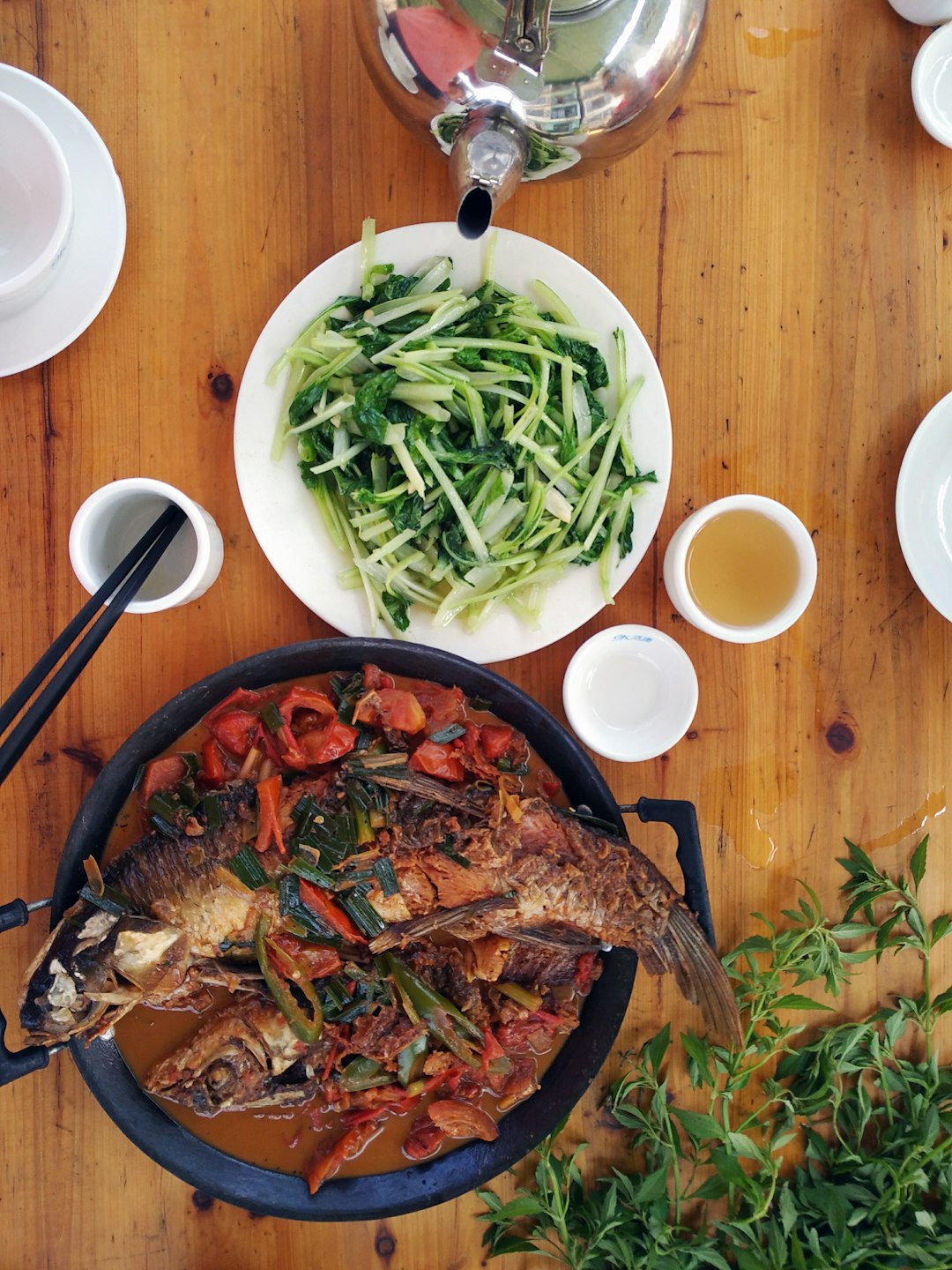
If Sichuan cuisine punches you in the face, Suzhou cuisine whispers in your ear. It's the culinary tradition of the Jiangnan literati — subtle, sweet, seasonal, obsessed with freshness. No chili assault; instead, delicate umami, carefully balanced sweetness, and an almost Japanese attention to the ingredient itself.
The dishes you must try
- Songhu Guiyu (松鼠鳜鱼) — Squirrel-shaped Mandarin Fish: The most famous dish in Suzhou. A whole mandarin fish, scored crosshatch, deep-fried until the flesh curls like a squirrel's tail, drenched in tangy sweet-and-sour sauce. Emperor Qianlong supposedly named it.
- Suzhou-style noodles (苏式面): The daily ritual. Thin, springy noodles in clear umami broth simmered for hours, topped with braised pork, shrimp, or eel. Locals judge by three things: the broth (must be clear), the noodles (must be firm), and the topping (must be fresh).
- Yangcheng Lake Hairy Crab (阳澄湖大闸蟹): Season: October–December only. The female's golden roe and male's white paste, eaten with vinegar and ginger tea. Yangcheng Lake is 20 km from Suzhou — the finest crabs in the country.
Where to eat — three real options
| Restaurant | Vibe | Per person | What to order |
|---|---|---|---|
| Song He Lou (松鹤楼) | The 260-year-old institution on Guanqian Street. The place for Squirrel Fish. | ¥100–200 | Squirrel fish (¥138–188), braised pork, seasonal lake fish |
| De Yue Lou (得月楼) | 400+ years old, garden setting, "boat cuisine" specialist. Calmer, more refined. | ¥100–180 | Squirrel fish, cherry-blossom pork, seasonal fish |
| Tong De Xing (同得兴) | The noodle institution. Where locals go for the best bowl in the city. No-frills, packed at breakfast. | ¥15–35 | Fengzhen pork noodles (枫镇大肉面) — braised pork in clear white broth |
The street food run
Wander Guanqian Street (观前街) or Shantang Street for grazing:
- Shengjianbao (生煎包) — pan-fried pork buns with crispy bottoms, ~¥8–12 for 4. Yaba Shengjian (哑巴生煎) is the cult favorite.
- Tangyuan (汤圆) — sweet glutinous rice balls in warm broth, ~¥10–15.
- Suzhou-style mooncakes — flaky, savory, pork-filled. Year-round at bakeries.
- Osmanthus sugar cakes (桂花糕) — delicate, floral, the taste of Suzhou autumn.
Suzhou's best meal costs less than a coffee back home
A bowl of Suzhou's finest noodles — in a broth simmered for hours, topped with melt-in-your-mouth braised pork — runs ¥15–25. The legendary Squirrel Fish at a 260-year-old restaurant is ¥138–188 and feeds two. A street-food breakfast of shengjian buns and soy milk is ¥12. You will eat extraordinarily well here on what a single salad costs in Manhattan.
🎭 Kunqu Opera — the mother of all Chinese opera, born here
Suzhou is the birthplace of Kunqu (昆曲), the oldest surviving form of Chinese opera — 600 years old, UNESCO Intangible Cultural Heritage since 2001, and the art form that gave birth to every Chinese opera tradition that followed (including Peking Opera). If you see one performance in China, make it Kunqu in the city where it was invented.
| Venue | What you get | Cost | When |
|---|---|---|---|
| Kunqu Opera Museum (昆曲博物馆) | Classic Kunqu in an intimate Ming-dynasty hall. No. 14, Zhongjia Lane. | ¥20–30 | Sundays (check schedule) |
| Master of the Nets Garden night tour | Kunqu + guqin + lantern-lit garden. The most atmospheric option. | ¥100 | Nightly Apr–Oct, 19:30–22:00 |
| Shantang Kunqu Hall | Daily performances in a teahouse on Shantang Street. | ¥30–50 | Daily |
Language barrier? Some venues provide English subtitles. Kunqu is highly visual — the singing, movement, and costumes carry the story even without understanding every word.
🌊 Suzhou Silk — the fabric that built this city
Suzhou has been China's silk capital for over 2,000 years — the Grand Canal was partly built to ship Suzhou silk to the emperor.
- Suzhou Silk Museum (苏州丝绸博物馆): Free admission. 09:00–17:00, closed Mondays. Near Beisi Pagoda, walkable from the garden cluster. Covers the full history from silkworm to Song-dynasty brocade, with working looms. Budget 1–1.5 hours.
- Buying silk: The museum shop is honest; Guanqian Street has traditional silk shops. For custom tailoring (qipao / cheongsam), allow 2–3 days and expect ¥500–2,000+ depending on fabric and complexity.
🌃 Suzhou Nightlife — quieter than Shanghai, better than you'd think
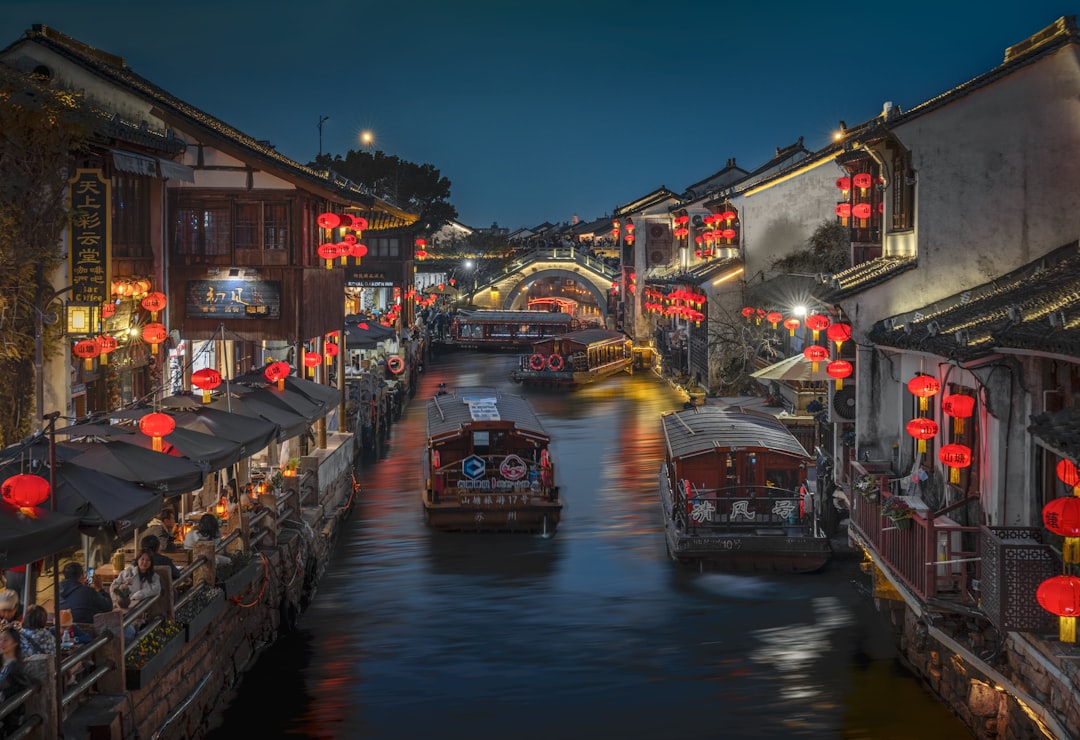
Suzhou isn't a party city — it's a canal-stroll-with-a-craft-beer city. The nightlife is atmospheric rather than loud, and that's exactly the point.
Jinji Lake / Ligongdi (李公堤)
Waterfront strip in SIP — rooftop bars, craft breweries. Boxing Cat Brewery + Fit Beer on the lake.
Drinks ¥40–80Shiquan Street (十全街)
Old-city bar street — moodier rooms in restored canal houses, live music, local crowd.
Drinks ¥35–70Pingjiang & Shantang after dark
Not bars — but the lantern-lit canal walks are the most beautiful "nightlife" in the city.
Canal-side beer ¥8–15A craft beer by a UNESCO canal costs less than a Bud Light at a stadium
A pint of locally brewed craft at Fit Beer or Santang runs ¥35–50. A Tsingtao at a canal-side shop is ¥8–10. Sit on an 800-year-old stone bridge at 10pm, cold beer in hand, watching lantern reflections wobble on the water — and realize this evening cost you less than a single drink at most Western bars.
Want a Suzhou plan with the best garden morning, a Kunqu night, and a water-town day trip? Ask us on WhatsApp.
Ask us →Sources — Part 3 (verified June 2026)
Gardens & museums: trip.com, travelchinaguide.com, wanderinchina.com, chinadiscovery.com, szmuseum.com (Humble Admin ¥70/¥50; Tiger Hill ¥70/¥60; Lion Grove ¥40/¥30; Master of Nets ¥40/¥30 + ¥100 night; Suzhou Museum free, reservation required, closed Mon).
Food: chinaculturetour.com, wanderinchina.com, chinahighlights.com, travelchinaguide.com (Song He Lou, De Yue Lou, Tong De Xing, Yaba Shengjian).
Kunqu: rosecampau.com, chinadiscovery.com, ich.unesco.org (UNESCO 2001/2008; Kunqu Museum ¥20–30 Sundays; Shantang Hall daily).
Silk: chinadiscovery.com, thechinaguide.com, tripadvisor.com (Silk Museum free, 09:00–17:00, closed Mon).
Nightlife: sipac.gov.cn, backoftheferry.com, trustingchoice.com (Jinji Lake / Ligongdi bars; Boxing Cat; Fit Beer; Santang Craft; Shiquan Street).
Day Trips from Suzhou
Stone bridges arching over narrow canals, whitewashed houses leaning over the water, and a pace of life that hasn't changed much in 500 years. Both are within an hour of Suzhou — pick one, or do both on separate days.
🏘️ Tongli Water Town — the easy, authentic half-day
Bottom line: the best water town if you only have time for one. Tongli is closer, easier to reach (direct metro!), less commercial than Zhouzhuang, and still has actual residents living their actual lives. Grandmothers washing vegetables in the canal, men playing chess on stone bridges — it's not a theme park.
Getting there
| Method | Time | Cost | Notes |
|---|---|---|---|
| Metro Line 4 → Tongli (terminal) | ~50 min | ¥5–7 | Easiest. Free tourist shuttle from Tongli metro to scenic area gate. |
| Tourist bus from Suzhou Railway Station | ~1.5 hrs | ~¥9 | Every hour, 06:00–19:00. |
| Didi from Suzhou center | ~45 min | ~¥80 | Door-to-door. |
Ticket: ¥100 (includes 10 internal attractions incl. Retreat & Reflection Garden). Over-60 half-price. Hours: Attractions 07:30–17:30; the town itself is open 24h. ✓ verified Jun 2026
Insider: The Retreat & Reflection Garden (退思园) is itself a UNESCO World Heritage site — a miniature masterpiece built by a disgraced official told to "retreat and reflect." It's the single must-see inside Tongli. The canal boat (~¥80–100/boat, seats 6, ~15–20 min) is atmospheric — the boatman poles under stone bridges while laundry flutters overhead. Budget 3–4 hours total.
🏘️ Zhouzhuang — the most famous water town in China
Bottom line: the postcard water town. More famous, more photogenic, more heavily marketed — which means more crowded and more commercial. But the architecture is genuinely stunning, and the Twin Bridges (双桥) are iconic for a reason.
Getting there
| Method | Time | Cost | Notes |
|---|---|---|---|
| Bus from Suzhou North Bus Station | ~50 min | ~¥17 | Every 20–30 min. |
| Didi from Suzhou center | ~1 hr | ~¥100–150 | More comfortable, direct. |
Ticket: ¥50 (weekdays) / ¥100 (weekends & holidays). Lifetime unlimited re-entry. Canal boat: ¥150–200/boat (seats 6). ✓ verified Jun 2026
Tongli vs. Zhouzhuang — the honest comparison
| Tongli | Zhouzhuang | |
|---|---|---|
| Getting there | Metro Line 4 direct (easiest) | Bus or Didi (no metro) |
| Crowd level | Moderate, more locals | Heavy, very touristy |
| UNESCO site inside | Yes (Retreat & Reflection Garden) | No |
| Most photogenic | Quieter canals, authentic feel | Twin Bridges, grander architecture |
| Best for | Half-day, authenticity-seekers | Photography, bucket-listers |
My pick: if you only have time for one, Tongli wins — the metro access is a gamechanger and it feels more real. If you have two half-days, do both: Tongli one afternoon (metro, ¥5), Zhouzhuang the next morning (bus, ¥17).
Want a water-town day trip planned — transport, best route, lunch spot? Ask us on WhatsApp.
Ask us →Sources — Part 4 (verified June 2026)
Tongli: topchinatravel.com, trip.com, chinadiscovery.com, museumofwander.com (Metro Line 4 terminal; ¥100 entry, 10 sights; Retreat & Reflection Garden UNESCO; boats ¥80–100; hours 07:30–17:30).
Zhouzhuang: chinaexplorertour.com, wanderinchina.com (¥50 weekday / ¥100 weekend; bus from North Station ¥17, ~50 min; boats ¥150–200).
Know Before You Go
🧠 Culture, money & health — the fine print
🤝 Culture shocks & etiquette (the 6 that trip up first-timers)
- No tipping. Anywhere. Restaurants, taxis, hotels, rickshaw drivers — none of it. Trying to tip causes confusion, not gratitude.
- Carry your own tissues + hand sanitizer. Public restrooms (and many squat toilets) often have neither paper nor soap.
- You order by scanning a QR code at most restaurants — point your camera at the table sticker, a menu opens, you tap, you pay. Menu's usually Chinese — Google Translate's camera, on your eSIM, reads it instantly.
- Tap water is NOT drinkable — locals boil it or drink bottled. Every hotel room has a kettle and free bottles.
- Strangers may ask to take a photo with you — especially with kids. Genuine friendly curiosity, not a scam. Smile, say yes or politely wave it off.
- Personal space & volume run differently — expect closer queuing, louder restaurants. Cultural, not rude. Roll with it.
💰 What's dirt-cheap vs. surprisingly pricey
Absurdly cheap (spend freely):
- High-speed rail — Shanghai→Suzhou, 25 min, ¥21–39.
- Street food & noodles — a great bowl ¥15–25, shengjian buns ¥8–12 for 4.
- Metro — cross-city rides ¥2–7.
- Canal evenings — beer + bridge + view = ¥10–15.
- Museums — Suzhou Museum and Silk Museum are both free.
Surprisingly pricey (budget for it):
- Garden tickets add up — ¥30–70 each; 3 gardens = ¥120–210.
- Hairy crab season (Oct–Dec) — a proper meal ¥200–400/pp.
- Western food & brunch — costs more than three local meals.
- Specialty coffee — a flat white ¥28–40.
- Silk shopping — quality scarves ¥200–500+, custom qipao ¥500–2,000+.
🚑 Emergencies & health (save these before you fly)
- Don't drink the tap water — bottled or boiled only. Hotel kettle is your friend.
- Summer heat stroke risk — July–August can hit 38°C with high humidity. Carry water, use umbrellas for sun (locals do), rest during midday.
- Pharmacies (药店) are everywhere, well-stocked, cheap, no prescription for basics.
- Major hospitals: The First Affiliated Hospital of Soochow University and Suzhou Municipal Hospital both have international departments. Travel insurance is strongly worth having.
❓ FAQ — straight answers to what everyone actually asks
Does Suzhou have an airport?
No — and that's fine. Fly into Shanghai Hongqiao (SHA) and take a 25-minute bullet train (¥21–39, 450+ daily). Hongqiao Railway Station is inside the airport — the transfer is seamless. Or fly into Nanjing and train to Suzhou in 45 min–1.5 hrs. (Full breakdown: Part 1.)
Do I need a visa to visit Suzhou in 2026?
Probably not. You enter China through Shanghai or Nanjing (both approved visa-free ports). 50 countries get 30 days visa-free. Citizens of the 57 countries on the 240-hour list — including the US — can instead use 240-hour (10-day) visa-free transit if they meet the policy's conditions, including entry through an approved port and an onward ticket with a confirmed date and itinerary, leaving within 240 hours for a third country or region different from their departure country or region. Always confirm on en.nia.gov.cn. (Full breakdown: Part 1.)
How many days do I need in Suzhou?
2–3 days for the city (2–3 gardens, Pingjiang Road, Suzhou Museum, noodles, a Kunqu evening). 3–4 days with a water-town day trip. Also works as a 1-day side trip from Shanghai (25 min each way) — but you'll wish you'd stayed longer.
Can I do Suzhou as a day trip from Shanghai?
Yes, easily. 25 minutes by bullet train, trains every few minutes. Humble Administrator's Garden + Suzhou Museum in the morning, Pingjiang Road over lunch, train back by evening. But staying at least one night lets you see canals at dusk and gardens at dawn — when they're magical.
Which gardens should I visit if I only have time for two?
Humble Administrator's Garden (grandest, largest) + Master of the Nets Garden (most intimate, best night tour). Swap one? Lion Grove for fun (rockery maze), Tiger Hill for drama.
Will Google, WhatsApp, and Instagram work in Suzhou?
Not on local WiFi/SIM. Install an international travel eSIM (Airalo, Nomad, Holafly, Saily) before you fly — routes data offshore, all apps work, no separate VPN. (eSIM comparison: Part 2.)
Is Suzhou safe at night — especially for solo travelers?
Extremely. One of the safest cities in China — well-lit canal paths, evening strollers, dense CCTV, virtually no street crime. Women walk the old-town canals alone past midnight. Safer at 11pm on Pingjiang Road than most Western cities at 7pm.
Tongli or Zhouzhuang — which water town?
Tongli — metro access (Line 4, terminal), more authentic, less crowded, has a UNESCO garden inside. Zhouzhuang for the famous Twin Bridges if you don't mind crowds. (Full comparison: Part 4.)
What's the best time of year to visit Suzhou?
Late March–April (spring blossoms, Biluochun harvest) and September–October (osmanthus fragrance, hairy crab season). Skip June–July (plum rain) and major holidays. (Full season guide: Part 1.)
Is everything in Suzhou sweet?
Suzhou cuisine leans sweet — Squirrel Fish has sweet-and-sour sauce. But it's subtle sweetness. Noodle broths are savory. Say "shǎo fàng táng / 少放糖" (less sugar) if you prefer.
How do I book garden tickets as a foreigner?
Major gardens require advance booking via WeChat mini-program "苏州园林". Passports accepted. Slots open 7 days ahead at 08:00 CST — Humble Admin weekend slots fill in minutes. Trip.com is a reliable fallback.
Can I drink the tap water?
No. Drink bottled or boiled only. Every hotel has a kettle and free bottles. Brushing teeth with tap is fine; ice in proper restaurants is fine.
📣 Plan it with us
Want the whole thing handled?
Bullet trains pre-booked from Shanghai, the garden booking explained (down to when tickets release), the right noodle shop for breakfast, a Kunqu opera evening in a lantern-lit garden, and a water-town morning before the crowds. That's exactly what we do — real humans, real local knowledge. Tell us your dates and what you're into, and we'll take it from there.
Plan your Suzhou trip on WhatsApp
All sources (verified June 2026)
Visa & entry: en.nia.gov.cn (National Immigration Administration). Transport: travelchinaguide.com, chinadiscovery.com, chinaairlinetravel.com, trip.com / 12306. Gardens & museums: trip.com, szmuseum.com, travelchinaguide.com, wanderinchina.com, chinadiscovery.com. Food: chinaculturetour.com, wanderinchina.com, chinahighlights.com, travelchinaguide.com. Kunqu: rosecampau.com, chinadiscovery.com, ich.unesco.org. Silk: chinadiscovery.com, thechinaguide.com. Nightlife: sipac.gov.cn, backoftheferry.com, trustingchoice.com. Water towns: topchinatravel.com, trip.com, chinaexplorertour.com, wanderinchina.com, museumofwander.com. eSIM & payment: unusualnomad.com, traveltomtom.net, cybernews.com, realchinatrip.com, Alipay help center. Hotels: thechinajourney.com, trip.com, booking.com. Climate: chinadiscovery.com, chinahighlights.com, wanderinchina.com.
⚠️ Live-confirm before travel: garden ticket prices/hours shift seasonally, garden reservations fill fast on weekends. Visa → en.nia.gov.cn; gardens → WeChat "苏州园林" or Trip.com; trains → 12306 or Trip.com.