240-hour transit by province: entry ports and permitted areas
Two lists matter, and they are easy to mix up. Entry ports are the 65 airports, seaports and rail or road crossings where you can clear immigration under this rule. The permitted area is where you may travel once you are in. You can enter in one province and carry on to another, as long as everywhere you stay sits inside its province's permitted area. A loop such as Beijing, Xi'an, Chengdu, Chongqing and Shanghai stays inside the permitted areas the whole way.
The table follows the official list on the National Immigration Administration's transit page (20 August 2026), sorted by province name. The English port names and airport codes are ours.
| Province | Entry ports | Where you may stay | Our guides |
|---|---|---|---|
| Anhui | Hefei Xinqiao (HFE), Huangshan Tunxi (TXN) | Whole province | Huangshan |
| Beijing | Capital (PEK), Daxing (PKX) | Whole municipality | Beijing |
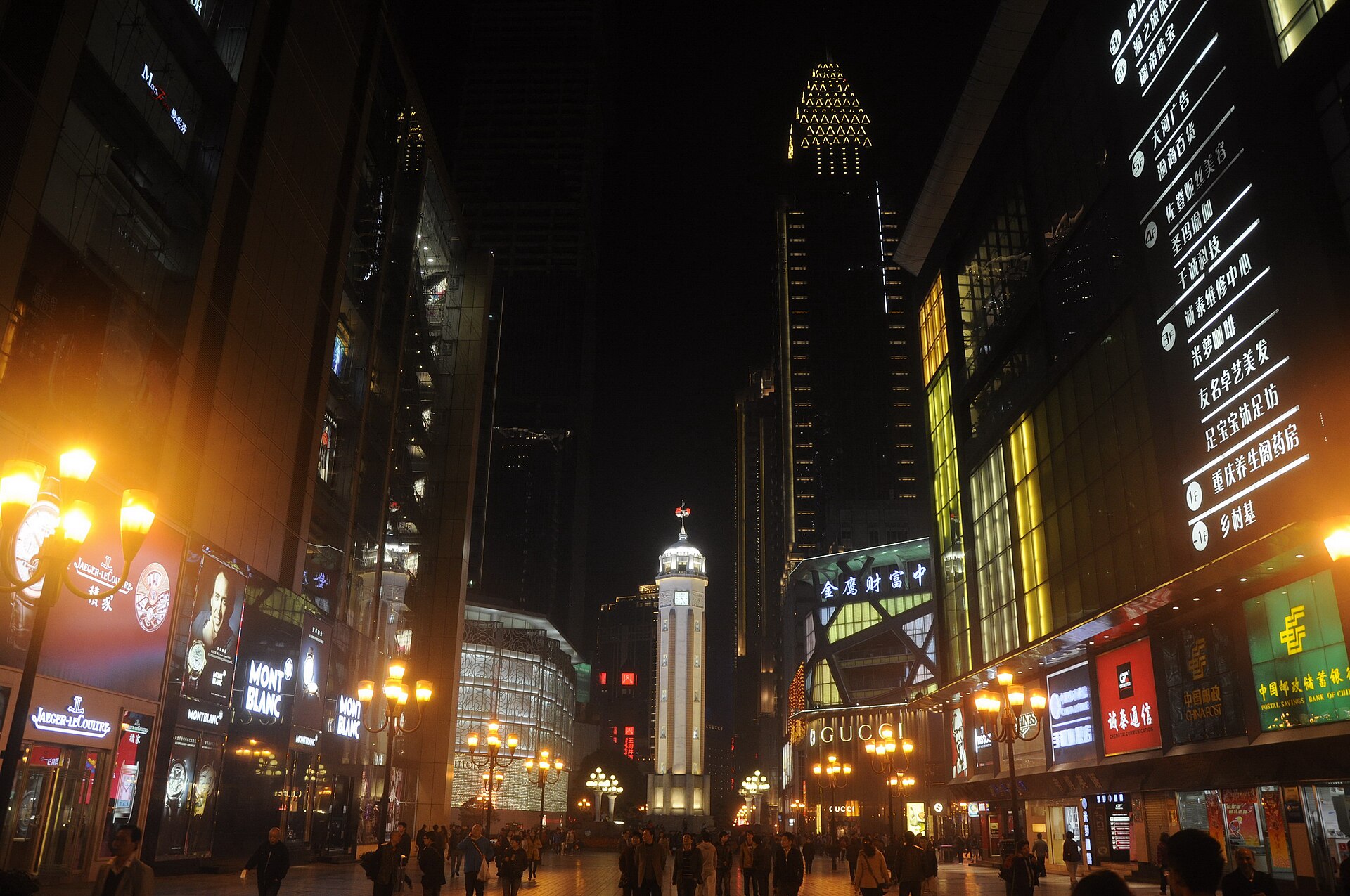
| Chongqing | Jiangbei (CKG) | Whole municipality | Chongqing |
| Fujian | Fuzhou Changle (FOC), Xiamen Gaoqi (XMN), Quanzhou Jinjiang (JJN), Wuyishan (WUS); Xiamen seaport (passenger) | Whole province | Xiamen, Quanzhou |
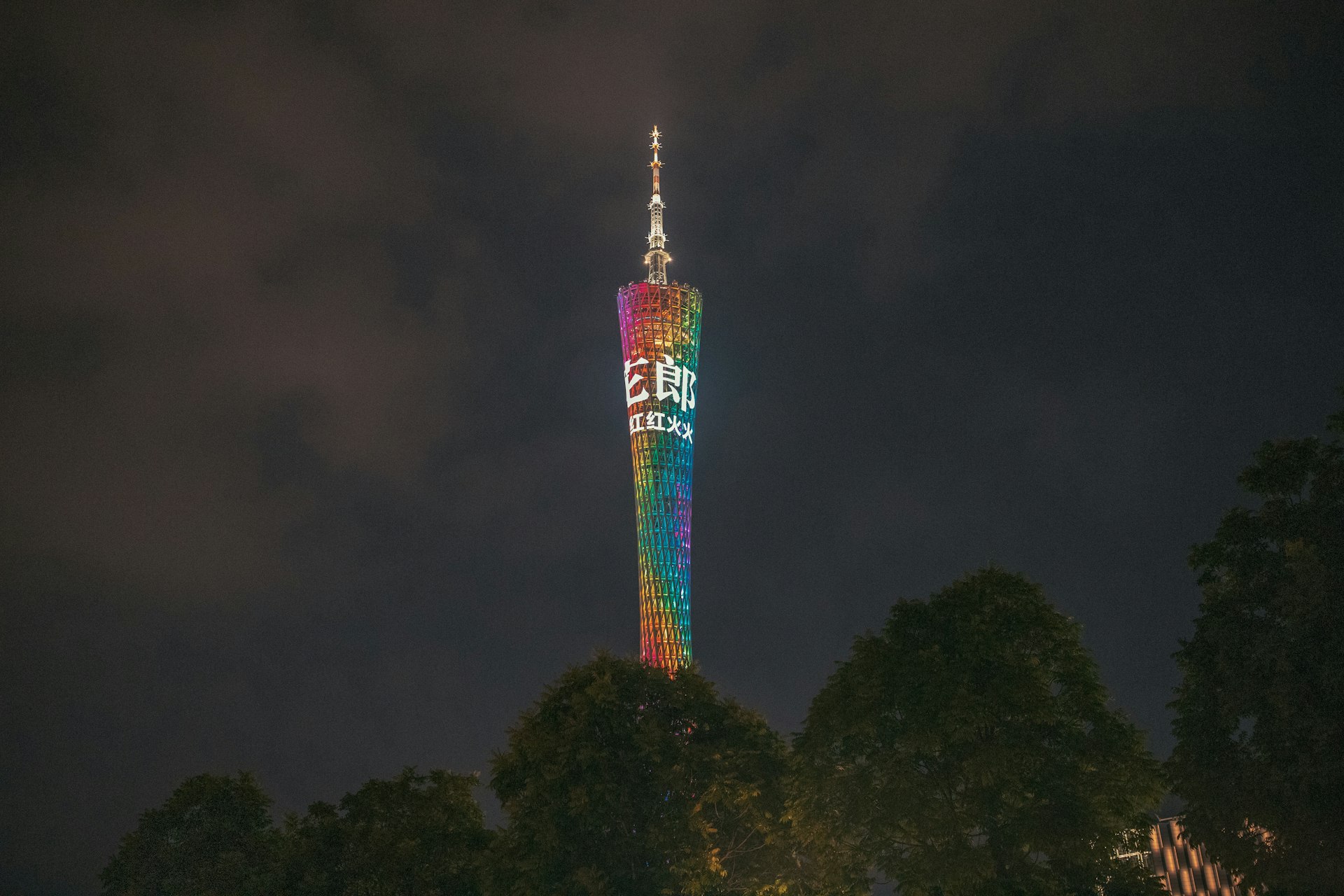
| Guangdong | Guangzhou Baiyun (CAN), Shenzhen Bao'an (SZX), Jieyang Chaoshan (SWA); Nansha and Shekou seaports (passenger); Pazhou Hong Kong–Macao terminal (Guangzhou); Zhongshan Port passenger terminal; Hengqin; Hong Kong–Zhuhai–Macao Bridge Zhuhai road port; West Kowloon high-speed rail station (in Hong Kong; Shenzhen's Office of Port of Entry and Exit says it operates under the “Two Inspections at One Place” model, so you clear mainland immigration inside the station) | Whole province | Guangzhou, Shenzhen |
| Guangxi | Nanning Wuxu (NNG), Guilin Liangjiang (KWL), Beihai Fucheng (BHY); Beihai seaport (passenger) | 12 cities: Nanning, Liuzhou, Guilin, Wuzhou, Beihai, Fangchenggang, Qinzhou, Guigang, Yulin, Hezhou, Hechi, Laibin | Guilin |
| Guizhou | Guiyang Longdongbao (KWE) | Whole province | – |
| Hainan | Haikou Meilan (HAK), Sanya Phoenix (SYX) | Whole province | Sanya |
| Hebei | Shijiazhuang Zhengding (SJW); Qinhuangdao seaport (passenger) | Whole province | – |
| Heilongjiang | Harbin Taiping (HRB) | Harbin only | Harbin |
| Henan | Zhengzhou Xinzheng (CGO) | Whole province | Luoyang |
| Hubei | Wuhan Tianhe (WUH) | Whole province | Wuhan |
| Hunan | Changsha Huanghua (CSX), Zhangjiajie Hehua (DYG) | Whole province | Zhangjiajie |
| Jiangsu | Nanjing Lukou (NKG), Sunan Shuofang (WUX), Yangzhou Taizhou (YTY); Lianyungang seaport (passenger) | Whole province | Nanjing, Suzhou |
| Jiangxi | Nanchang Changbei (KHN) | Nanchang and Jingdezhen only | – |
| Liaoning | Shenyang Taoxian (SHE), Dalian Zhoushuizi (DLC); Dalian seaport (passenger) | Whole province | – |
| Shaanxi | Xi'an Xianyang (XIY) | Whole province | Xi'an |
| Shandong | Jinan Yaoqiang (TNA), Qingdao Jiaodong (TAO), Yantai Penglai (YNT), Weihai Dashuipo (WEH); Qingdao seaport (passenger) | Whole province | Qingdao |
| Shanghai | Hongqiao (SHA), Pudong (PVG); Shanghai seaport (passenger) | Whole municipality | Shanghai |
| Shanxi | Taiyuan Wusu (TYN) | Taiyuan and Datong only | Datong |
| Sichuan | Chengdu Shuangliu (CTU), Chengdu Tianfu (TFU) | 11 cities: Chengdu, Zigong, Luzhou, Deyang, Suining, Neijiang, Leshan, Yibin, Ya'an, Meishan, Ziyang | Chengdu |
| Tianjin | Binhai (TSN); Tianjin seaport (passenger) | Whole municipality | – |
| Yunnan | Kunming Changshui (KMG), Lijiang Sanyi (LJG); Mohan railway port | 9 cities and prefectures: Kunming, Yuxi, Chuxiong, Honghe, Wenshan, Pu'er, Xishuangbanna, Dali, Lijiang | Kunming, Dali, Lijiang |
| Zhejiang | Hangzhou Xiaoshan (HGH), Ningbo Lishe (NGB), Wenzhou Longwan (WNZ), Yiwu (YIW); Wenzhou and Zhoushan ports (passenger) | Whole province | Hangzhou |
| Not covered | None | Gansu, Tibet, Xinjiang, Qinghai, Ningxia, Inner Mongolia, Jilin: no ports, no permitted area | Dunhuang, Lhasa |
Six provinces name specific cities: Heilongjiang, Jiangxi, Guangxi, Shanxi, Sichuan and Yunnan. All the others are open in full. In Guangdong the table adds that you may leave by any open port in the province. For the other provinces it gives no exit rule, so check your onward flight's departure airport before you book.
Which popular places are outside the 240-hour area?
If a place is not in the table, the 240-hour transit does not cover it, however you get there. These are the places that look included but are not:
- Dunhuang, and all of Gansu. Gansu is not one of the 24 provinces, and the table lists no port there.
- Lhasa and the rest of Tibet. Tibet is not one of the 24. Neither are Xinjiang, Qinghai, Ningxia, Inner Mongolia or Jilin.
- Shangri-La. Yunnan's permitted area is nine cities and prefectures: Kunming, Yuxi, Chuxiong, Honghe, Wenshan, Pu'er, Xishuangbanna, Dali and Lijiang. Shangri-La is the seat of Diqing prefecture, which is not on the list. Lijiang is.
- Pingyao. Shanxi's permitted area is Taiyuan and Datong only. Pingyao belongs to Jinzhong, which is not on the list. The table does not name Pingyao; it is left out by the cities it does name.
- Heilongjiang outside Harbin. Only Harbin is permitted. Snow Town (Xuexiang) is in Hailin, which sits under Mudanjiang, not Harbin. That comes from the administrative map, not from the table, which does not mention it, so treat Snow Town as out of bounds unless an official source tells you otherwise.
- Sichuan beyond its 11 cities. Jiuzhaigou is in Aba prefecture and Daocheng Yading is in Ganzi prefecture. Neither is on the list. Chengdu and Leshan (home of the Giant Buddha) are.
Entering at a listed port does not change any of this, and a stay permit will not either: it is for emergencies, not for adding places to a trip. These places need a different route in. For some passports that is the 30-day visa-free entry, which the notices do not tie to a list of provinces (see the 30-day list and its 31 December 2026 deadline). For the rest it is a Chinese tourist (L) visa. Tibet also needs a separate Tibet Travel Permit, arranged through a licensed travel agency, whichever route you use; our Lhasa guide explains how it works.
240-hour transit rules that catch people out
- Going home does not count as a third country. The rule is for people passing through to a third country or region, and the place you set off from and the place you are going to must be in different countries or regions. A ticket into China from the US and back to the US does not qualify.
- Hong Kong and Macao: the notices do not say. The wording is "a third country or region", and none of the official pages we read names Hong Kong or Macao either way. Reading them as qualifying is a reasonable inference: the West Kowloon rail station and the Hong Kong–Zhuhai–Macao Bridge became 240-hour entry ports in an announcement dated 3 November 2025. But it is an inference, not a rule. If your plan depends on it, ask the National Immigration Administration's 24-hour hotline, +86 12367 (English available), before you book.
- Work, study and journalism need a visa. Tourism, business, visits and family visits are covered. Activities that need prior approval still require a visa.
- Check your passport and history before you fly. The National Immigration Administration's announcement of 3 November 2025 asks for a passport with at least three months of validity, and for you to meet the entry conditions of your next country. The consulate FAQ of May 2025 adds that you cannot use the transit if your passport carries a Chinese visa-refusal stamp, or if you have a record of illegal entry, overstay or illegal work in China in the past five years. The 2026 transit page does not repeat either set of conditions.
- Mind the clock and the area limit. The clock starts at midnight after you land. Land on 1 March and your 240 hours run from 00:00 on 2 March to 00:00 on 12 March (our arithmetic). Overstaying, or leaving the permitted area, without a stay permit is punished under Chinese law. If an emergency such as illness keeps you longer, apply for a stay permit at the local public-security exit-entry office before the time runs out.
- Register where you stay. A hotel registers you. If you stay anywhere else, such as with friends or in a private rental, you or your host must register with the local public security authorities within 24 hours of arriving there. Failing to register brings a warning and can bring a fine of up to ¥2,000 (Exit and Entry Administration Law, Articles 39 and 76).
If your passport is not one of the 57, check the 30-day visa-free list too. It includes eight countries that the 240-hour list does not: Andorra, Liechtenstein, Saudi Arabia, Oman, Kuwait, Bahrain, Peru and Uruguay.